
Saint Michael Archangel Makes the Sea Withdraw to Leave a Passage for a Woman who Gave Birth on a Pilgrimage to Tumba, and Saint Michael Archangel and the Bull of Monte Gargano — History & Facts
In the early 15th century, tales of Saint Michael’s miraculous interventions were a source of awe and devotion across Europe, inspiring artists and pilgrims alike. Among these legends, the story of the archangel parting the sea for a woman in labor—so she might safely reach the sacred mount of Tumba—stood out for its drama and compassion. Fra Angelico’s Saint Michael Archangel Makes the Sea Withdraw to Leave a Passage for a Woman who Gave Birth on a Pilgrimage to Tumba, and Saint Michael Archangel and the Bull of Monte Gargano captures not one, but two celebrated miracles, weaving together episodes that had gripped the medieval imagination for centuries.
The painting’s earliest known mention appears in inventories from the 19th century, but its origins reach back to the artist’s formative years in the early 1400s. At the center of the composition, Saint Michael, clad in gleaming armor and unfurling wings, commands the retreating waters with an outstretched hand. Below him, a woman, exhausted yet resolute, clutches her newborn as she crosses the dry seabed—a visual echo of the Exodus, but here, guided by the archangel’s mercy. To one side, the second miracle unfolds: Michael stands over the humbled bull of Monte Gargano, recalling the moment when the animal, struck by the saint’s arrow, became a sign of divine presence on the mountain.
The luminous gold leaf, delicate halos, and rhythmic arrangement of figures recall Fra Angelico’s contemporaries in the early Renaissance, yet his narrative clarity and gentle humanity set him apart from the more dramatic treatments by later artists like Piero della Francesca. The precise journey of this panel through history remains partly shrouded, as is often the case with early 15th-century devotional works. It likely formed part of a predella or small altarpiece, commissioned for a monastic community or a confraternity devoted to Saint Michael. Over centuries, such panels were dispersed, repainted, or misattributed, and only in modern times has Fra Angelico’s authorship been widely accepted, based on stylistic parallels with his documented works.
Today, the painting is recognized as an early testament to the artist’s narrative gifts and spiritual vision, standing at the threshold of the Renaissance and offering a window into the devotional life of its time.
More Artworks by Fra Angelico

Condemnation of St Lawrence by the Emperor Valerian
Fra Angelico
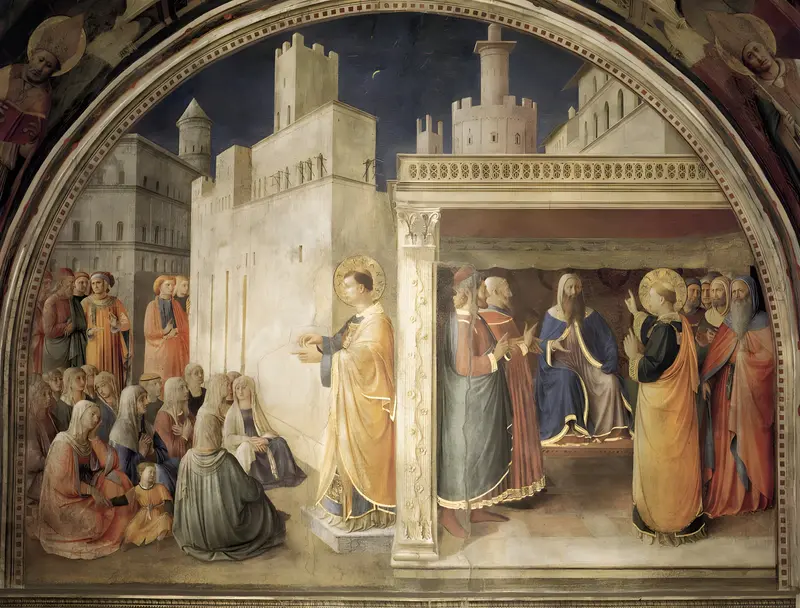
Lunette of the north wall
Fra Angelico
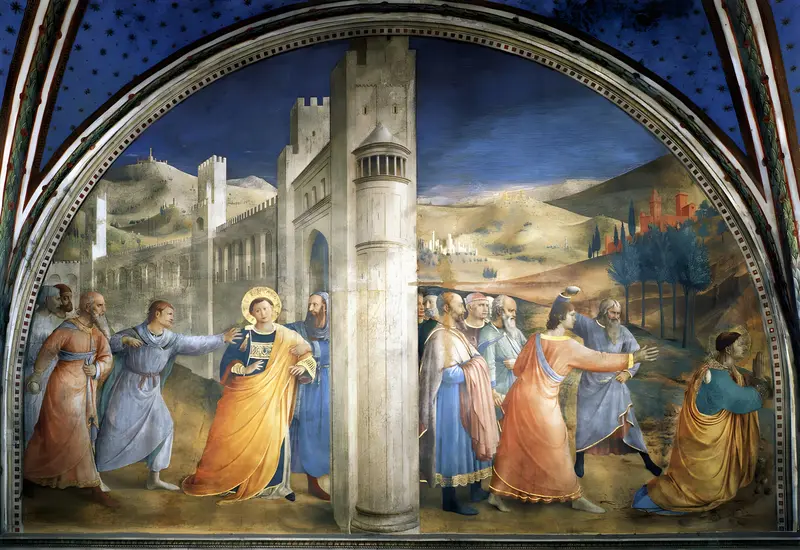
Lunette of the east wall in Niccoline Chapel
Fra Angelico
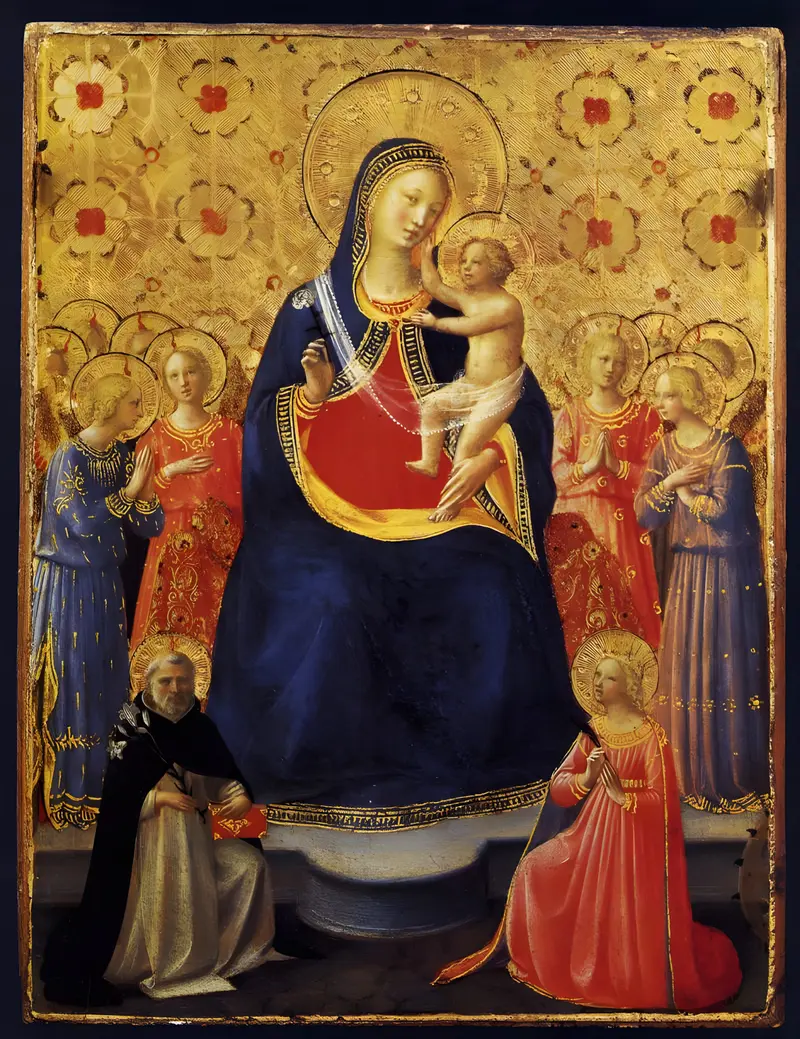
Madonna and Child Enthroned with Nine Angels and Saints Dominic and Catherine of Alexandria
Fra Angelico
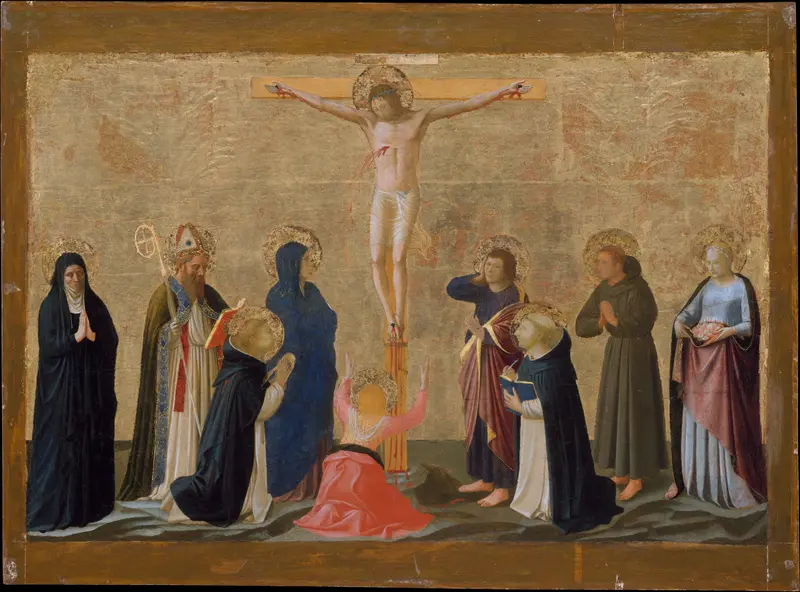
The Crucifixion
Fra Angelico
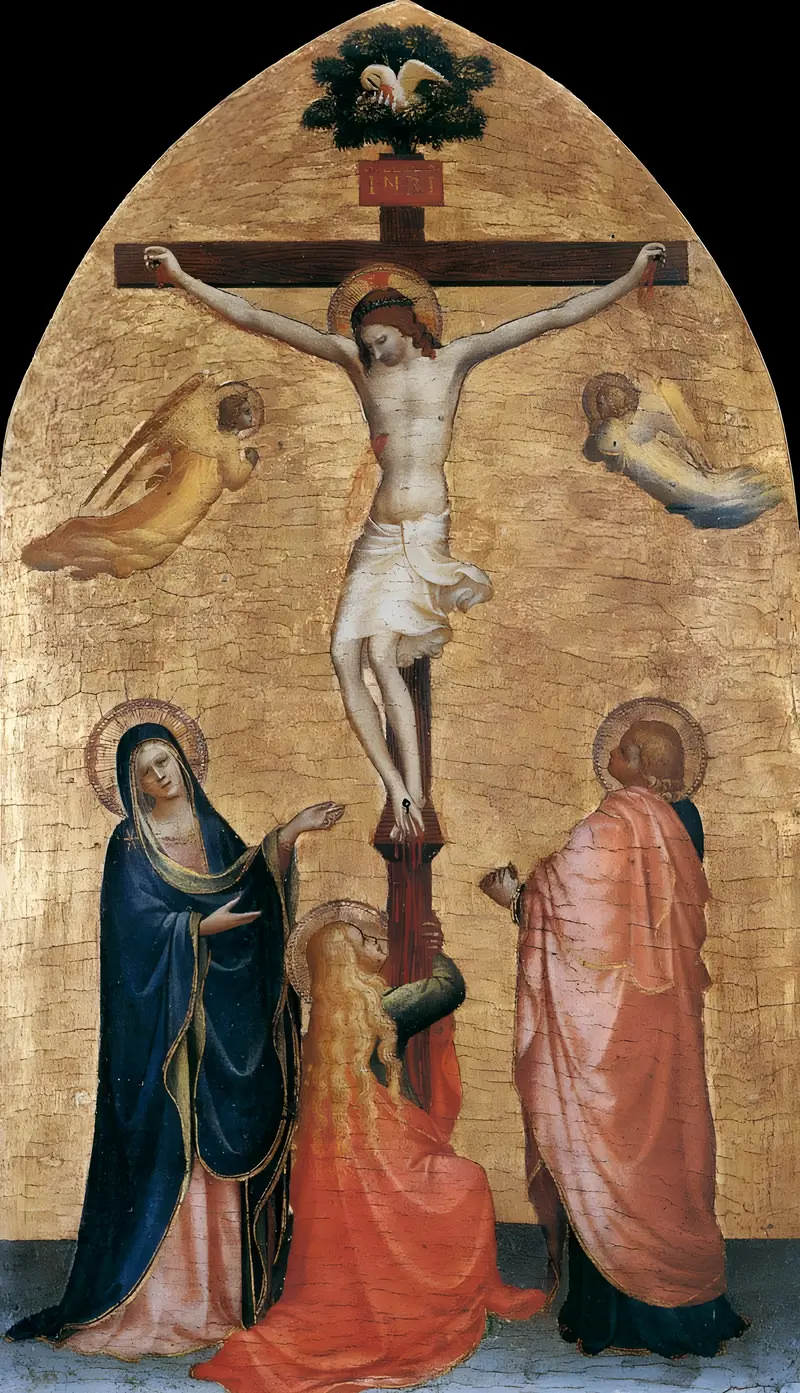
Crucifixion with the Virgin, John the Evangelist, and Mary Magdelene
Fra Angelico
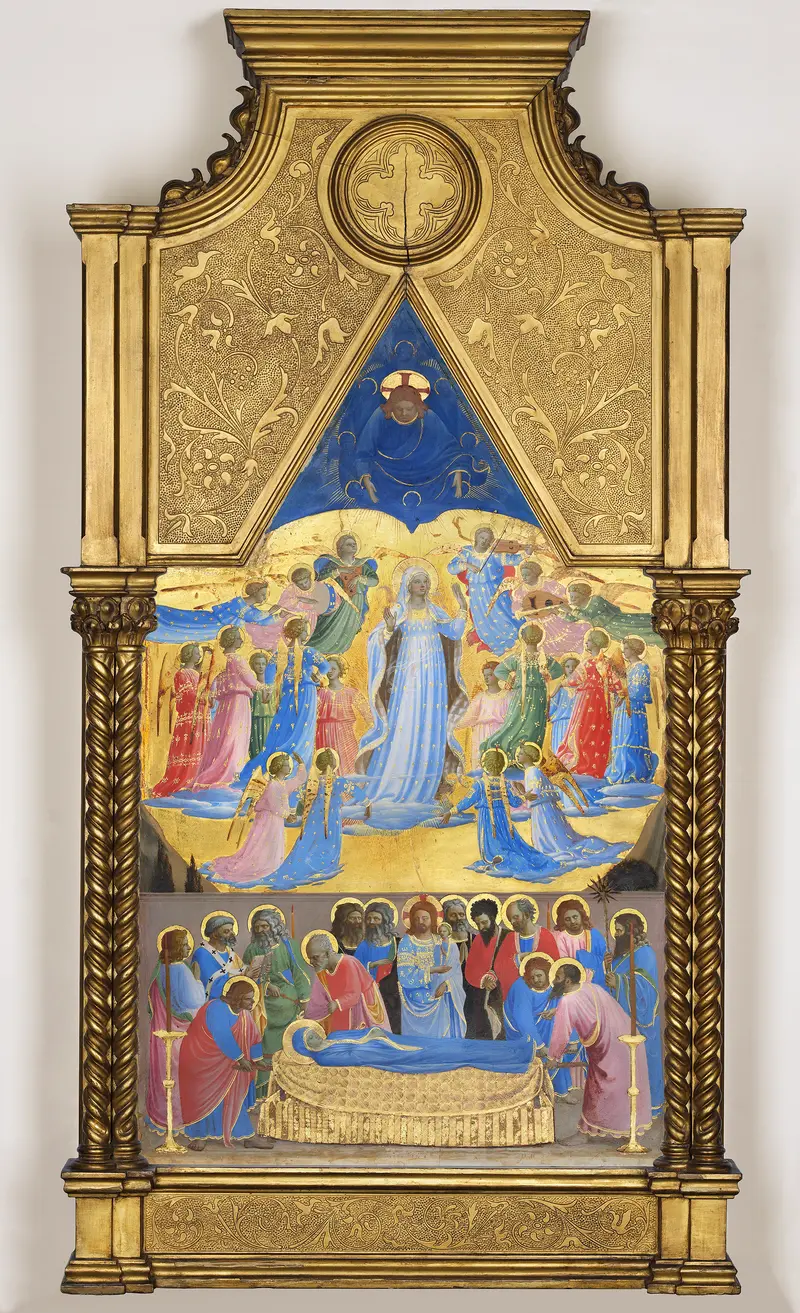
Dormition and Assumption of the Virgin
Fra Angelico
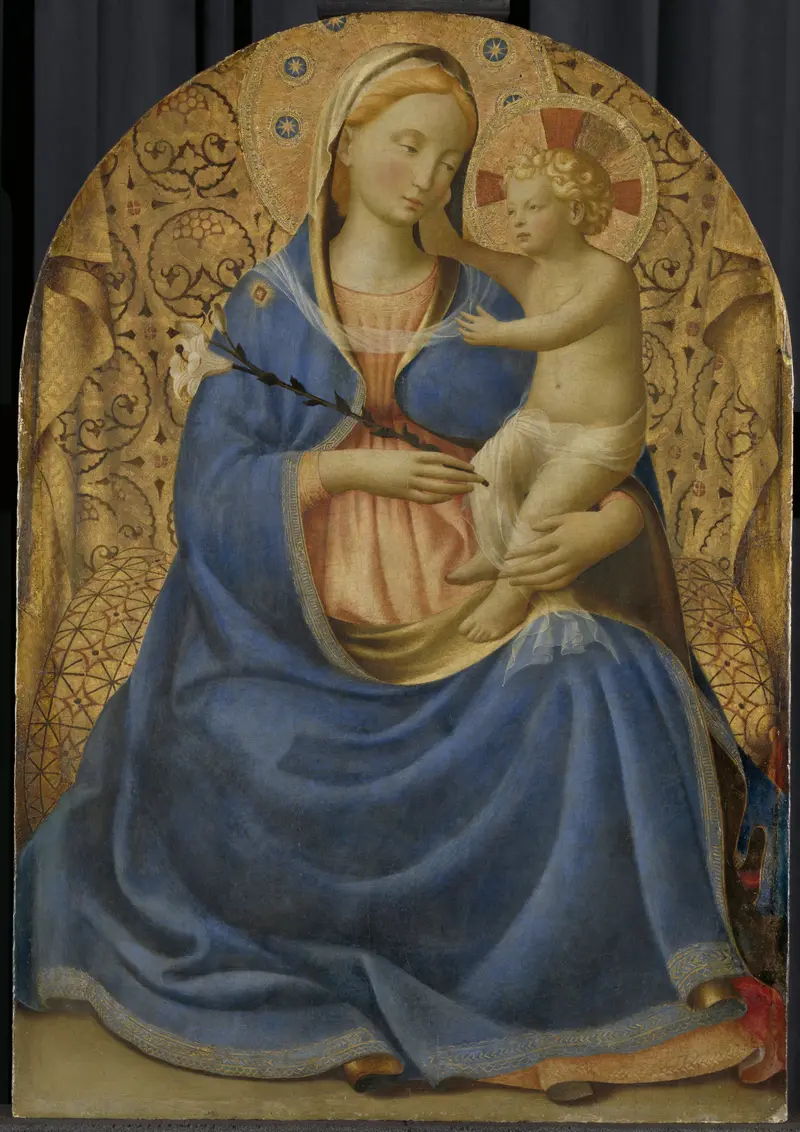
Madonna of Humility
Fra Angelico
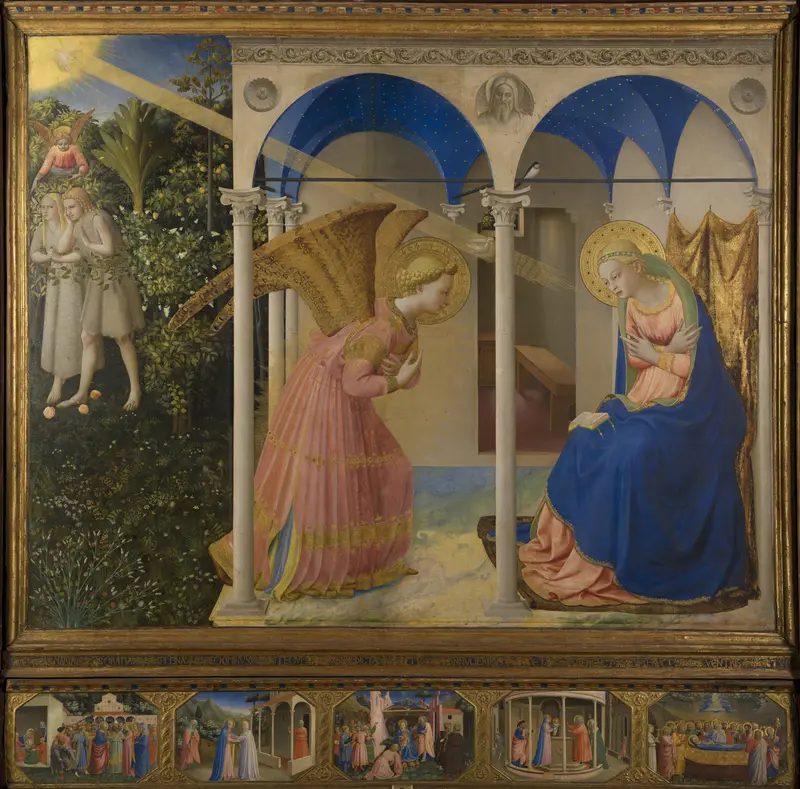
The Annunciation
Fra Angelico

Saint Anthony Abbot
Fra Angelico





