
Self-Portrait at the Easel — History & Facts
A young artist sits at his easel, caught in the act of looking back at us—interrupting his own work, as if we have just entered the studio unannounced. The light falls sharply across his face, carving out a moment of concentration and alertness amid the muted browns and ochres of the room. His hands hover, paused mid-gesture, the tools of his trade just out of sight behind the vertical bars of the canvas stretcher.
The composition is daring: the easel dominates the foreground, partially obscuring the figure, so we are forced to peer around it, much as the artist himself peers around the conventions of portraiture. The effect is intimate, almost conspiratorial, as if we are being invited to witness not just the making of a painting, but the making of an artist. Painted in 1885, this self-portrait belongs to a moment in European art when young painters, inspired by the realism of the French academies and the restless spirit of modernity, began to claim their own identities and spaces. The sparse setting, with its bare floor and stacked stretchers, speaks to the realities of a working studio rather than the trappings of success.
Such images were rarely commissioned; they were statements of intent, declarations of presence in a rapidly changing art world. Akseli Gallen-Kallela would later become a central figure in Finnish art, but here, in the collection of Cutler Miles, we see him at the threshold—testing his own gaze, and ours. Let your eye linger on that steady look: it is both a challenge and an invitation.
More Artworks by Akseli Gallen-Kallela
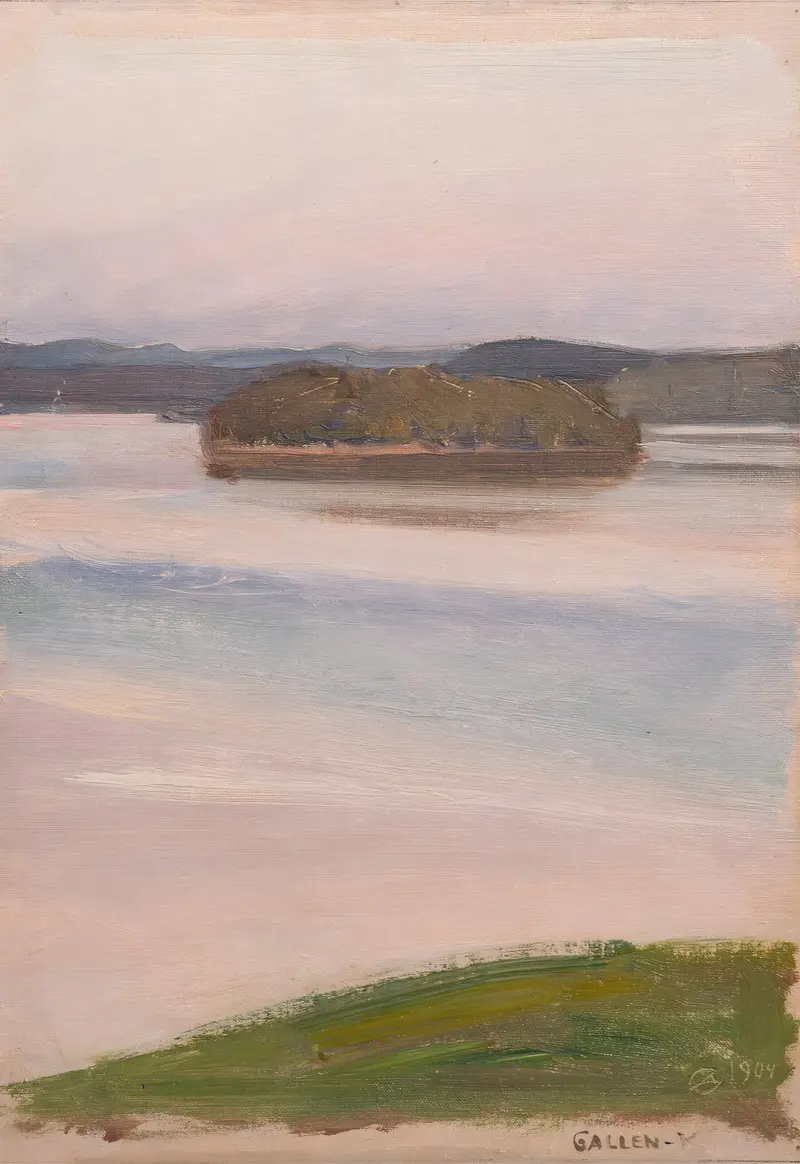
Lake Keitele
Akseli Gallen-Kallela
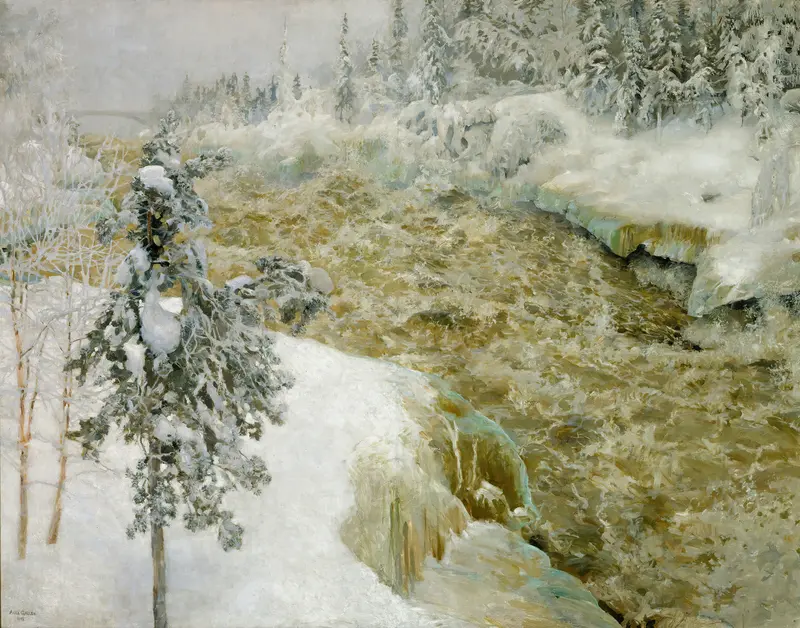
Imatra Falls in Snow ; Imatra in Winter
Akseli Gallen-Kallela
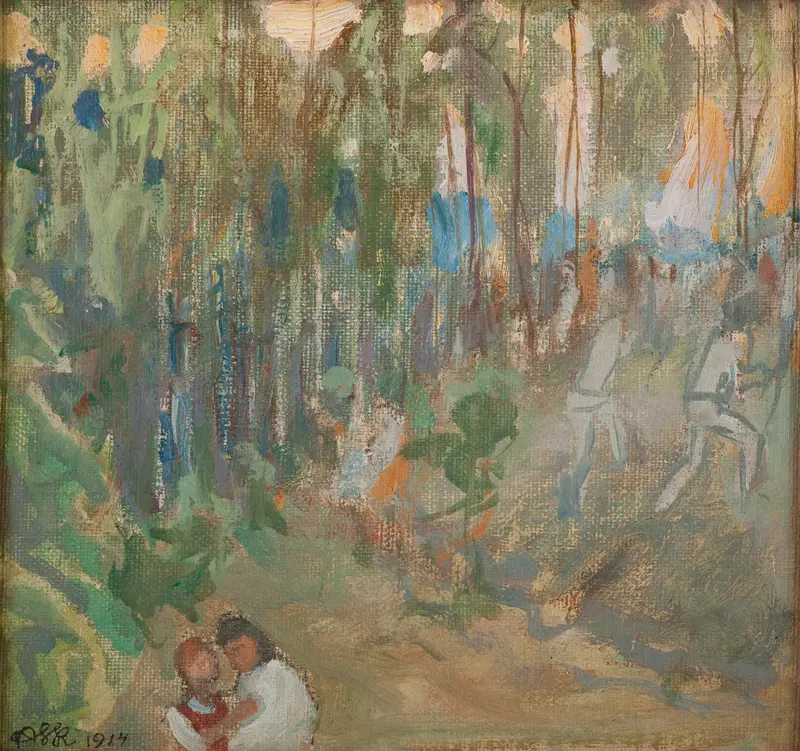
Vainovalkeat
Akseli Gallen-Kallela
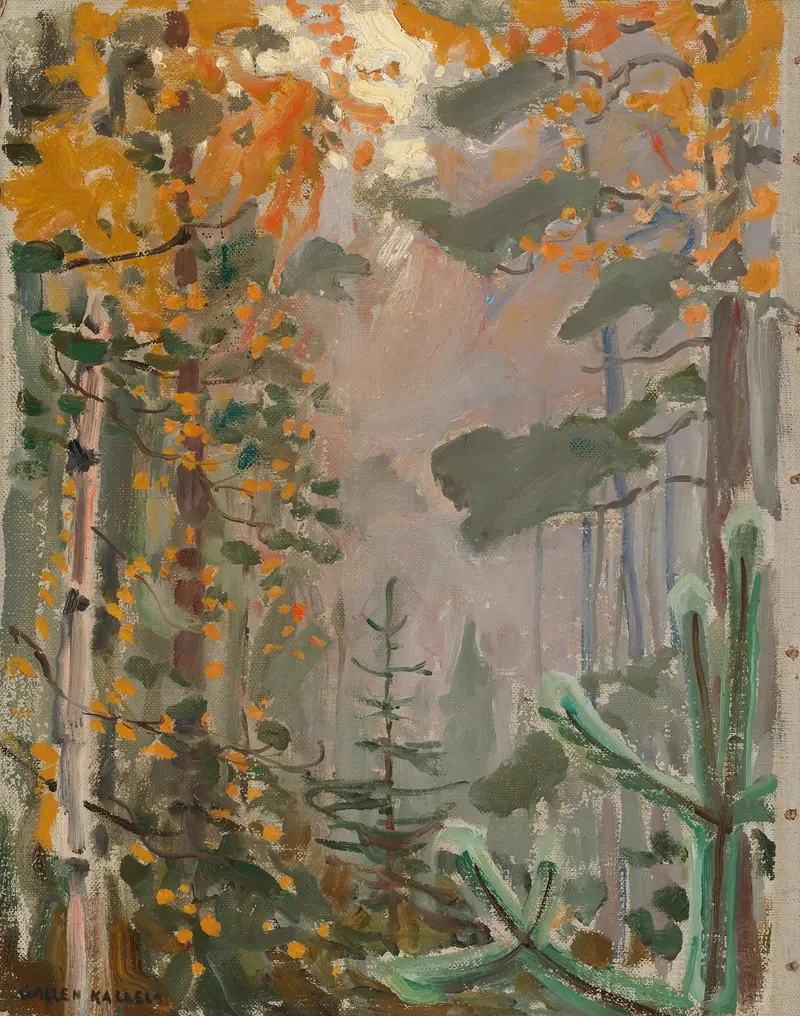
Autumn Landscape
Akseli Gallen-Kallela
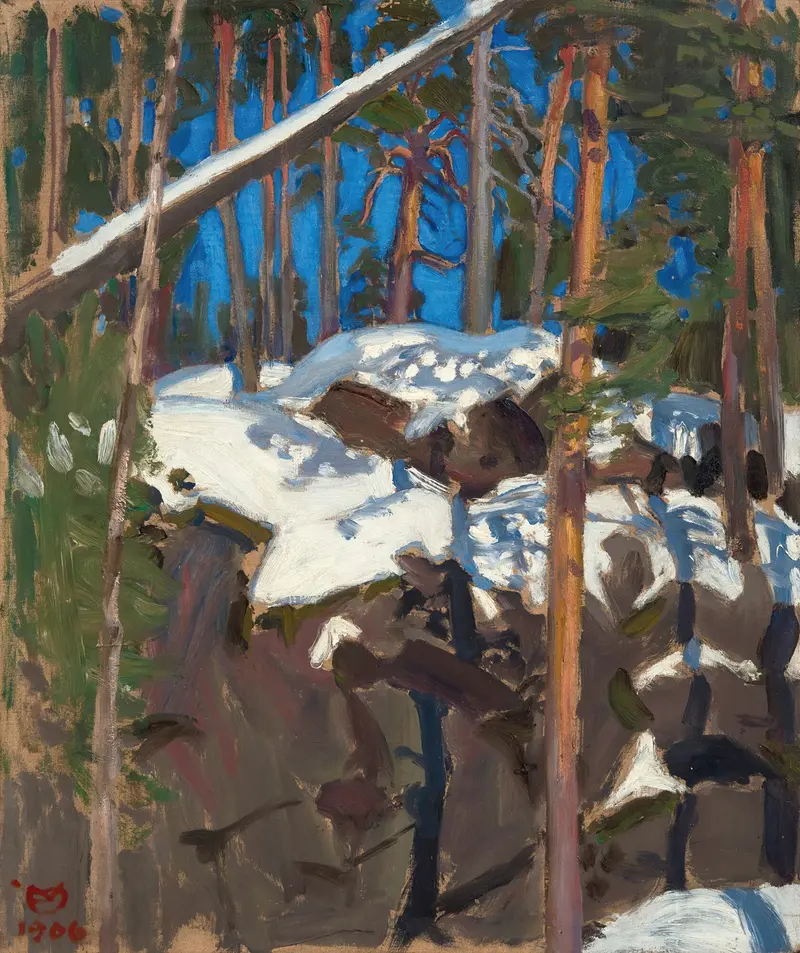
Spring Sun At Konginkangas
Akseli Gallen-Kallela
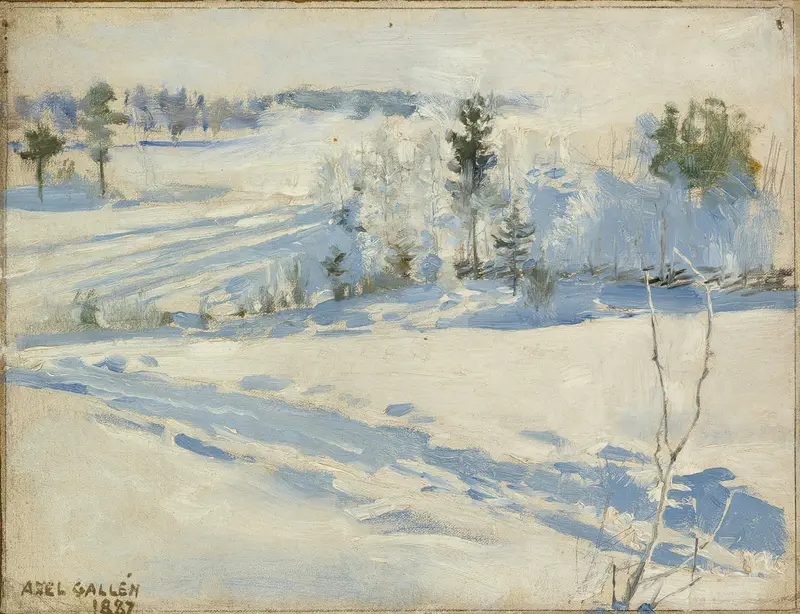
Winter Landscape
Akseli Gallen-Kallela

First Snow
Akseli Gallen-Kallela
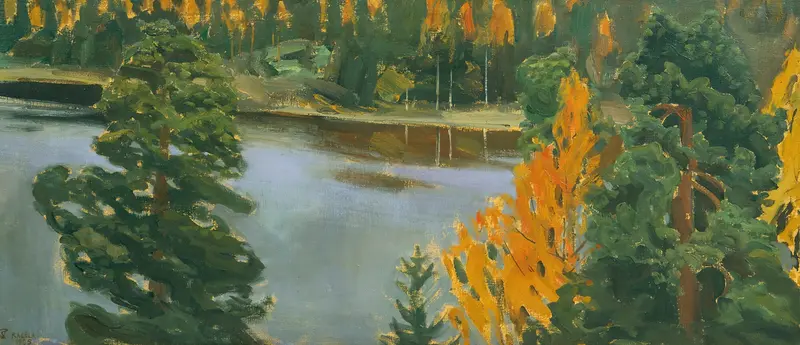
Lake View In Autumn
Akseli Gallen-Kallela
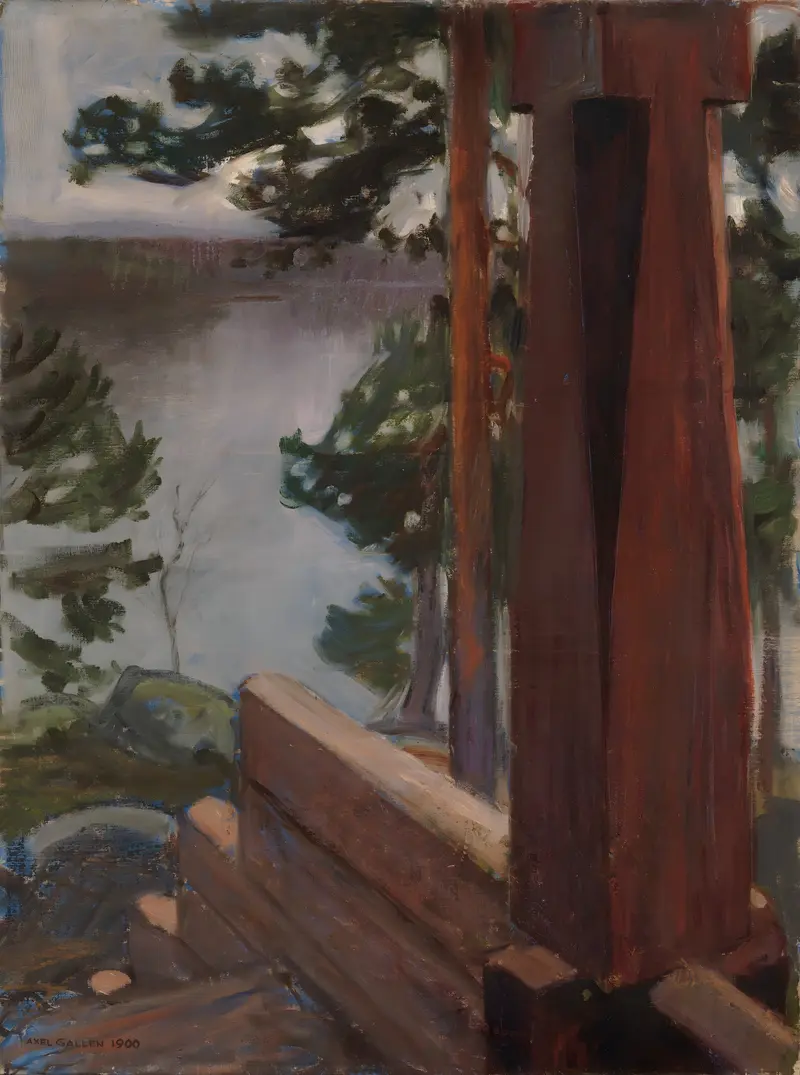
The Kalela Porch
Akseli Gallen-Kallela

Light Behind The Clouds
Akseli Gallen-Kallela





