
Sigismund Augustus and Barbara at the Radziwiłł court in Vilnius — History & Facts
When Jan Matejko completed Sigismund Augustus and Barbara at the Radziwiłł court in Vilnius in 1867, he chose to immortalize one of the most controversial royal romances in Polish-Lithuanian history. The union of Sigismund II Augustus, the last Jagiellonian king, and Barbara Radziwiłł was a scandal that shook the court and divided the nobility in the 1540s. Their secret marriage, revealed in 1547, sparked outrage among the Polish senate, who saw Barbara as a threat to dynastic stability and royal protocol.
Matejko’s painting is not only a record of a forbidden love, but also a commentary on the power struggles and personal sacrifices that shaped a nation. The scene captures the lovers at the Radziwiłł palace in Vilnius, moments before their marriage is exposed to the world. Sigismund, dressed in regal black, leans protectively toward Barbara, whose pale face and delicate hands betray both love and anxiety. Around them, courtiers in sumptuous Lithuanian dress exchange wary glances, their postures tense with anticipation and disapproval.
Matejko’s use of deep, dramatic light isolates the couple in a pool of intimacy, while the heavy tapestries and gilded furnishings signal the wealth and political influence of the Radziwiłł family. Unlike Rembrandt’s more introspective royal portraits, Matejko’s composition is crowded and theatrical, emphasizing the public consequences of private passion. The exact medium of Sigismund Augustus and Barbara at the Radziwiłł court in Vilnius remains uncertain, though Matejko typically worked in oil on canvas. The painting was created early in Matejko’s career, as he was establishing himself as the leading historical painter of the Polish lands.
Today, it stands as a key example of his lifelong dedication to national history and identity, a theme that would culminate in later works such as The Prussian Homage. While the painting’s early provenance is not fully documented, it is now recognized as an important piece in the narrative of 19th-century Polish art, reflecting both the artist’s meticulous research and his flair for drama.
More Artworks by Jan Matejko
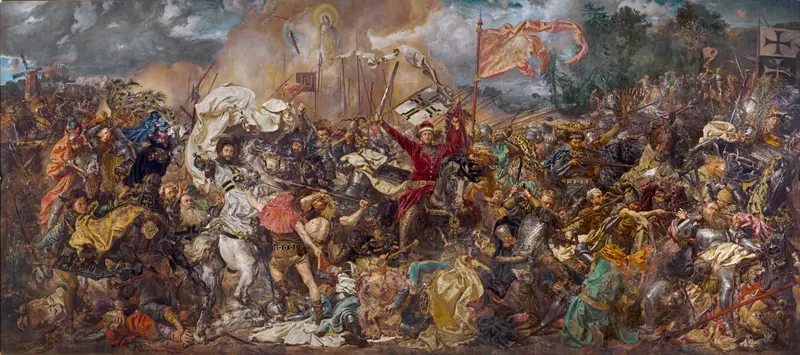
Battle of Grunwald
Jan Matejko

Stańczyk
Jan Matejko

Battle of Raclawice
Jan Matejko
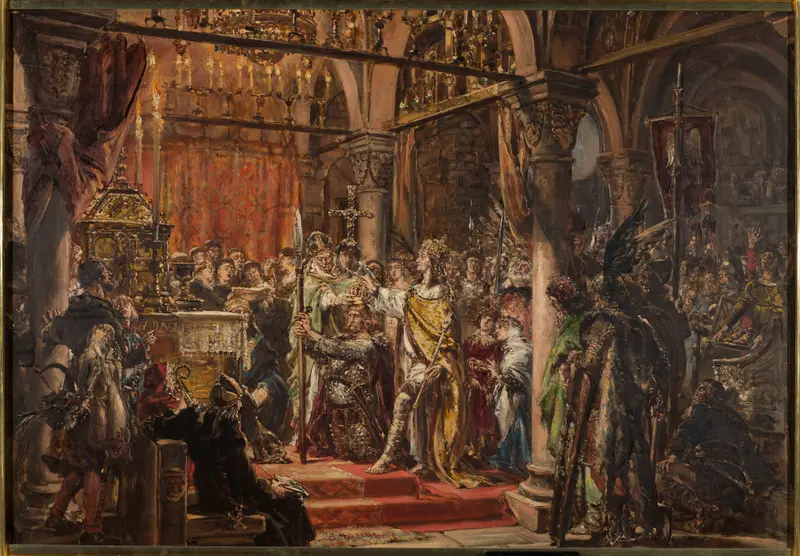
Coronation of the First King, 1001 AD, from the series “History of Civilization in Poland”
Jan Matejko
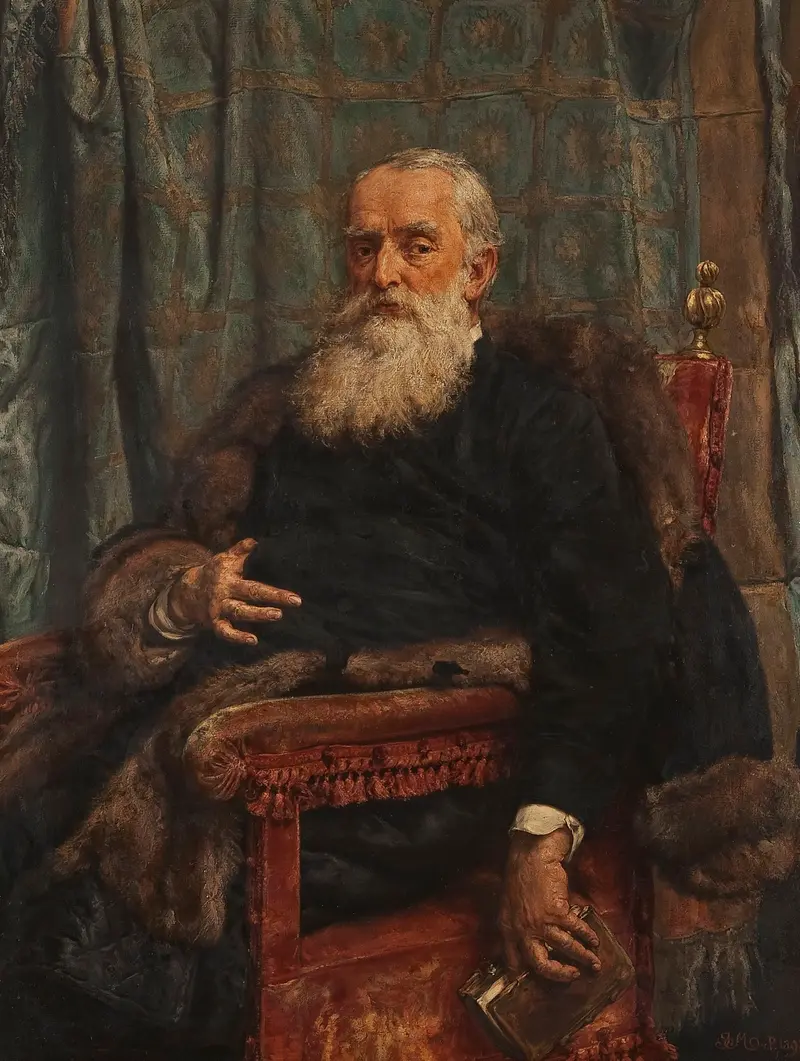
Portrait of Henryk Krajewski
Jan Matejko
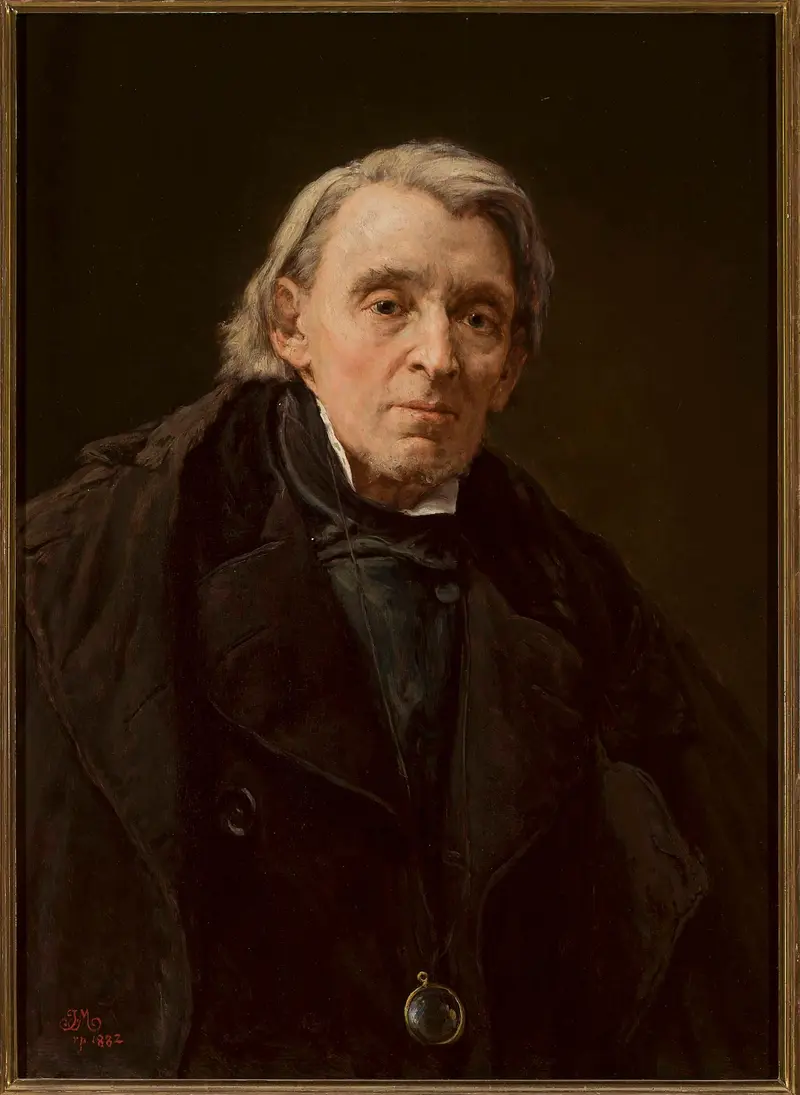
Portrait of Karol Podlewski
Jan Matejko
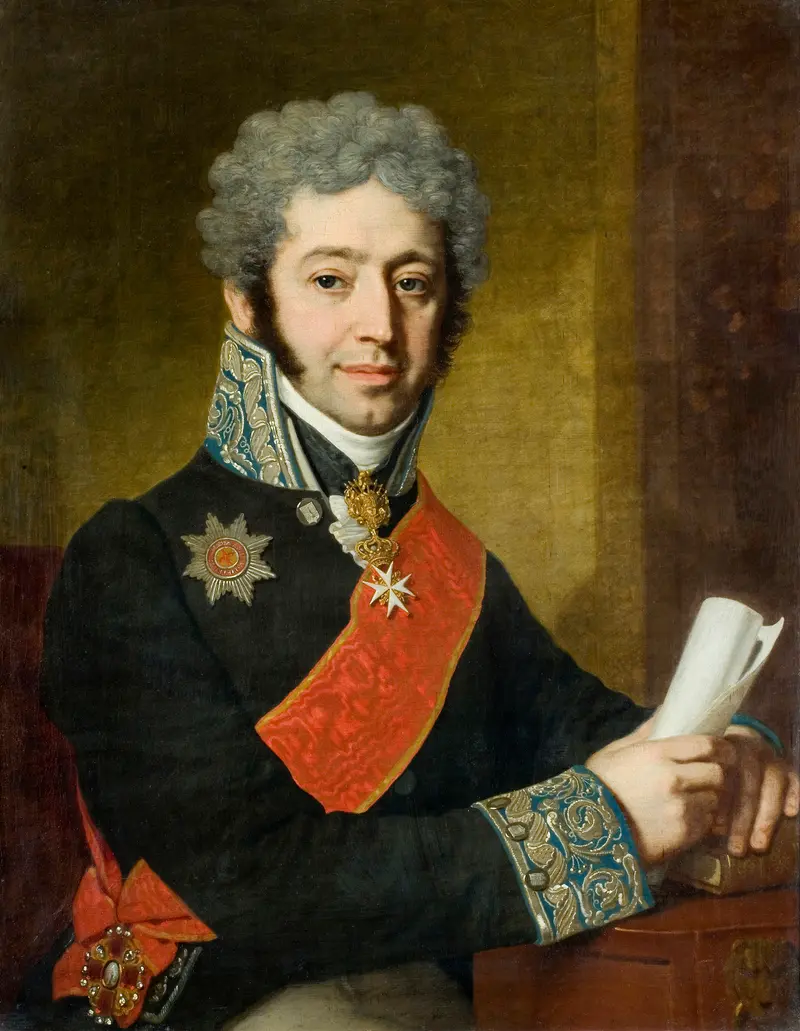
Portrait of Potocki and Poninski
Jan Matejko
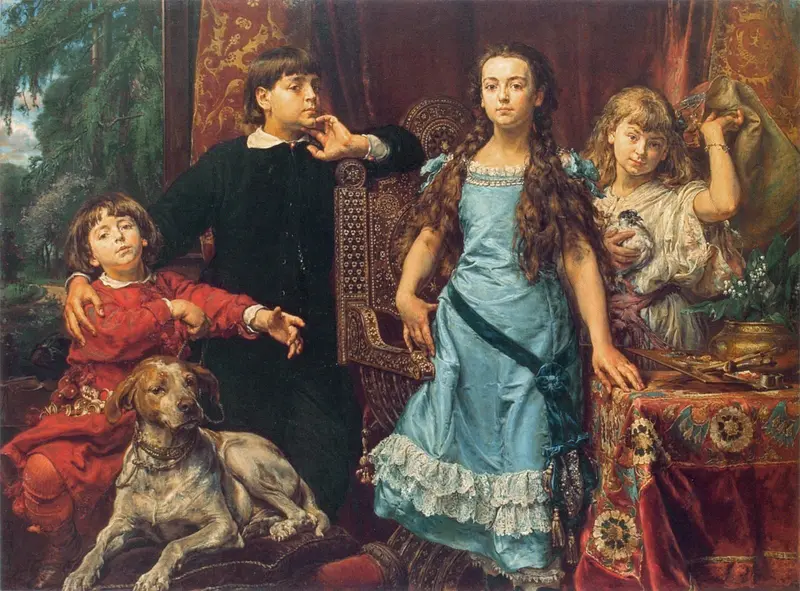
Portrait of the artist's four children
Jan Matejko
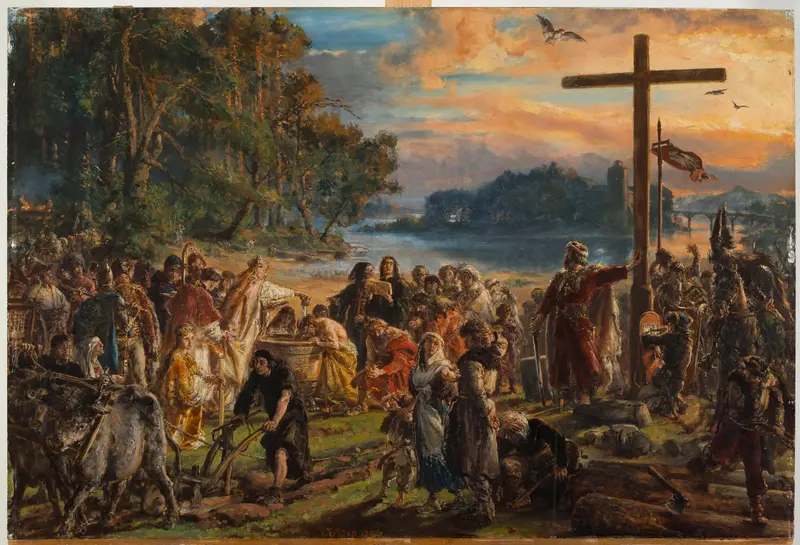
Introduction of Christianity in Poland
Jan Matejko
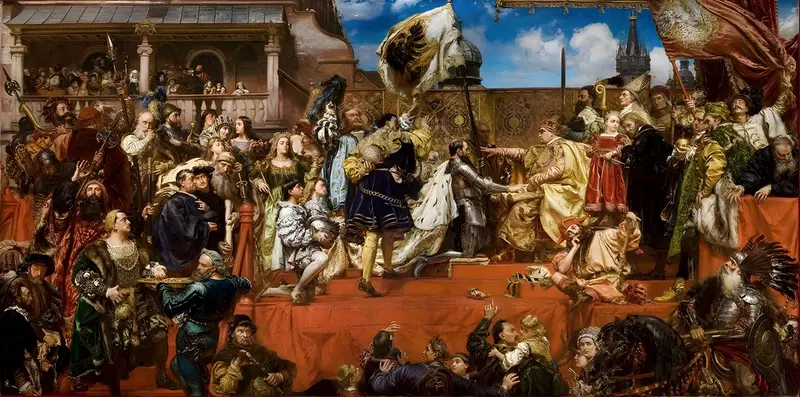
Prussian Homage
Jan Matejko





