
Signboard of a wineshop: tasting the wine (one side); barreling the wine (other side) — History & Facts
The first thing that catches the eye is the quiet drama of the wine-taster’s gesture, arm outstretched toward the daylight, glass raised high as if to catch both the color of the vintage and the judgment of the world outside. Light pours in from the open doorway, illuminating the glass and the taster’s silhouette, while the rest of the room recedes into shadow. The seated figure, slouched in a posture of satisfied exhaustion, suggests the pleasures and labors that fill this dim interior.
Every object—barrels, baskets, even the dog at the man’s feet—serves to root the scene in the everyday work of a wine merchant’s shop, yet the composition lifts it above the ordinary, inviting us to linger on the ritual of tasting and the camaraderie of trade. Painted between 1640 and 1650, this signboard by Aelbert Cuyp belongs to a world where such images were both advertisement and story, hanging outside shops to attract customers with a promise of quality and conviviality. In the bustling Dutch towns of the Golden Age, wine merchants commissioned painted boards like this one not only to mark their trade but to signal trustworthiness and pride in their product. The fact that this object survives in the collection of the Rijksmuseum today is a rare stroke of luck, as so many utilitarian works have vanished with time.
Its double-sided nature—one side for tasting, the other for barreling—reminds us of the cycle of commerce and craft that shaped daily life, and invites us to imagine the countless passersby who once paused to study its painted story.
More Artworks by Aelbert Cuyp

The Maas at Dordrecht
Aelbert Cuyp
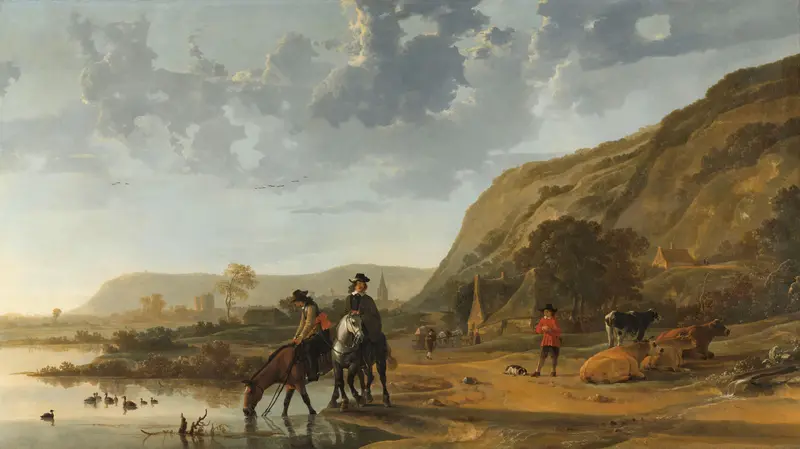
River Landscape with Riders
Aelbert Cuyp

The Maas at Dordrecht
Aelbert Cuyp
Gezicht op Dordrecht
Aelbert Cuyp
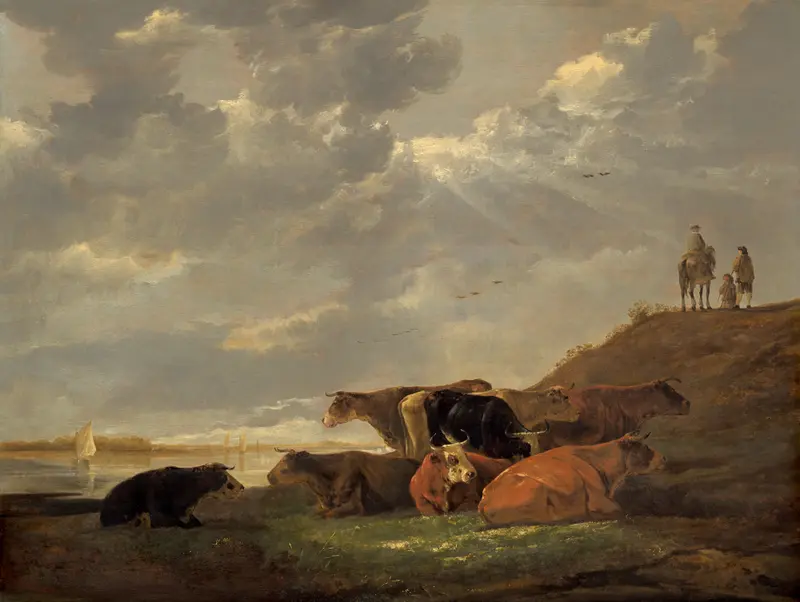
River Landscape with Cows
Aelbert Cuyp
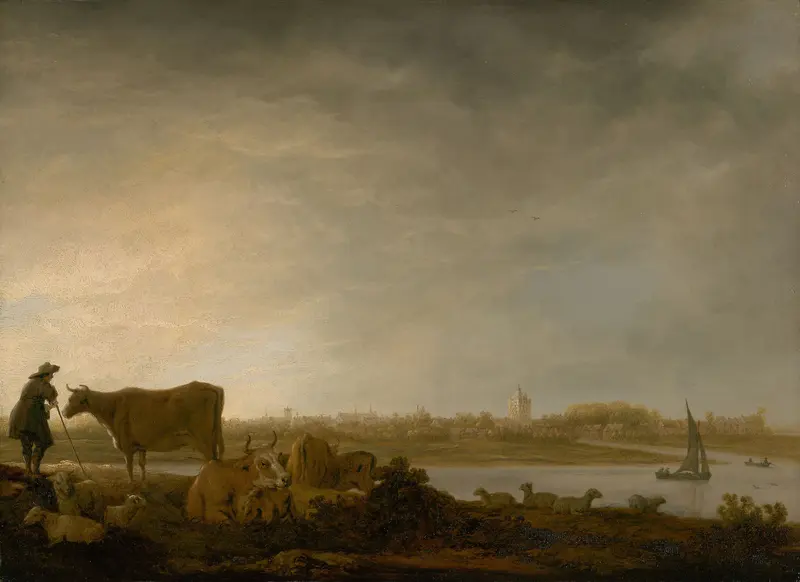
A View of Vianen with a Herdsman and Cattle by a River
Aelbert Cuyp
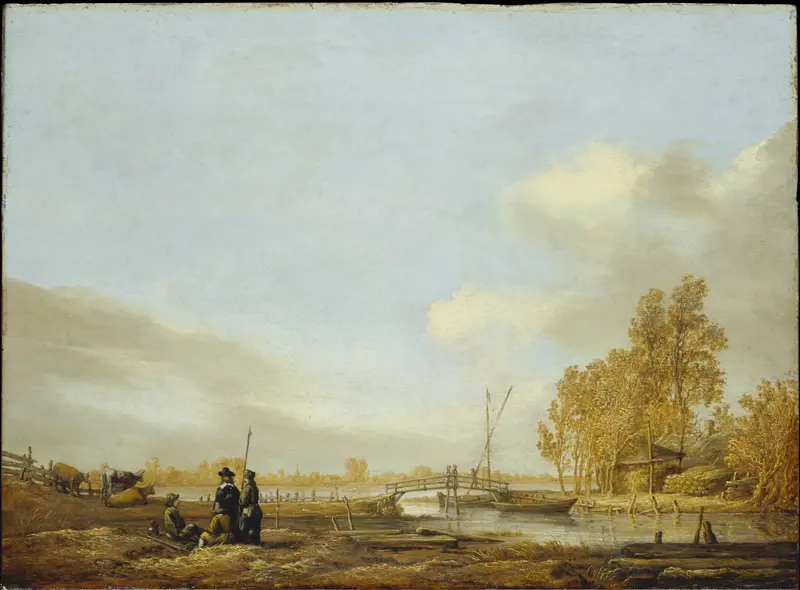
River Landscape with Footbridge
Aelbert Cuyp
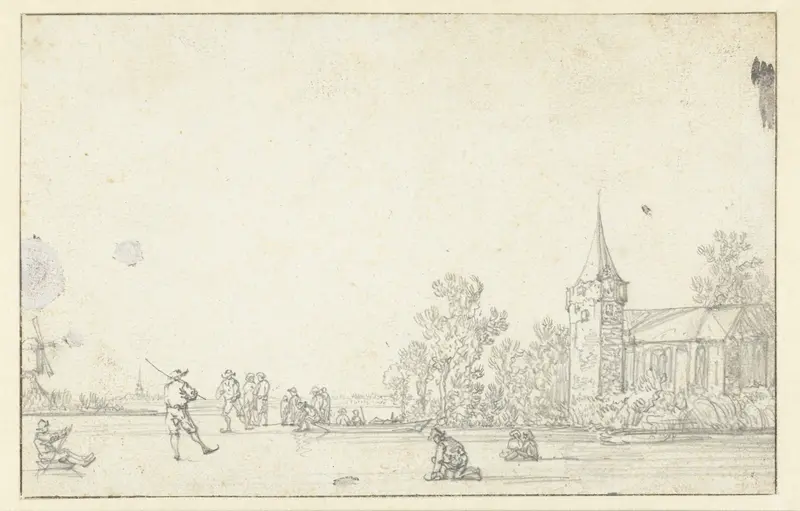
Bevroren rivier met schaatsers bij een kerk
Aelbert Cuyp

Cattle near a River
Aelbert Cuyp
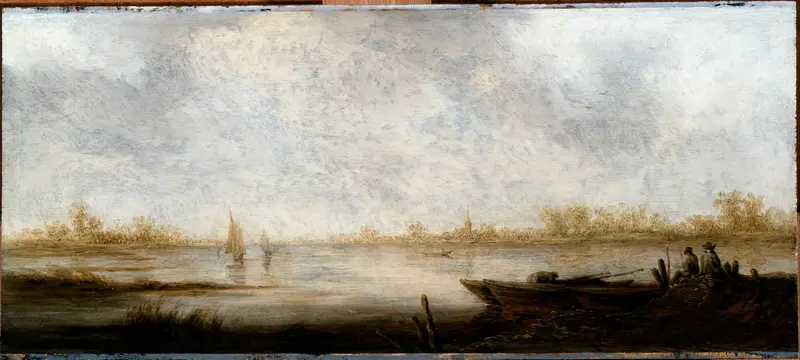
River Landscape
Aelbert Cuyp
More Genre Scene Art

Banquet of the Officers of the St George Civic Guard
Frans Hals

Rembrandt and Saskia in the Scene of the Prodigal Son
Rembrandt van Rijn

Bal du moulin de la Galette
Pierre-Auguste Renoir

Quadrille at the Moulin Rouge
Henri de Toulouse-Lautrec

A Burial at Ornans
Gustave Courbet

When Will You Marry?
Paul Gauguin