
Some houses on the outskirts of Køge. — History & Facts
The first thing that seizes the eye in Some houses on the outskirts of Køge is the way the bare trees carve their presence against a sky of shifting greys and blues, their branches twisting and sprawling like veins across the canvas. The houses huddle beneath these trees, their roofs slanting at odd angles, the paint on their walls faded and patchy, as if the years have worn them thin. The earth in the foreground is rough, almost muddy, and the low, wintry light glances off the gables and the tangled undergrowth, drawing your gaze from the stark geometry of the buildings to the wild, organic forms of the trees.
The palette is subdued, almost somber, yet there is a quiet dignity in the way the scene is constructed—every brushstroke seems to weigh the stillness of this edge-of-town moment, capturing a pause in the slow rhythm of rural life. Created in 1895, this work by Albert Gottschalk belongs to a period when Danish artists were turning their attention to the everyday landscapes of their homeland, often seeking out the overlooked corners and humble outskirts rather than grand vistas or historical sites. Such paintings were rarely commissioned; instead, they were labors of observation, meant to capture the changing face of the countryside as Denmark modernized. The houses here, with their patched roofs and plain facades, speak to a world in transition—neither untouched by time nor overtaken by progress.
Little is recorded about this specific painting, which is now in the collection of bruun-rasmussen.dk, but its quiet presence invites viewers to linger, to trace the lines of the trees, and to imagine the lives unfolding just beyond those shuttered windows.
More Artworks by Albert Gottschalk
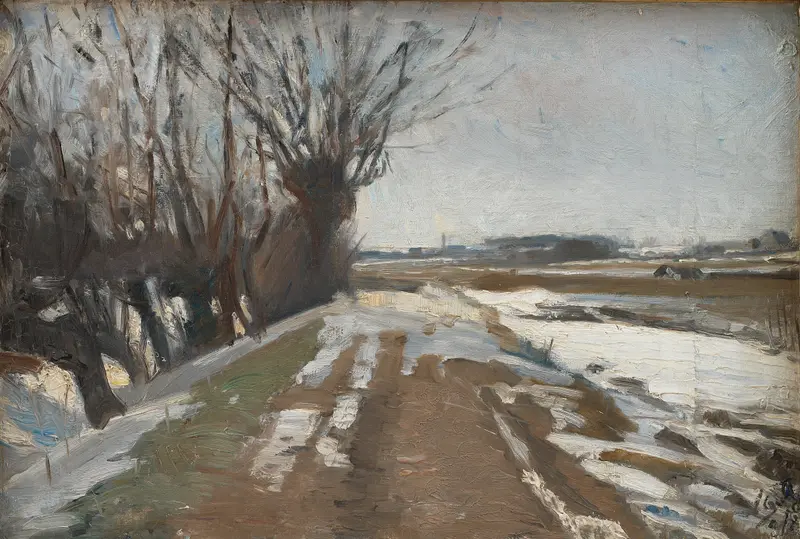
Winter Landscape. Utterslev near Copenhagen
Albert Gottschalk
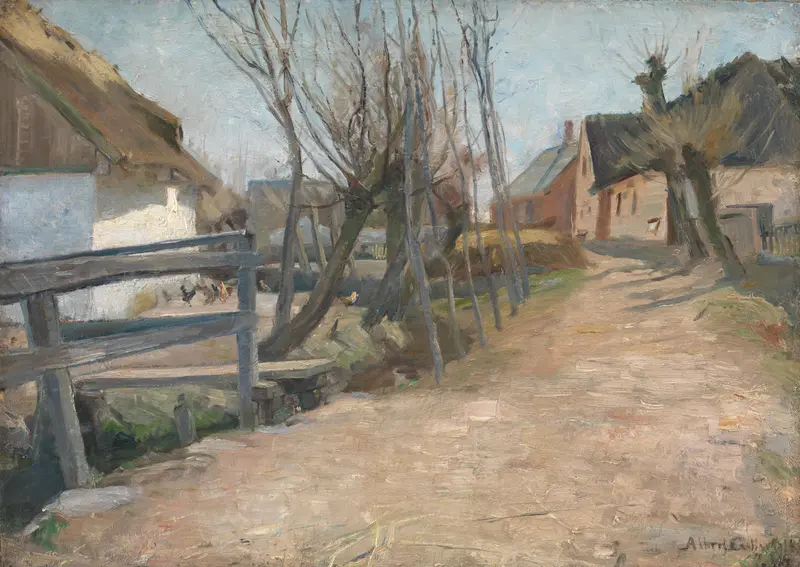
Tidlig forårsdag i Glostrup
Albert Gottschalk
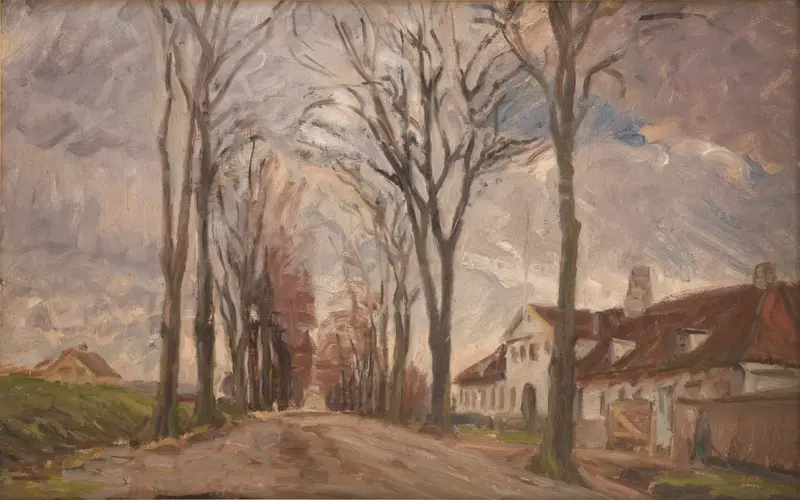
Lyngbyvejen ved Vintappergården
Albert Gottschalk
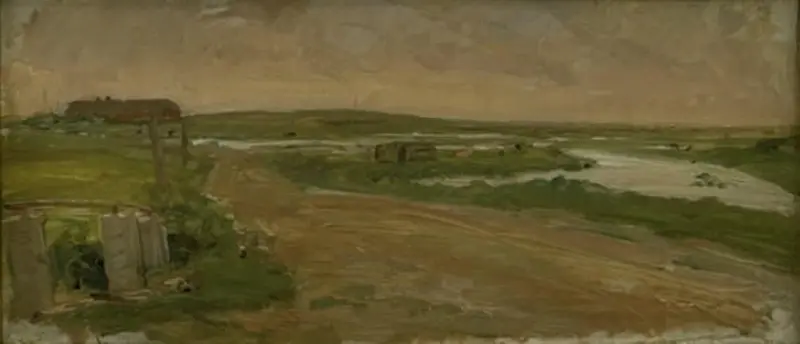
Vestjysk landskab. Holmsland
Albert Gottschalk
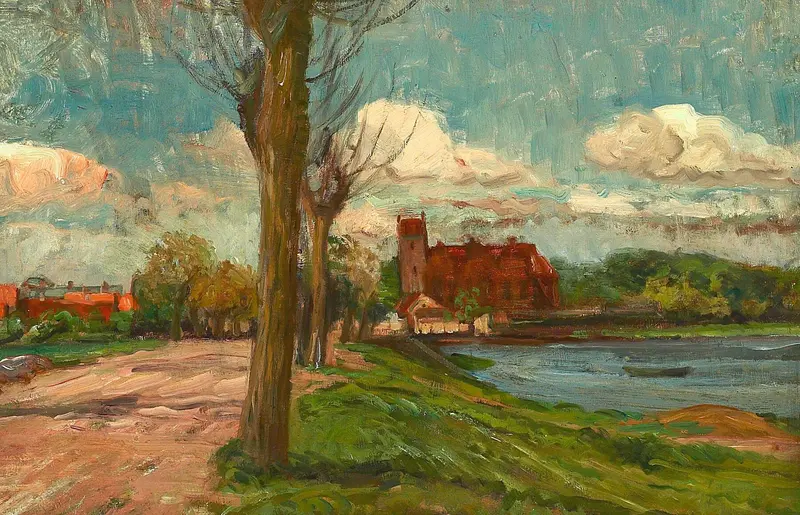
A road leading to a small town with a church.
Albert Gottschalk
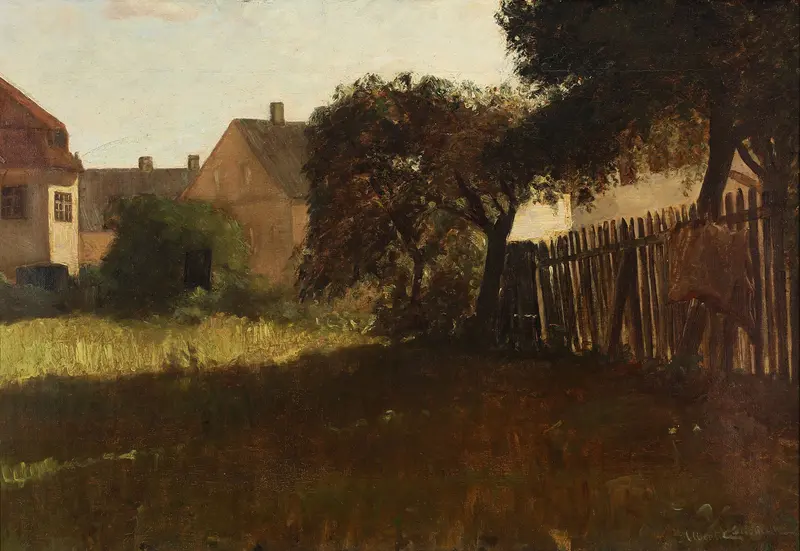
A summer day in a Garden in Vesterbro, Copenhagen
Albert Gottschalk
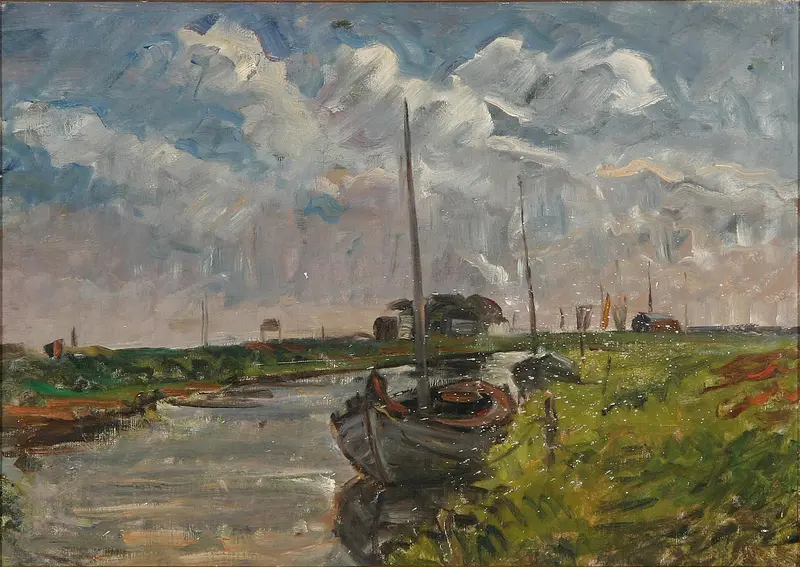
A canal with a boat.
Albert Gottschalk
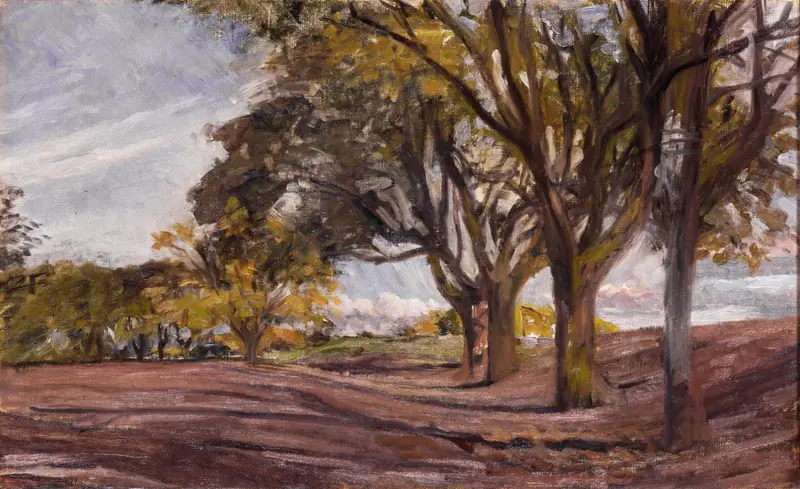
Chestnut Avenue at the Hermitage.
Albert Gottschalk
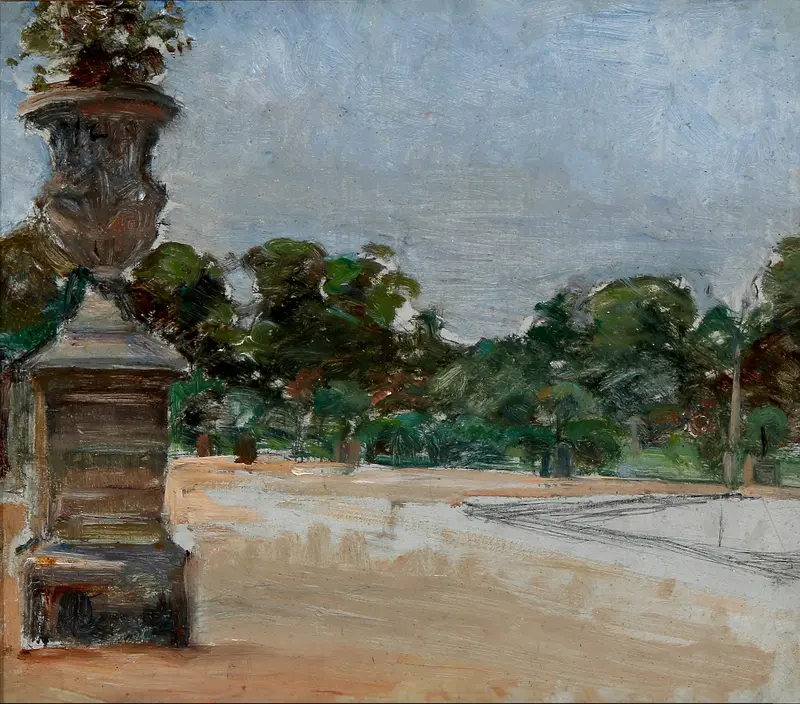
From the Tuileries Garden in Paris
Albert Gottschalk
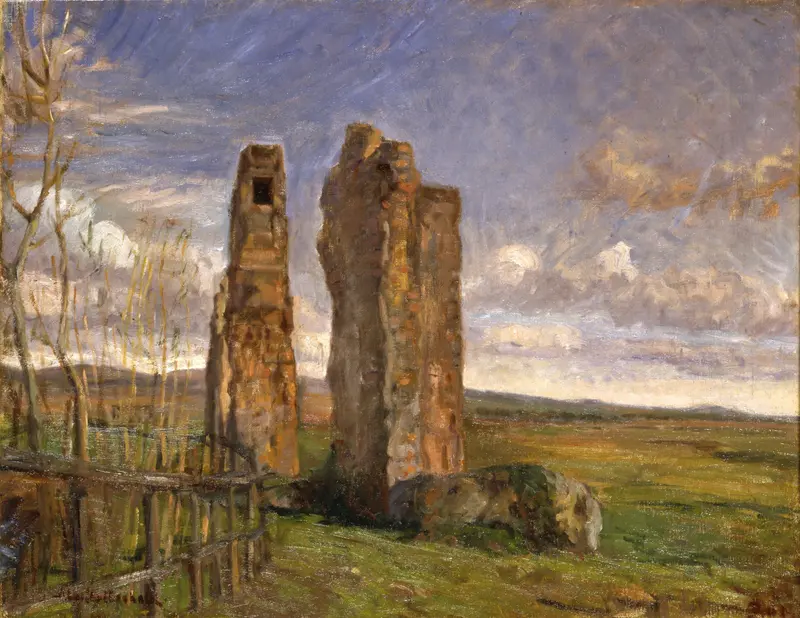
Ruins in Campagna
Albert Gottschalk
More Landscape Art

The Starry Night
Vincent van Gogh

View of Delft
Johannes Vermeer

Water Lilies
Claude Monet

The Grand Canal, Venice, looking north-west from the Ca' Corner to the Ca' Contarini degli Scrigni, with the campanile of Santa Maria della Carità
Canaletto

Windsor Castle
Canaletto

The Grand Canal looking North-East from the Palazzo Dolfin-Manin to the Rialto Bridge
Canaletto