Spring Garden, Plate 6 (Hortus Eystettensis) — History & Facts
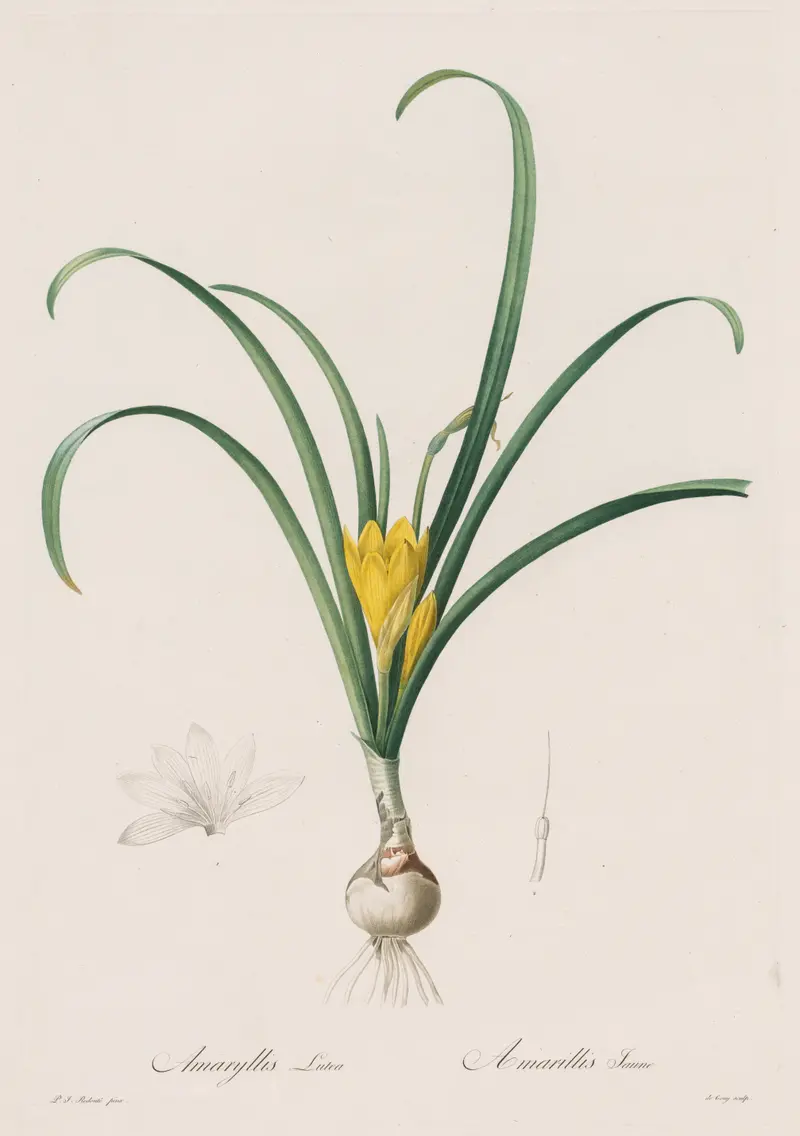
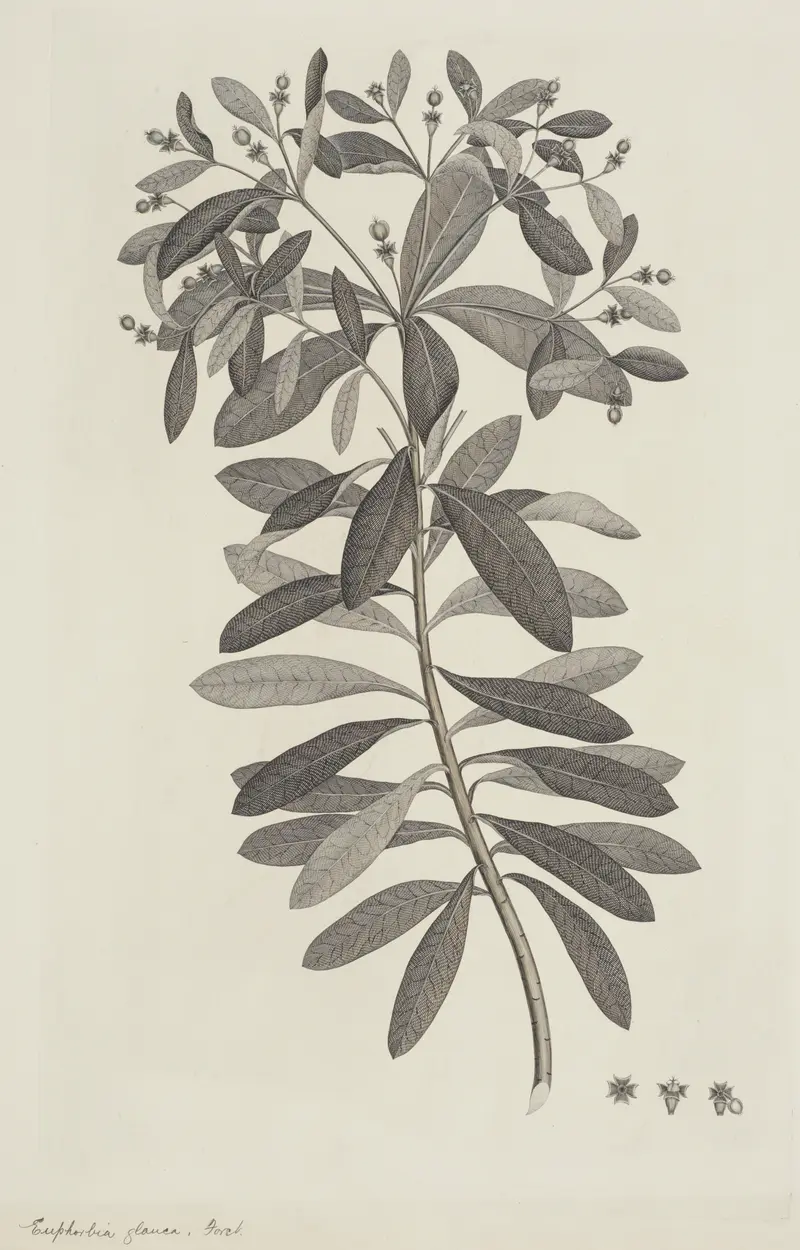
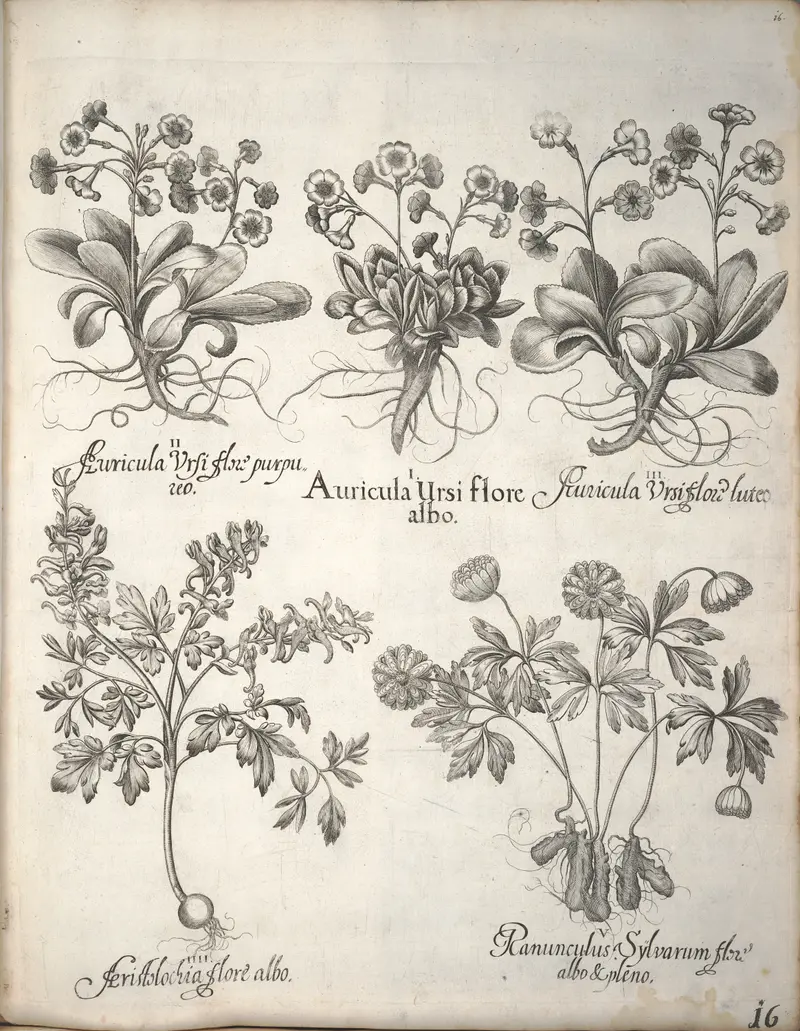
What first draws the eye in Spring Garden, Plate 6 (Hortus Eystettensis) by Basilius Besler is the quiet precision with which each plant is rendered—three distinct species, each standing upright and isolated, as if on a stage. The central pistachio, flanked by laurel and almond, commands attention with its branching stems and clusters of fruit, while the delicate blossoms and leaves of its companions are drawn with a clarity that invites close inspection. The artist’s use of fine, controlled line creates a sense of volume and texture, guiding the viewer from the curling tips of each leaf to the subtle shading at the base of the stems.
There is no background to distract; the focus is absolute, the mood one of studious observation, as if the viewer has been invited into a botanist’s private archive. This engraving belongs to a world where science and art were newly entwined, and the garden was both a site of beauty and a living encyclopedia. Published in 1640, this plate comes from an era when botanical illustration was essential for scholars, physicians, and collectors eager to catalogue the riches of nature. The Hortus Eystettensis—from which this work is drawn—was a landmark project, created to document the plants of a single, remarkable garden.
Though the details of this specific plate’s journey remain obscure, its presence in an online archive today is a testament to the enduring fascination with the intersection of art, science, and the natural world. The next time you look, let your eye linger on the careful articulation of each leaf and flower—each one a record of discovery.
More Artworks by Basilius Besler
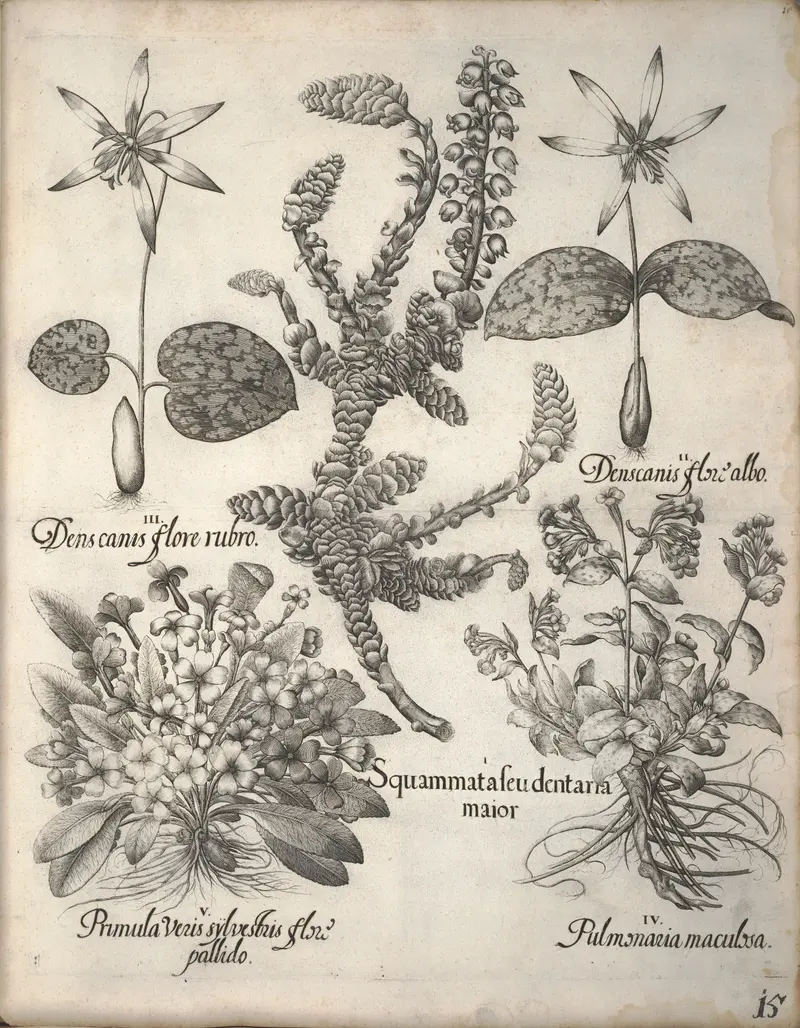
Spring Garden, Plate 15 (Hortus Eystettensis)
Basilius Besler
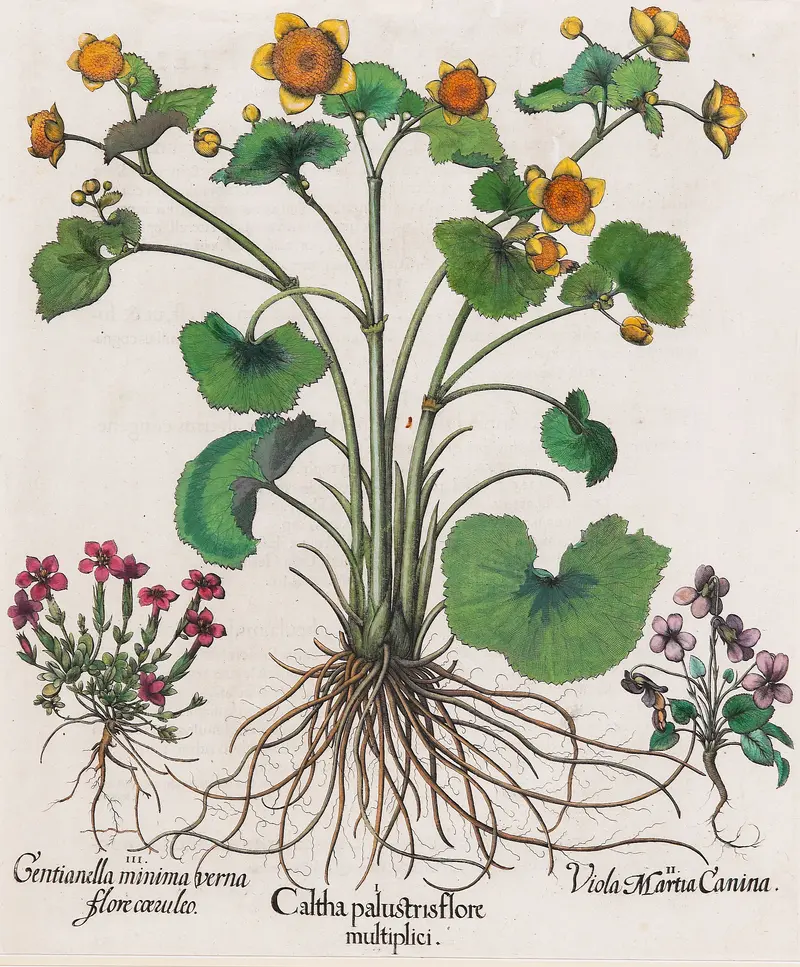
Marsh Marigold (Caltha palustris)
Basilius Besler

Tulips (Hortus Eystettensis)
Basilius Besler

Tulips II (Hortus Eystettensis)
Basilius Besler

Snapdragons (Antirrhinum)
Basilius Besler
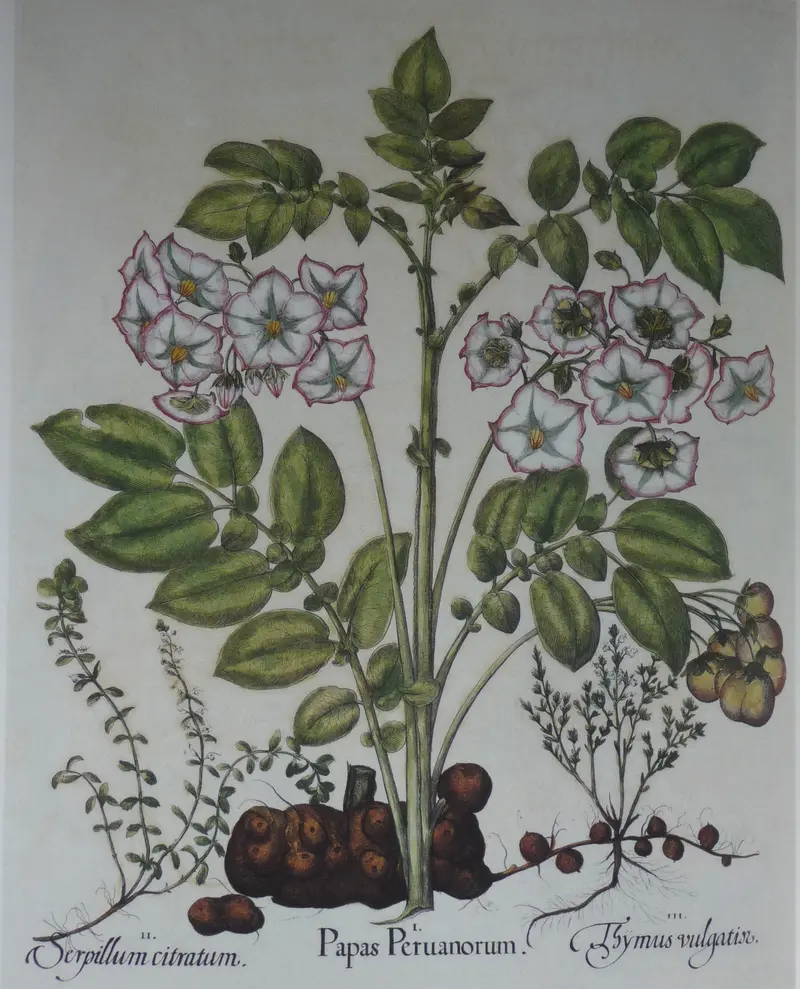
Peruvian Potato Flower (Papas Peruanorum)
Basilius Besler
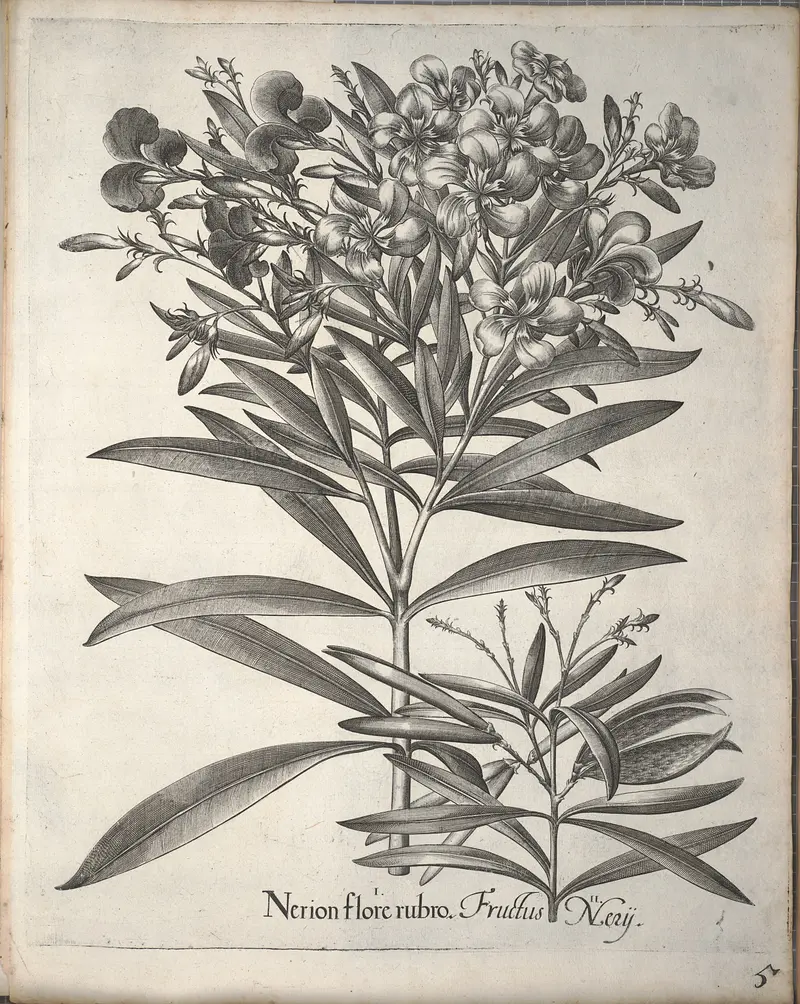
Summer Garden, Plate 5 (Hortus Eystettensis)
Basilius Besler
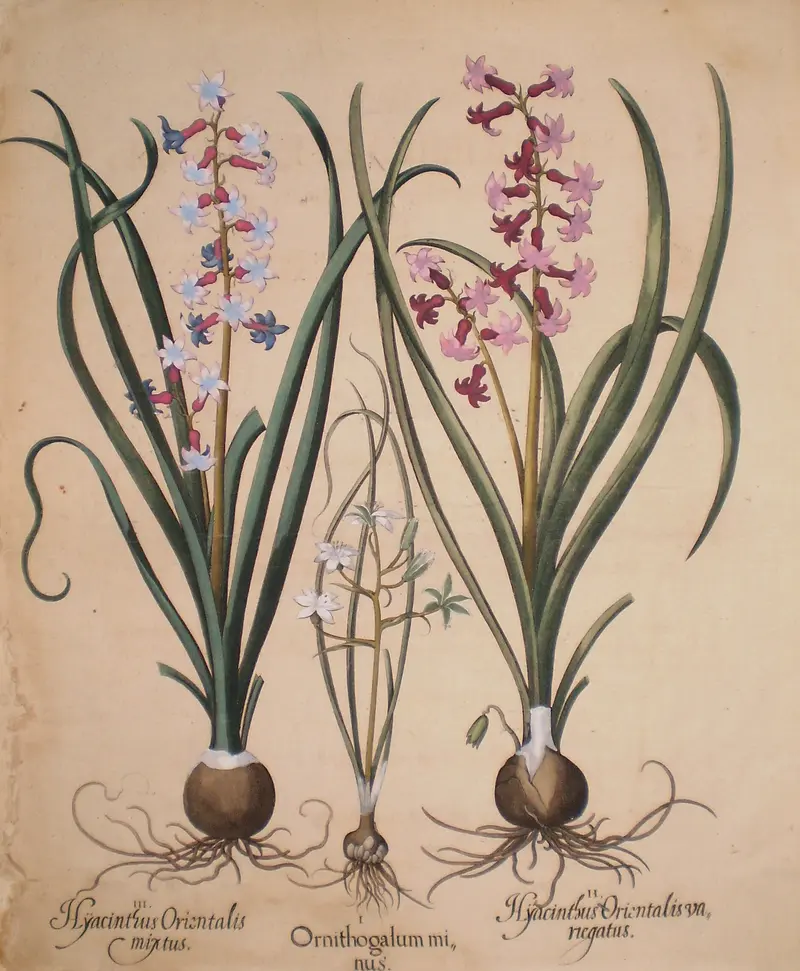
Hyacinths and Star-of-Bethlehem
Basilius Besler
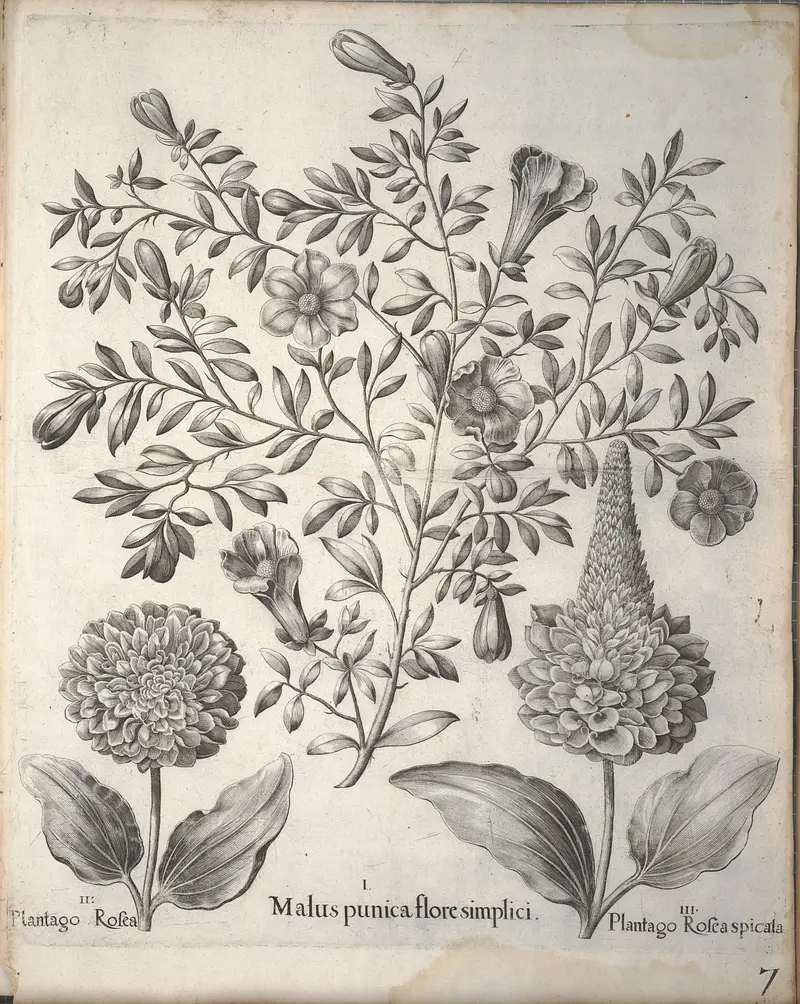
Summer Garden, Plate 7 (Hortus Eystettensis)
Basilius Besler
Spring Garden, Plate 16 (Hortus Eystettensis)
Basilius Besler