
St. Louis of Toulouse — History & Facts
What first catches the eye in St. Louis of Toulouse by Antonio Vivarini is the lavish, almost architectural presence of gold: it radiates from the saint’s halo, encrusts his mitre and vestments, and frames the entire composition in a glow that feels both regal and sacred. The young bishop’s gaze is steady but distant, as if he is listening to something beyond the frame.
Vivarini’s attention to detail is almost hypnotic—the miniature figures of saints set into the golden borders of the cope, the intricate pattern of fleur-de-lis on the blue ground, and the book held open in the saint’s left hand, its pages edged with gold and patterned like a reliquary. Every element seems to point toward the saint’s dual identity as both royal and holy, inviting the viewer to linger on each symbol and texture. Painted in the 1450s, this work belongs to a world where images were not just decoration, but instruments of devotion and teaching. In the late Gothic tradition of Venice and the Veneto, artists like Vivarini created such panels for altars, chapels, and private prayer, serving both as visual biographies and as intercessors in paint and gold.
The sumptuous materials and careful iconography reflect a time when the boundary between art and relic was thin—when a painting was meant to draw the viewer’s thoughts upward, toward the divine. Though history has kept few traces of this particular panel’s early life, its survival into the present, as recorded in a 2024 photograph, lets us step into that gilded world and see how faith and kingship could be woven together, one jewel and brushstroke at a time.
More Artworks by Antonio Vivarini
Ovetari Chapel
Antonio Vivarini
Christ in the Tomb
Antonio Vivarini
Miracle of the fire of Petrus Martyr
Antonio Vivarini
The Saint's Investiture upon His Entry into the Dominican Order
Antonio Vivarini
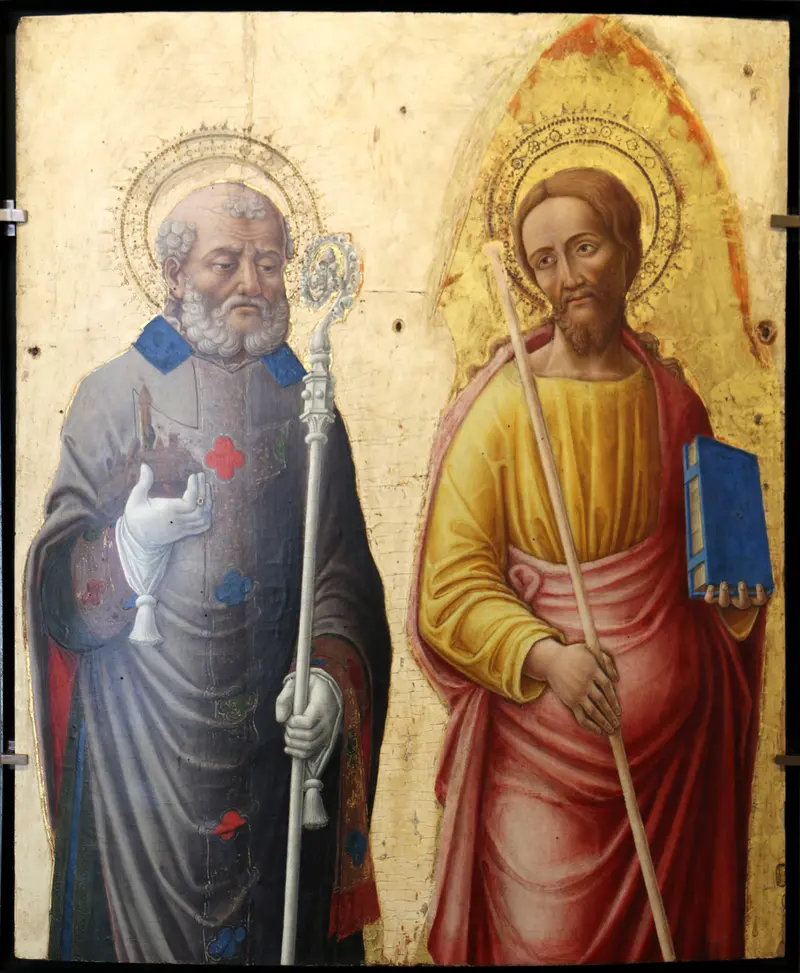
Vivarini saints Pétrone et Jacques
Antonio Vivarini
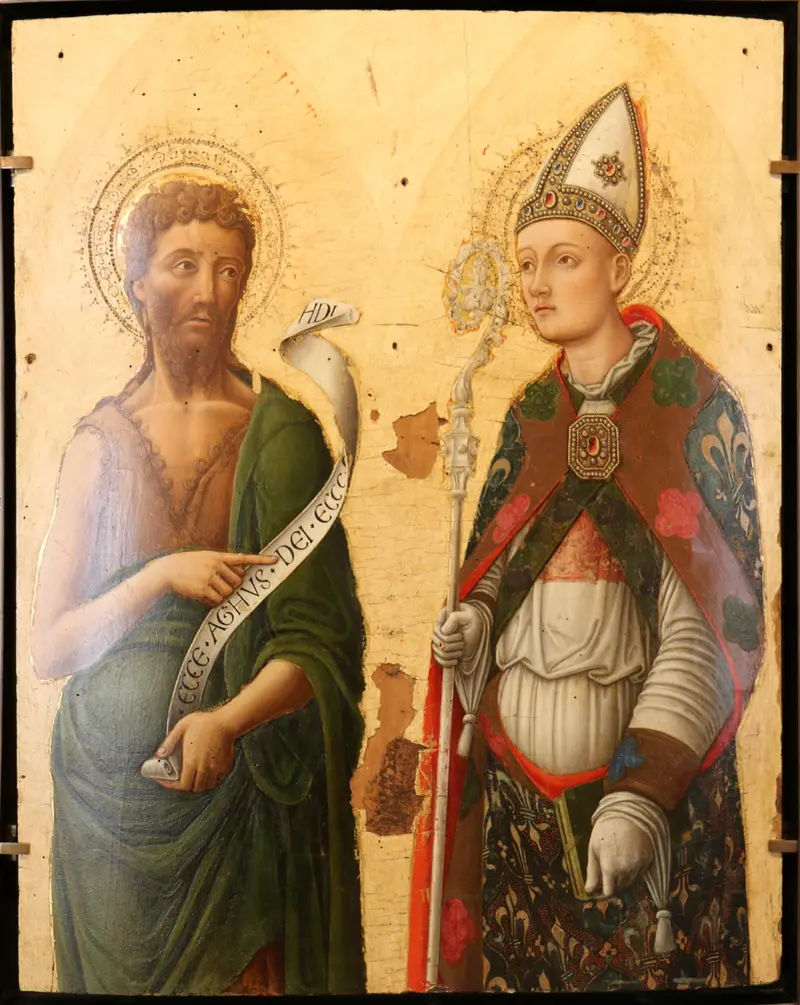
Vivarini Saint Jean Baptiste et saint Louis de Toulouse
Antonio Vivarini
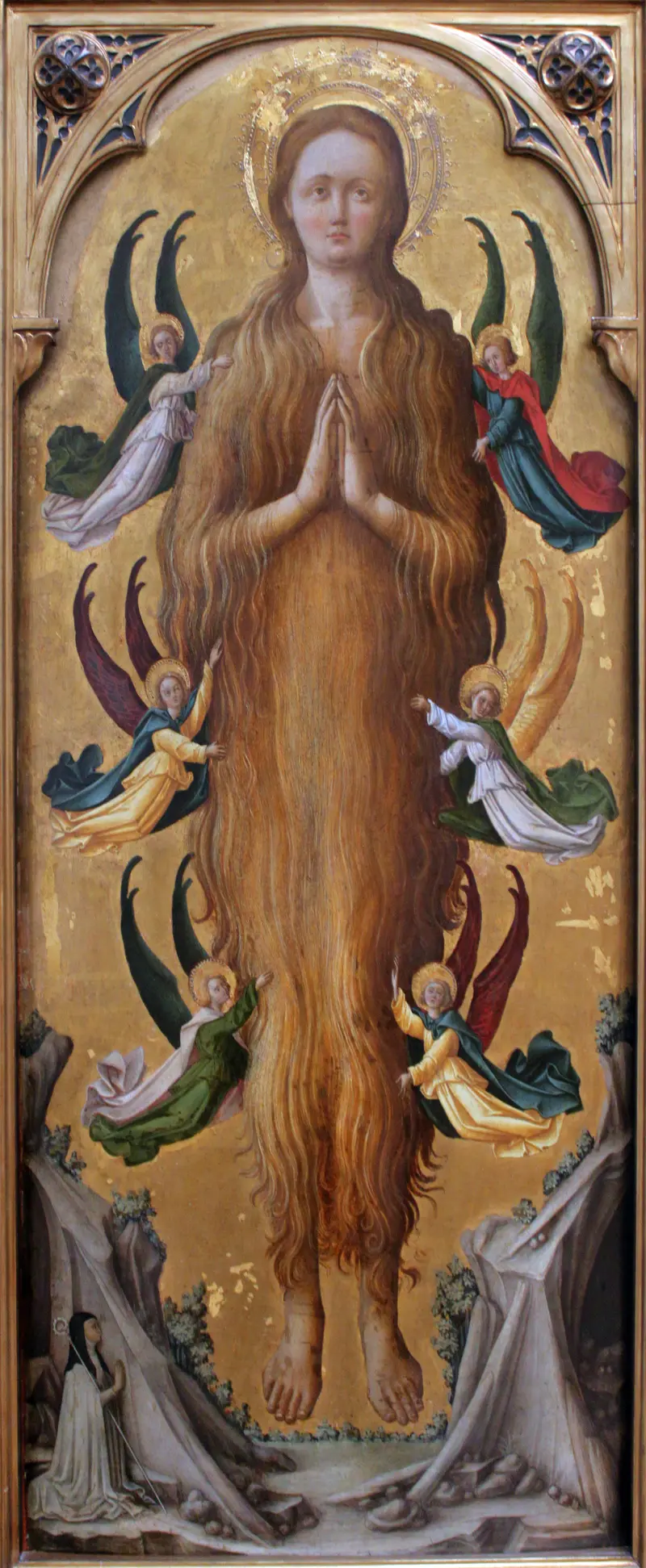
The holy Mary Magdalene, borne aloft by angels
Antonio Vivarini
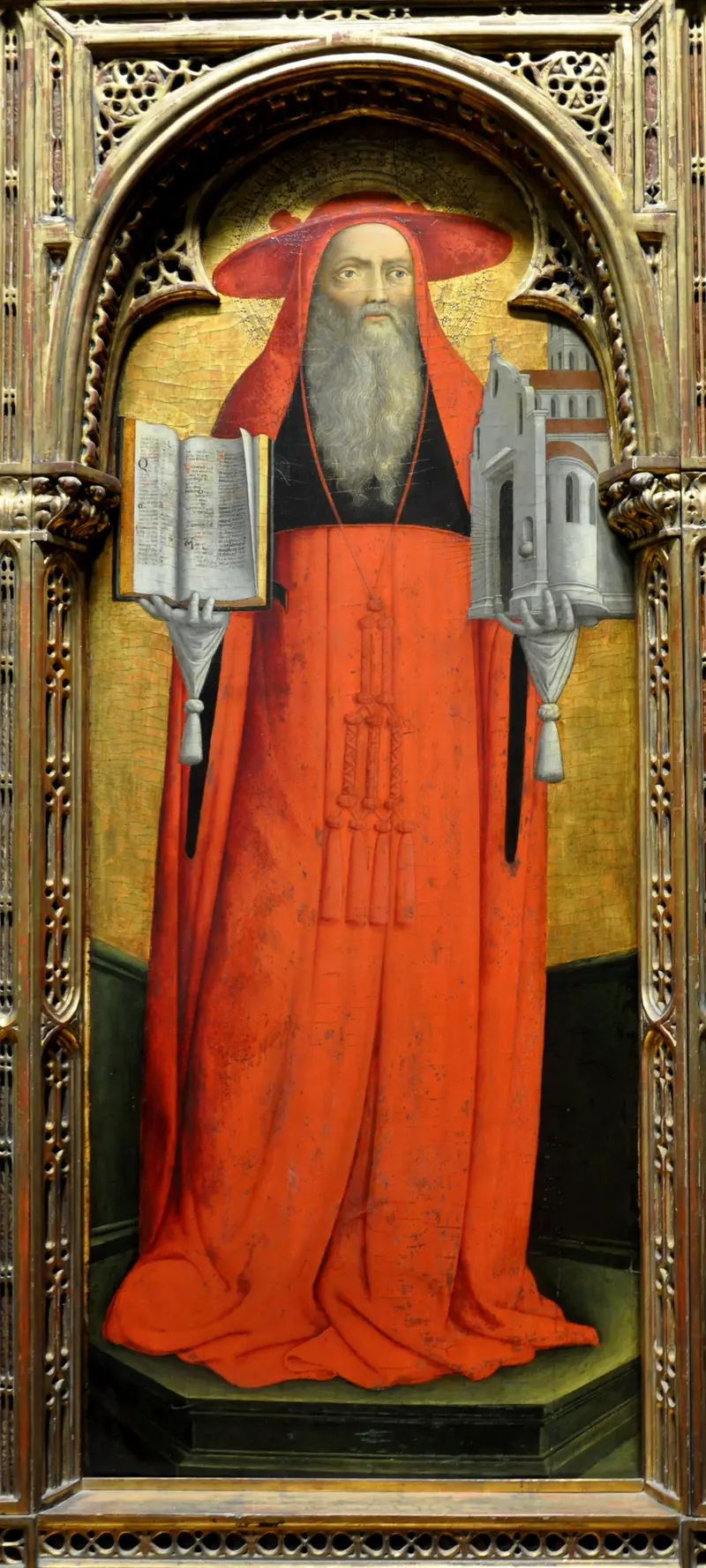
Hieronymus Altar KHM 2
Antonio Vivarini
Saint Lucy
Antonio Vivarini
Virgin and Child
Antonio Vivarini





