
Steinwüste (Stone Desert) — History & Facts
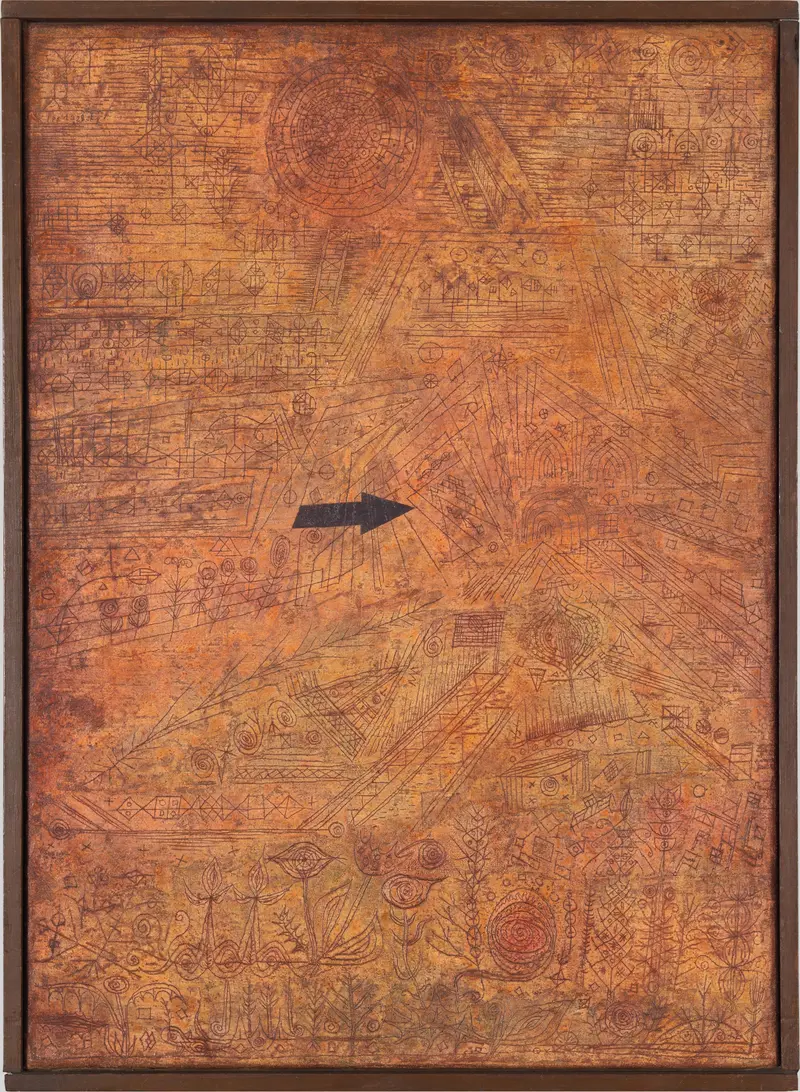
In Steinwüste, Paul Klee presents a landscape filled with abstract forms and earthy colors. The painting features a range of browns, ochres, and muted greens, creating a sense of a barren yet intriguing terrain. The shapes are simplified and stylized, evoking a sense of both desolation and beauty.
Klee's unique approach to landscape transforms the natural world into a dreamlike vision. The painting is characterized by its use of geometric shapes and a limited color palette, typical of Klee's style. The brushwork appears deliberate, with each stroke contributing to the overall composition. Viewers can observe how Klee balances abstraction with recognizable forms, inviting them to interpret the landscape in their own way.
The dimensions of the work are approximately 60 x 80 cm, making it a medium-sized piece. Paul Klee was a key figure in the development of modern art, blending elements of expressionism and abstraction. Steinwüste reflects Klee's fascination with the interplay of color and form, as well as his interest in the spiritual aspects of nature. An interesting fact about this work is that it was created during a period when Klee was exploring the concept of 'inner vision', aiming to depict not just the physical landscape but also the emotional experience of it.
More Artworks by Paul Klee

More Landscape Art

The Starry Night
Vincent van Gogh

View of Delft
Johannes Vermeer

Water Lilies
Claude Monet

The Grand Canal, Venice, looking north-west from the Ca' Corner to the Ca' Contarini degli Scrigni, with the campanile of Santa Maria della Carità
Canaletto

Windsor Castle
Canaletto

The Grand Canal looking North-East from the Palazzo Dolfin-Manin to the Rialto Bridge
Canaletto