
Still Life: Haddock, Plaice, Crabs and Lobster — History & Facts
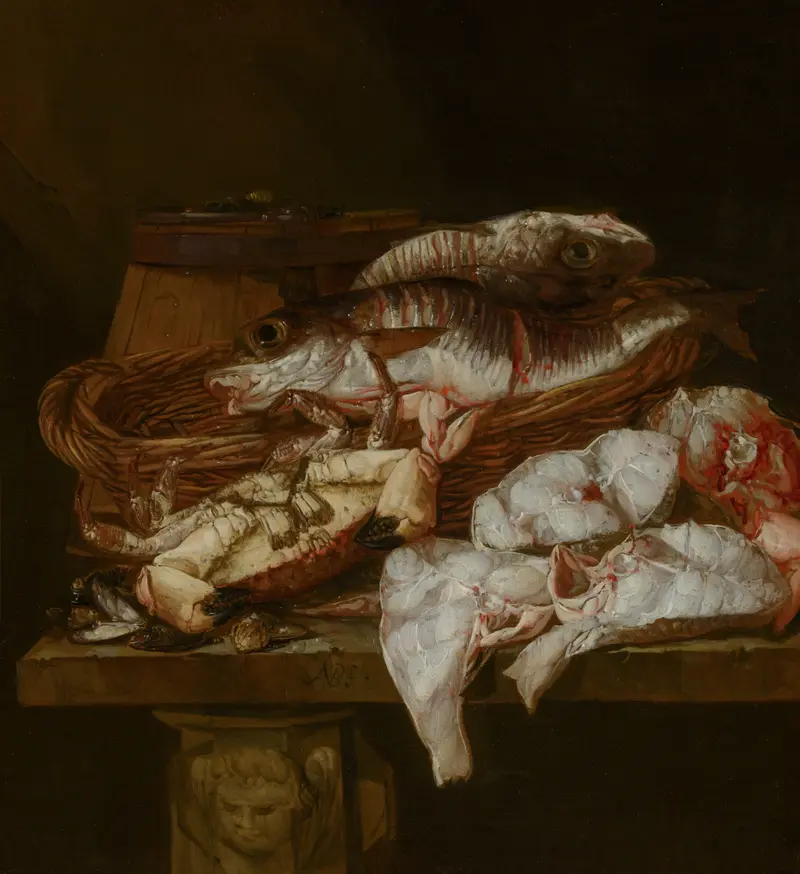
What first catches the eye in Still Life: Haddock, Plaice, Crabs and Lobster is the sheer abundance of the sea’s harvest, heaped with a kind of deliberate gravity. The painter, Abraham van Beyeren, arranges his catch as if staging a silent drama: the gleaming haddock sprawls across the table, its mouth agape, while the crabs and lobster curl protectively around it, their claws and shells rendered with a tactile precision. The light, cool and searching, strikes the slick scales and the rough shells, picking out every ridge and glint of moisture, while the dark background swallows the edges, making the catch seem to emerge from shadow.
Even the hint of a window at the left, framing a cloudy sky and distant figures, roots this bounty in the world of work and weather, not just display. In the bustling Dutch Republic of the mid-seventeenth century, still lifes like this one were more than decoration: they were statements of prosperity, reminders of nature’s gifts, and sometimes quiet meditations on the fleetingness of pleasure. Painted between circa 1650 and 1670, this work belongs to a moment when the genre flourished, commissioned by merchants and burghers who saw their own lives reflected in the richness and order of such scenes. Van Beyeren was known for his lavish banquet pieces, yet here the focus is on the raw, unadorned produce, just landed from the sea.
History has kept few traces of this painting’s early journey, but its presence today in a public collection invites us to linger over every scale and claw, and to imagine the world that prized such careful, sumptuous observation.
More Artworks by Abraham van Beyeren

Still Life
Abraham van Beyeren
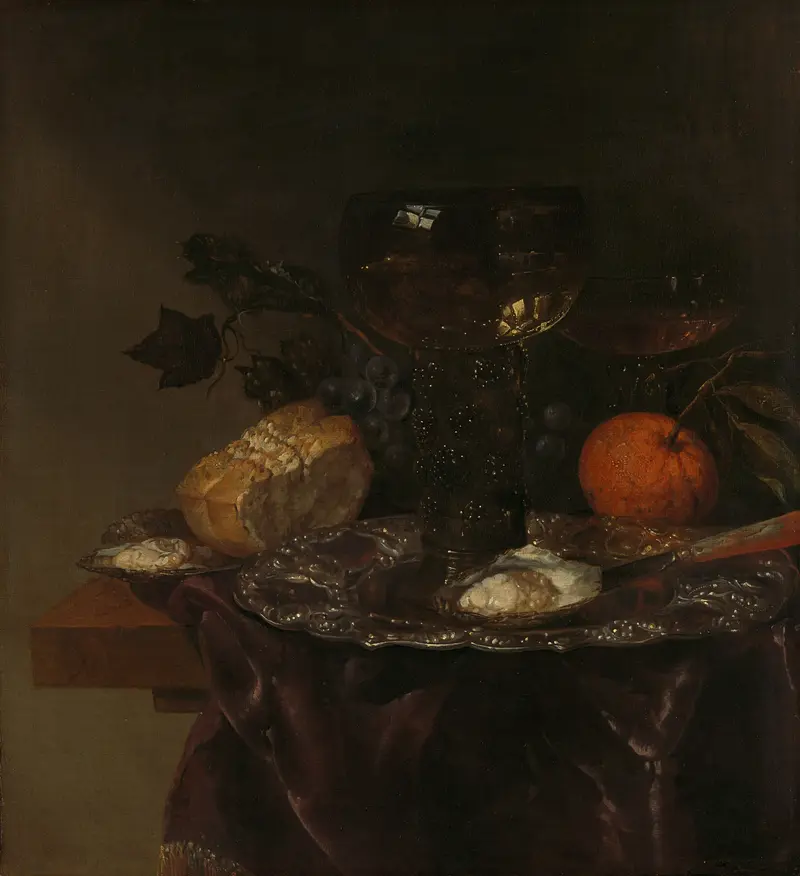
Still Life
Abraham van Beyeren
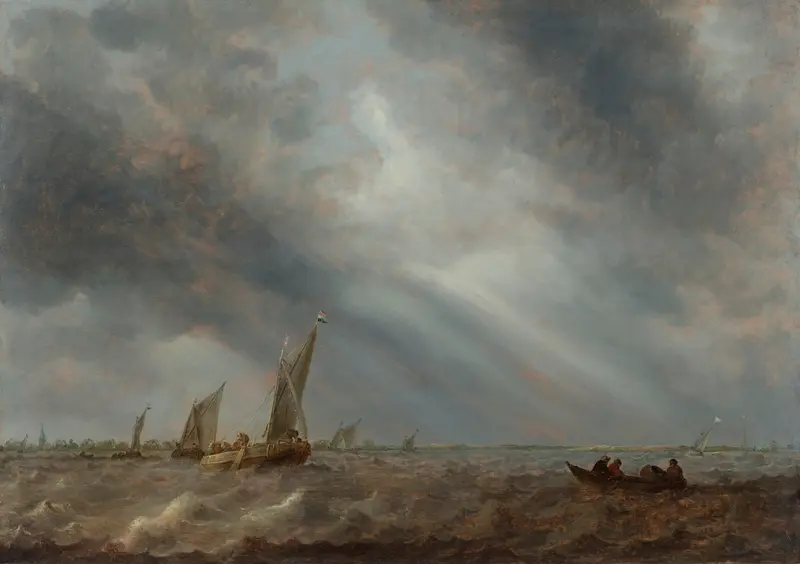
Various sailing vessels and a rowing boat with fishermen on choppy waters under a stormy sky
Abraham van Beyeren
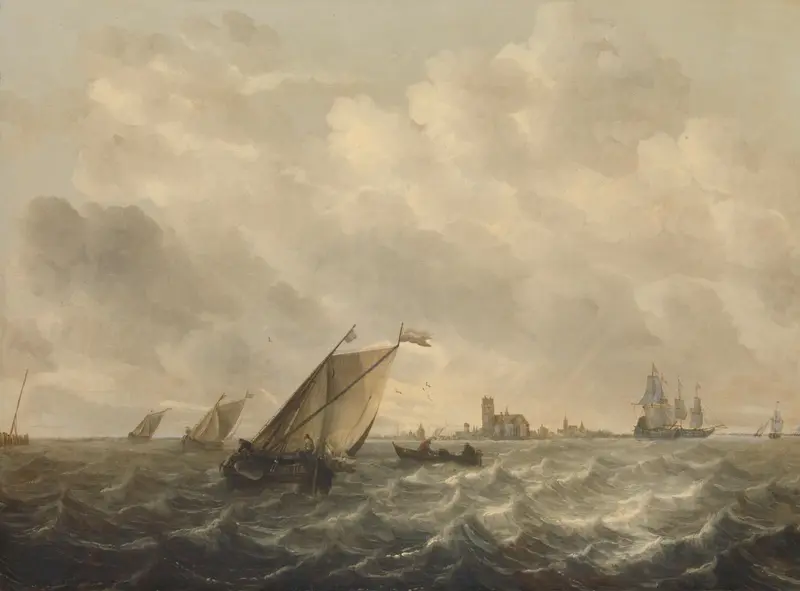
River View
Abraham van Beyeren
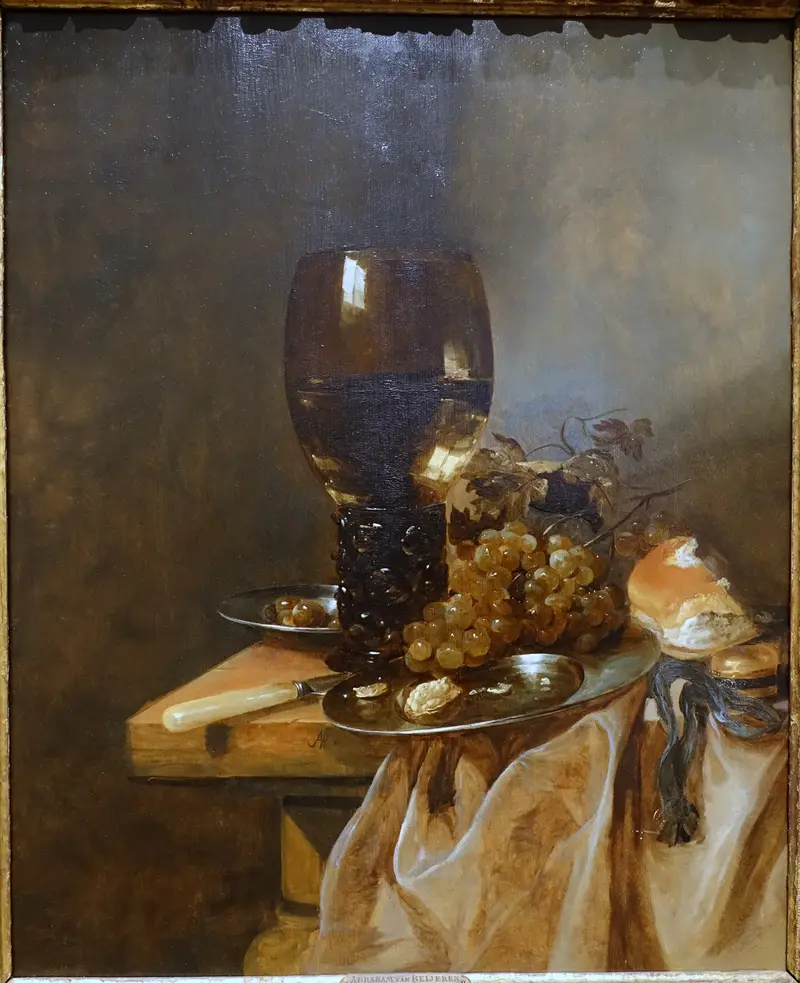
A Roemer with Grapes, a Pewter Plate and a Roll
Abraham van Beyeren
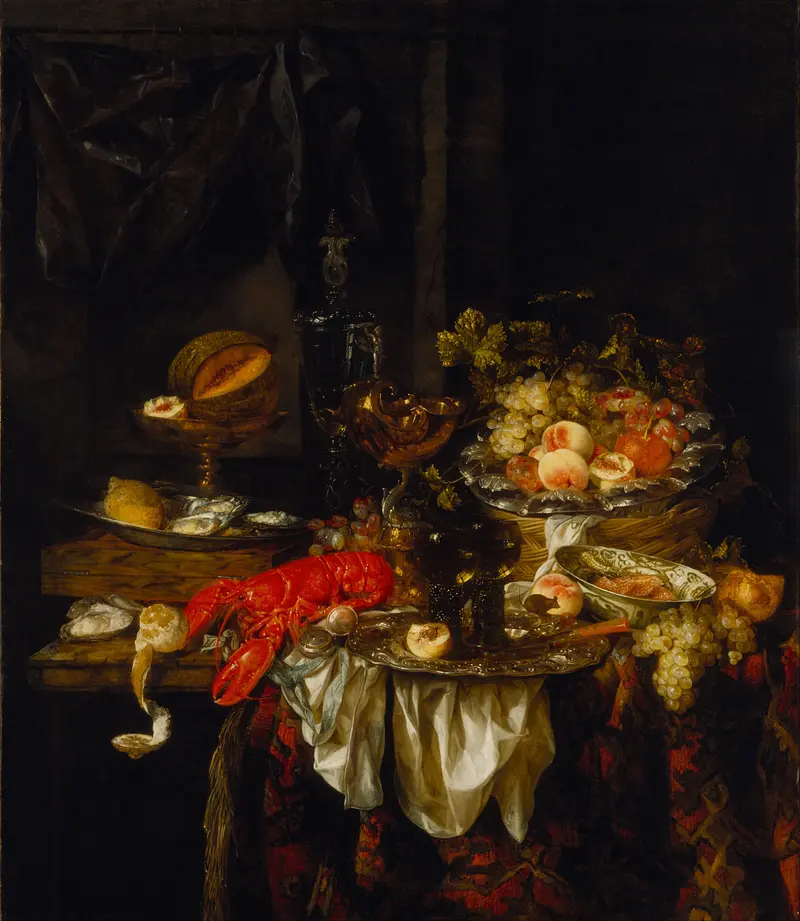
Banquet Still Life
Abraham van Beyeren
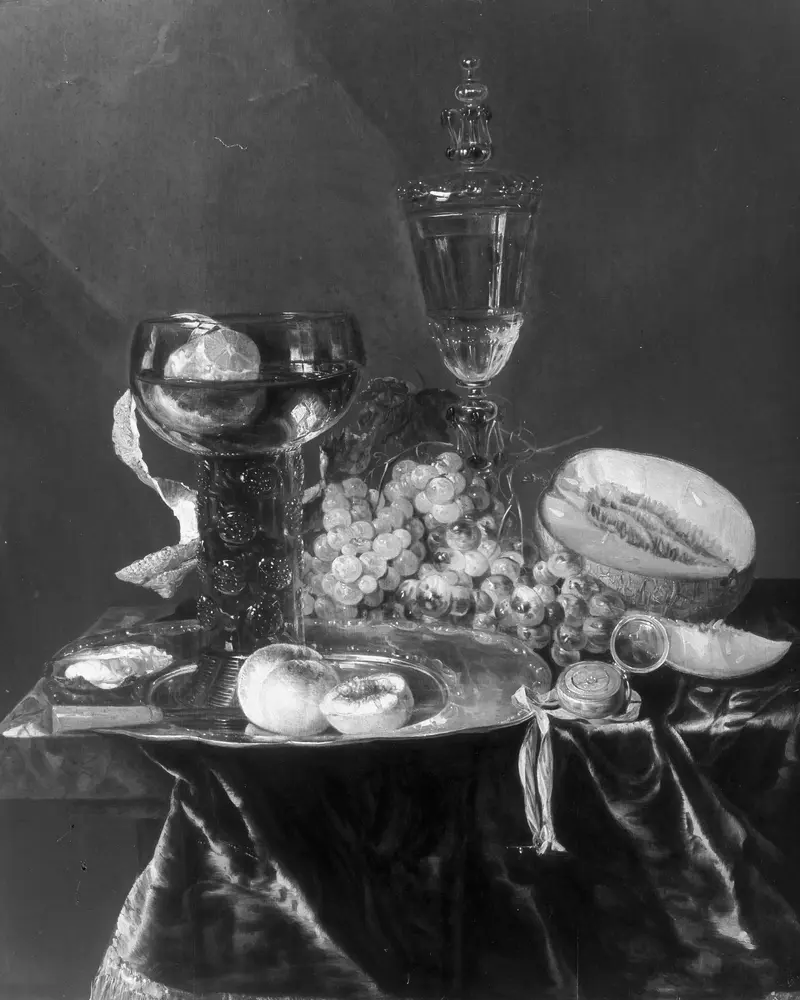
Still life with a glass lid goblet
Abraham van Beyeren
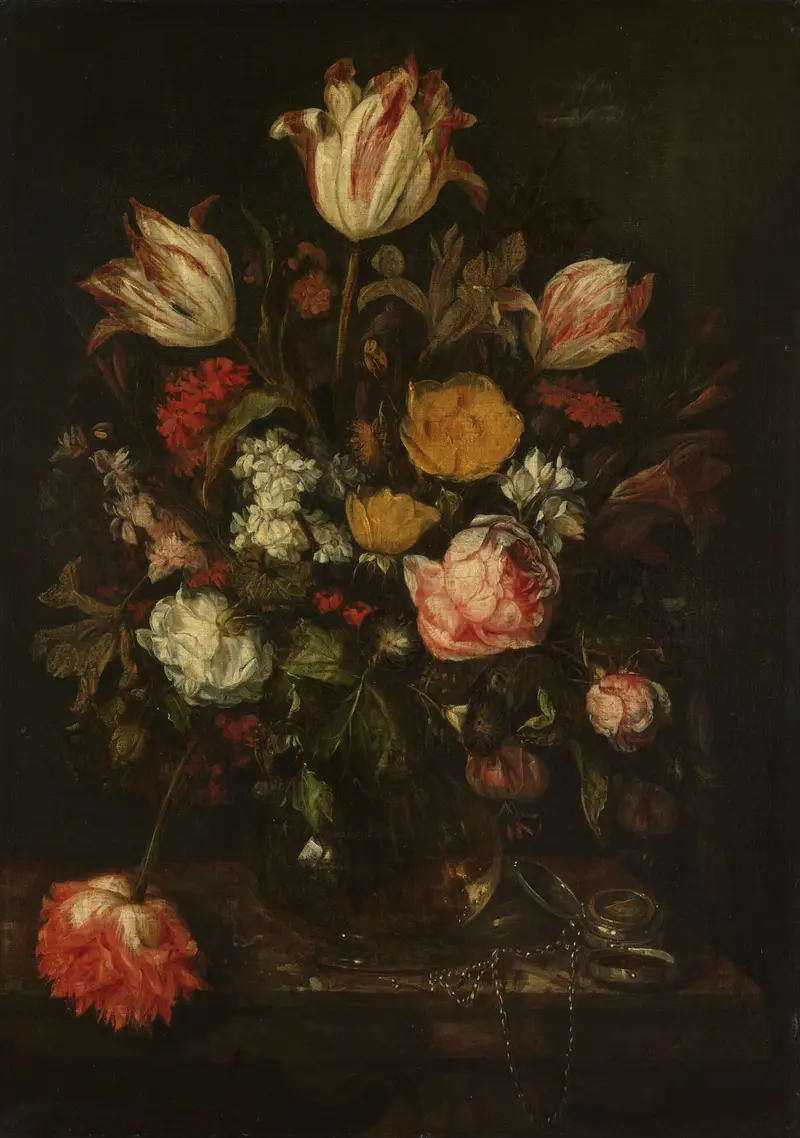
Still life with flowers
Abraham van Beyeren
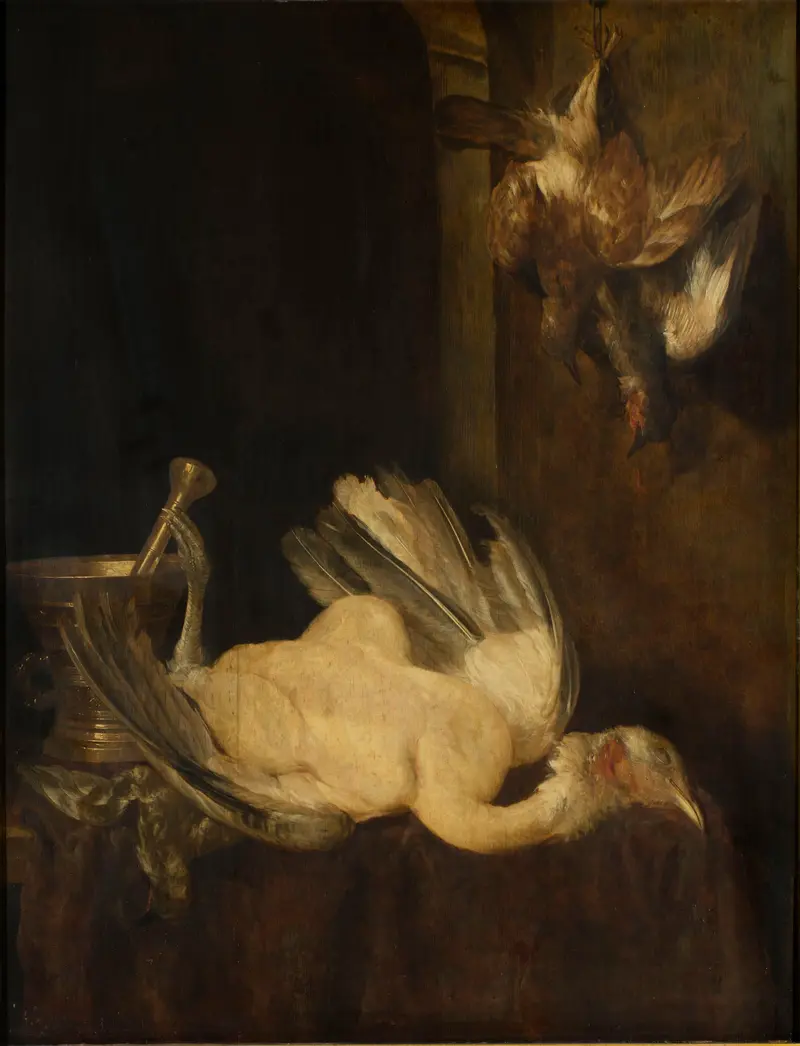
Still life with dead birds
Abraham van Beyeren
Still Life with Seafood
Abraham van Beyeren





