
Study for "The Last of the Buffalo" — History & Facts
What first seizes the eye in Study for The Last of the Buffalo is the collision of raw power and human skill, caught at the instant when a rearing white horse, nostrils flared and muscles taut, faces the massive bulk of a buffalo. The rider leans forward, bow drawn, every sinew engaged in the hunt—his focus mirrored in the animal’s wild, rolling gaze. The composition pulls the viewer’s attention to this confrontation, the light catching on the horse’s flank and the hunter’s back, while the darker earth and shadowed buffalo anchor the drama.
The sweep of the prairie, rendered in broad, loose strokes, recedes into a haze, giving the figures the stage and heightening the sense of motion and danger. The palette, dominated by the ochres and browns of the plains, is punctuated by the pale flash of the horse and the hunter’s skin, lending the scene an immediacy that feels almost cinematic. Painted around 1888, this work belongs to a period when images of the American West held both documentary and mythic power. Artists like Albert Bierstadt were celebrated for their grand landscapes and scenes that seemed to capture a vanishing world—a world in which the buffalo hunt was both a reality and a symbol.
Such paintings were often commissioned or collected by those eager to possess a piece of the frontier, even as railroads and settlement were transforming it forever. This study, now in the De Young Museum in San Francisco, bears witness to that era’s fascination with the West’s peoples and its animals, and to the tensions between preservation and progress. In its unfinished energy, it invites us to look again—not just at the hunt, but at the world that made such moments possible.
More Artworks by Albert Bierstadt

A Storm in the Rocky Mountains, Mt. Rosalie
Albert Bierstadt
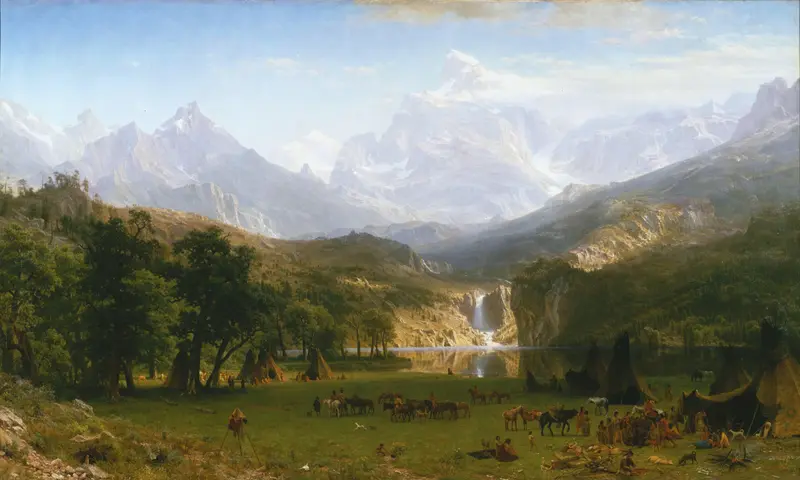
The Rocky Mountains, Lander's Peak
Albert Bierstadt
Niagara from the American Side
Albert Bierstadt
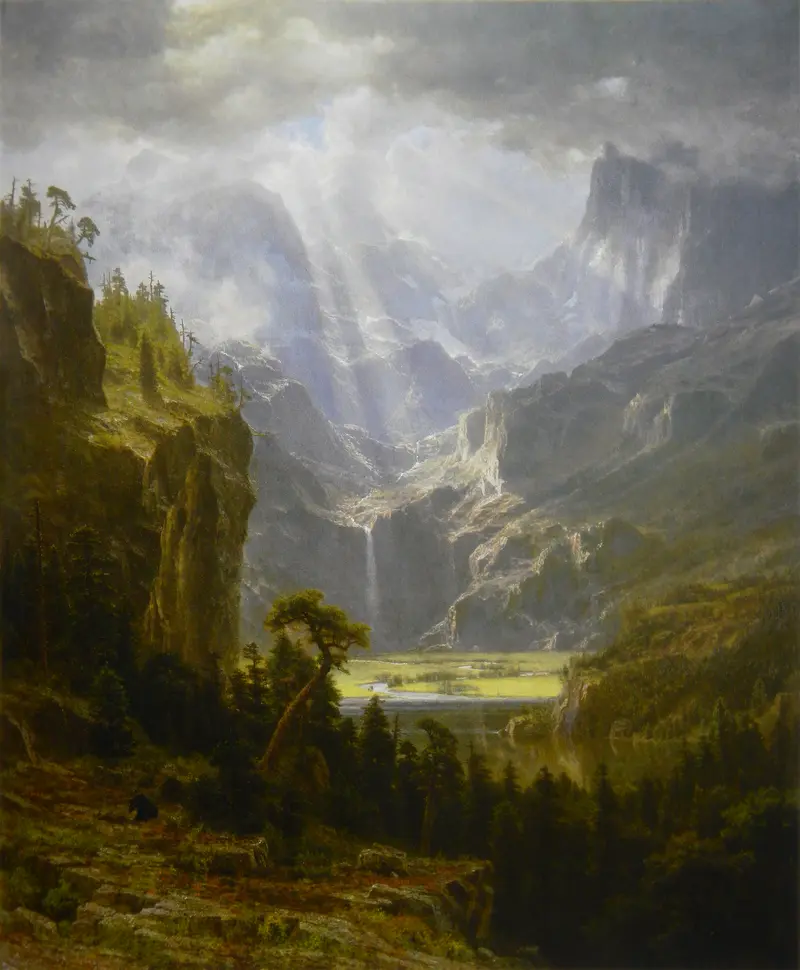
Rocky Mountains, Lander’s Peak
Albert Bierstadt

Valley of the Yosemite
Albert Bierstadt
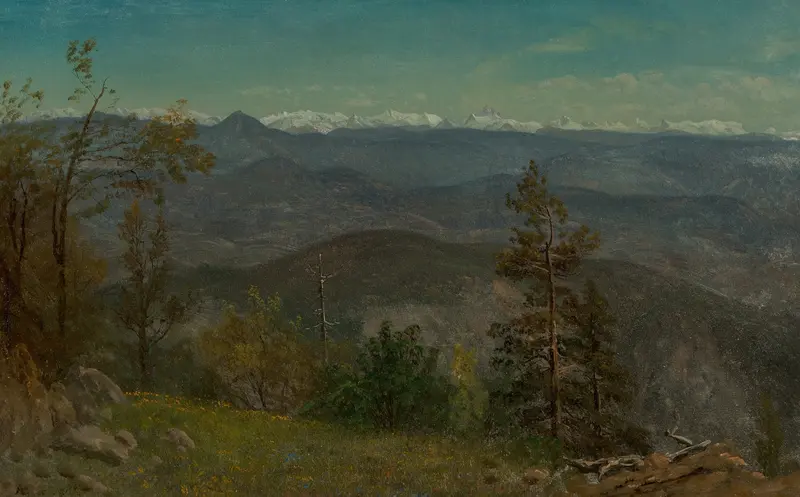
Yosemite Valley, California
Albert Bierstadt
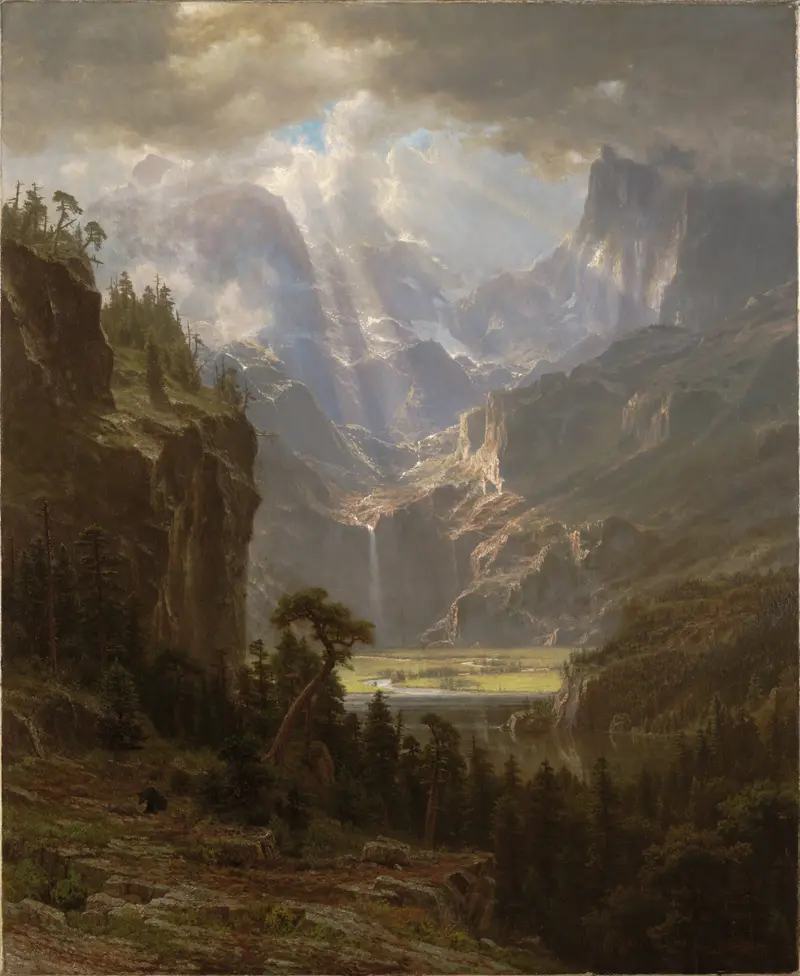
Rocky Mountains, "Lander's Peak"
Albert Bierstadt

Laramie Peak
Albert Bierstadt
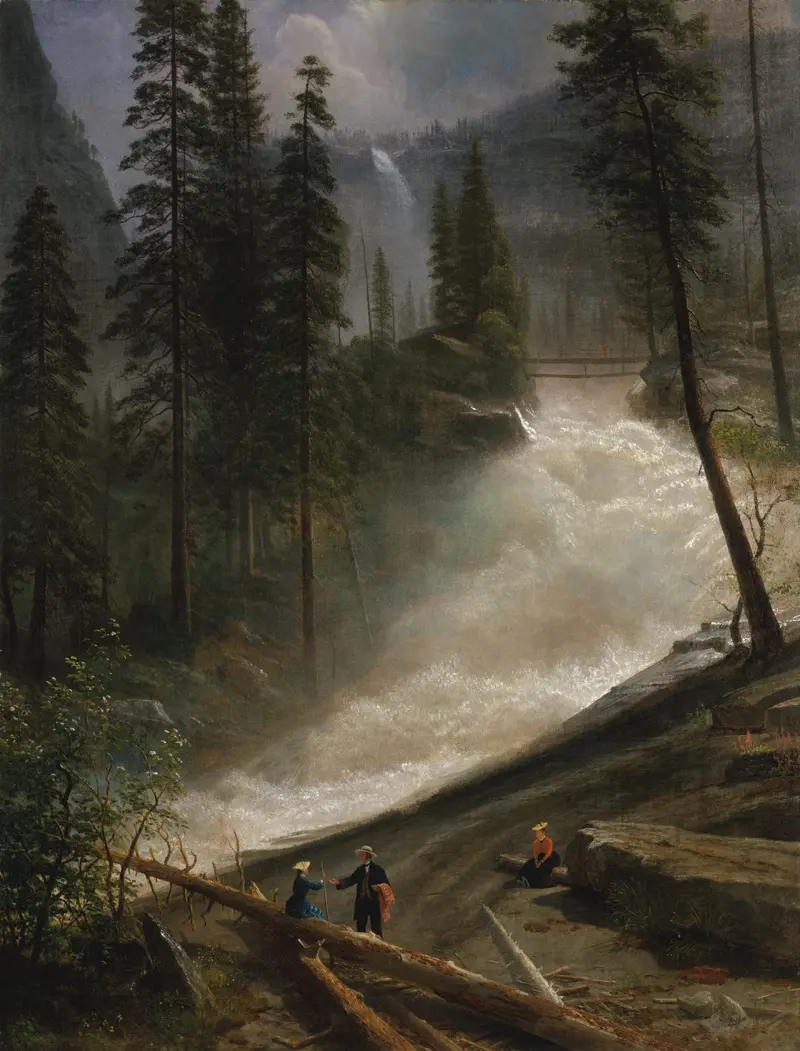
Nevada Falls, Yosemite
Albert Bierstadt
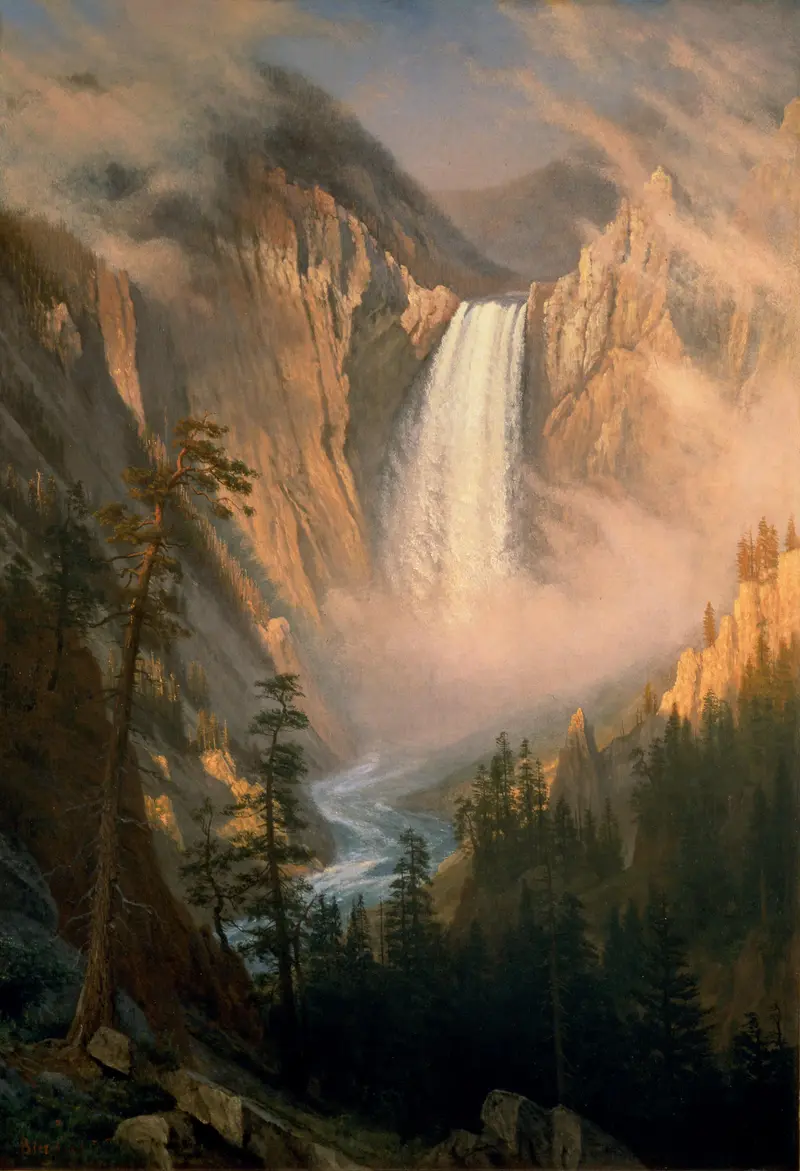
Yellowstone Falls
Albert Bierstadt





