
Sunset — History & Facts
In the twilight of day, shadows elongate, whispering secrets of the past while embracing the promise of night. Beneath the dramatic hues of a sinking sun, the landscape unfolds, revealing the delicate balance between light and darkness. Look to the center of the canvas, where the radiant orb is ablaze in fiery oranges and deep, luscious reds. Notice how the light spills across the horizon, illuminating the rolling hills and the patchwork of fields that stretch out beneath it.
The soft, flowing brushstrokes create an atmosphere of tranquility, yet there’s an underlying tension woven into the shadows that dance along the ground, hinting at stories untold. Within the composition, the contrast between warmth and coolness speaks volumes. The sun, symbolizing hope and renewal, casts a golden glow, while the encroaching shadows evoke a sense of melancholy and reflection. This interplay invites contemplation on the fleeting nature of time and the dualities that govern existence.
The delicate balance of vibrancy and gloom elicits a silent dialogue with the viewer, beckoning them to explore their own emotional landscapes hidden within. In 1861, the artist was in the throes of mature creativity, painting in the English countryside during a time of significant personal and artistic evolution. The world was grappling with social change and the aftermath of war. Palmer, influenced by the Romantic movement, sought to capture not just the visual beauty of nature but its emotional resonance, merging reality with imagination in works like Sunset.
More Artworks by Samuel Palmer
Browse all →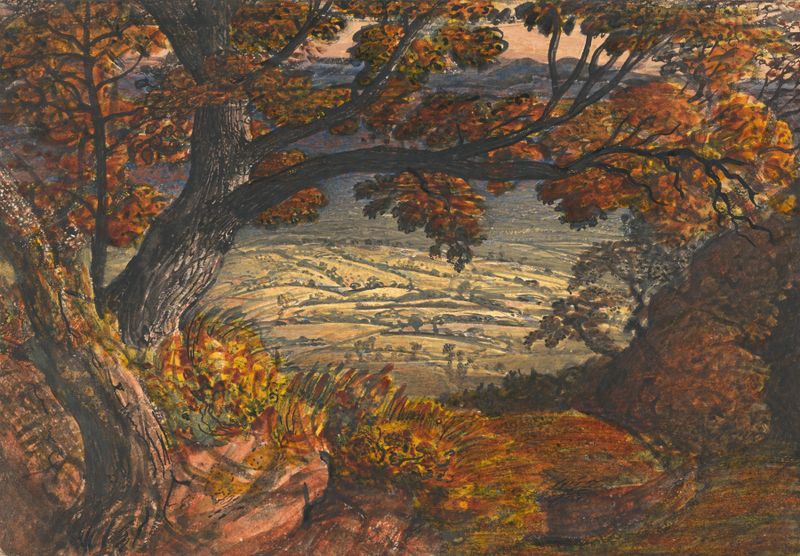
The Weald of Kent
Samuel Palmer
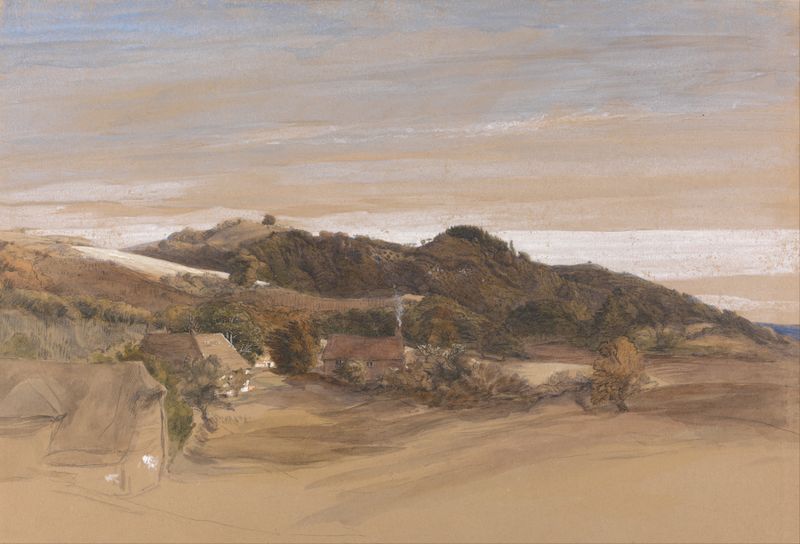
Underriver Hills, near Sevenoaks, Kent, from the Grounds of J. Herries, Esq.
Samuel Palmer
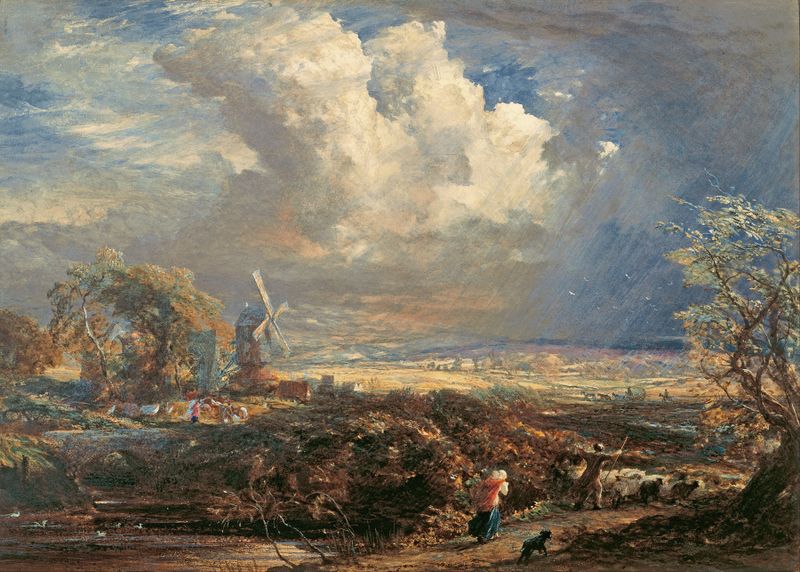
Summer Storm near Pulborough, Sussex
Samuel Palmer
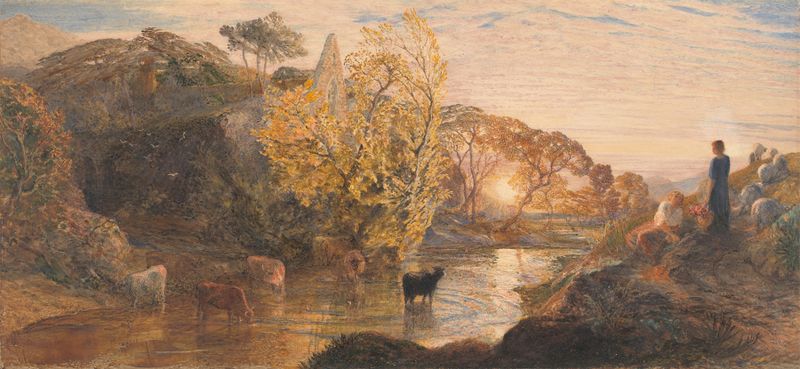
Tintern Abbey at Sunset
Samuel Palmer
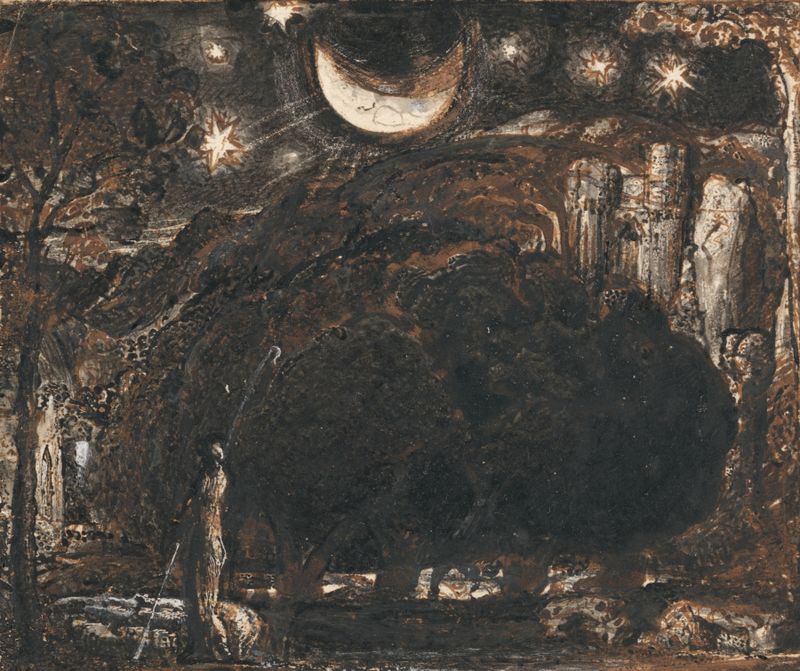
A Shepherd and his Flock under the Moon and Stars
Samuel Palmer
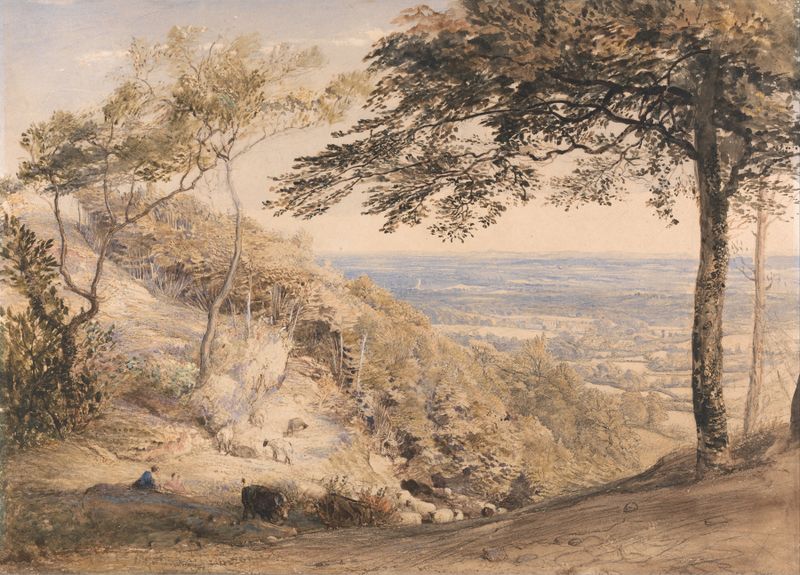
Wilmot’s Hill, Kent
Samuel Palmer
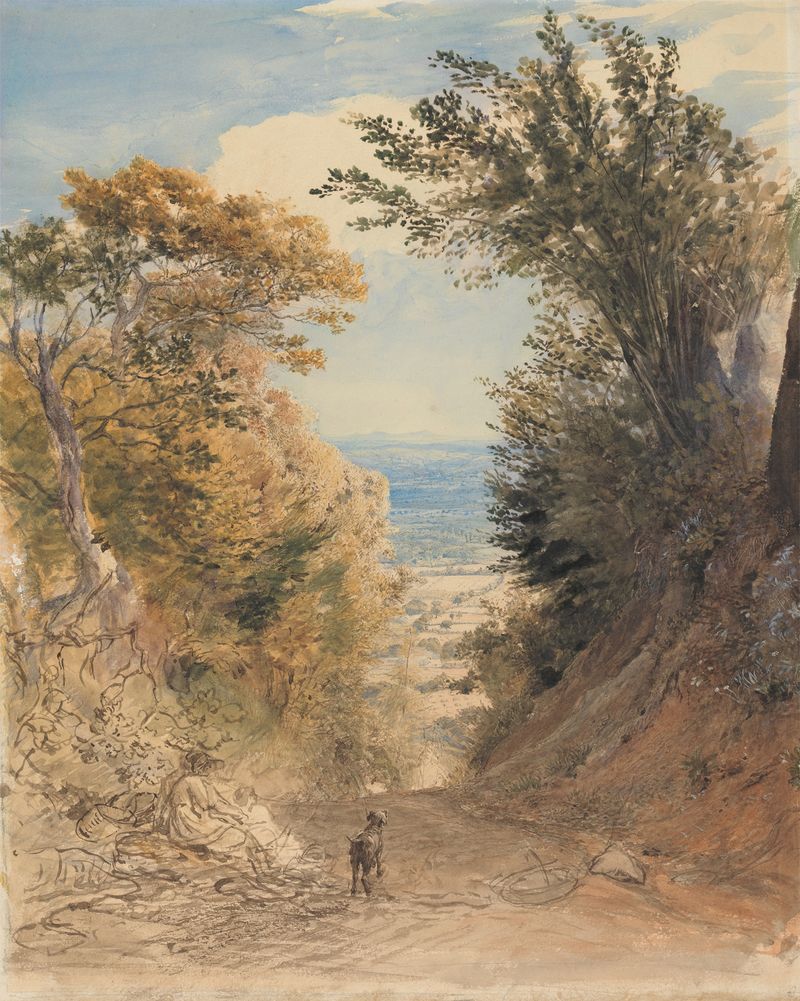
View from Rook’s Hill, Kent
Samuel Palmer
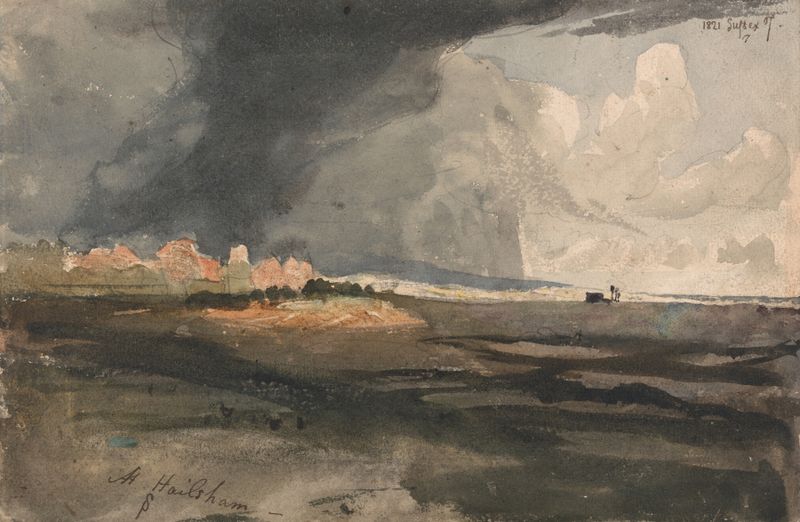
At Hailsham, Sussex; a Storm Approaching
Samuel Palmer
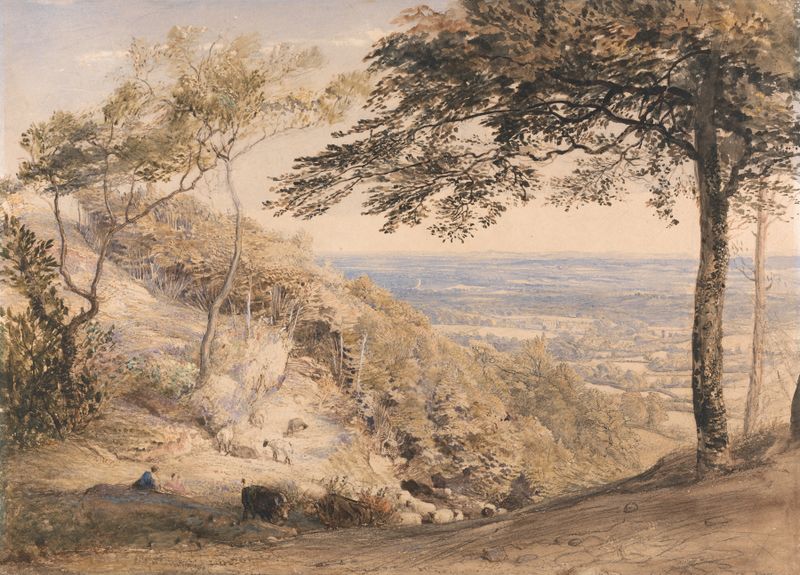
Wilmot’s Hill, Kent
Samuel Palmer
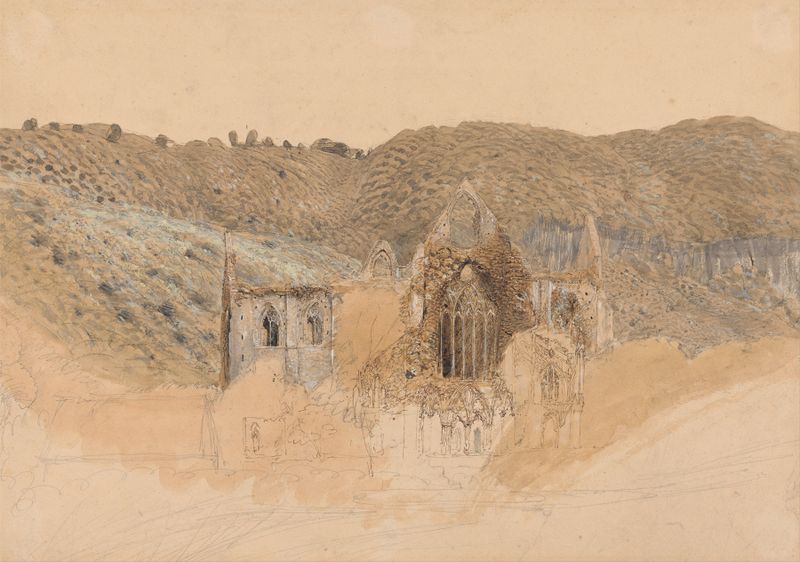
Tintern Abbey
Samuel Palmer





