
Sur la Seine, la nuit — History & Facts
The first thing to catch the eye in Sur la Seine, la nuit is not the famous silhouette of the Eiffel Tower, but the way the city’s night seems to seep into the figures themselves. A man, his features rough-hewn and shadowed by a brimmed hat, raises a drink to his lips, while beside him a woman sits upright, her face half-lost in the dusk. The benches stretch away into the darkness, where other Parisians huddle in whispered conversation or silent contemplation, their forms dissolving into the river’s reflected lights.
Lepère’s lines are restless, almost nervous, as if the city’s energy cannot be stilled even at midnight; the Seine’s surface flickers with the glow of distant lamps, drawing the viewer’s gaze back and forth between the intimacy of the foreground and the monumental ironwork rising in the haze. Created in 1888, this work belongs to a moment when Paris was transforming before its citizens’ eyes: the Eiffel Tower, still under construction in the background, signals the city’s leap into modernity. Artists like Auguste Lepère turned to the everyday life of the boulevards and the riverbanks, capturing the mingling of old and new, of leisure and labor, that defined the era. Prints and drawings such as this were often made for collectors eager to possess a slice of the city’s changing face, and today this piece survives in the National Gallery of Art’s collection thanks to open access initiatives.
History has kept few traces of these anonymous night wanderers, but Lepère’s hand preserves their fleeting presence—inviting us to linger with them a moment longer on the banks of the Seine.
More Artworks by Auguste Lepère

Le Pont-Neuf (Paris)
Auguste Lepère
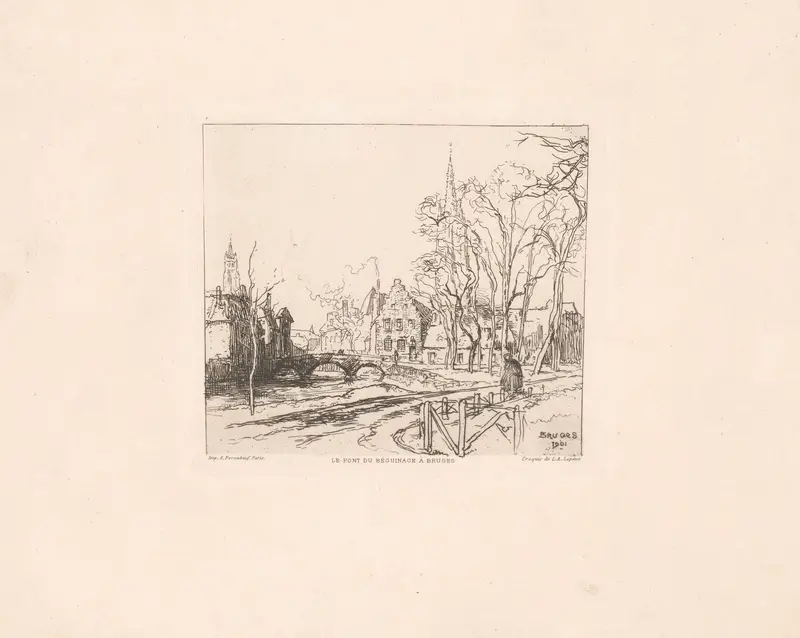
Le pont du Beguinage à Bruges
Auguste Lepère
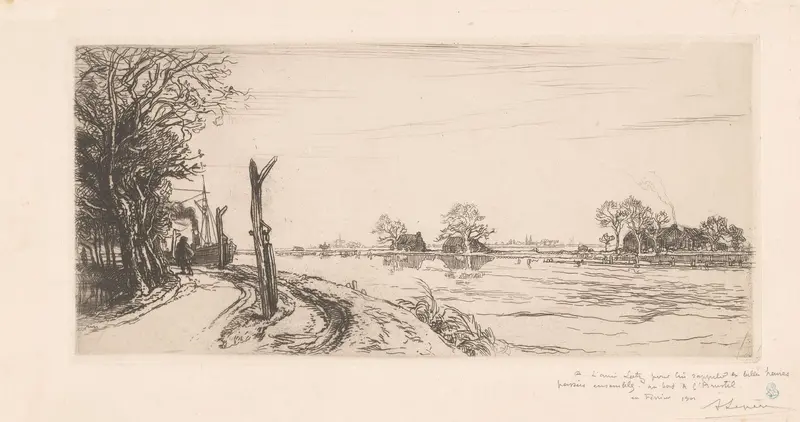
Au bord de l’Amstel
Auguste Lepère
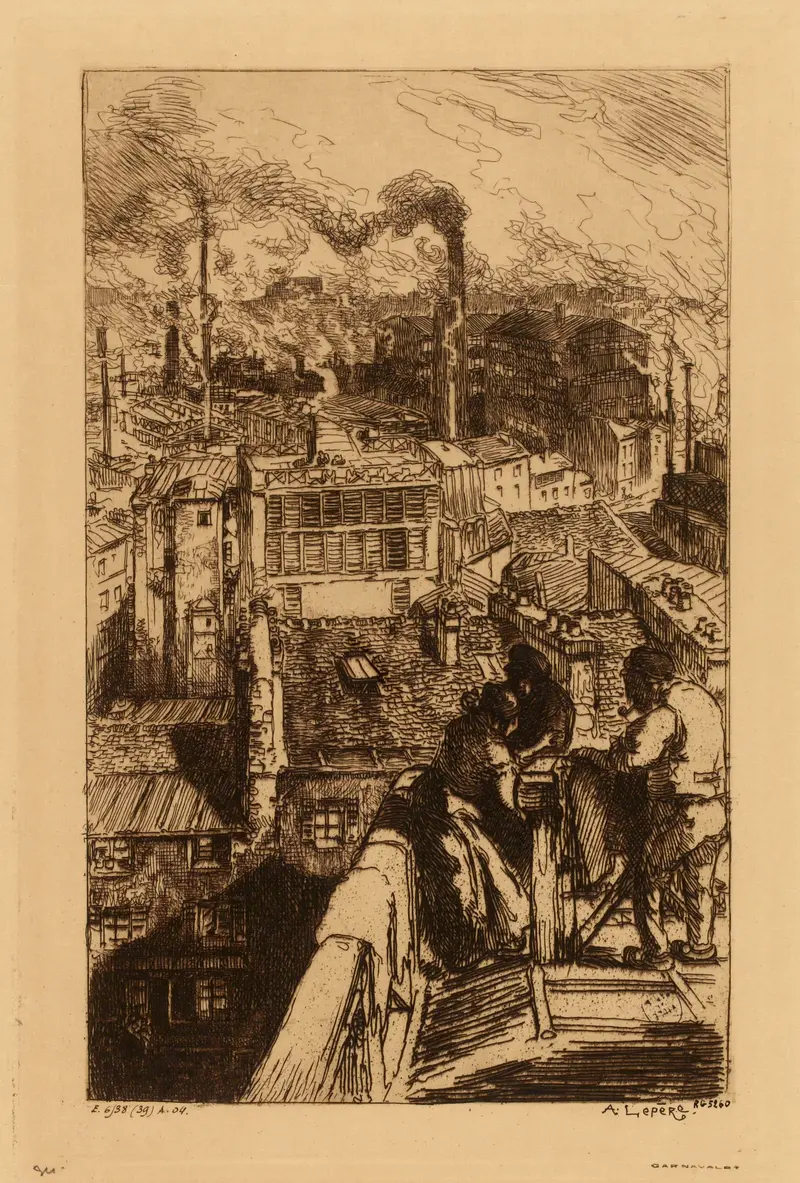
Le quartier des Gobelins
Auguste Lepère
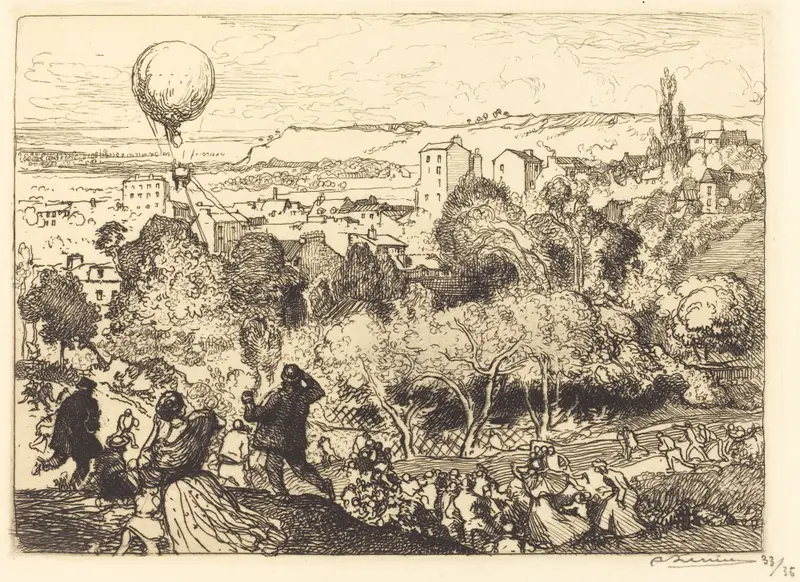
The Falling Balloon, in Pre-Saint-Gervais (Lebaloon qui tombe, au Pre-Saint-Gervais)
Auguste Lepère
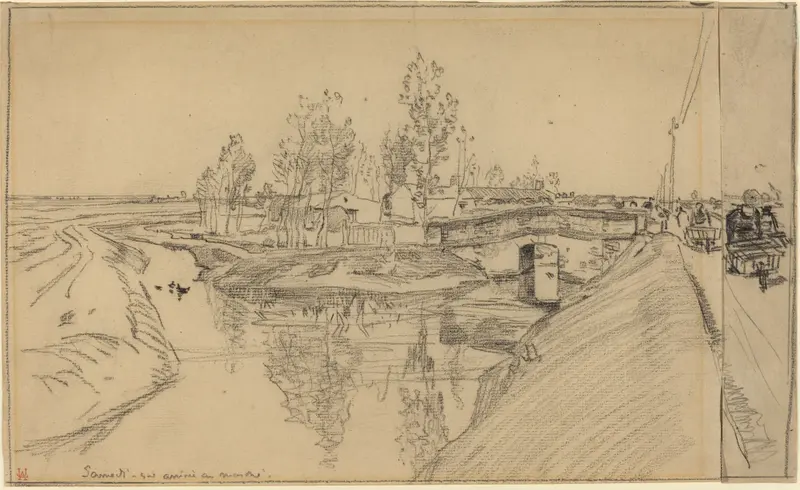
Arrivee au Marche
Auguste Lepère
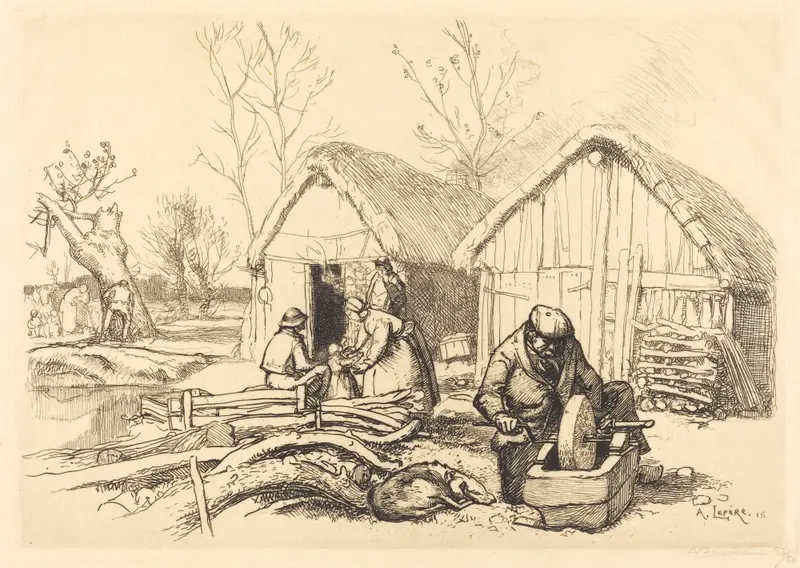
The House of the Woodcutter, Vendee (La maison du bucheron, Vendee)
Auguste Lepère
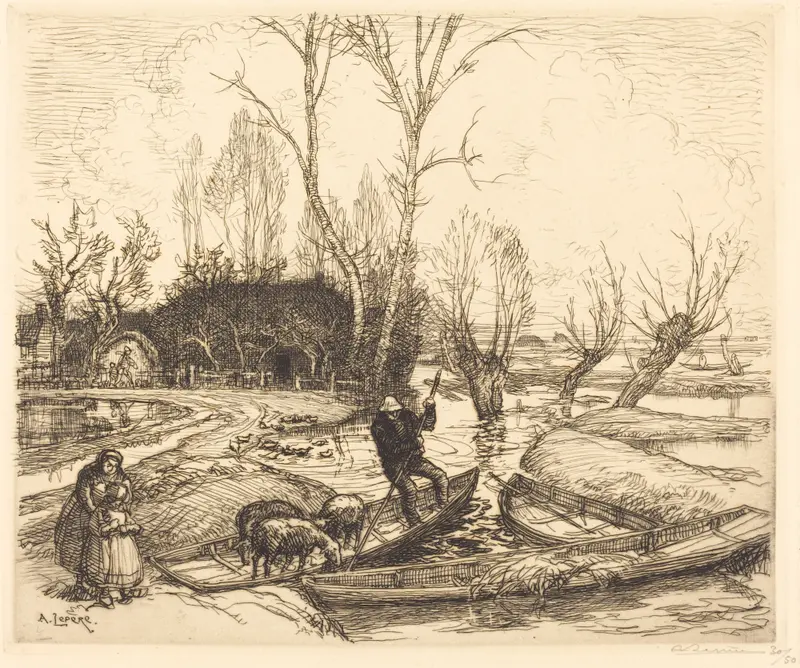
In the Deluged Marsh - The Shepherd (Au marais inonde - Le berger)
Auguste Lepère
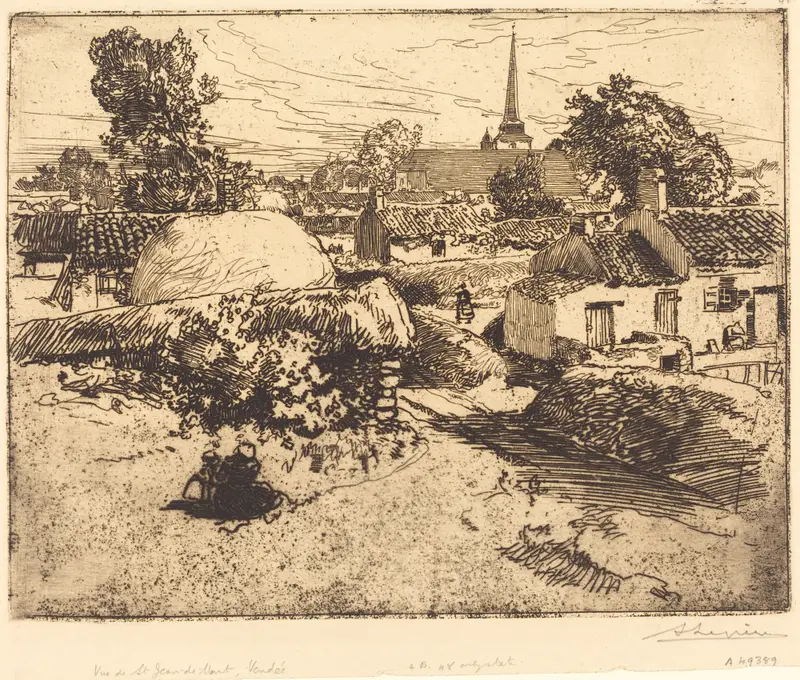
View of St.-Jean-de-Mont, Vendee (Vue de St.-Jean-de-Mont, Vendee)
Auguste Lepère
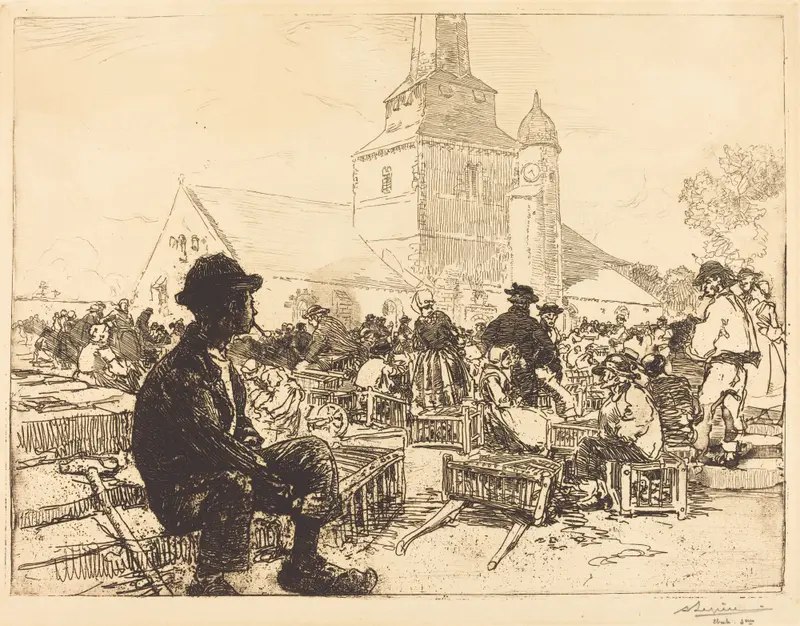
Poultry Market at St.-Jean-de-Mont (Marche a la volaille, a St.-Jean-de-Mont)
Auguste Lepère
More Genre Scene Art

Banquet of the Officers of the St George Civic Guard
Frans Hals

Rembrandt and Saskia in the Scene of the Prodigal Son
Rembrandt van Rijn

Bal du moulin de la Galette
Pierre-Auguste Renoir

Quadrille at the Moulin Rouge
Henri de Toulouse-Lautrec

A Burial at Ornans
Gustave Courbet

When Will You Marry?
Paul Gauguin