
Tagonoura, near Fuji — History & Facts
Can paint confess what words never could? In Tagonoura, near Fuji, a world unfolds where mountains stand sentinel over restless waters, whispering secrets of obsession and longing. Look to the center, where the majestic silhouette of Mount Fuji rises, its peak gently veiled in a shroud of delicate mist. The hues of the twilight sky transition from deep indigo to soft lavender, mirrored in the rippling surface below. Notice how the brushwork breathes life into the water: each stroke conveys a sense of movement, as if the landscape itself is caught in a reverie.
The composition invites the viewer’s gaze to dance along the horizon, where earthy tones meet the ethereal sky, embodying a serene yet charged atmosphere. Yet, amidst the tranquil beauty lies an undercurrent of tension, manifesting in the contrast between the stillness of nature and the swirling emotions it evokes. The delicate interplay between light and shadow suggests a narrative of longing—a desire to capture the essence of this elusive moment. Moreover, the pairing of the earthly and the divine calls to mind a deeper obsession: the struggle between humanity and nature, the ephemeral and the eternal, grounding the viewer in a profound reflection of their own yearnings. In 1897, during a time when Japan was experiencing a complex dance between tradition and modernity, the artist found himself grappling with these very themes.
Living in Tokyo, Kobayashi Kiyochika was influenced by the shifting tides of Western art and technology, yet he remained deeply connected to his cultural roots. As he painted Tagonoura, near Fuji, he sought to encapsulate a fleeting moment that resonated with both personal and collective obsessions, revealing the deep emotional landscapes that paint itself can traverse.
More Artworks by Kobayashi Kiyochika
Browse all →
Thunder and Lightning at Oumaya Bridge
Kobayashi Kiyochika

Shinkyō, Sacred Bridge at Nikkō
Kobayashi Kiyochika

Daybreak at Shrine, Kanda
Kobayashi Kiyochika

The Great Fire at Ryōgoku Bridge, Viewed from Asakusa Bridge on the 26th of January, 1881
Kobayashi Kiyochika

The Moon At Shinagawa
Kobayashi Kiyochika
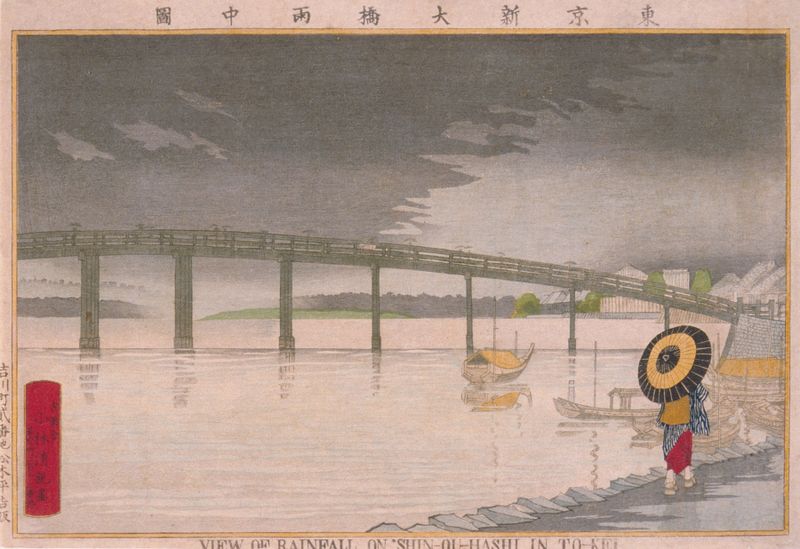
View of Rainfall on Shin-Ou-hashi in To-kei
Kobayashi Kiyochika

Evening at Tōshōgū Shrine, Ueno, Tokyo
Kobayashi Kiyochika

Snow at Ochanomizu
Kobayashi Kiyochika
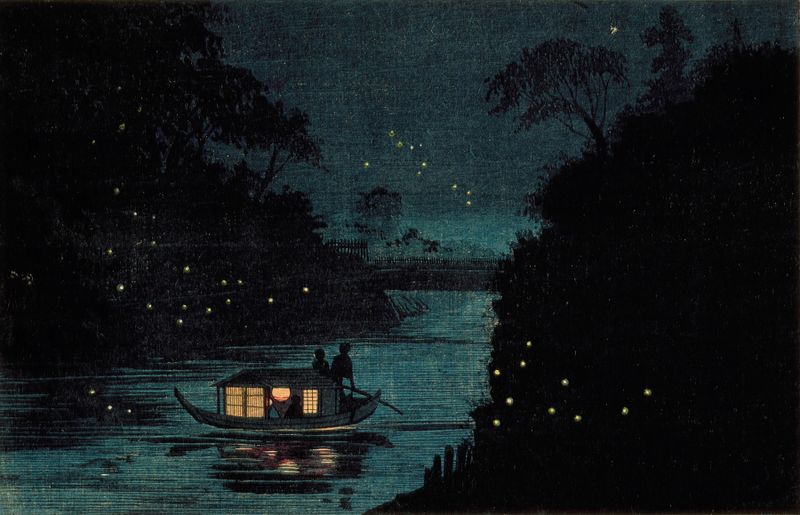
Fireflies at Ochanomizu
Kobayashi Kiyochika
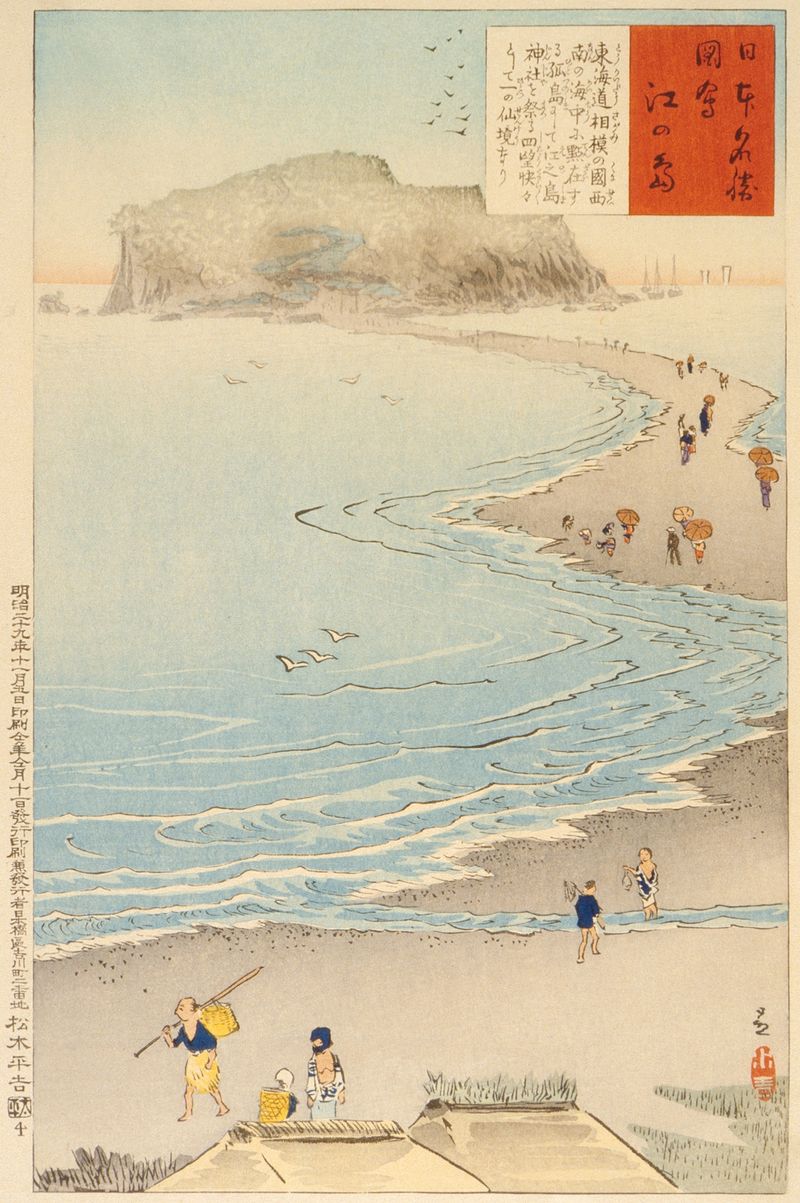
The Island Enoshima
Kobayashi Kiyochika





