
The Awakening Conscience — History & Facts
The Awakening Conscience is an oil painting completed in 1853 by William Holman Hunt, a leading figure of the Pre-Raphaelite Brotherhood. The work was painted during a period when Hunt was deeply engaged with moral and religious themes, and it reflects his interest in the social issues of Victorian England. The painting was created at a time when Hunt was exploring the use of intense detail and symbolism, characteristic of the Pre-Raphaelite movement. The composition shows a young woman rising from the lap of a man seated at a piano in a richly decorated interior.
The woman’s gaze is directed upwards, her expression one of sudden realization, while the man looks up at her, his hand still holding hers. The room is filled with ornate furnishings, a vibrant patterned carpet, and a gilded mirror reflecting a garden outside, suggesting both material comfort and a sense of enclosure. Hunt’s use of clear, bright colors and meticulous detail draws attention to symbolic elements such as the discarded glove, the cat toying with a bird, and the open music book, all of which contribute to the narrative of a moment of moral awakening. The Awakening Conscience was first exhibited in 1854 and quickly became a subject of public discussion for its depiction of a kept woman’s sudden awareness of her situation.
The painting was commissioned by Thomas Fairbairn, a notable patron of the arts. It has been held in several collections and is now part of the Tate collection in London. The work remains an important example of Pre-Raphaelite art and is frequently cited in discussions of Victorian morality and symbolism in painting.
More Artworks by William Holman Hunt
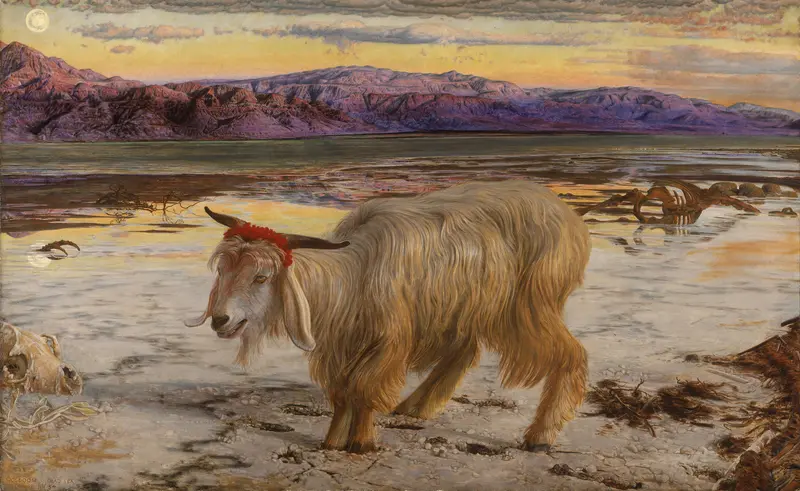
The Scapegoat
William Holman Hunt
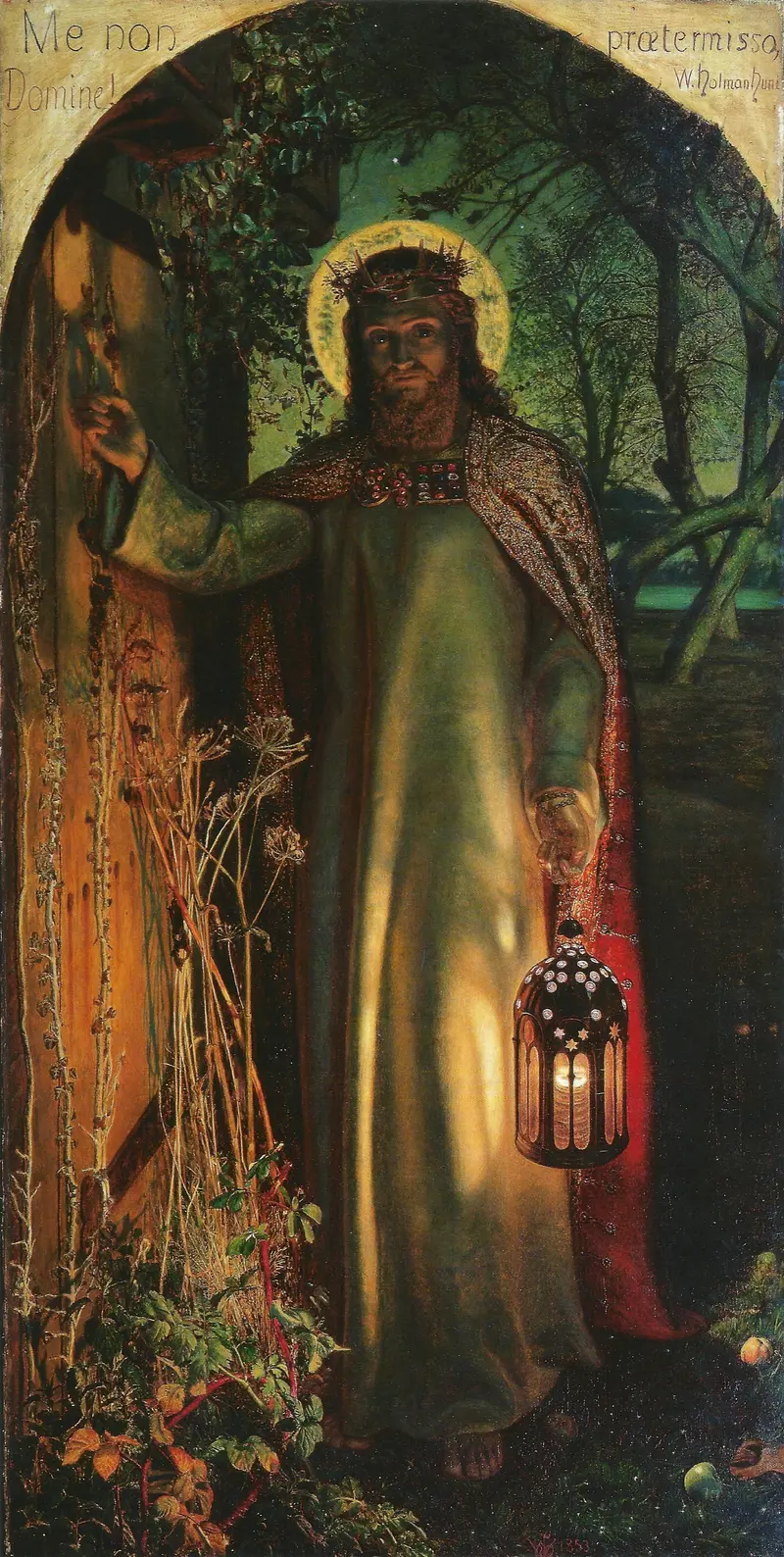
The Light of the World
William Holman Hunt
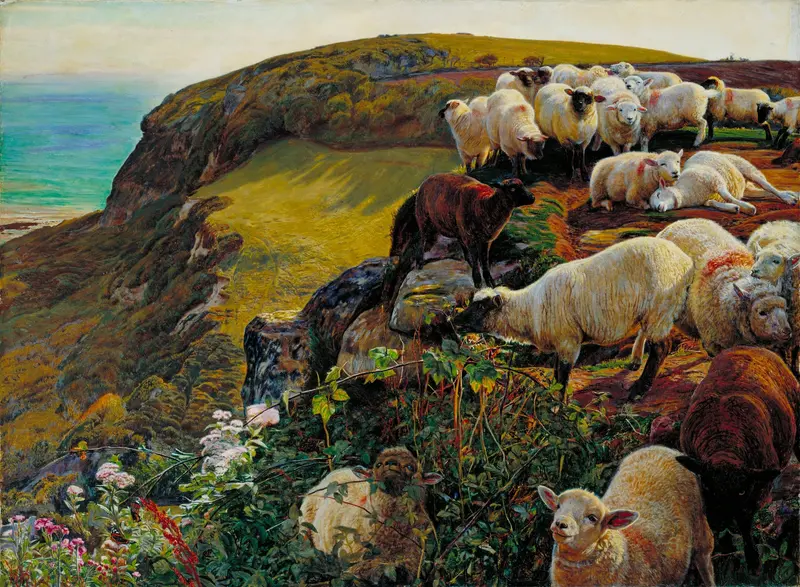
Our English Coasts, 1852 (Strayed Sheep)
William Holman Hunt

The Shadow of Death
William Holman Hunt
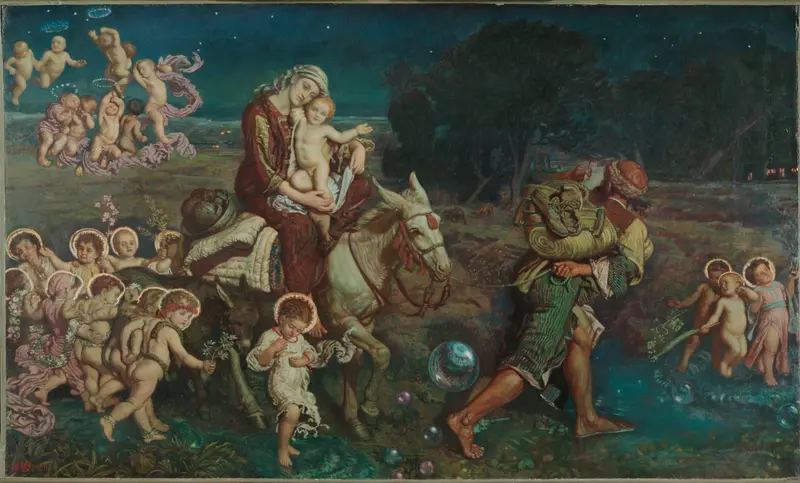
The Triumph of the Innocents
William Holman Hunt
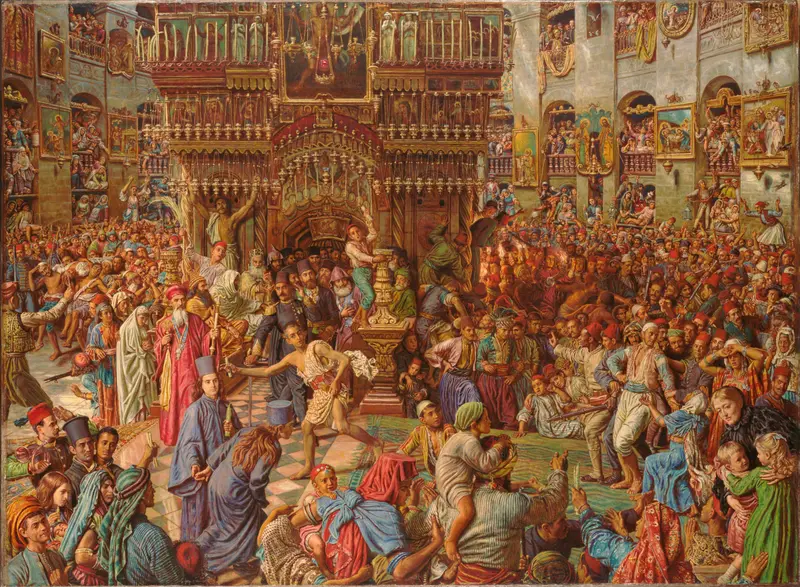
The Miracle of the Sacred Fire, Church of the Holy Sepulchre
William Holman Hunt
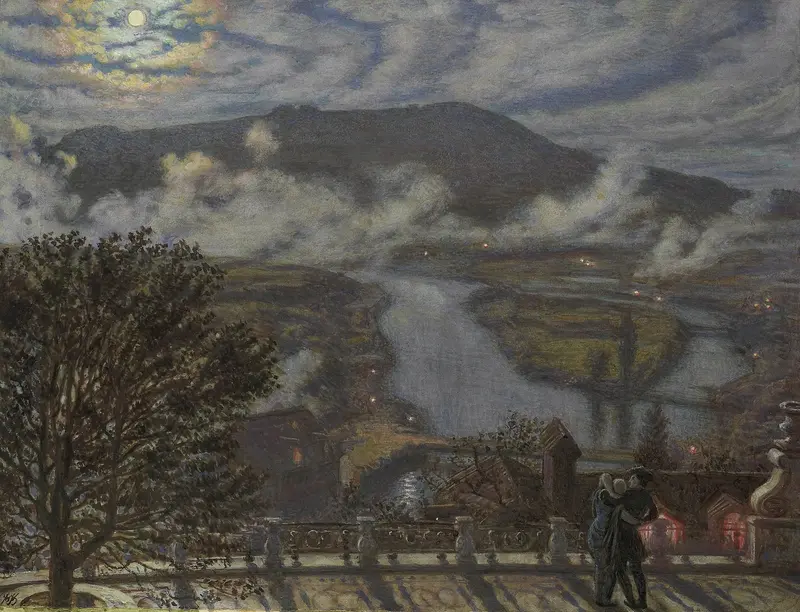
View from a Terrace of a River Landscape at Night
William Holman Hunt
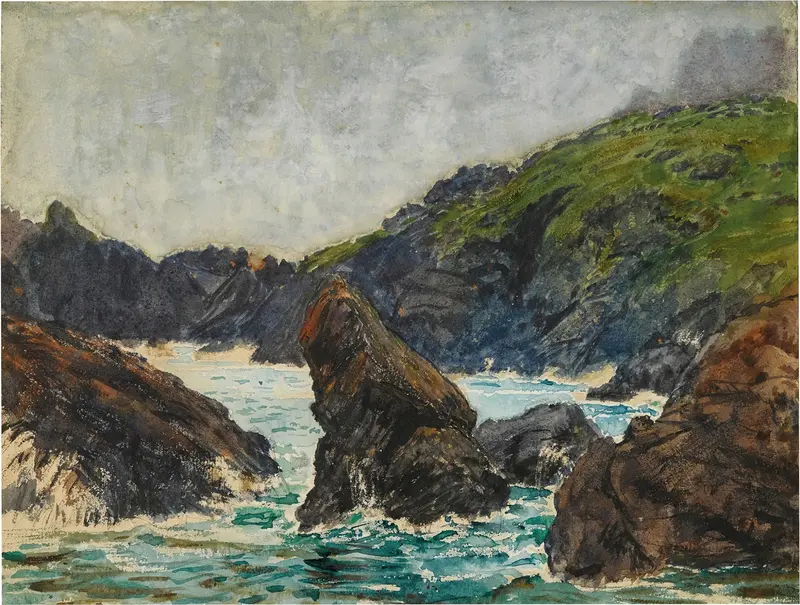
The Lizard, Cornwall
William Holman Hunt

Homeward Bound
William Holman Hunt
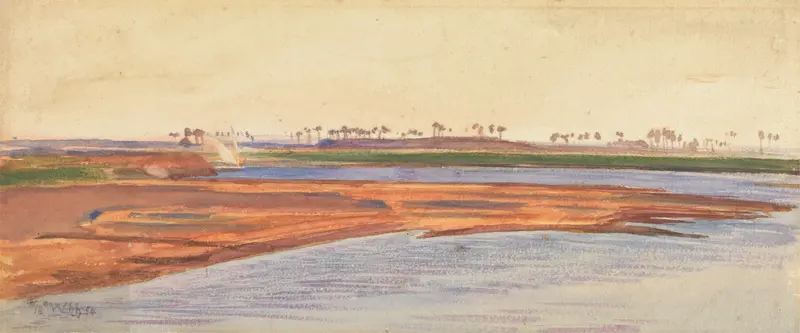
The Nile
William Holman Hunt
More Genre Scene Art

Banquet of the Officers of the St George Civic Guard
Frans Hals

Rembrandt and Saskia in the Scene of the Prodigal Son
Rembrandt van Rijn

Bal du moulin de la Galette
Pierre-Auguste Renoir

Quadrille at the Moulin Rouge
Henri de Toulouse-Lautrec

A Burial at Ornans
Gustave Courbet

When Will You Marry?
Paul Gauguin