
The Baptism of Christ — History & Facts
A shaft of light, almost tangible, slices through the wild, whorled landscape, drawing the eye to a moment of ritual at the river’s edge. The drama here is not in the figures’ faces—too distant and loosely rendered for portraiture—but in the restless energy of the world around them. The brushwork is urgent, almost stormy, with trees and water whipped into motion, as if creation itself pauses to witness the event.
The central figure bows, naked and vulnerable, while another, clothed in rough drapery, extends a hand in blessing; above them, the light crystallizes into a burst, signaling a presence beyond the visible. The landscape seems to lean in, pressing close, as if the entire scene is held in a single, suspended breath. Painted around 1740, this Baptism of Christ by Alessandro Magnasco belongs to a world where religious stories were still the mainstay of public and private devotion, but the way they were told was changing. Magnasco, known for his fevered, almost impressionistic handling of paint, brings an emotional turbulence to the subject that sets him apart from his more composed contemporaries.
Such works were often commissioned for chapels or religious institutions, intended to inspire awe and contemplation. Yet here, the wildness of nature nearly overwhelms the sacred act, hinting at a period when artists and viewers alike were beginning to sense the power of the untamed world. The painting remains in the collection of the National Gallery of Art, a testament to the enduring fascination with moments when the spiritual and the earthly collide—look again, and see how the river and sky seem to pulse with the same energy as the story at their heart.
More Artworks by Alessandro Magnasco

The Synagogue
Alessandro Magnasco
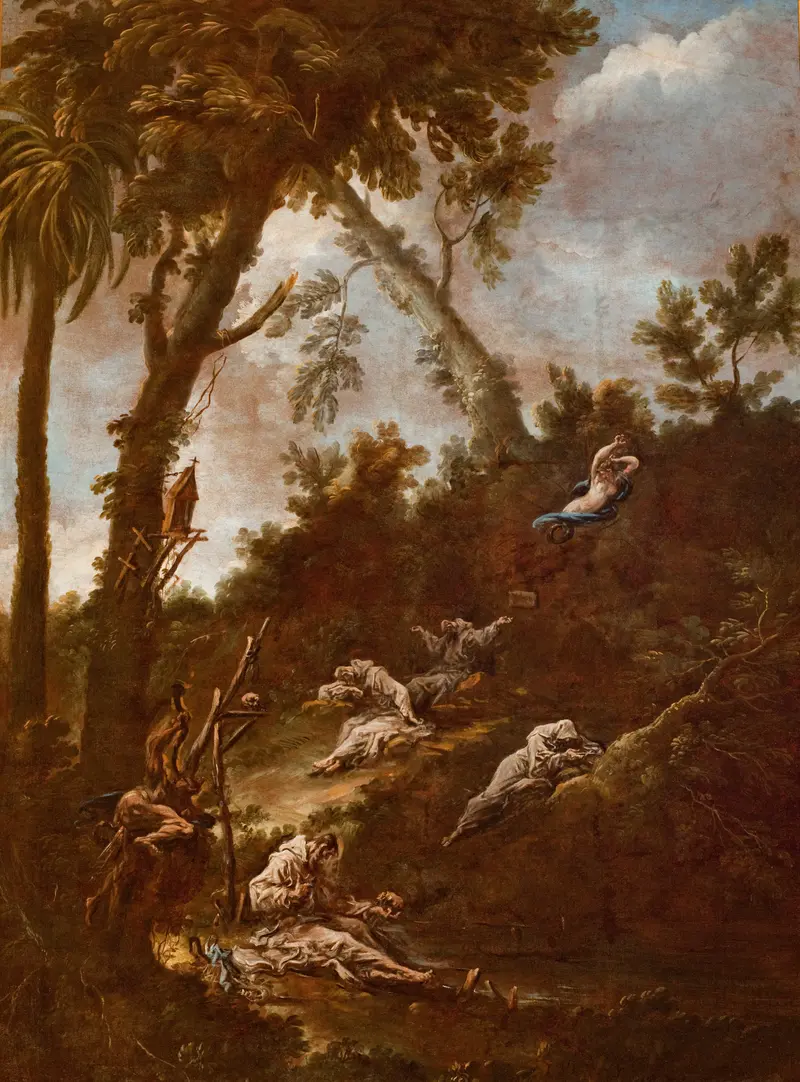
Hermits (Anachorets)
Alessandro Magnasco
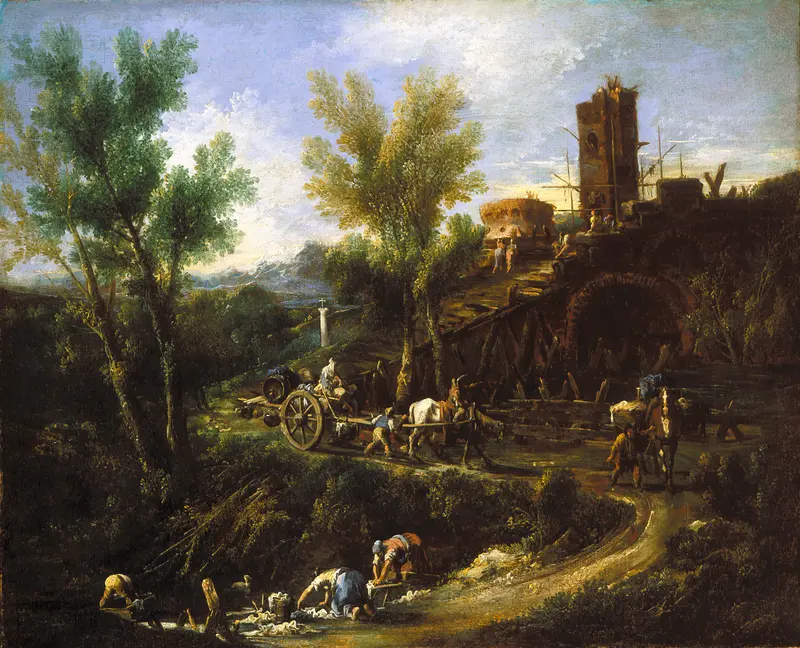
Landscape with Gypsies and Washerwomen
Alessandro Magnasco
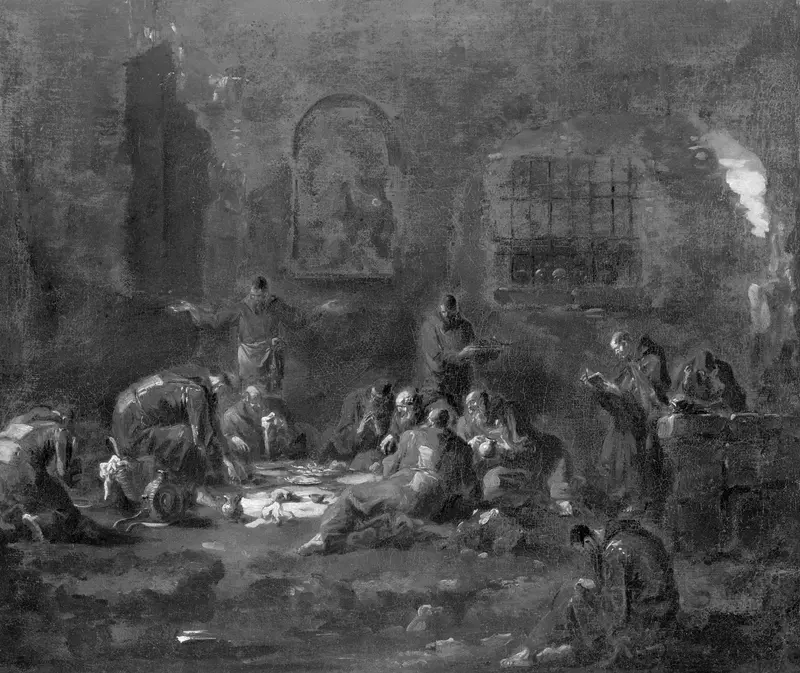
Monks at Supper
Alessandro Magnasco
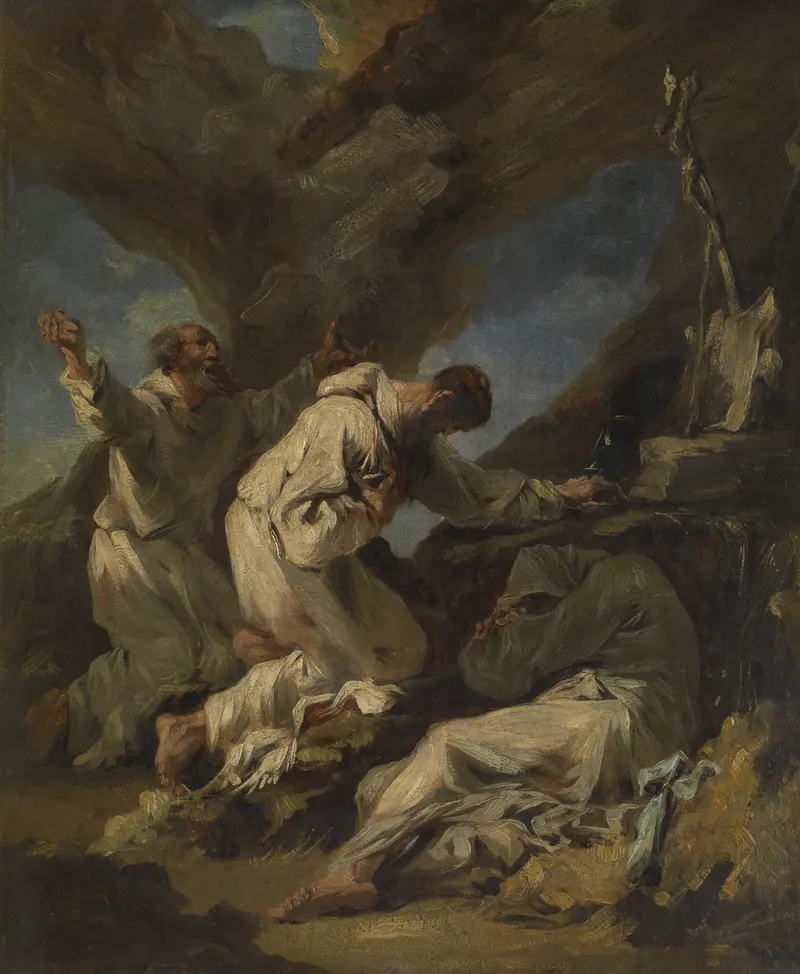
Praying Monks
Alessandro Magnasco
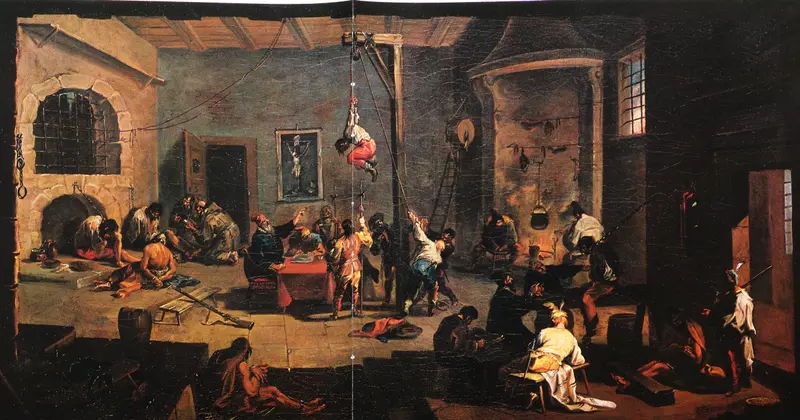
Torture Scene
Alessandro Magnasco
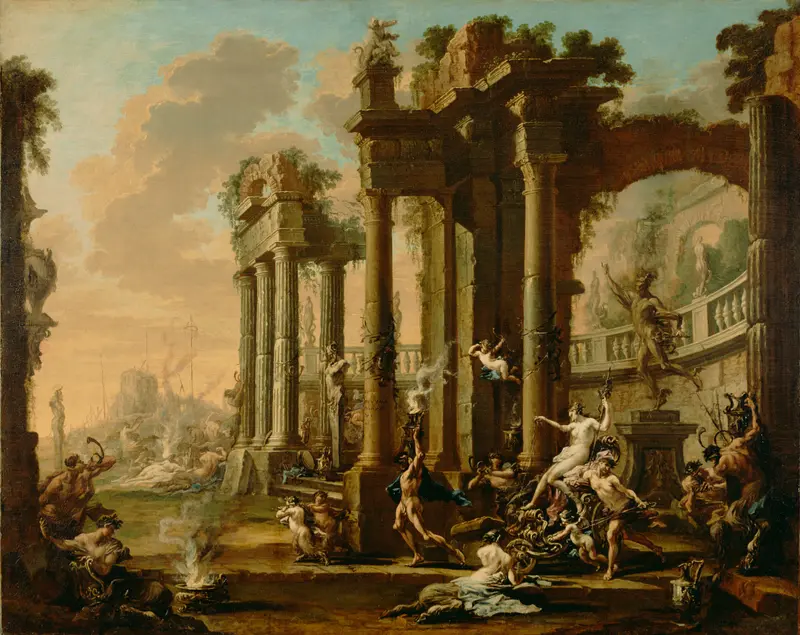
The Triumph of Venus
Alessandro Magnasco
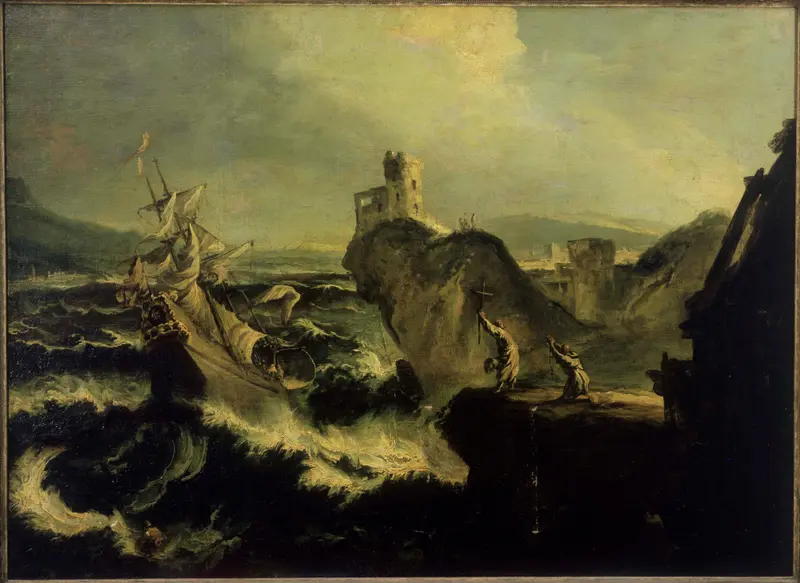
The Shipwreck
Alessandro Magnasco
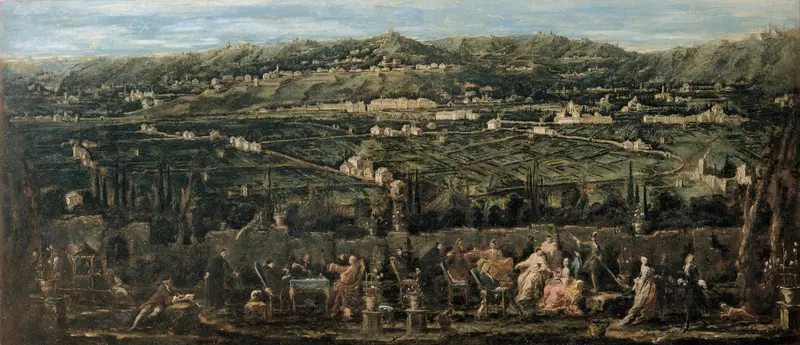
Garden Party in Albaro
Alessandro Magnasco
Monks Praying in a Grotto
Alessandro Magnasco





