
The Basket Chair — History & Facts
A garden scene unfolds with a sense of immediacy, as if the viewer has just stepped outside and caught a fleeting moment before it dissolves. The most striking element is the way light dances across the painting, filtering through foliage and dappled on the pale dress of the young girl leaning over the gate. The wicker curve of the basket chair anchors the left edge, its yellow warmth contrasting with the cool, lush greens that sweep across the background.
The girl’s relaxed posture—arms draped, feet barely touching the ground—suggests the lazy curiosity of a summer afternoon, while the watering can in the foreground hints at recent play or chores interrupted. Painted in 1882, this work by Berthe Morisot belongs to the world of late nineteenth-century France, when artists of the Impressionist movement sought to capture life’s fleeting impressions rather than its staged dramas. Such garden scenes were favored by the bourgeoisie, who commissioned paintings to celebrate domestic tranquility and the pleasures of private outdoor space. Morisot, one of the few women in the Impressionist circle, often turned her gaze to the everyday lives of women and children, rendering their worlds with quick, visible brushwork and a palette that vibrates with light.
Today, The Basket Chair resides in the collection of the Museum of Fine Arts, Houston—a reminder of how history sometimes preserves the hush of a garden afternoon, waiting for us to step in and linger.
More Artworks by Berthe Morisot

The Harbor at Lorient
Berthe Morisot
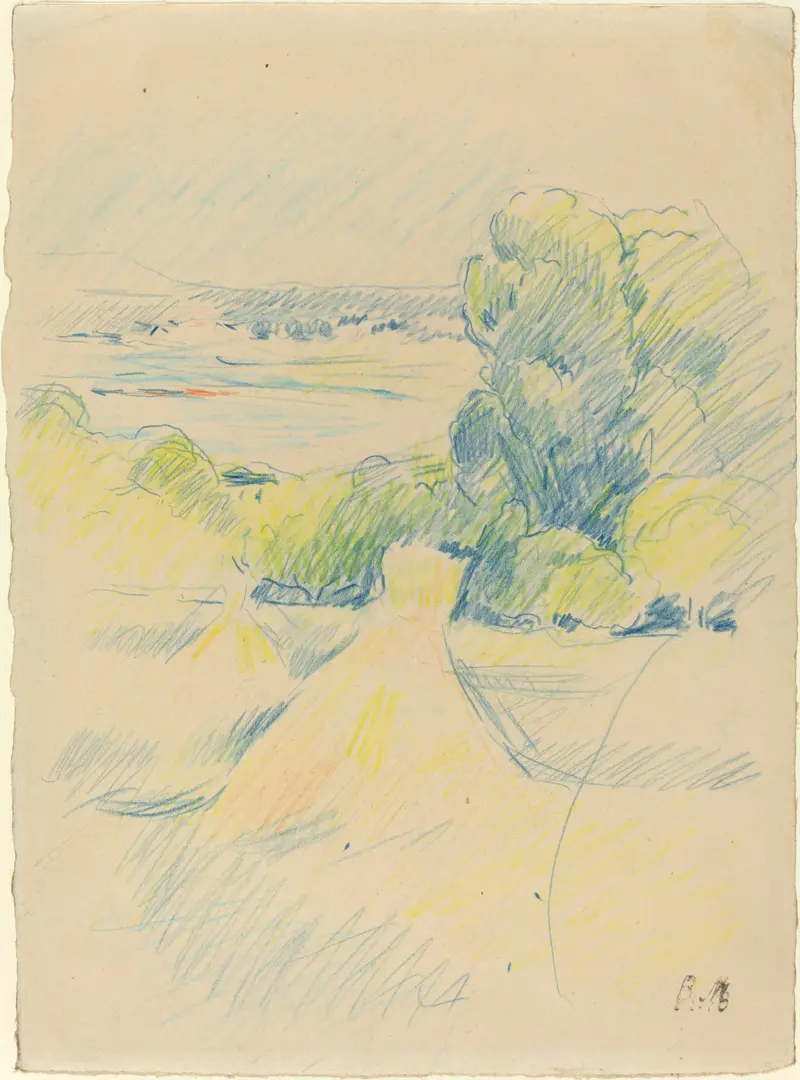
Landscape
Berthe Morisot

Hanging the Laundry out to Dry
Berthe Morisot

Woman in a Garden
Berthe Morisot

Young Girl with Hat
Berthe Morisot
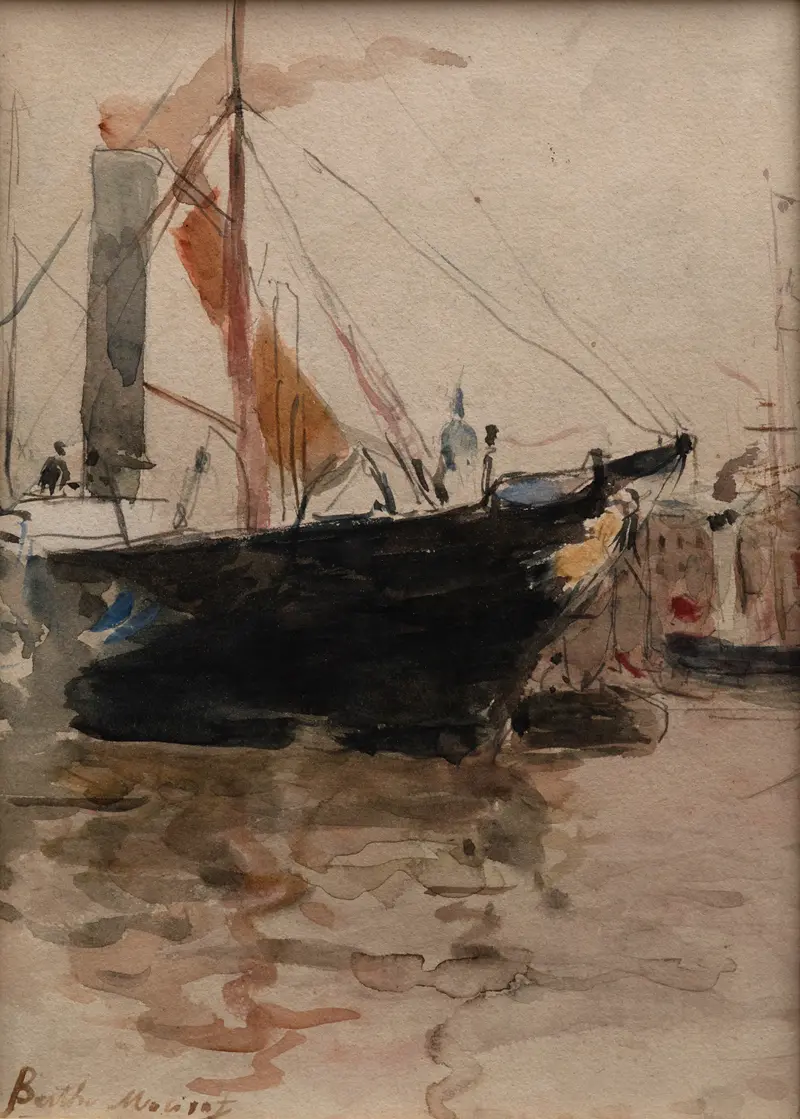
Harbor Scene, Isle of Wight
Berthe Morisot
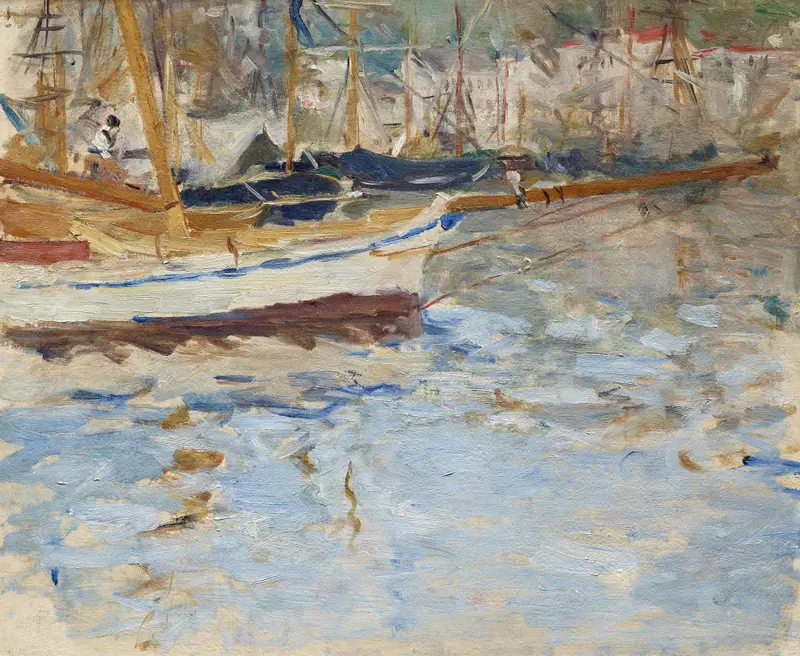
The Port of Nice
Berthe Morisot
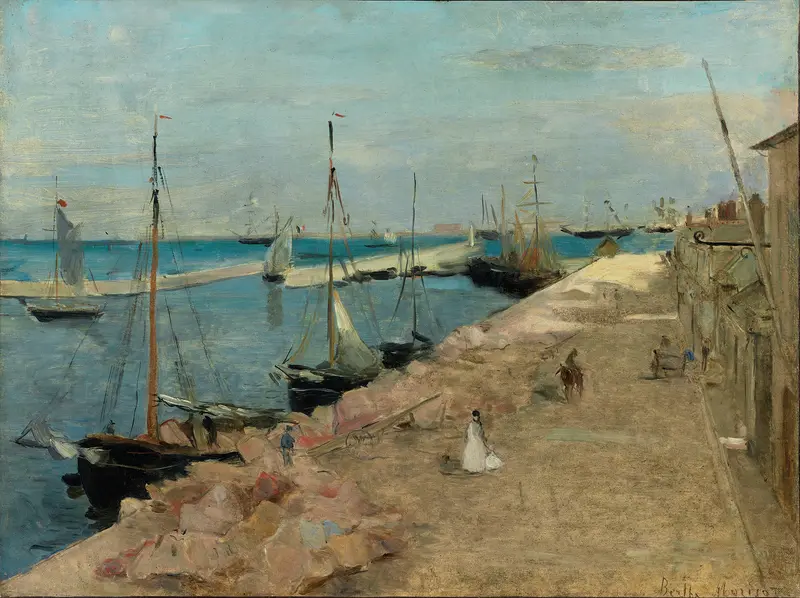
The Harbor at Cherbourg
Berthe Morisot

The Mother and Sister of the Artist
Berthe Morisot
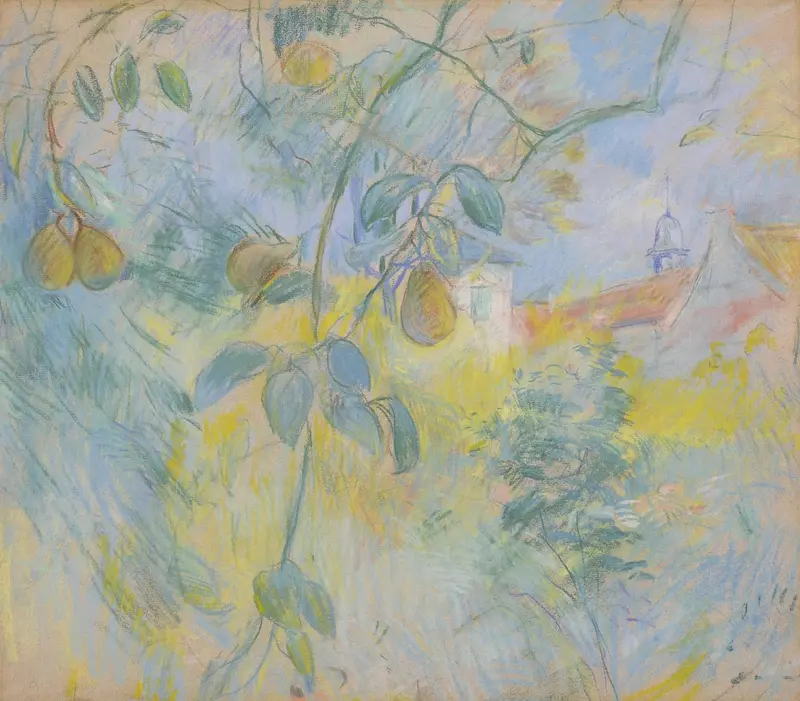
Les Poires
Berthe Morisot
More Genre Scene Art

Banquet of the Officers of the St George Civic Guard
Frans Hals

Rembrandt and Saskia in the Scene of the Prodigal Son
Rembrandt van Rijn

Bal du moulin de la Galette
Pierre-Auguste Renoir

Quadrille at the Moulin Rouge
Henri de Toulouse-Lautrec

A Burial at Ornans
Gustave Courbet

When Will You Marry?
Paul Gauguin