
The Beach — History & Facts
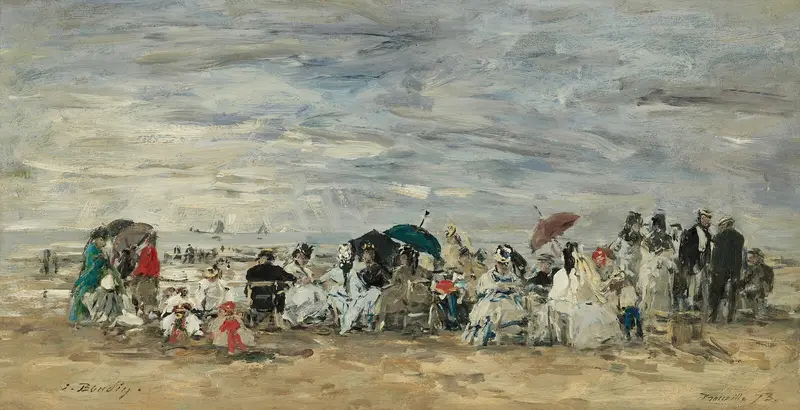
In The Beach, Eugène Boudin presents a lively coastal scene filled with figures enjoying their day by the sea. The painting features a palette of soft blues and sandy yellows, capturing the essence of a sunny beach. The figures are depicted in various poses, some lounging while others engage in activities like walking or playing.
The gentle waves and bright sky add to the cheerful atmosphere of the scene. The painting is executed in oil on canvas, a medium that allows for rich color and texture. Boudin's brushwork is loose and fluid, characteristic of the Impressionist style, which emphasizes the effects of light and movement. The composition is balanced, drawing the viewer's eye across the beach and into the horizon.
The dimensions of the artwork are approximately 65 x 81 cm, making it a medium-sized piece. Eugène Boudin is often credited with being a precursor to the Impressionist movement, influencing artists like Claude Monet. The Beach reflects Boudin's fascination with coastal life and the changing effects of light on water. Interestingly, Boudin was one of the first artists to paint en plein air, or outdoors, which was a significant shift in the art world at the time.
This work exemplifies his dedication to capturing the beauty of nature in a spontaneous and immediate way.
More Artworks by Eugène Boudin

Vacationers on the Beach at Trouville
Eugène Boudin
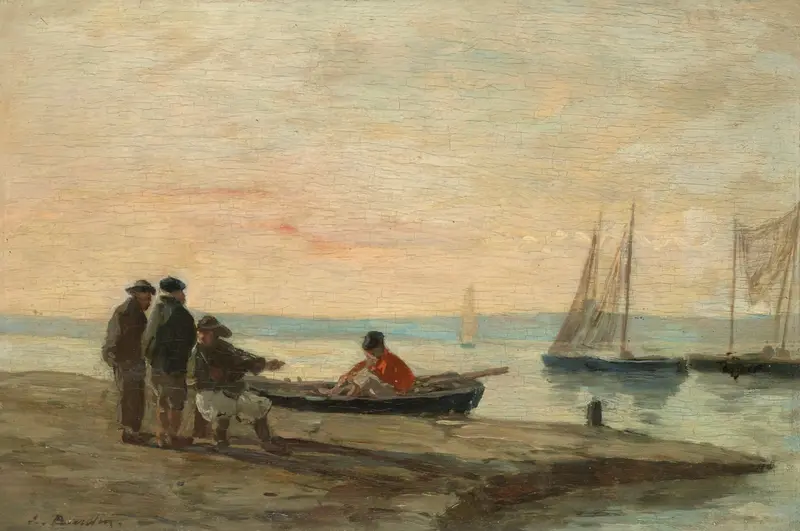
Port aux environs d’Honfleur
Eugène Boudin
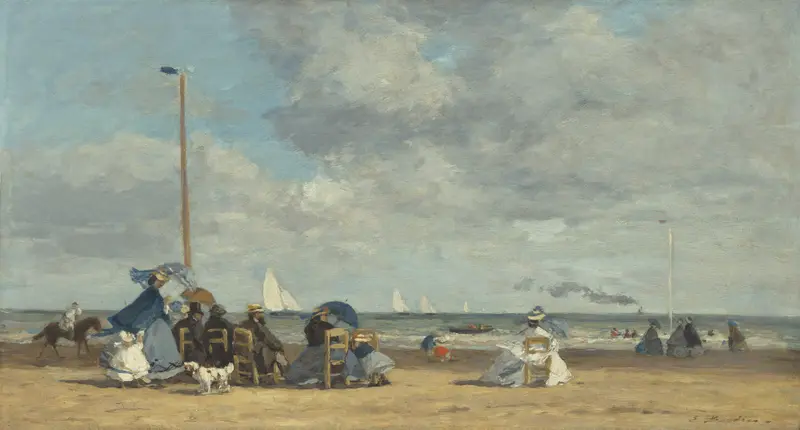
Beach at Trouville
Eugène Boudin
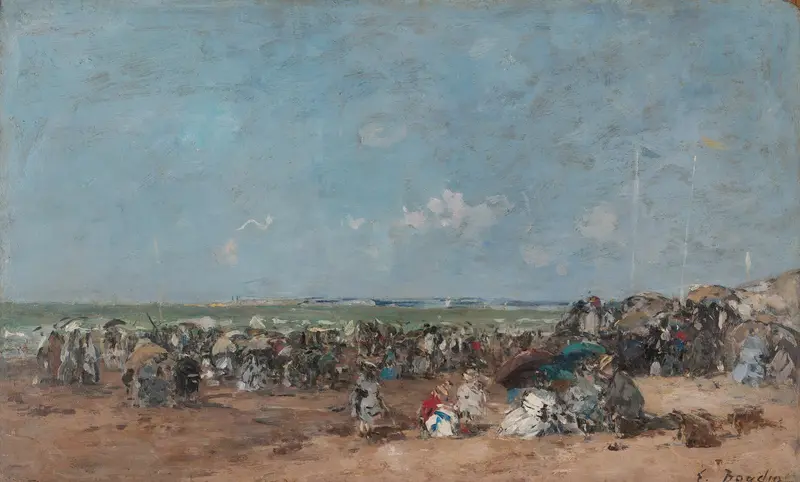
Beach Scene in Trouville
Eugène Boudin
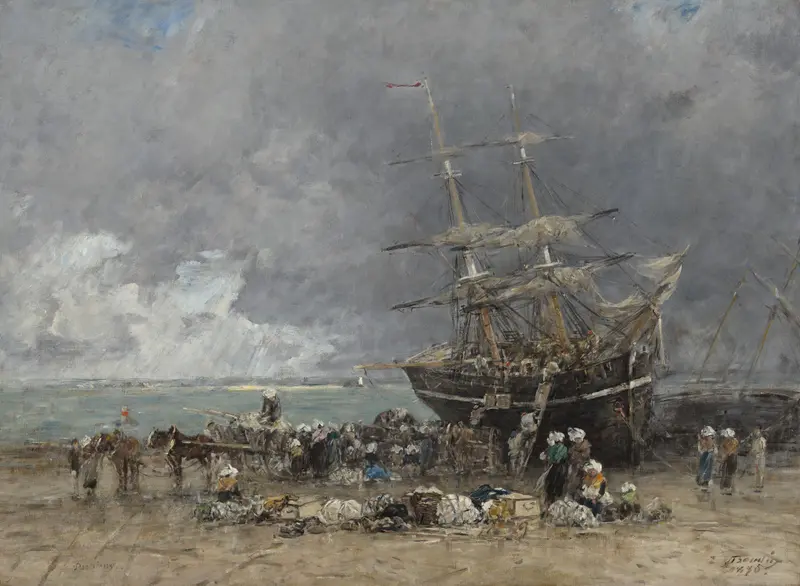
Return of the Terre-Neuvier
Eugène Boudin
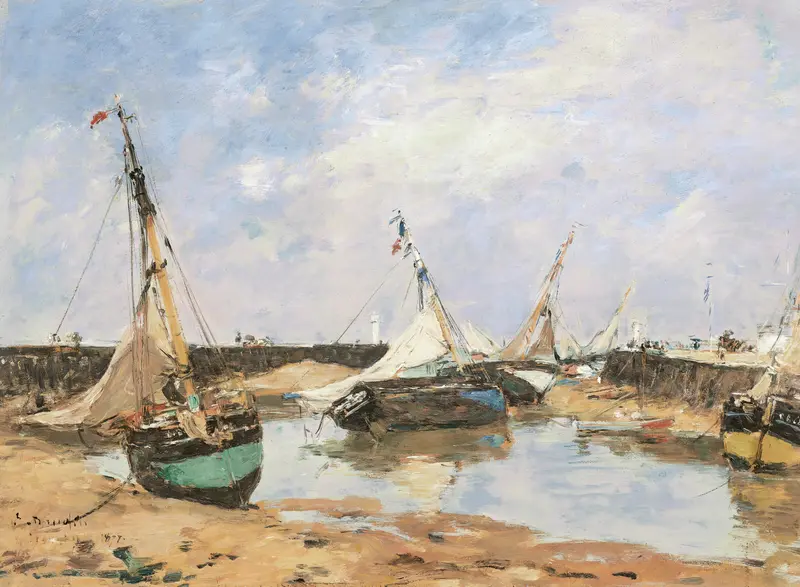
Trouville. Barques échouées entre les jetées
Eugène Boudin
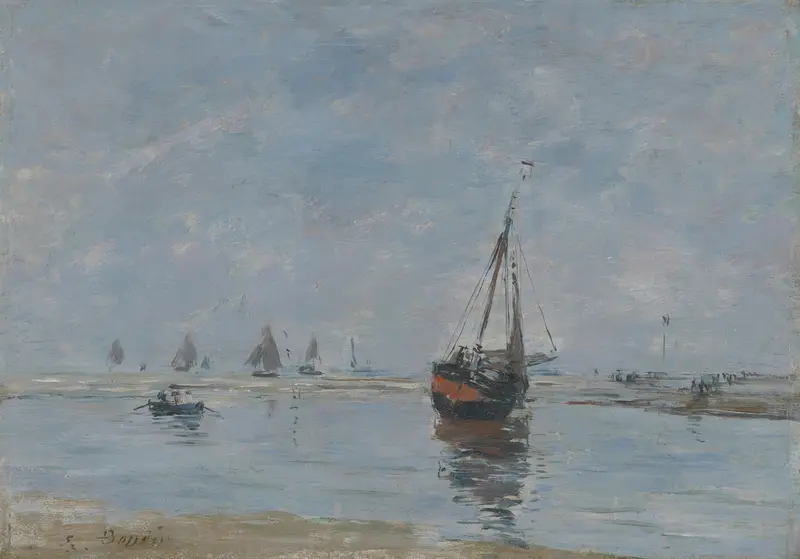
Trouville at Low Tide
Eugène Boudin
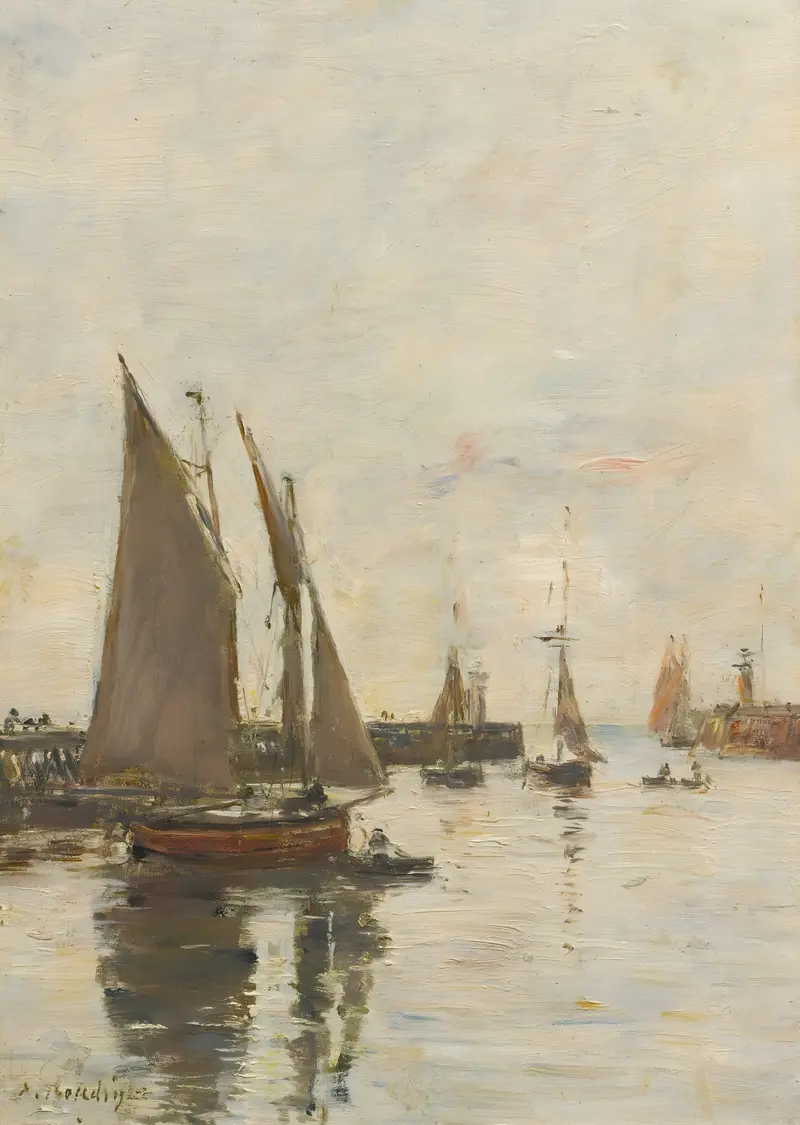
Trouville, Les Jetées Marée Haute
Eugène Boudin
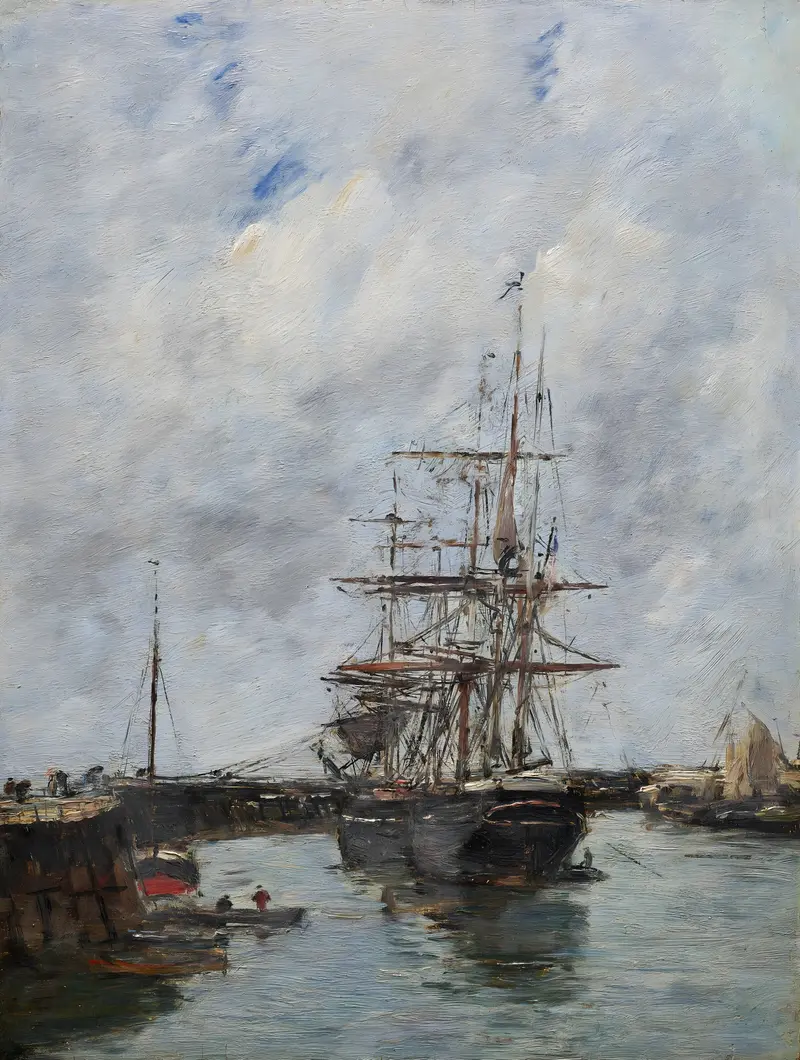
Trouville, Les jetées marée haute
Eugène Boudin
Trouville, Scène de plage
Eugène Boudin





