
The beach "Le Bas Butin", Honfleur — History & Facts
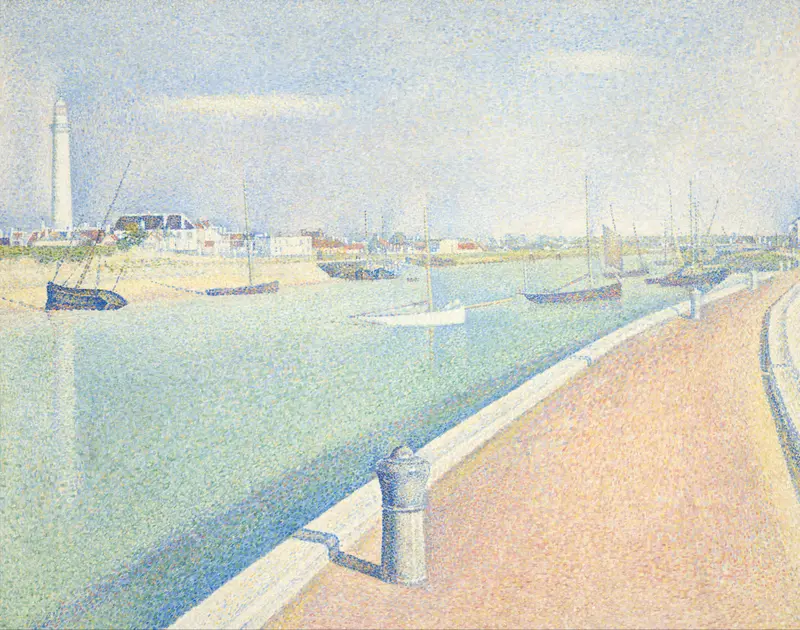
When Georges Seurat exhibited The beach "Le Bas Butin", Honfleur in 1886, he was only a few months past the scandalous debut of A Sunday Afternoon on the Island of La Grande Jatte. Critics and fellow artists alike were still debating whether his new technique—later called Pointillism—was a scientific breakthrough or an affront to painting itself. This smaller canvas, painted during a summer sojourn in the Normandy port of Honfleur, became an early experiment in Seurat’s systematic approach to color, executed just as he was refining his theories. The scene captures a quiet, sunlit moment on the Seine estuary’s sandy bank, where the river meets the sea.
A handful of figures, almost spectral in their stillness, are scattered along the shore: a woman in a white dress gazes out over the water, while a child bends to examine something in the sand. The brushwork—tiny, precise dots of pure color—merges at a distance into a shimmering haze, giving the light a palpable presence. Unlike Monet’s lively brushstrokes in his own Honfleur scenes, Seurat’s methodical technique imposes a calm order, turning an ordinary day at the beach into a study in perception and optical effect. The exact provenance of The beach "Le Bas Butin", Honfleur is somewhat obscure, as is often the case with Seurat’s smaller panels, which were sometimes traded privately or passed among friends.
Today, it is recognized as an important transitional work, bridging Seurat’s early Impressionist experiments and his mature Pointillist masterpieces. Its place in his career marks a moment when he was testing the boundaries of his new method, away from Parisian crowds and controversies. The painting now hangs in the Museo Thyssen-Bornemisza in Madrid, a testament to Seurat’s restless search for a new language of light and color.
More Artworks by Georges Seurat
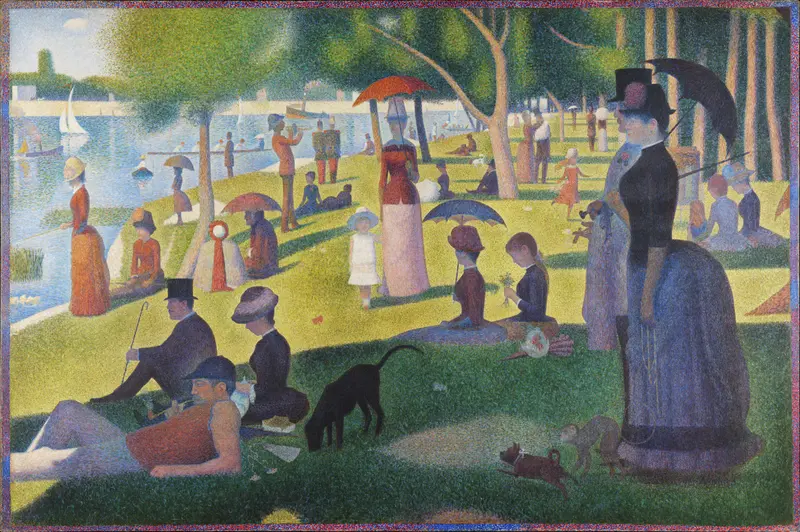
A Sunday Afternoon on the Island of La Grande Jatte
Georges Seurat
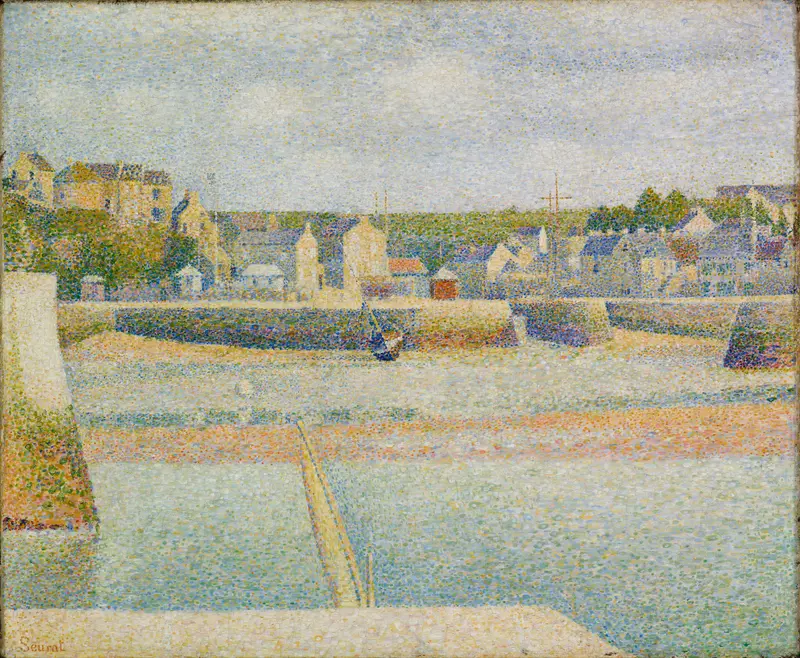
Port-en-Bessin, The Outer Harbor (Low Tide)
Georges Seurat
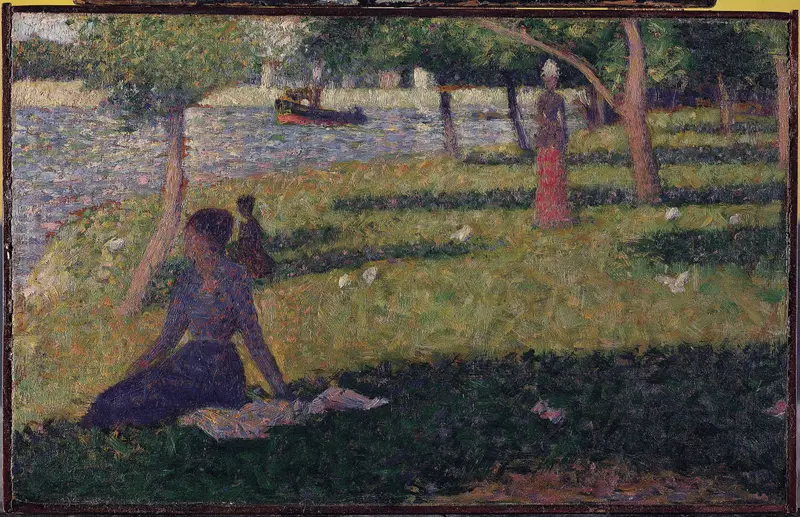
Étude pour ‘La Grande Jatte’ (Study for ‘La Grande Jatte’)
Georges Seurat
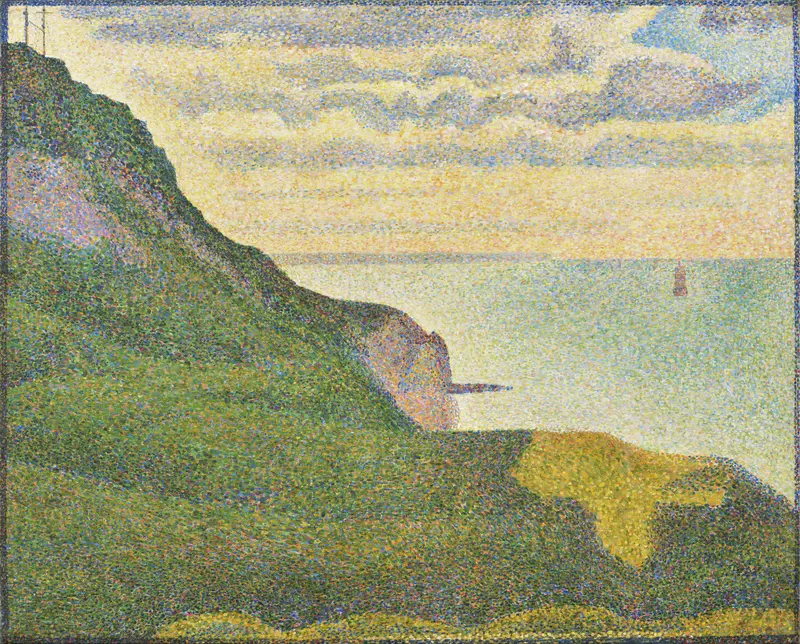
Seascape at Port-en-Bessin,Normandy
Georges Seurat
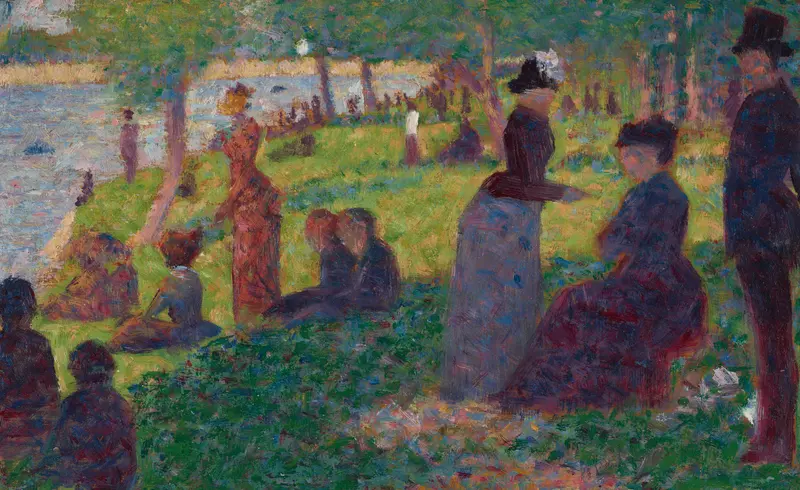
Oil Sketch for "A Sunday on La Grande Jatte — 1884"
Georges Seurat
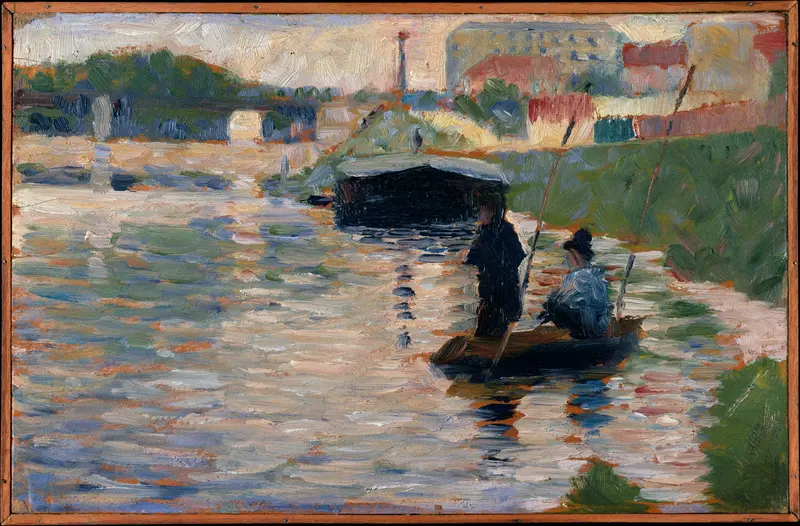
View of the Seine
Georges Seurat
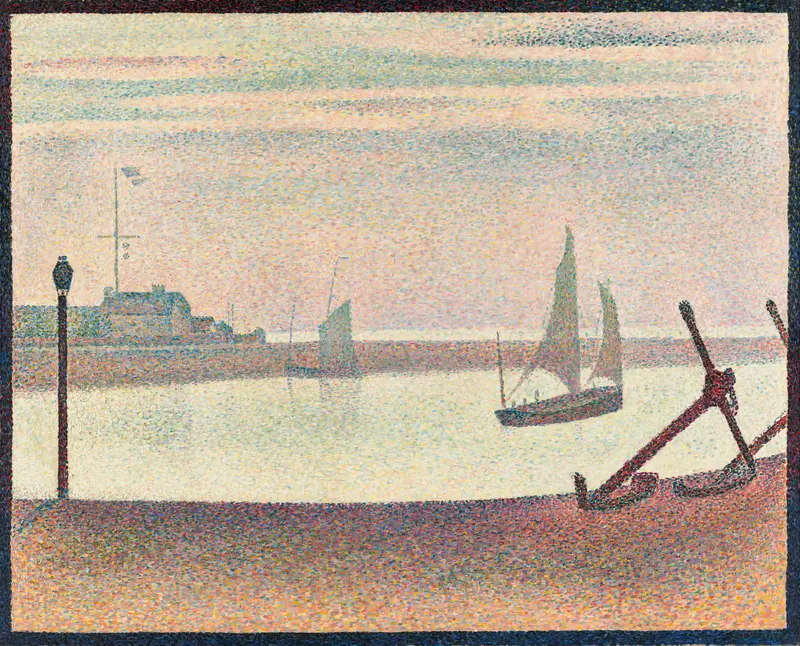
The Channel at Gravelines, Evening
Georges Seurat
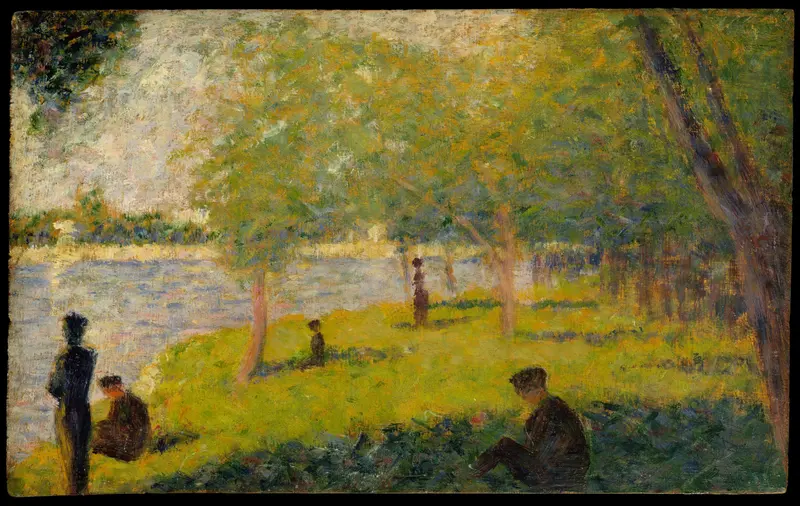
Study for ‘A Sunday on La Grande Jatte’
Georges Seurat
Study for A Sunday on La Grande Jatte
Georges Seurat
The Channel of Gravelines, Petit Fort Philippe
Georges Seurat





