
The Black Horse (East of the Sun and West of the Moon) — History & Facts
What first catches the eye in The Black Horse (East of the Sun and West of the Moon) is not just the fantastical procession of riders, but the sense that the world itself is teetering on the edge of dream and waking. The figures, elongated and draped in impossibly ornate costumes, seem to float above a landscape that dissolves into mist and suggestion. The black horse at the center, with its rider in a vivid red cloak, draws the gaze upward along the winding path toward a distant castle perched above a waterfall.
Each rider is a study in contrasts—light and shadow, opulence and mystery—while the delicate, almost skeletal trees and bridges lend the entire scene a sense of fragile enchantment. The composition leads the viewer’s eye in a spiral, from the grounded figure in black to the ethereal castle, inviting us to imagine the journey that lies ahead. Created in 1922 for a collection of Norwegian fairy tales, this illustration by Kay Nielsen belongs to a world where stories were gateways to other realms. The early twentieth century saw a flourishing of book illustration as publishers and readers alike sought to bring new life to old tales, and Nielsen’s work stands out for its blend of Art Nouveau linework and Nordic folklore.
These images were meant to captivate both children and adults, offering a visual feast that matched the strangeness and beauty of the stories themselves. While little is recorded about the fate of individual illustrations, the survival of this work in a digitized volume from the New York Public Library speaks to the enduring appeal of fairy tales and the artists who gave them form. The longer you look, the more the painting seems to promise: another secret, another path, just out of sight.
More Artworks by Kay Nielsen
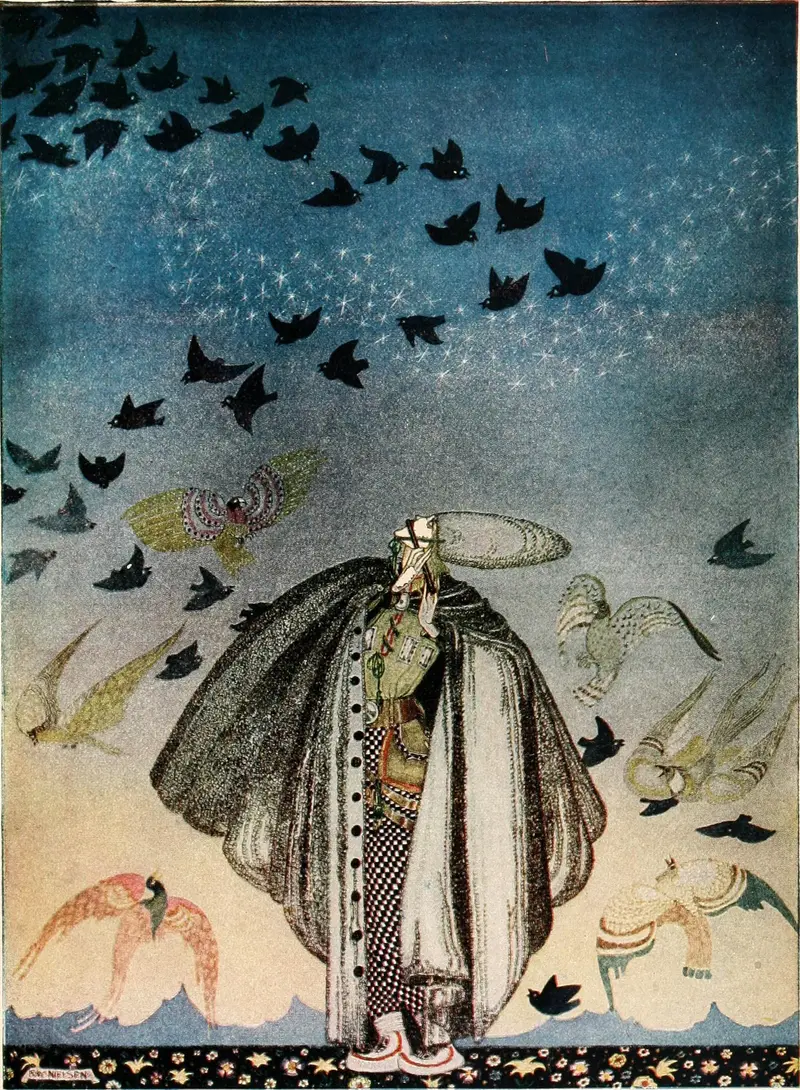
The Cloak of Black Birds (East of the Sun and West of the Moon)
Kay Nielsen

The Spirit at the Lighted Door (East of the Sun and West of the Moon)
Kay Nielsen
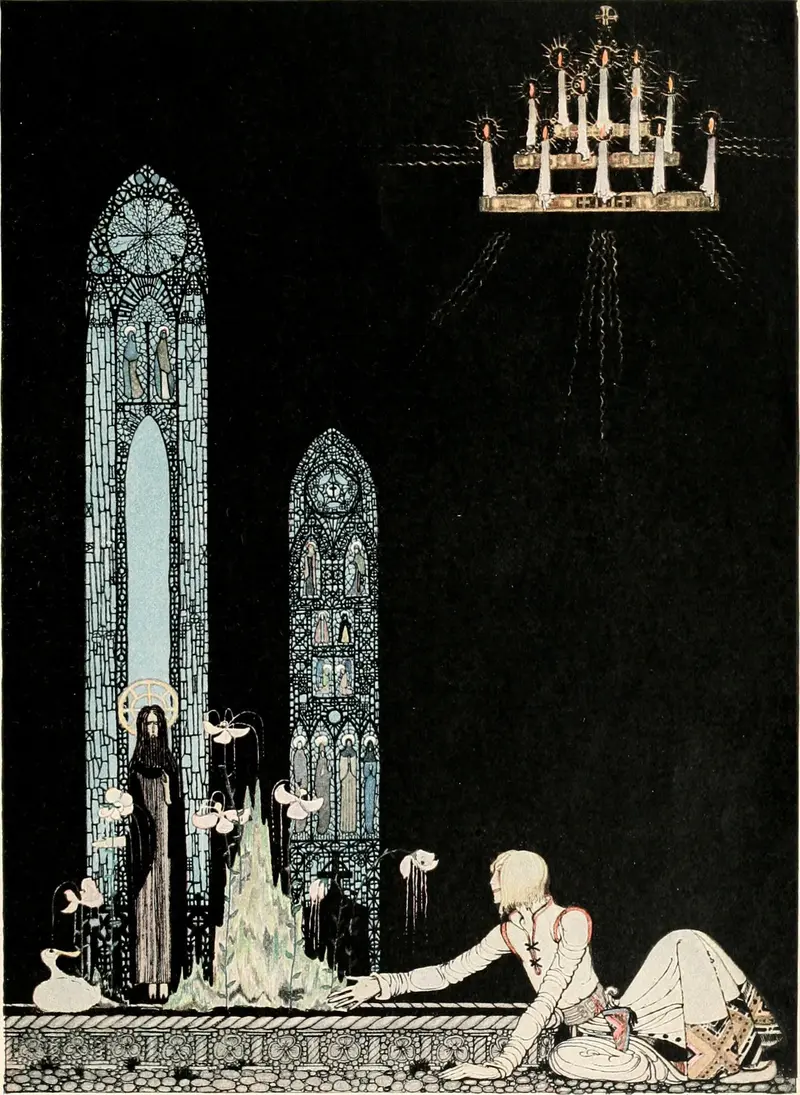
The Widow's Son and the Candles (East of the Sun and West of the Moon)
Kay Nielsen
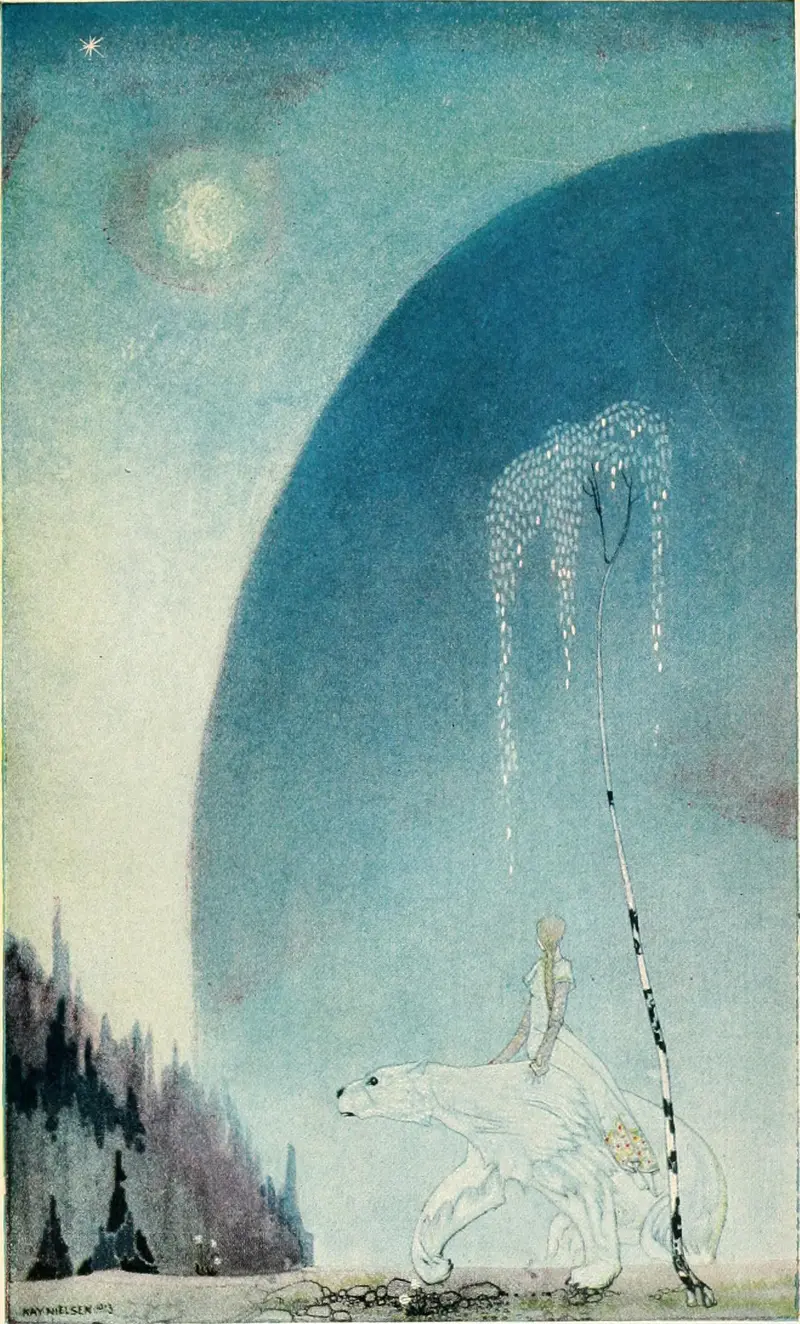
The White Goat Under the Moon (East of the Sun and West of the Moon)
Kay Nielsen

The Cloud Castle (Hansel and Gretel and Other Stories)
Kay Nielsen
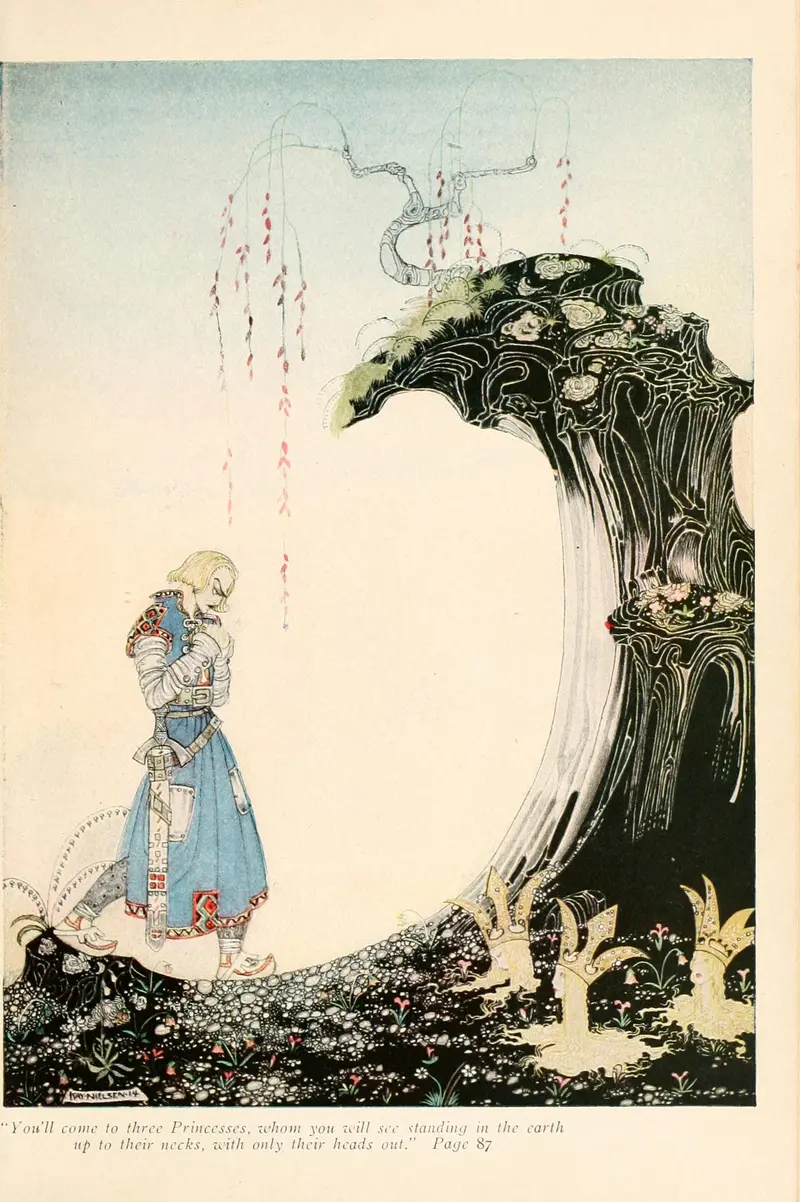
The Enchanted Wave (East of the Sun and West of the Moon)
Kay Nielsen
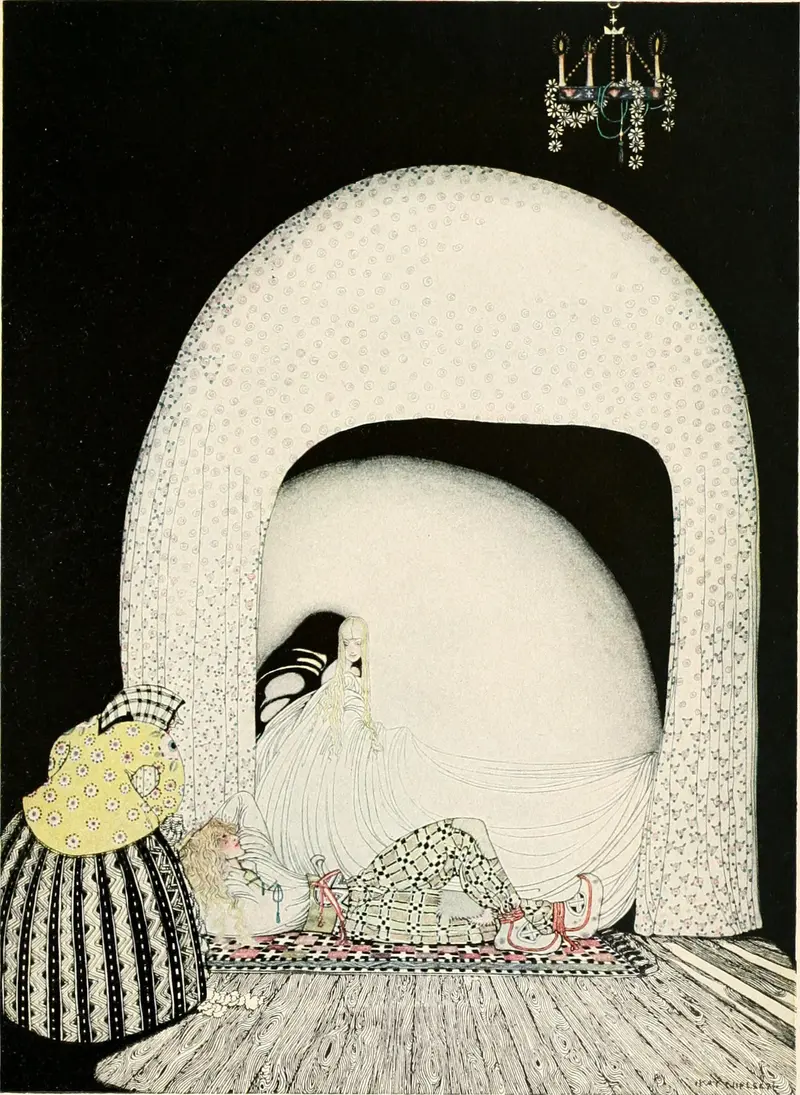
Beneath the White Canopy (East of the Sun and West of the Moon)
Kay Nielsen
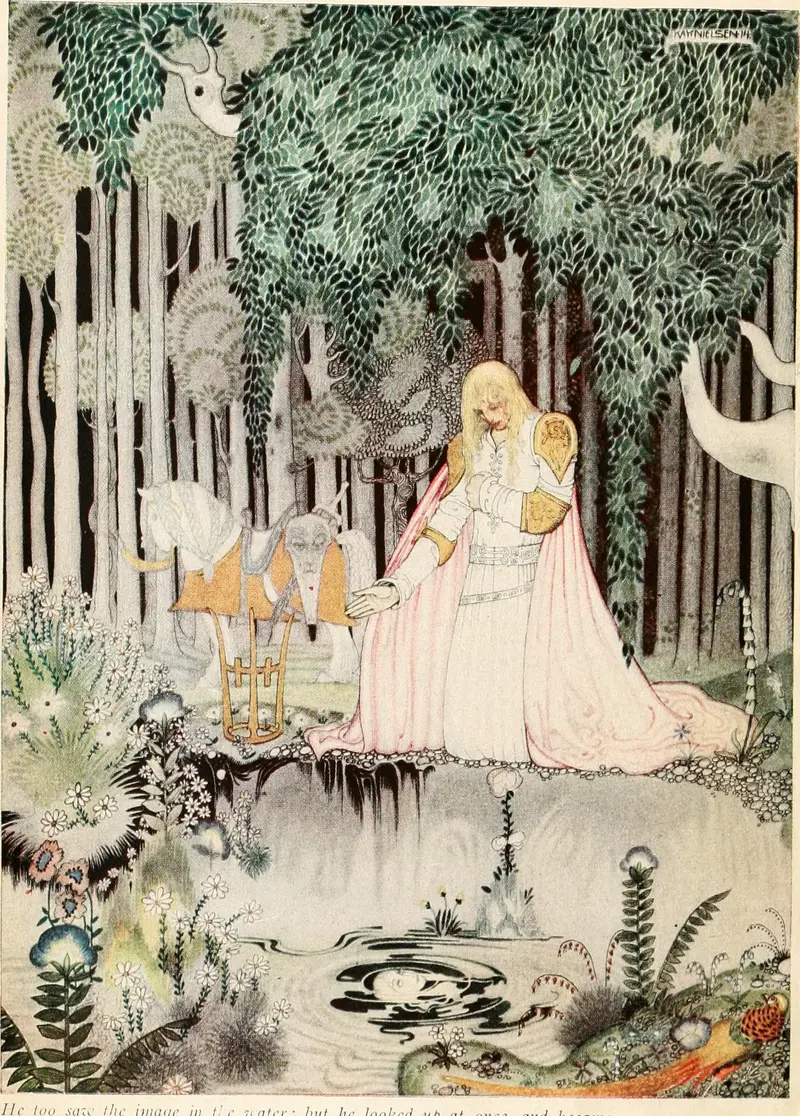
The Princess in the Moonlit Wood (East of the Sun and West of the Moon)
Kay Nielsen
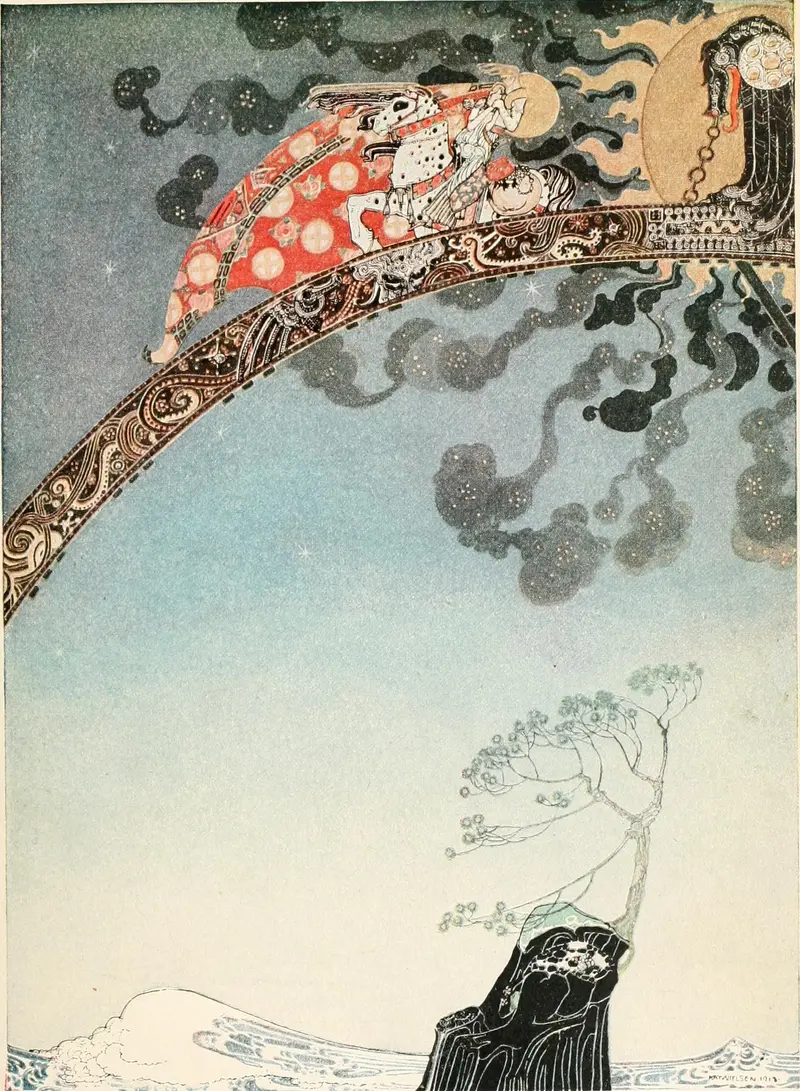
The Bridge Over the Sea (East of the Sun and West of the Moon)
Kay Nielsen
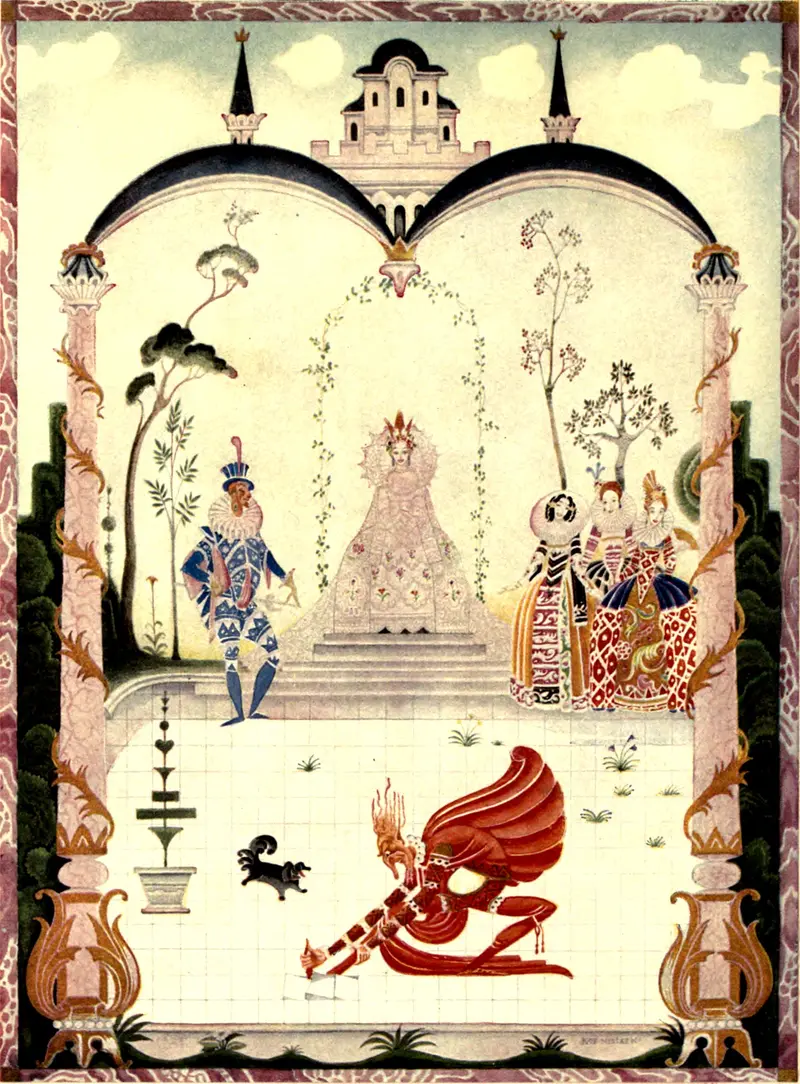
Frontispiece (Hansel and Gretel and Other Stories)
Kay Nielsen





