
The Bridge Tsūtenkyō, Kyoto — History & Facts
Can beauty exist without sorrow? The answer echoes softly in the stillness of The Bridge Tsūtenkyō, Kyoto, a poignant work that captures the loneliness of transient moments in time. Look to the left, where the gentle curve of the bridge leads the eye across the painting, inviting you to traverse its wooden planks. Notice how the artist plays with layers of light and shadow, creating a soft glow that illuminates the delicate cherry blossoms, their fleeting beauty symbolizing the passage of time. The color palette is both muted and vibrant, merging rich deep blues with hints of warm pinks, evoking a sense of yearning that resonates deeply within the viewer. As you draw closer, the careful detailing reveals the emotional tensions at play.
The solitary figure, almost swallowed by the expansive landscape, stands in stark contrast to the vibrant cherry blossoms, suggesting an internal struggle against the backdrop of nature’s beauty. The ethereal fog that cloaks the distant mountains adds a layer of isolation, amplifying the sense that this moment, though visually stunning, is steeped in solitude and longing. In 1896, Kobayashi Kiyochika was at the forefront of the modernization of Japanese art, bridging traditional Ukiyo-e techniques with Western methods. Living in a period of significant cultural change in Japan, he sought to capture both the beauty of his surroundings and the complexities of human emotion, reflecting a society grappling with its identity amid rapid transformation.
This work stands as a testament to his keen insight into the human condition, encapsulating the quiet sorrow that often runs parallel to beauty.
More Artworks by Kobayashi Kiyochika
Browse all →
Thunder and Lightning at Oumaya Bridge
Kobayashi Kiyochika

Shinkyō, Sacred Bridge at Nikkō
Kobayashi Kiyochika

Daybreak at Shrine, Kanda
Kobayashi Kiyochika

The Great Fire at Ryōgoku Bridge, Viewed from Asakusa Bridge on the 26th of January, 1881
Kobayashi Kiyochika

The Moon At Shinagawa
Kobayashi Kiyochika
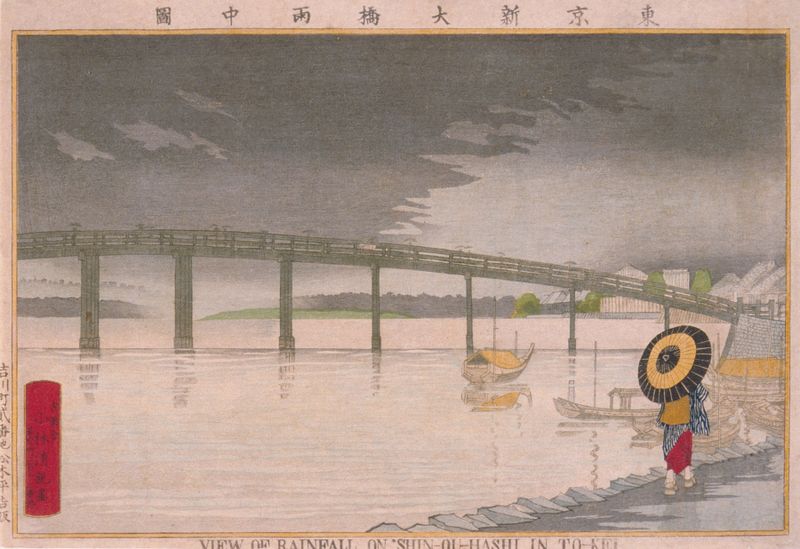
View of Rainfall on Shin-Ou-hashi in To-kei
Kobayashi Kiyochika

Evening at Tōshōgū Shrine, Ueno, Tokyo
Kobayashi Kiyochika

Snow at Ochanomizu
Kobayashi Kiyochika
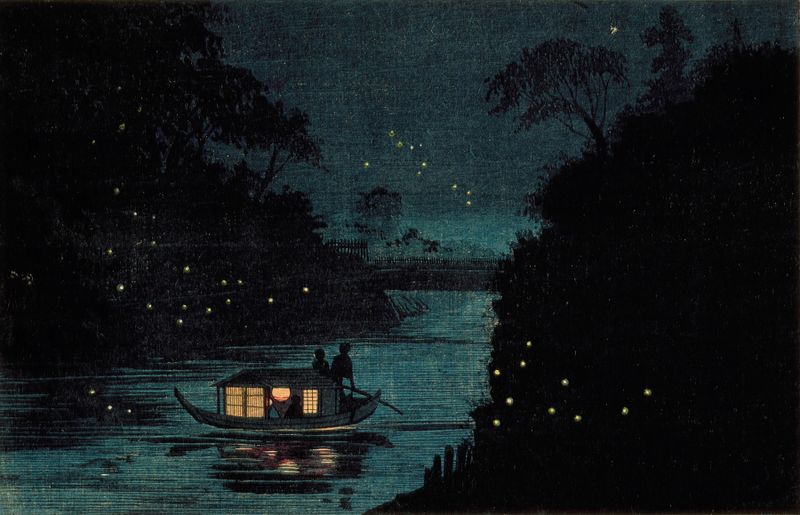
Fireflies at Ochanomizu
Kobayashi Kiyochika
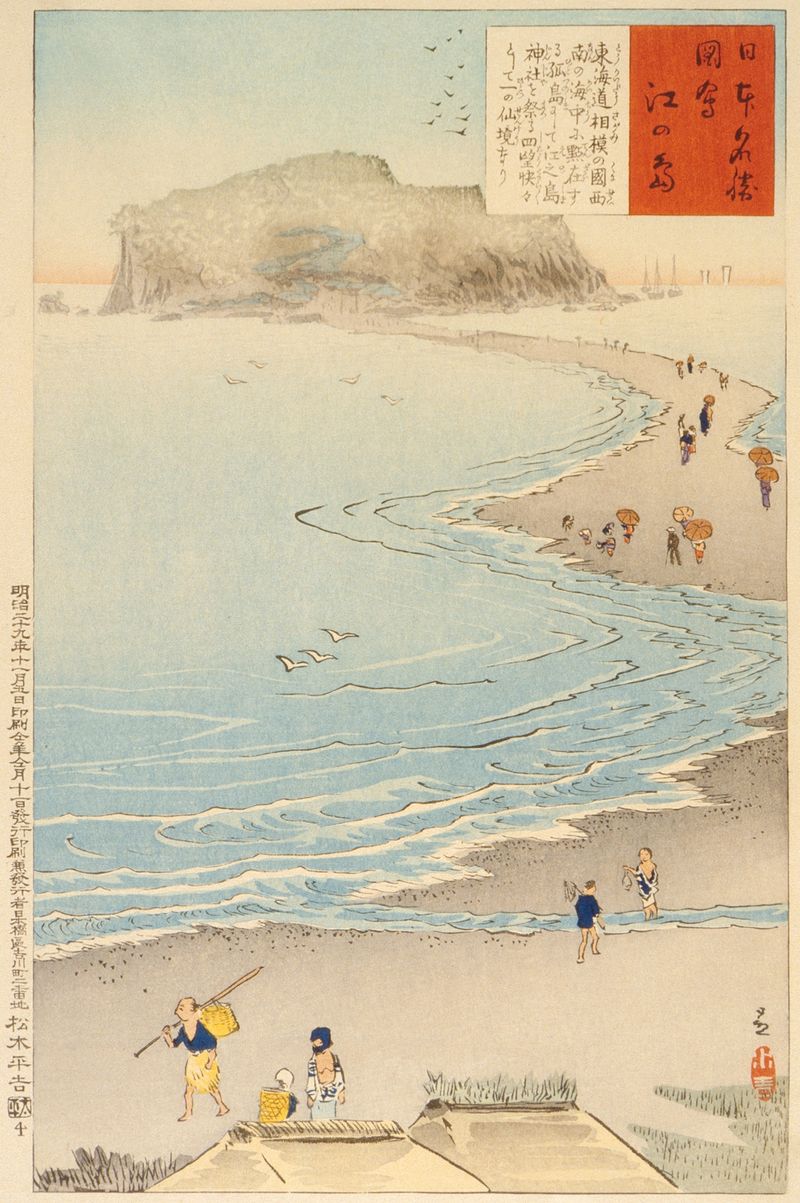
The Island Enoshima
Kobayashi Kiyochika





