
The Clipper Ship Annie H. Smith — History & Facts
What first catches the eye in The Clipper Ship Annie H. Smith is the sheer sweep of canvas—billowing sails, taut and full, carry the ship forward with a sense of purpose that almost defies the stillness of paint. The hull slices through a restless green sea, its dark mass both weighty and elegant, while the ship’s name gleams at the prow like a signature.
Jacobsen’s hand lingers on the rigging, every line crisply rendered, guiding the viewer’s gaze upward and outward, as if inviting you to imagine the wind that fills those sails. The low horizon grants the sky a vastness that dwarfs even this proud vessel, lending the scene a quiet grandeur. Subtle touches of light on the water and sails suggest a day neither stormy nor calm, but alive with movement and possibility. Painted in 1917, long after the Annie H.
Smith had vanished from the seas, this work belongs to the twilight of the age of sail and to the later years of Antonio Jacobsen, a painter famed for his portraits of ships. By then, many of the great clippers had already been lost or repurposed, as the world shifted to steam and steel. Yet the tradition of ship portraiture endured—commissioned by captains, owners, and sailors who wished to remember their vessels in their prime.
Jacobsen’s meticulous style and devotion to accuracy made him the chronicler of a fading era, and this painting, sourced from rafaelosonaauction.com, stands as both tribute and elegy. The ship may have become a coal barge by the 1890s, but here, on canvas, she sails forever—her story waiting for each new viewer to set her in motion again.
More Artworks by Antonio Jacobsen

Het stoomschip met hulpzeilvermogen ‘Kroonland’
Antonio Jacobsen

The Barque Vigilant
Antonio Jacobsen
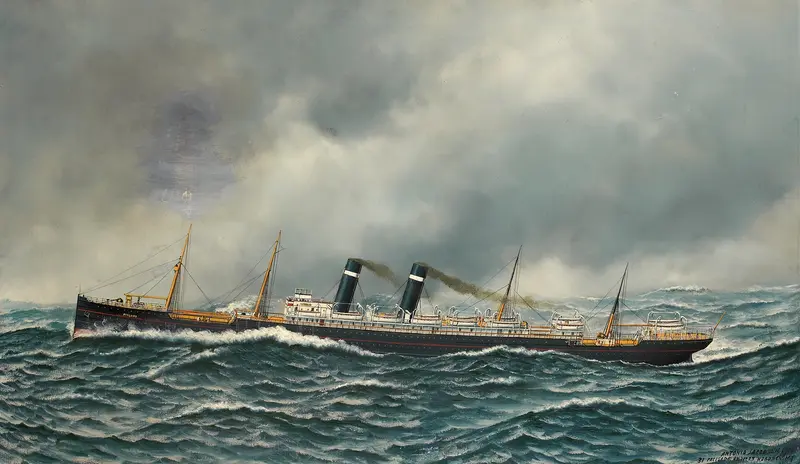
Het stoomschip ‘Finland’ te New York
Antonio Jacobsen
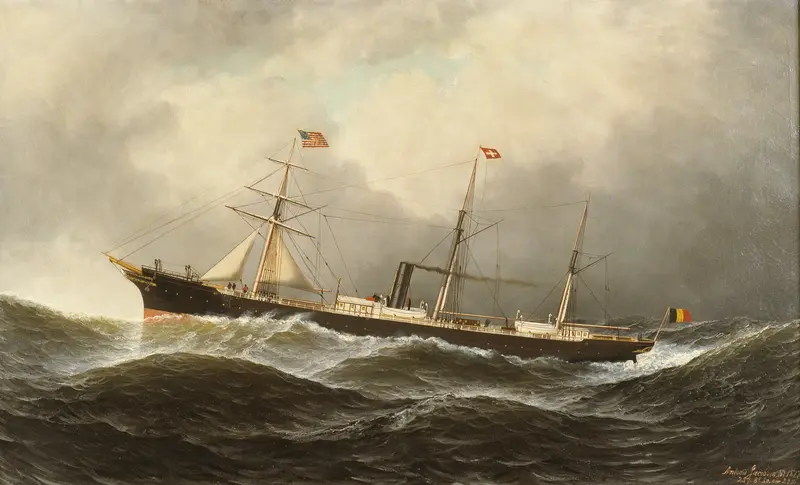
Het Belgische stoomschip met hulpzeilvermogen ‘Ludwig’ op zee
Antonio Jacobsen
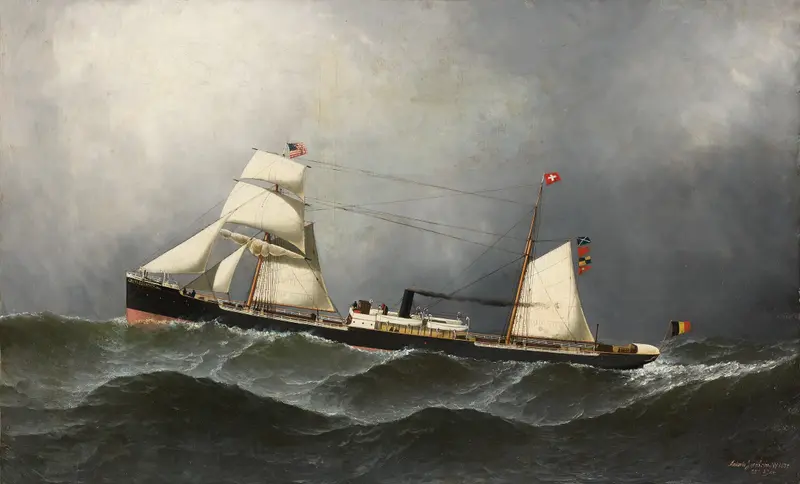
Het stoomschip met hulpzeilvermogen ‘Daniel Steinmann’ van de White Cross Line
Antonio Jacobsen
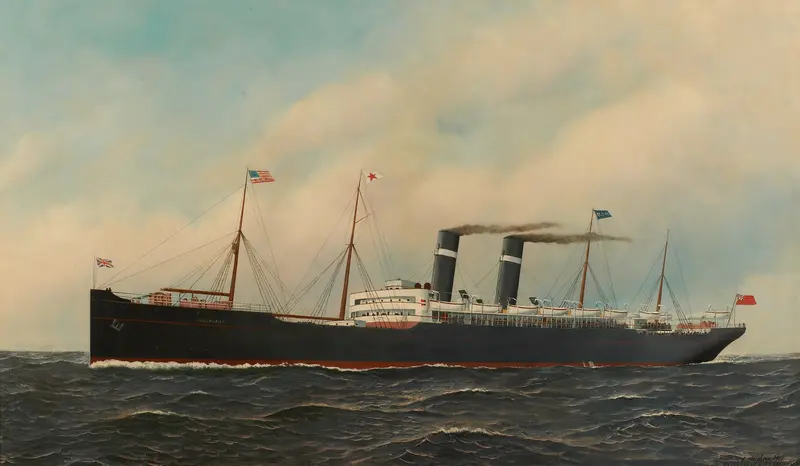
Het passagiersstoomschip Vaderland
Antonio Jacobsen
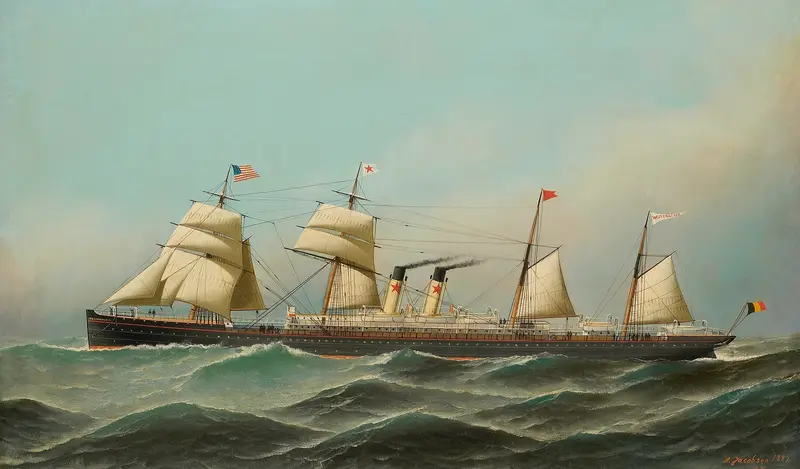
Het stoomschip met hulpzeilvermogen ‘Westernland’
Antonio Jacobsen
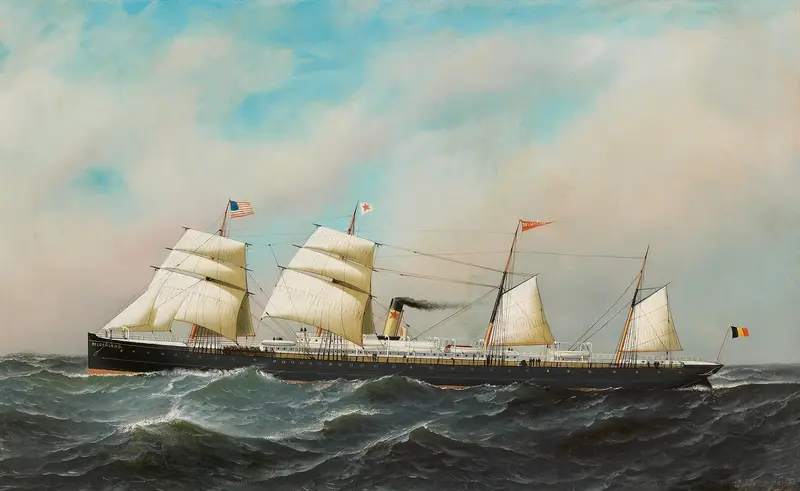
Het stoomschip met hulpzeilvermogen Belgenland
Antonio Jacobsen
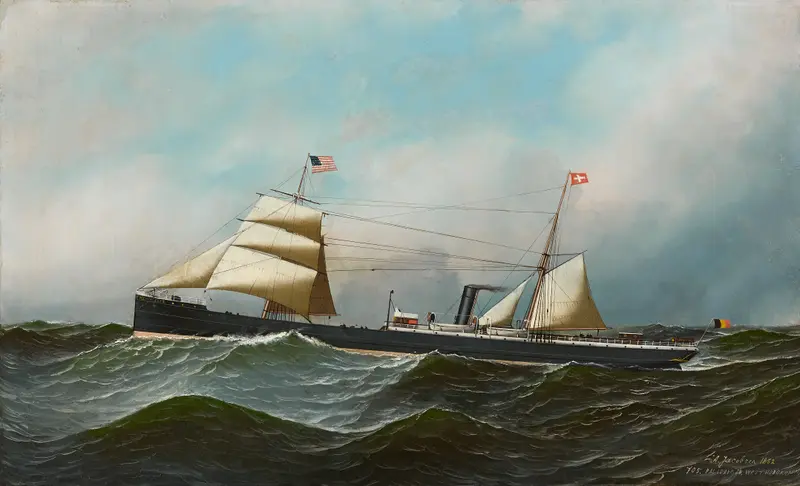
Het stoomschip met hulpzeilvermogen ‘Henry Edye’ van de White Cross Line
Antonio Jacobsen
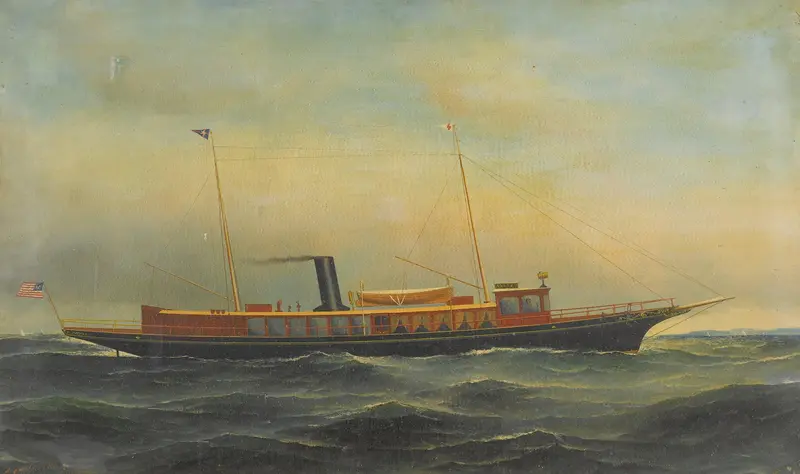
The Yacht ‘aztec’
Antonio Jacobsen





