
The Colloquy of Monos and Una (Poe) — History & Facts
A procession of spectral figures drifts across a void, their robes a riot of pattern and jewel tones, yet their faces are mask-like, remote. At the heart of this floating assembly, two central figures—one crowned, one veiled—embrace with a gravity that pulls the eye. The artist, Harry Clarke, conjures a world where the boundaries between life and death, dream and waking, are blurred: the deep blue of the night sky behind them is punctuated by a luminous moon, suggesting both eternity and isolation.
The intricate costumes, with their angular folds and shimmering details, signal a ritual or ceremony, while the elongated forms and stylized faces evoke both the medieval and the modern. Every gesture here is deliberate: the outstretched arms, the sidelong glances, the way each figure seems tethered to the next by invisible threads of fate. Created in 1923 as an illustration for Poe’s Tales of Mystery and Imagination, this work belongs to a fevered moment in art when the decorative and the macabre mingled freely. Clarke, working in the wake of Art Nouveau and on the cusp of Art Deco, brought a distinctly Irish sensibility to the world of book illustration, blending folklore, decadence, and psychological unease.
Such images were commissioned to lure readers deeper into the text, promising visions as strange as Poe’s own words. History has kept few traces of the specific journeys of this piece, but its survival in the “Dark classics” collection marks it as a testament to an era when illustration was not just accompaniment, but an invitation to linger in the shadows between worlds. Look again at the faces: each one seems to ask a different question of the night.
More Artworks by Harry Clarke
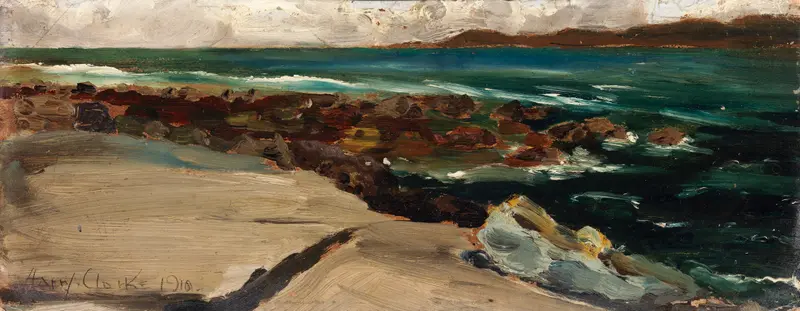
Landscape by the Coast
Harry Clarke
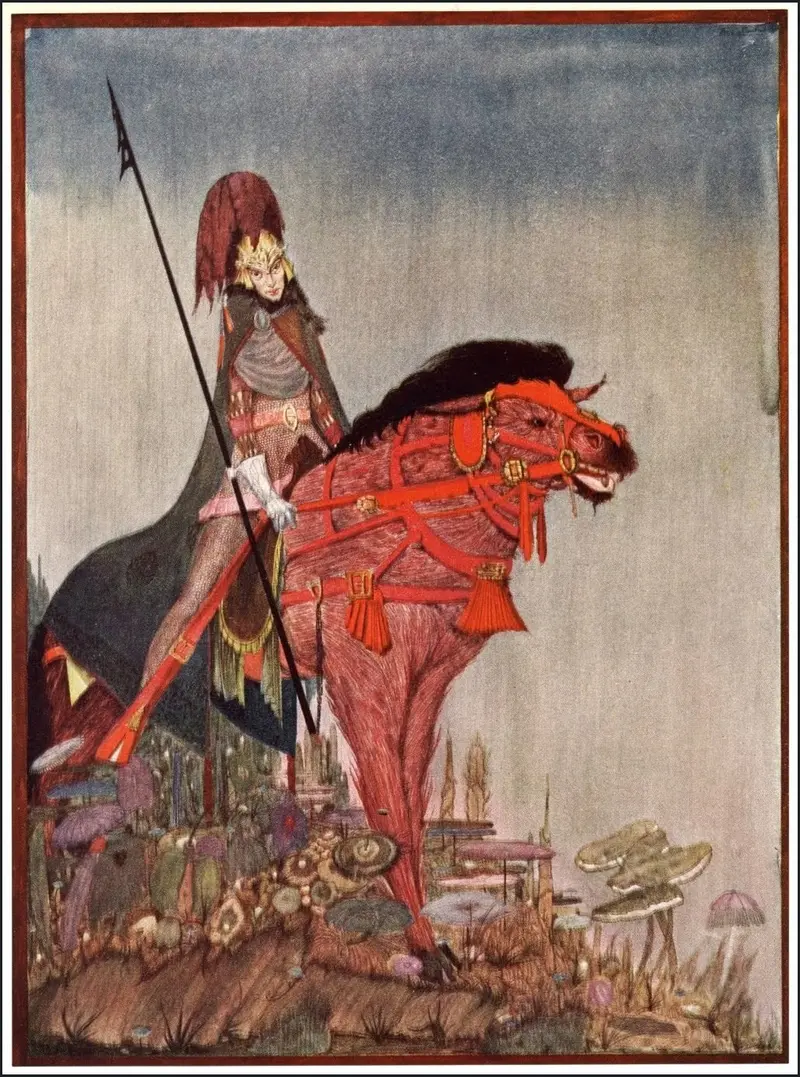
Metzengerstein (Poe)
Harry Clarke
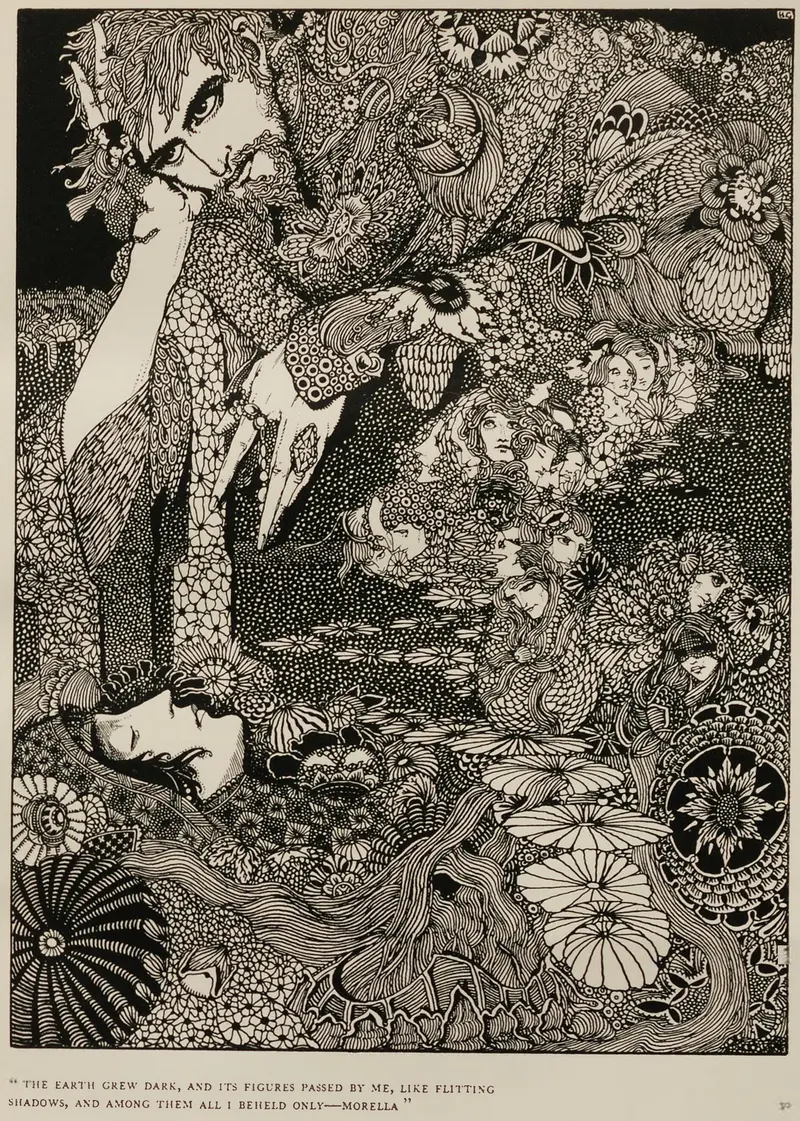
Morella (Poe)
Harry Clarke
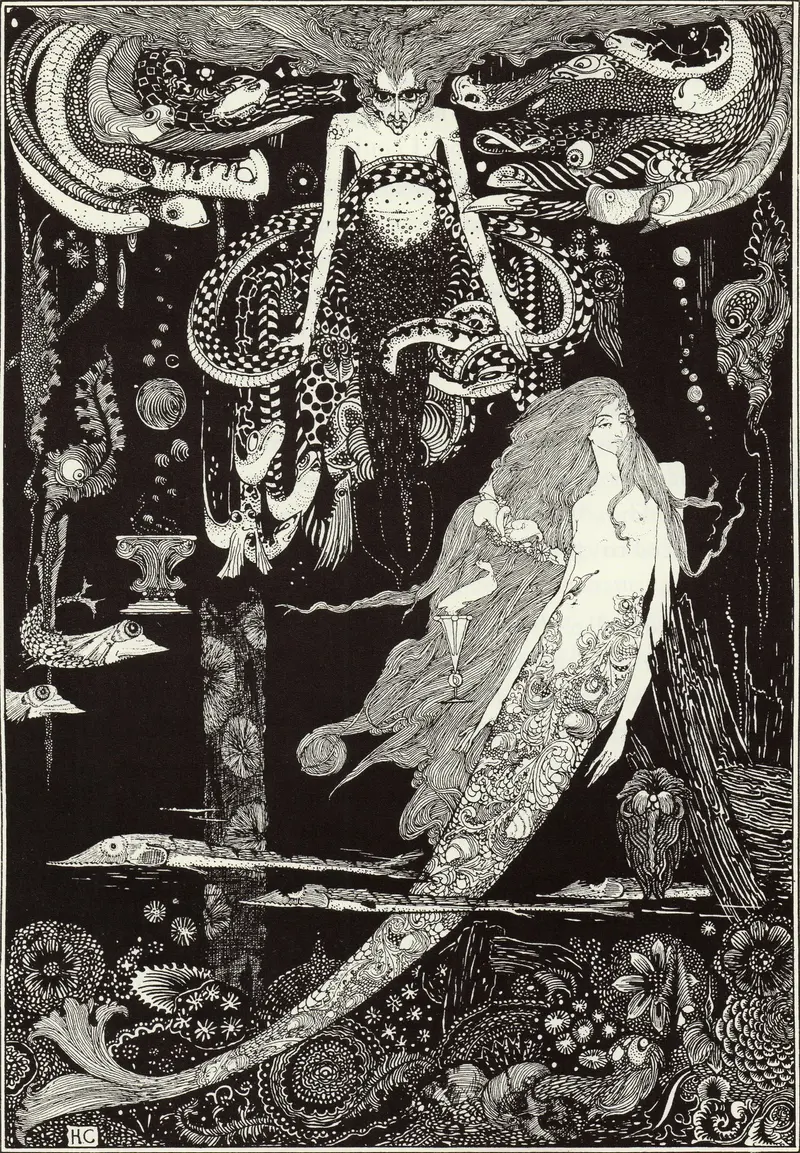
The Little Mermaid (Andersen)
Harry Clarke
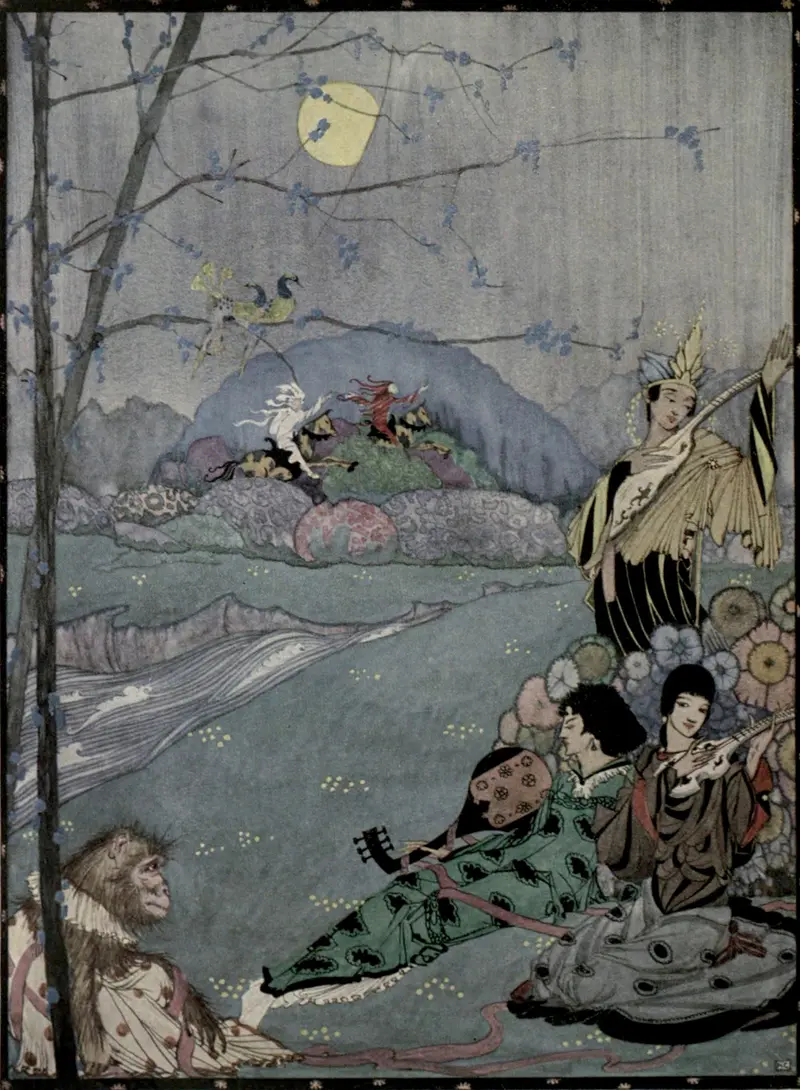
Arabia (The Year's at the Spring)
Harry Clarke
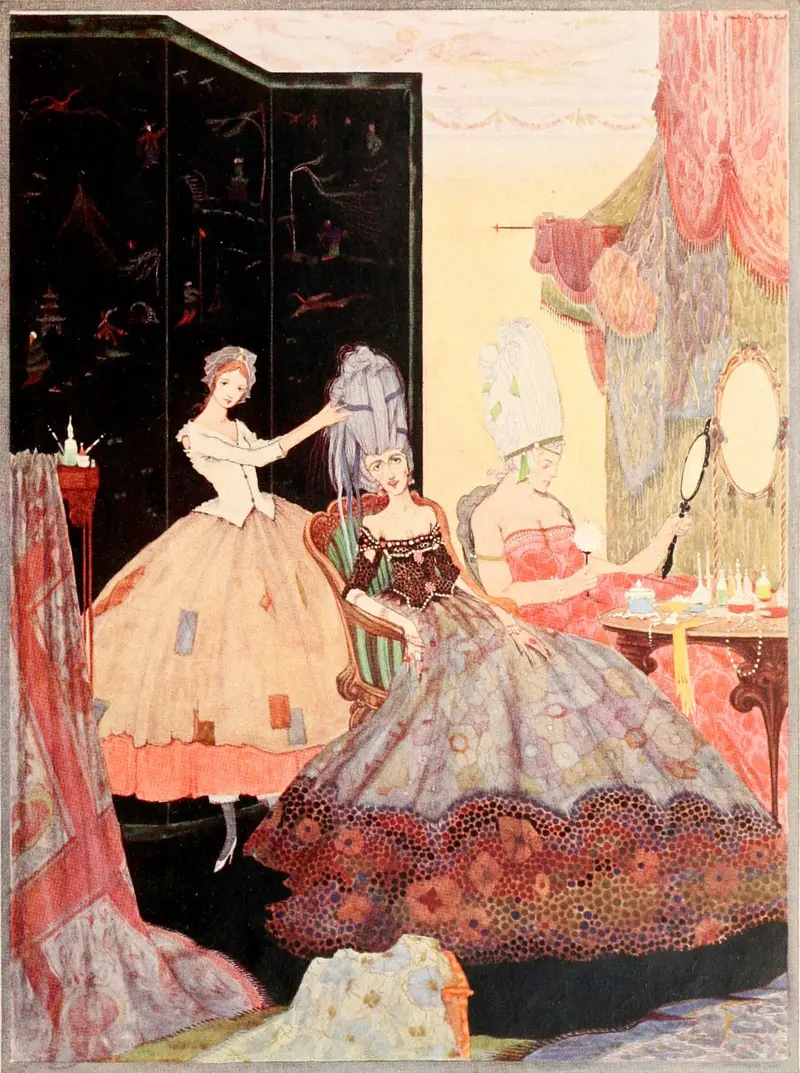
Cinderella (Perrault)
Harry Clarke
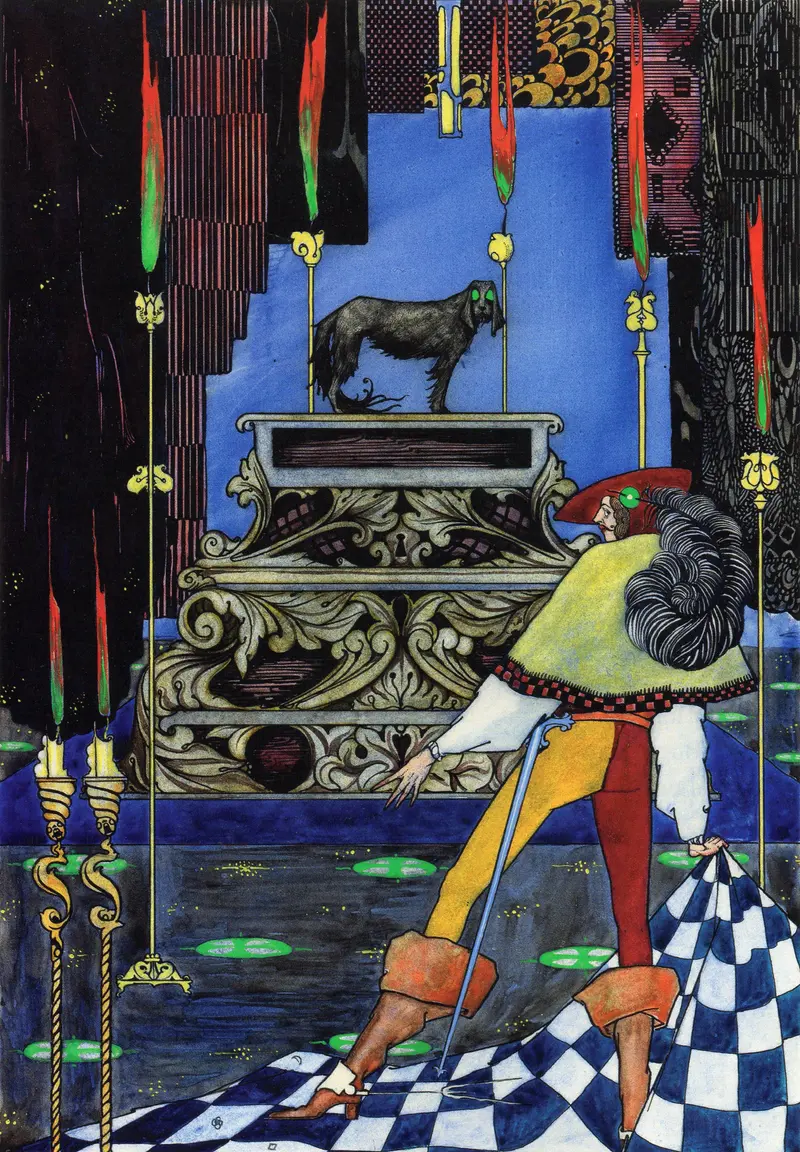
The Tinder Box (Andersen)
Harry Clarke
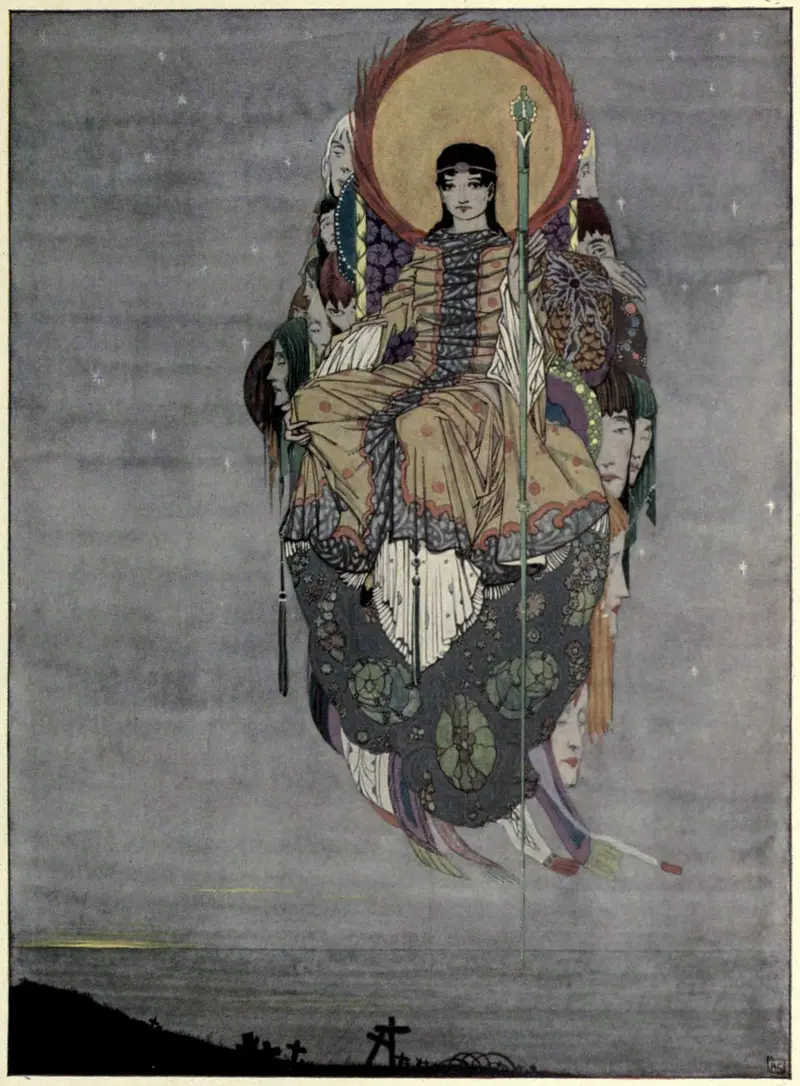
The Dead (The Year's at the Spring)
Harry Clarke
The Mystery of Marie Roget (Poe)
Harry Clarke

The Travelling Companion (Andersen)
Harry Clarke





