
The Court of the Princess — History & Facts
A golden haze settles over the scene, drawing the eye to a gathering that seems to shimmer between memory and dream. Figures in flowing garments swirl beneath a crumbling arch, their gestures caught mid-conversation or dance. The brushwork is loose, almost feverish, as if the painter wanted to capture not the details of a royal court, but the sensation of festivity and intrigue.
Light pools at the center, illuminating the princess and her retinue, while the edges dissolve into shadow, suggesting secrets just out of reach. The palette—rich ochres, deep umbers, and flashes of green—sets a mood of faded grandeur, inviting the viewer to imagine the music and laughter that might have filled this space. Painted by Adolphe Joseph Thomas Monticelli sometime between 1844 and 1886, The Court of the Princess belongs to a world in flux. In nineteenth-century France, artists like Monticelli were drawn to the past, conjuring visions of aristocratic life with a freedom and intensity that anticipated Impressionism.
Such works were often created for collectors who longed for the romance of vanished courts, even as modernity pressed in. Little is recorded about the specific history of this painting, now preserved thanks to the Metropolitan Museum of Art’s open access initiative, but its very obscurity is part of its allure. Each brushstroke invites us to linger, to invent stories for these figures, and to lose ourselves in the golden dusk of a forgotten celebration.
More Artworks by Adolphe Monticelli

Portrait of a Lady
Adolphe Monticelli
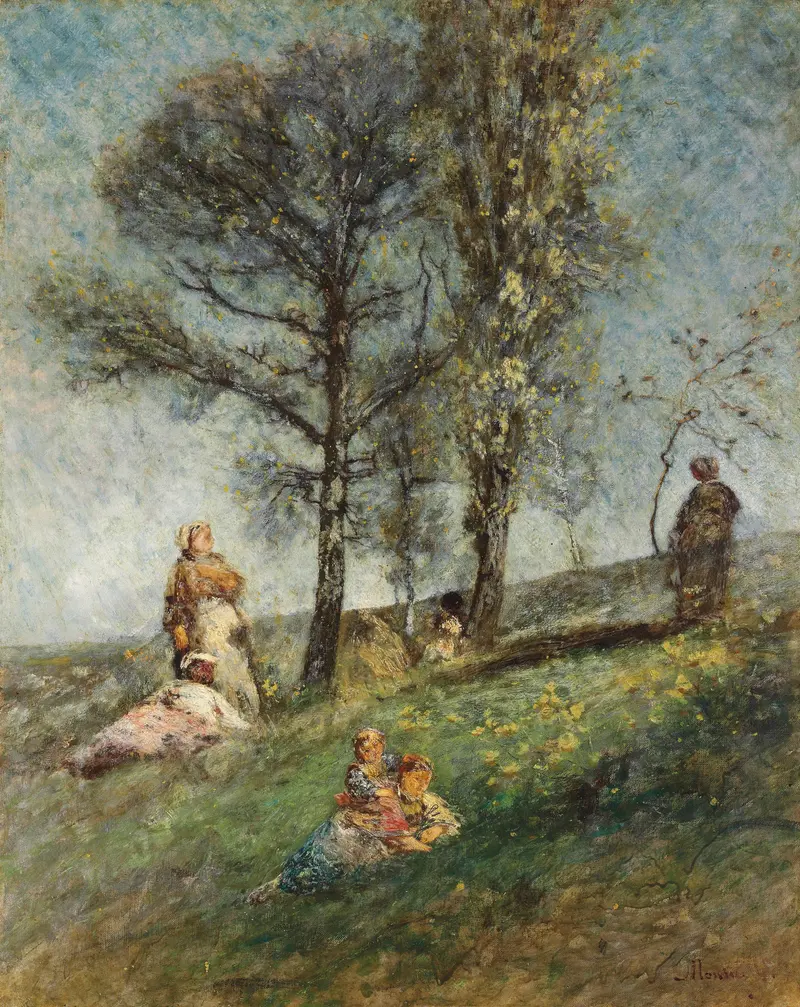
A Young Family Under Trees On A Hill
Adolphe Monticelli

Fête d'Après-Midi
Adolphe Monticelli
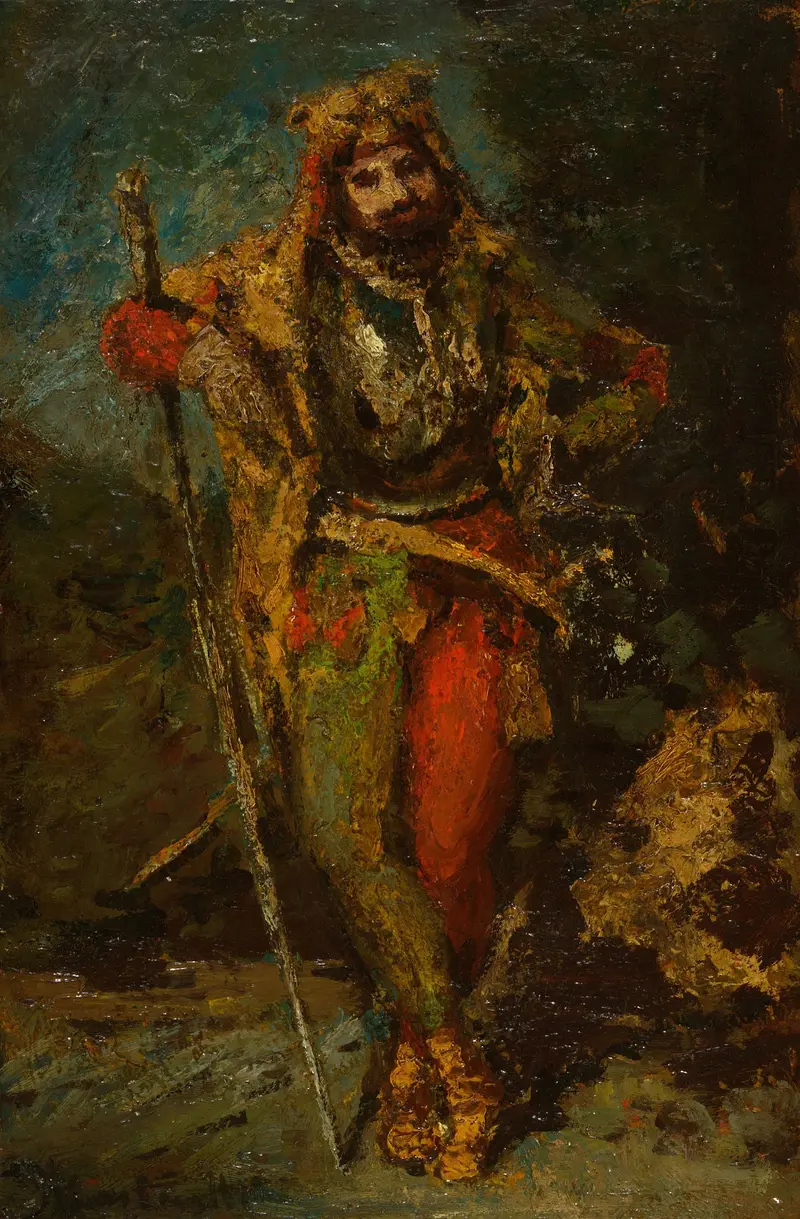
Mephisto from the Opera Faust
Adolphe Monticelli
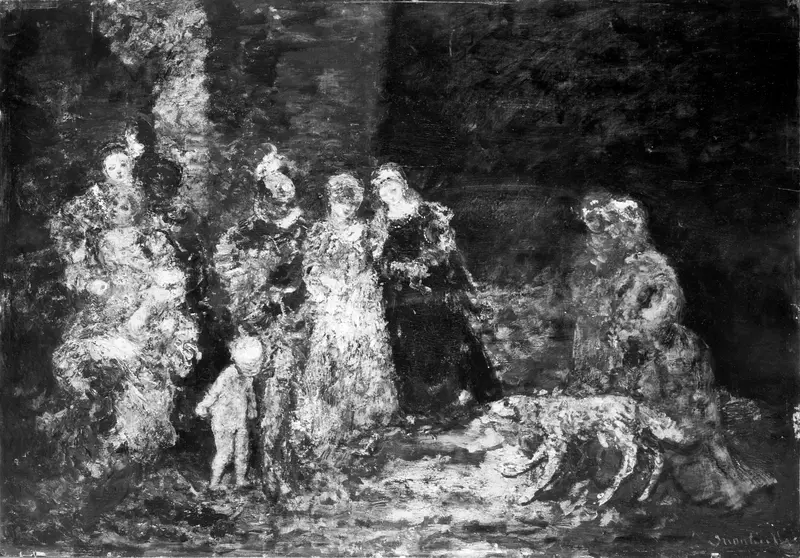
The Fairies
Adolphe Monticelli
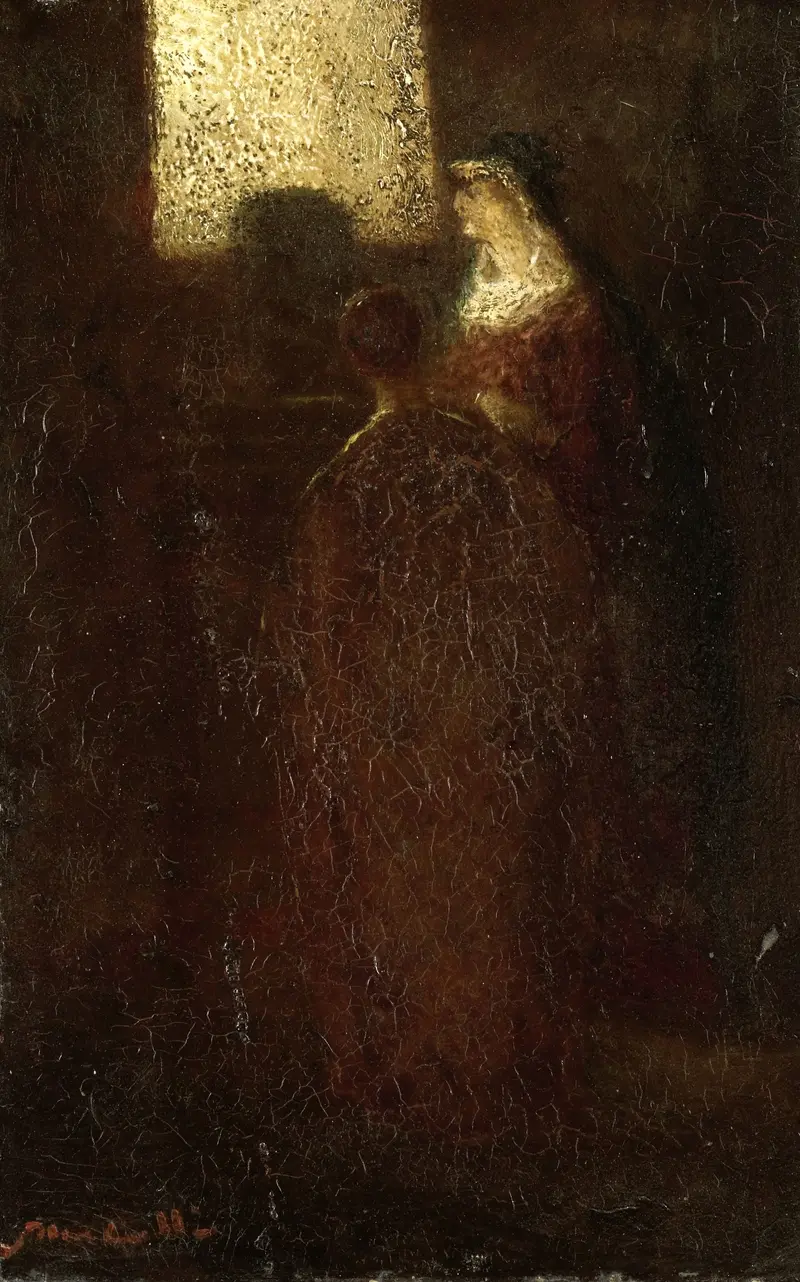
Aan het altaar
Adolphe Monticelli
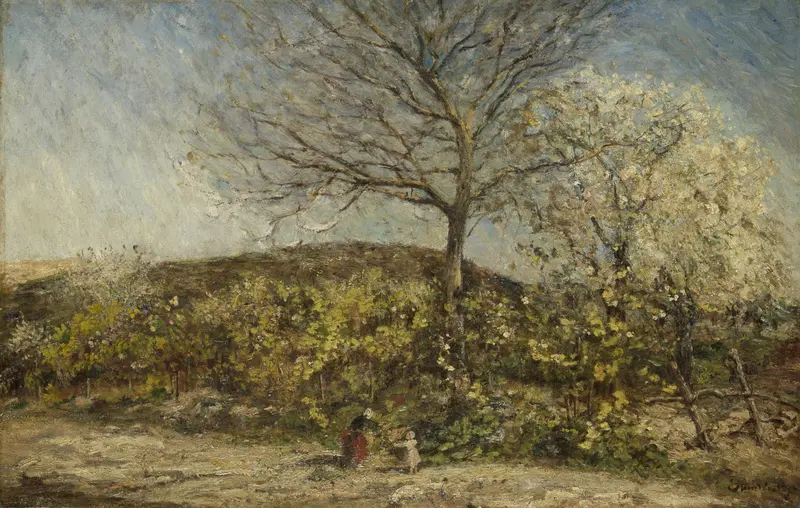
Landschap met bloeiende boomgaard
Adolphe Monticelli
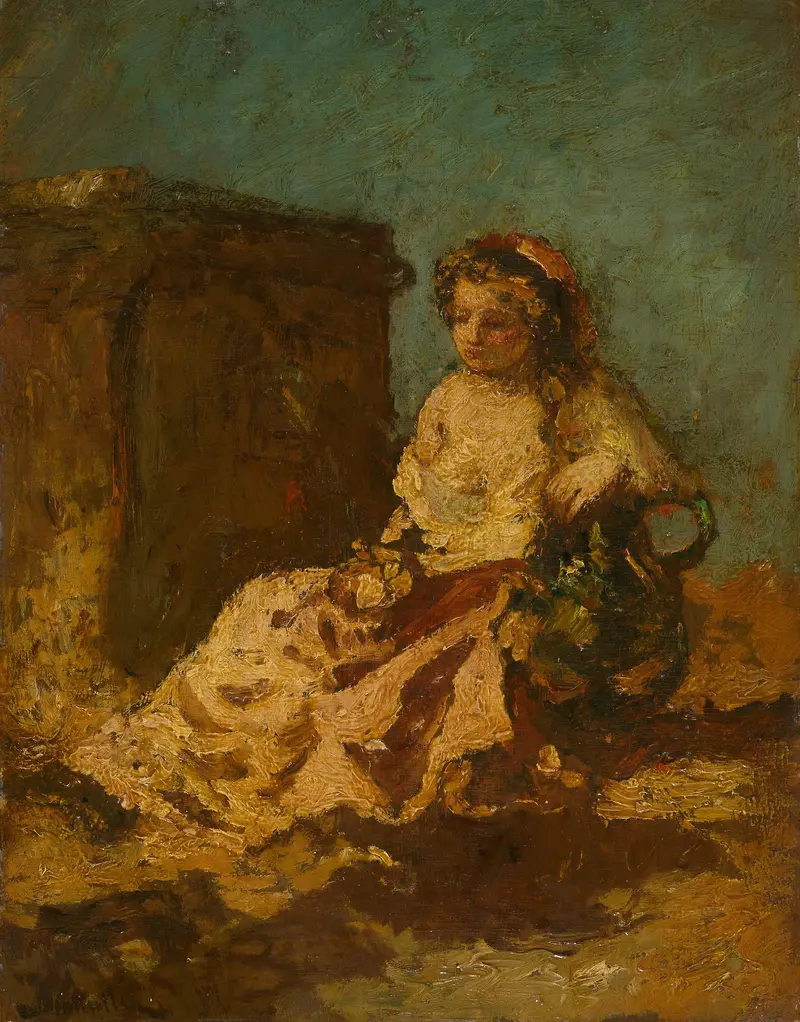
Meditation (Seated Woman)
Adolphe Monticelli
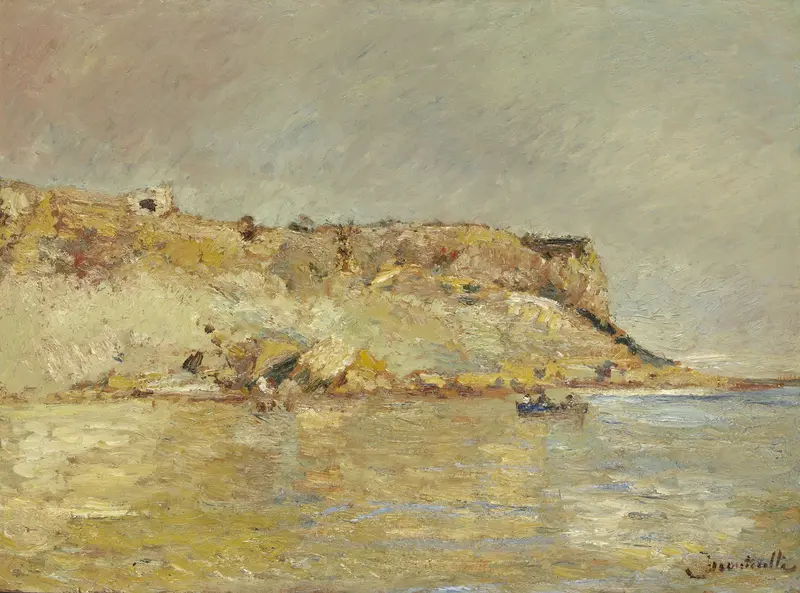
Coastal Mountains
Adolphe Monticelli
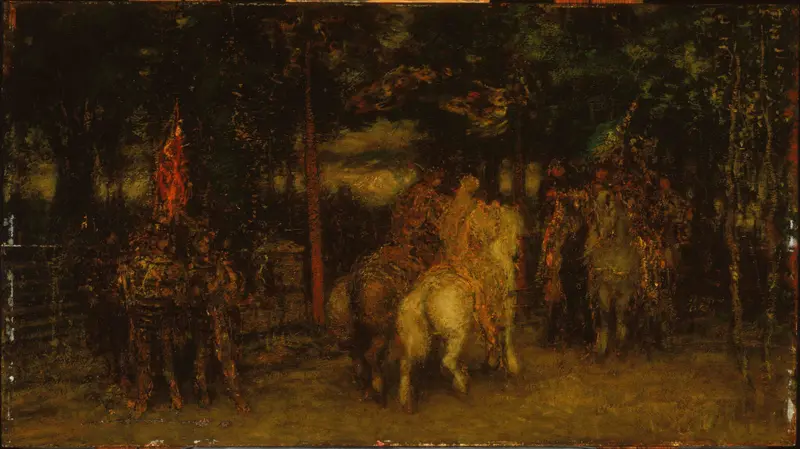
Landscape with Figures
Adolphe Monticelli
More Genre Scene Art

Banquet of the Officers of the St George Civic Guard
Frans Hals

Rembrandt and Saskia in the Scene of the Prodigal Son
Rembrandt van Rijn

Bal du moulin de la Galette
Pierre-Auguste Renoir

Quadrille at the Moulin Rouge
Henri de Toulouse-Lautrec

A Burial at Ornans
Gustave Courbet

When Will You Marry?
Paul Gauguin