The Dance — History & Facts
The Dance is a large oil on canvas completed by Henri Matisse in 1910. The work was commissioned by the Russian art collector Sergei Shchukin for his Moscow mansion, at a time when Matisse was recognized as a leading figure of the Fauvism movement. This painting marks a significant moment in Matisse's career, exemplifying his exploration of expressive color and simplified form. The composition features five nude figures holding hands in a circular dance against a background of deep blue and green.
The figures are rendered with bold, flat areas of red, outlined in dark lines, and their dynamic, rhythmic poses convey a sense of movement and unity. The landscape is abstracted into sweeping curves of green for the ground and blue for the sky, emphasizing the figures' vitality and the painting's decorative qualities. After its completion, The Dance was installed in Shchukin's collection, where it was paired with Matisse's companion piece, Music. Following the Russian Revolution, Shchukin's collection was nationalized, and the painting eventually entered the collection of the State Hermitage Museum in Saint Petersburg, where it remains today.
The Dance has been widely exhibited and is regarded as a landmark of early twentieth-century modernism.
More Artworks by Henri Matisse
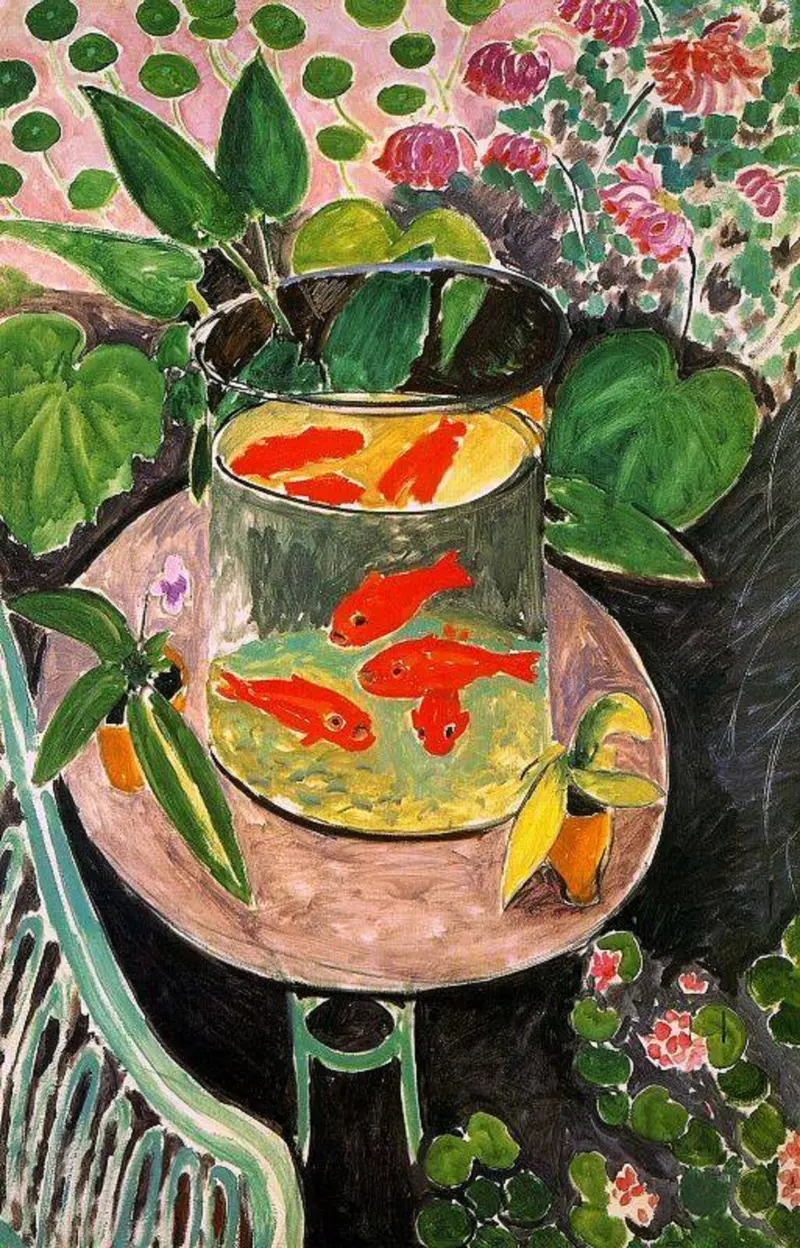
Goldfish
Henri Matisse

Femme au chapeau fleuri
Henri Matisse
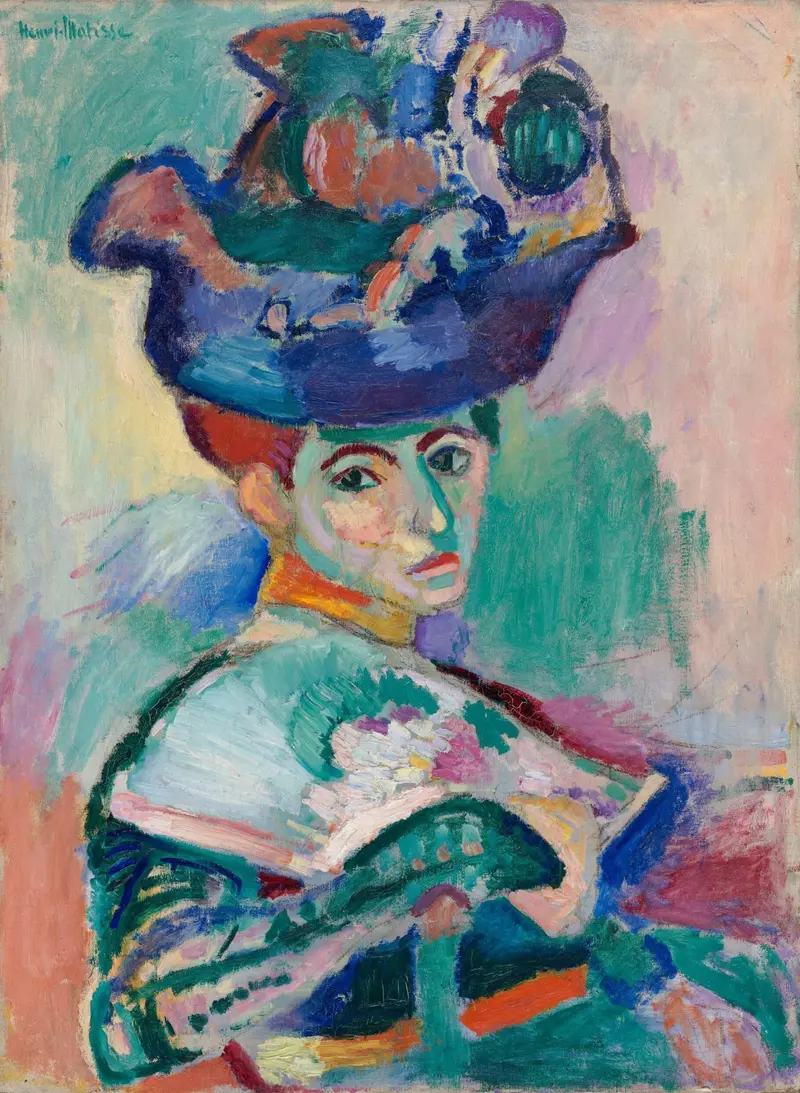
Woman with a Hat
Henri Matisse

Le Bonheur de vivre, also called The Joy of Life
Henri Matisse

Femme près de la fenêtre, Nice
Henri Matisse
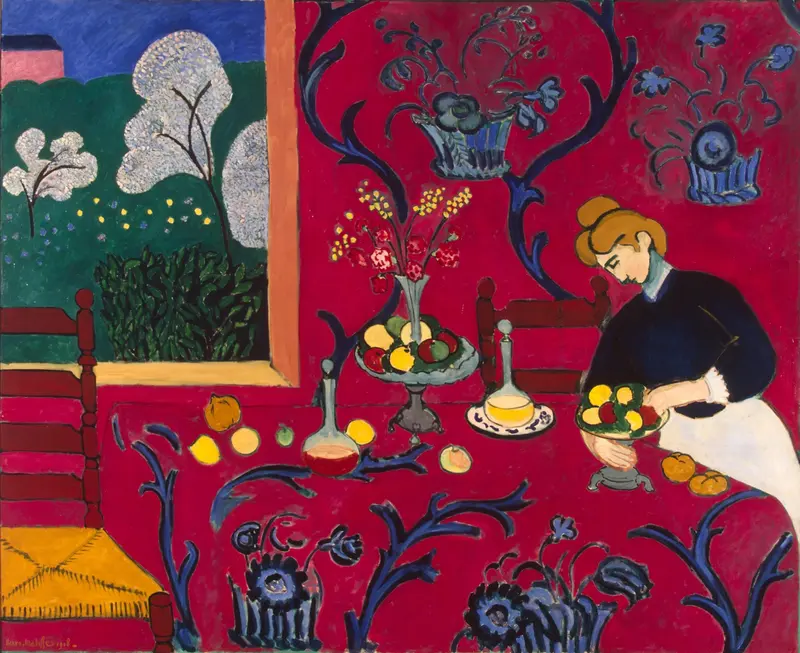
Harmony in Red (The Red Room)
Henri Matisse
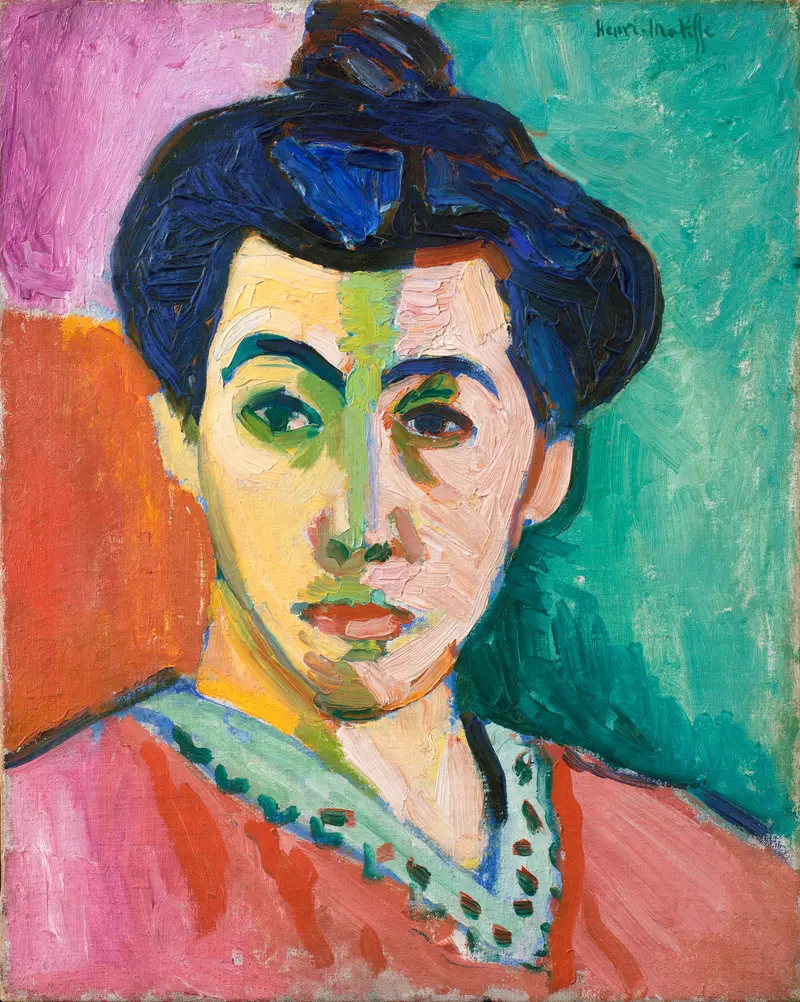
The Green Stripe (Portrait of Madame Matisse)
Henri Matisse
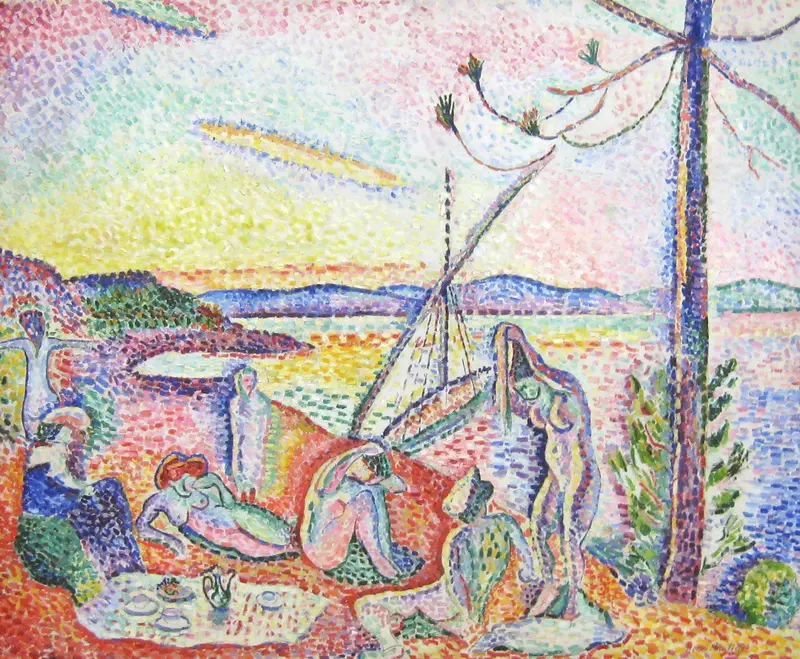
Luxe, Calme et Volupté
Henri Matisse
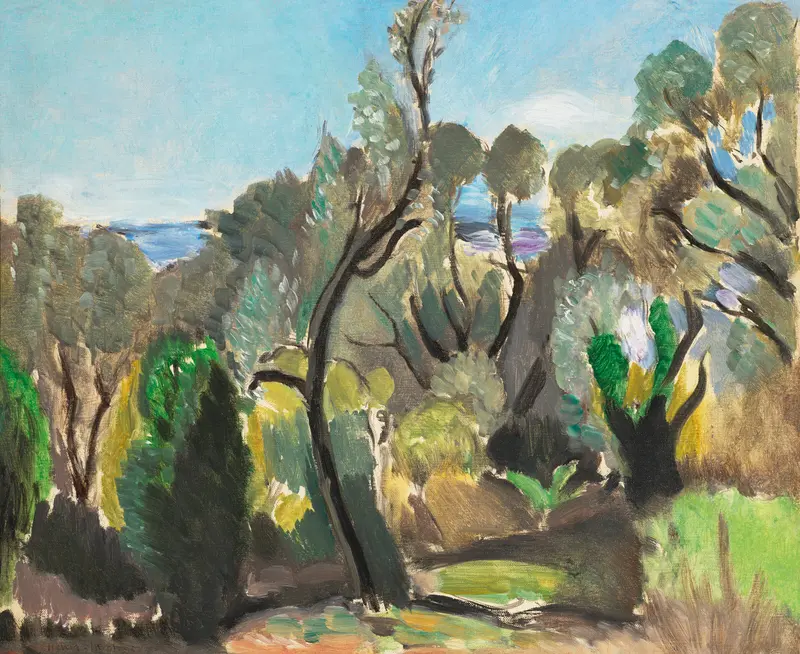
Paysage aux environs de Nice ou Les Oliviers ou Coin du Mont-Boron
Henri Matisse
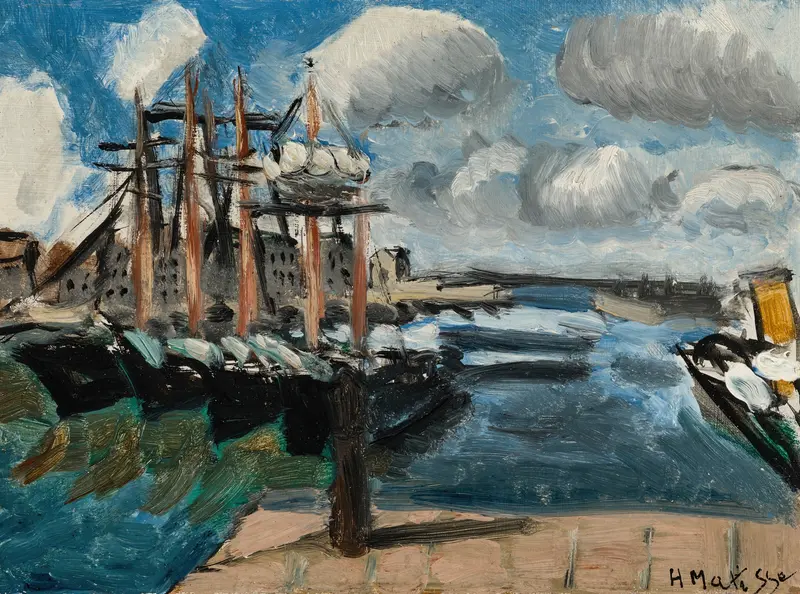
Port de Cherbourg
Henri Matisse