
Harmony in Red (The Red Room) — History & Facts
Harmony in Red (The Red Room) is an oil on canvas painted by Henri Matisse in 1908. The work was originally commissioned as Harmony in Blue for the dining room of Sergei Shchukin, a Russian collector, but Matisse ultimately reworked the composition in red, resulting in its current form. Created during a pivotal period in Matisse’s career, the painting exemplifies his exploration of bold color and decorative pattern, hallmarks of the Fauvism movement. The composition centers on a domestic interior where a woman arranges fruit on a table set against a vivid red background.
The red surface, which extends seamlessly across the walls and tablecloth, is adorned with blue, arabesque-like floral motifs. Through the window, a garden with flowering trees and a blue sky introduces a contrasting palette of greens, blues, and whites. The flattened perspective, simplified forms, and strong outlines emphasize color and pattern over naturalistic detail, creating a sense of unity and rhythm throughout the scene. After its completion, Harmony in Red entered the collection of Sergei Shchukin in Moscow, where it was displayed alongside other major works by Matisse.
Following the Russian Revolution, Shchukin’s collection was nationalized, and the painting became part of the State Hermitage Museum in Saint Petersburg. The work has since been recognized as a defining example of early twentieth-century modernism and remains one of Matisse’s most celebrated paintings.
More Artworks by Henri Matisse
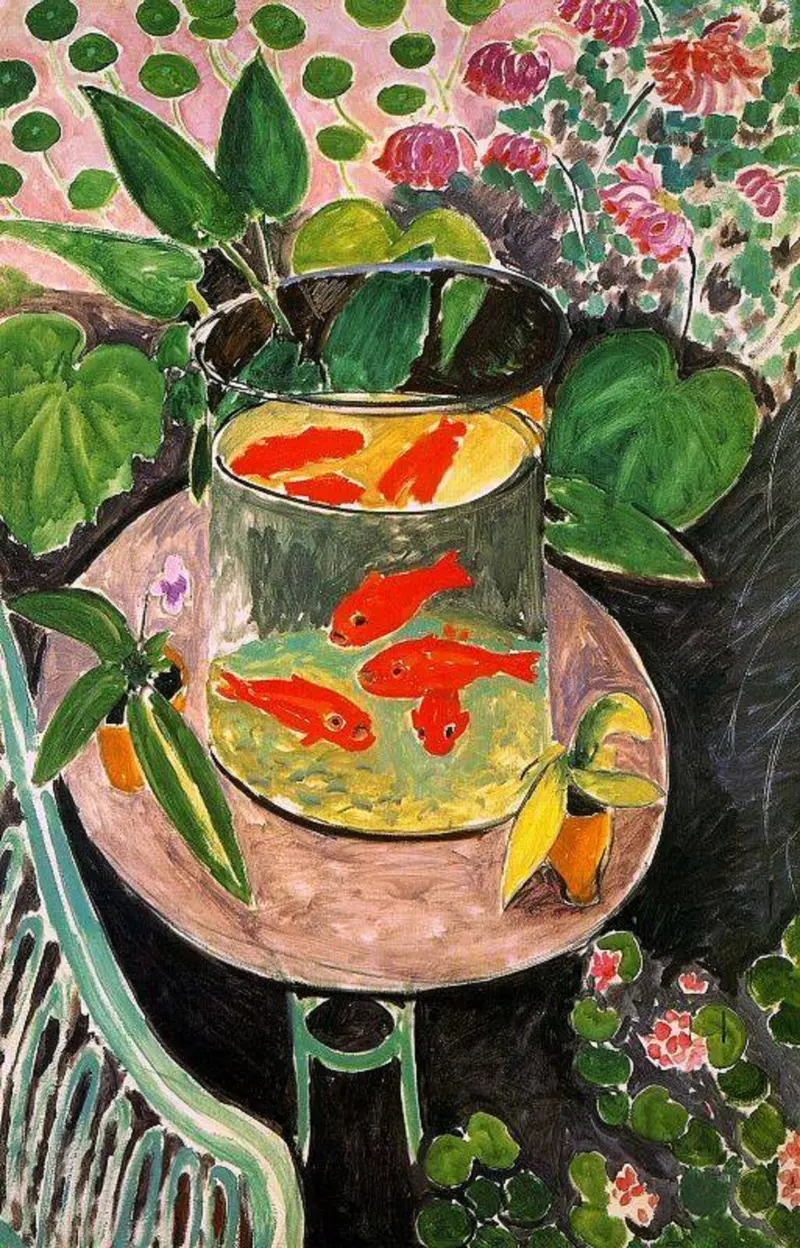
Goldfish
Henri Matisse

Femme au chapeau fleuri
Henri Matisse
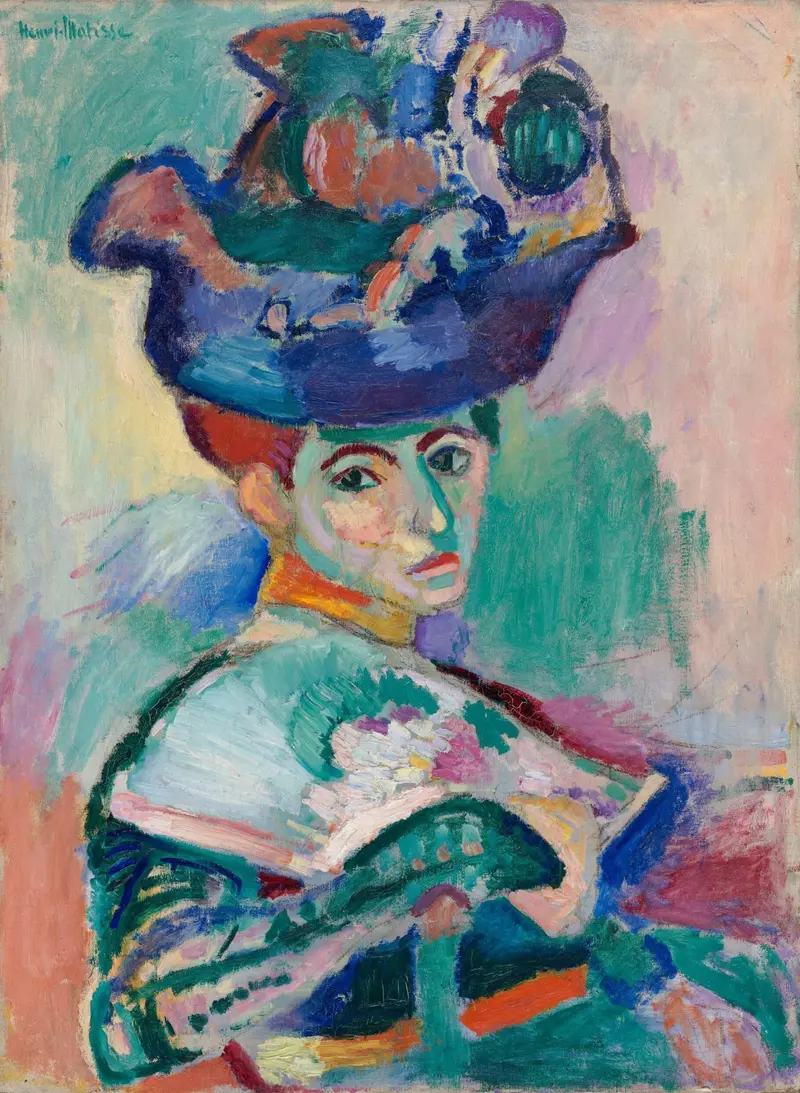
Woman with a Hat
Henri Matisse
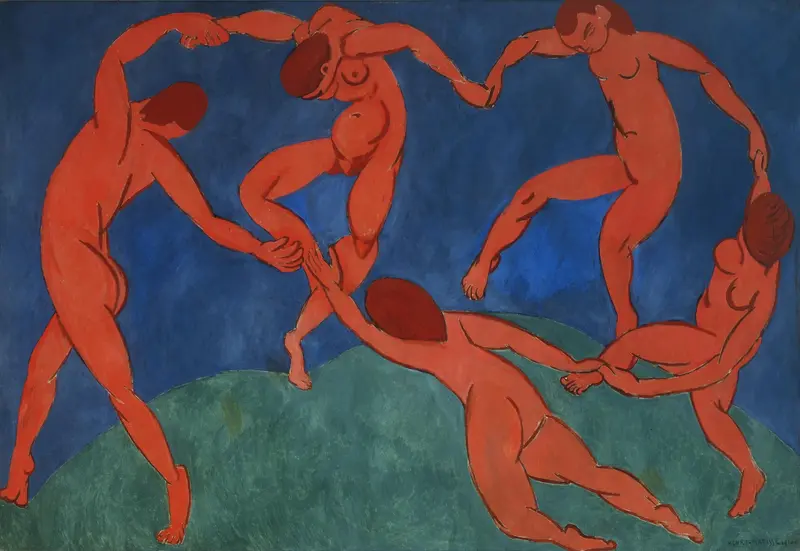
The Dance
Henri Matisse

Le Bonheur de vivre, also called The Joy of Life
Henri Matisse

Femme près de la fenêtre, Nice
Henri Matisse
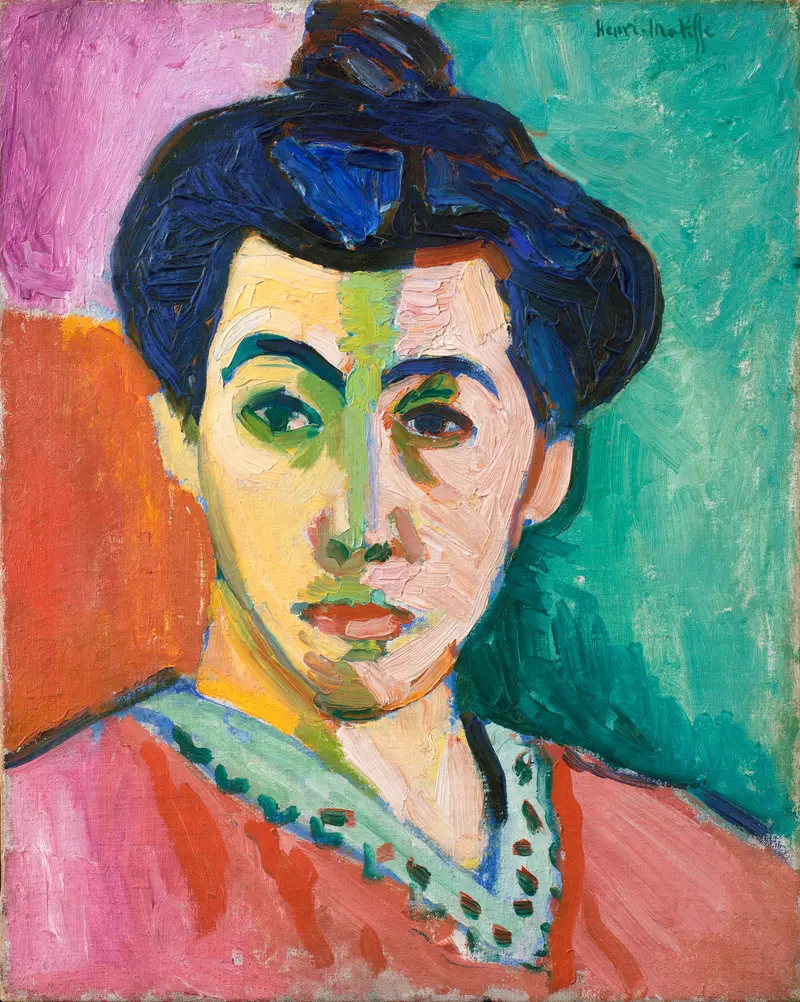
The Green Stripe (Portrait of Madame Matisse)
Henri Matisse
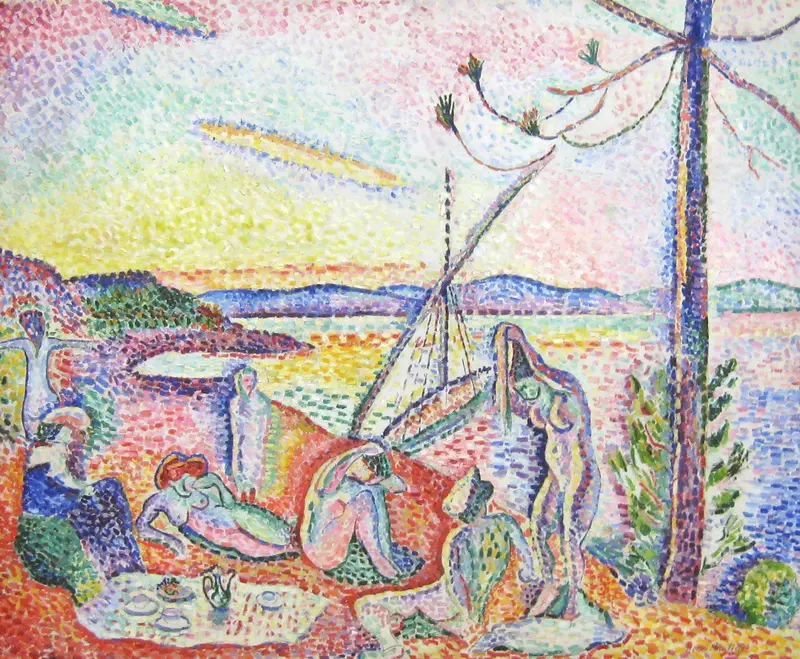
Luxe, Calme et Volupté
Henri Matisse
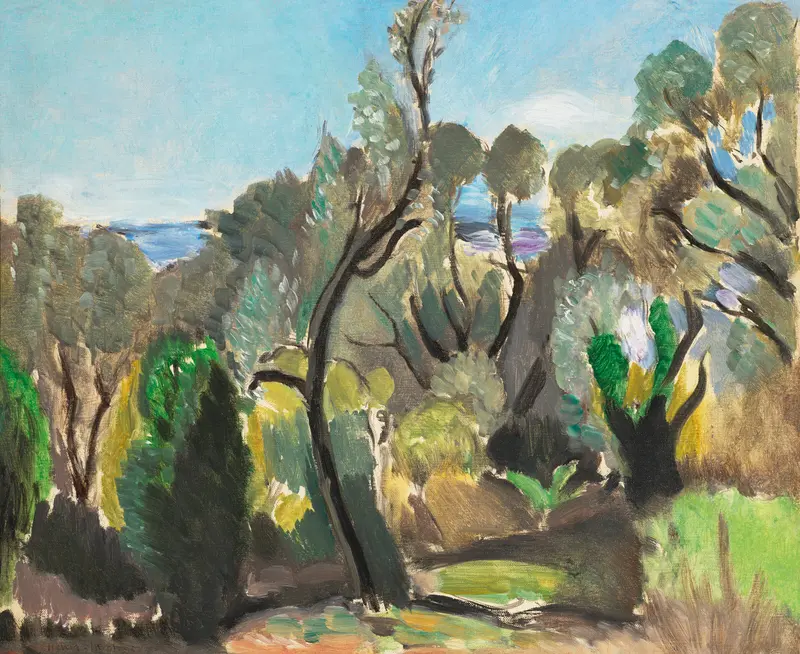
Paysage aux environs de Nice ou Les Oliviers ou Coin du Mont-Boron
Henri Matisse
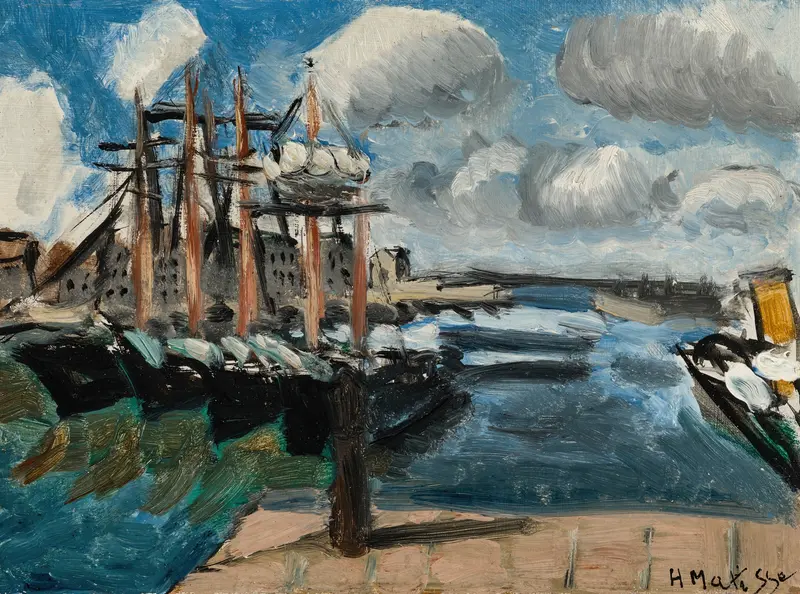
Port de Cherbourg
Henri Matisse
More Genre Scene Art

Banquet of the Officers of the St George Civic Guard
Frans Hals

Rembrandt and Saskia in the Scene of the Prodigal Son
Rembrandt van Rijn

Bal du moulin de la Galette
Pierre-Auguste Renoir

Quadrille at the Moulin Rouge
Henri de Toulouse-Lautrec

A Burial at Ornans
Gustave Courbet

When Will You Marry?
Paul Gauguin