
The Green Stripe (Portrait of Madame Matisse) — History & Facts
The Green Stripe (Portrait of Madame Matisse) was painted by Henri Matisse in 1905, during a pivotal period in his career when he was developing the style that would become known as Fauvism. The subject is Amélie Matisse, the artist's wife, depicted in a frontal bust-length portrait. The painting is notable for its experimental use of color and bold brushwork, which marked a radical departure from traditional portraiture of the era. The composition centers on the sitter’s face, divided by a vivid green band running vertically down the forehead and nose, which gives the painting its title.
The background is rendered in flat planes of contrasting colors—pink, orange, and green—while the face and clothing are modeled with broad, visible strokes of unmixed pigment. The use of non-naturalistic color emphasizes the structure of the face and conveys emotional intensity, while the simplified forms and strong outlines reflect the influence of Post-Impressionism. The painting is regarded as one of the key works of Fauvism. The painting has since become one of the most recognized works of early twentieth-century modernism.
It is held today in the Statens Museum for Kunst, Copenhagen.
More Artworks by Henri Matisse
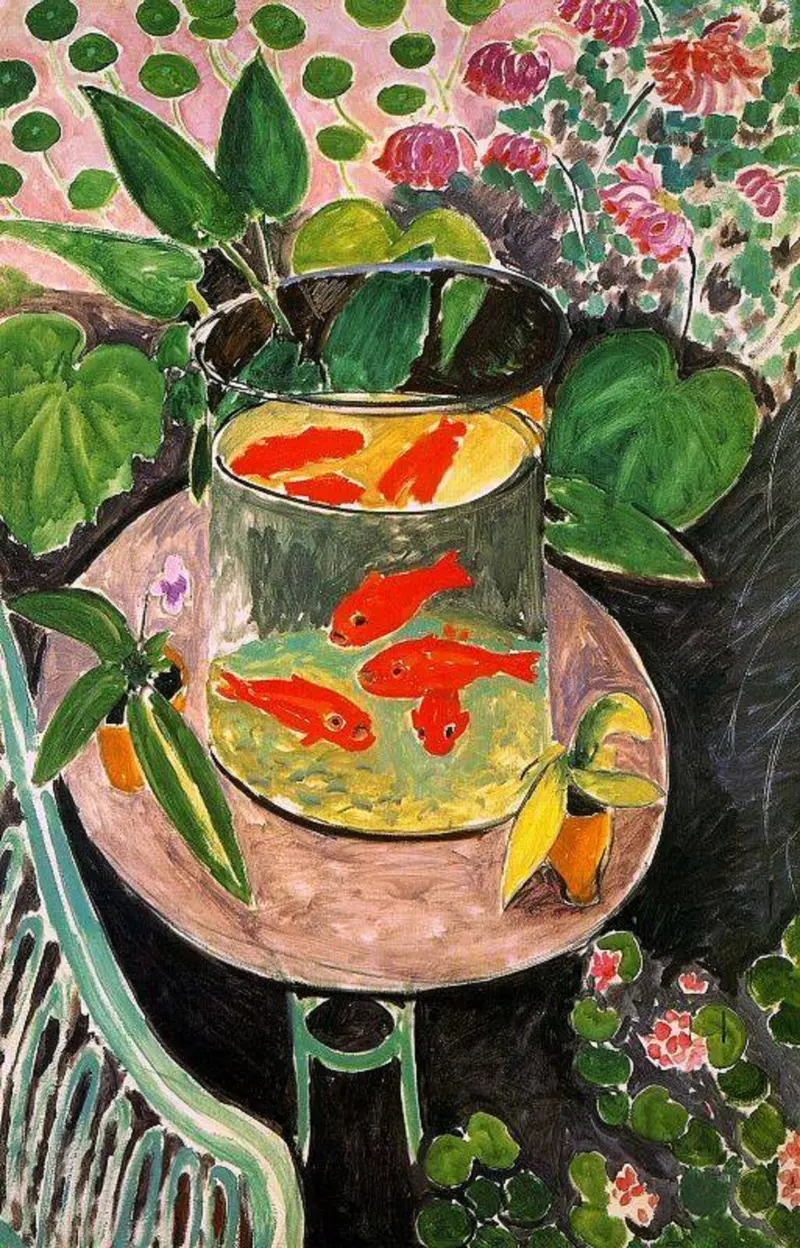
Goldfish
Henri Matisse

Femme au chapeau fleuri
Henri Matisse
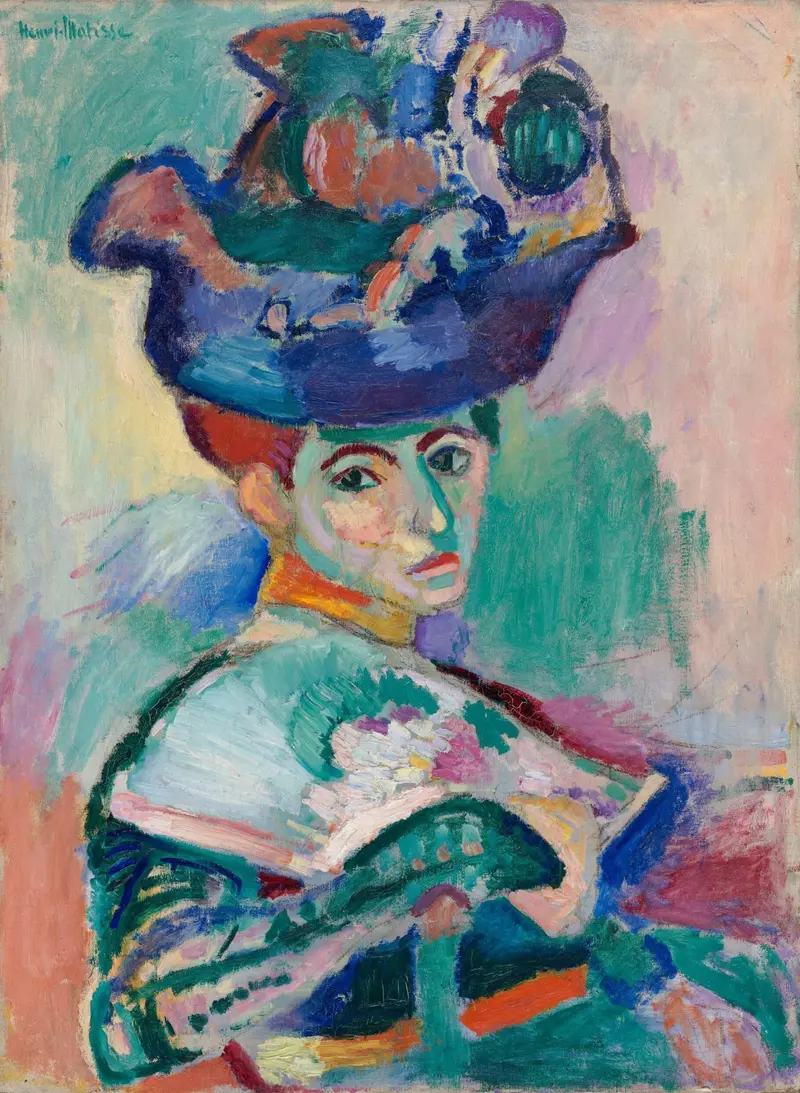
Woman with a Hat
Henri Matisse
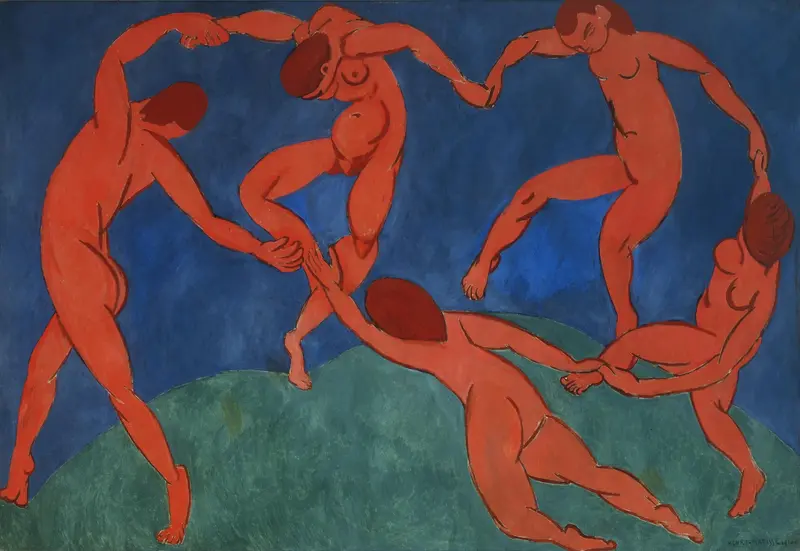
The Dance
Henri Matisse

Le Bonheur de vivre, also called The Joy of Life
Henri Matisse

Femme près de la fenêtre, Nice
Henri Matisse
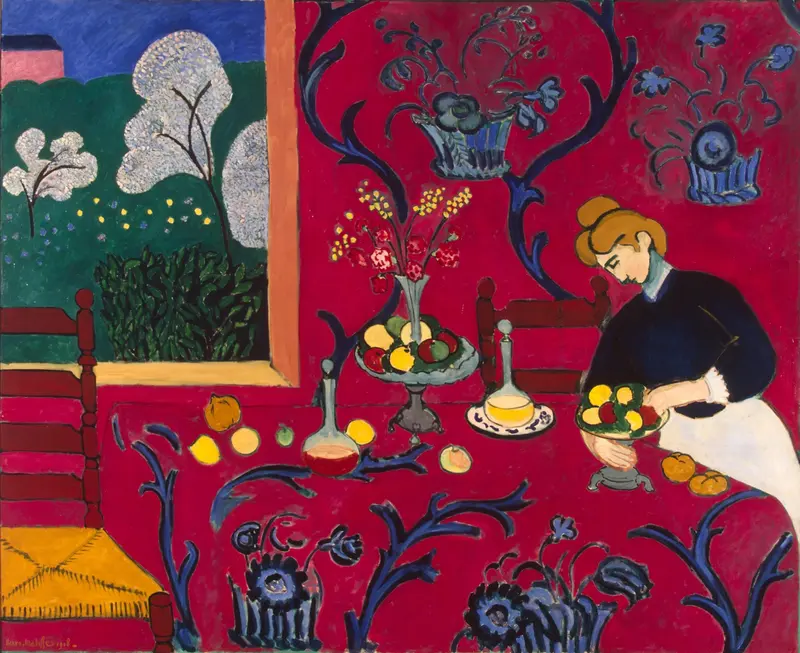
Harmony in Red (The Red Room)
Henri Matisse
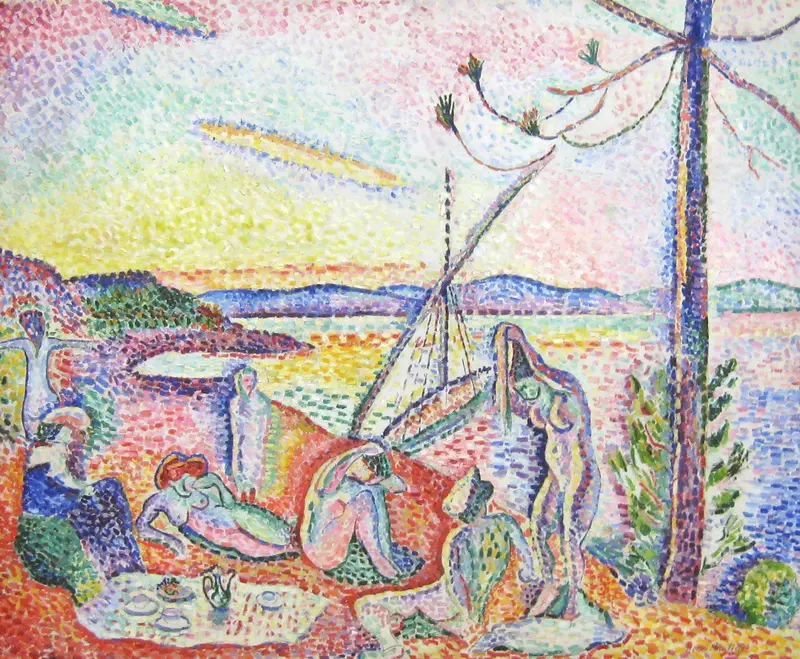
Luxe, Calme et Volupté
Henri Matisse
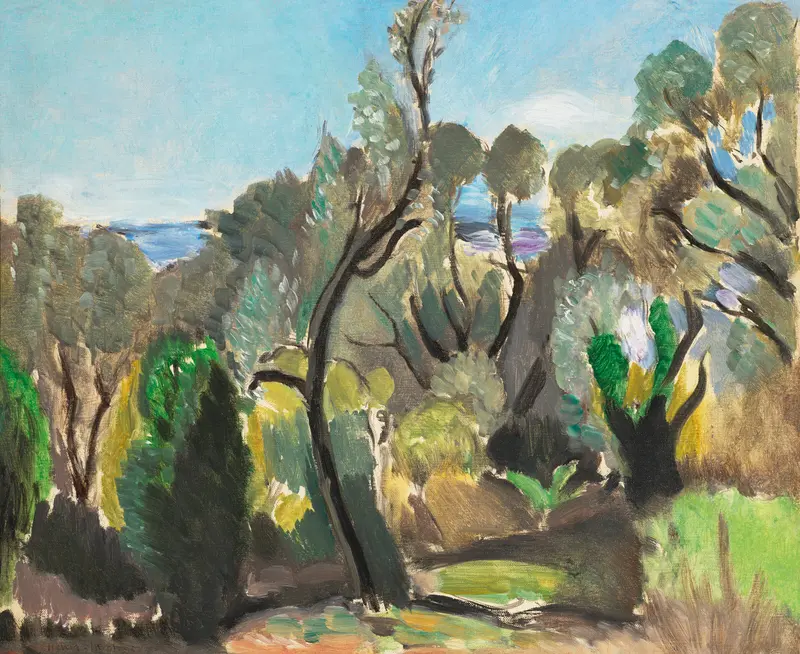
Paysage aux environs de Nice ou Les Oliviers ou Coin du Mont-Boron
Henri Matisse
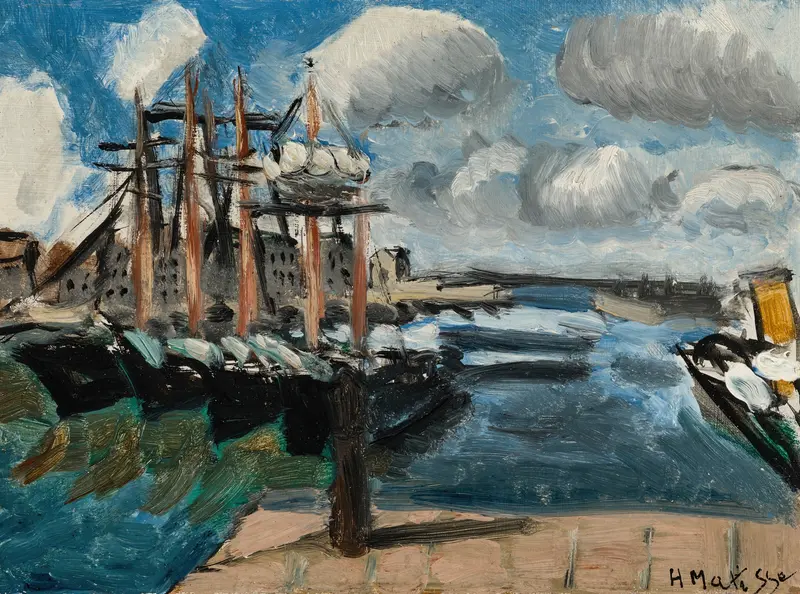
Port de Cherbourg
Henri Matisse





