
The Departure for the Horse Ride — History & Facts
A plume of rose-red, a flash of dappled haunches, and the crisp anticipation of a hunt: what first catches the eye in The Departure for the Horse Ride is the moment of poised readiness, as one rider receives a steadying hand and prepares to mount. The composition draws you in with its careful choreography—one figure already astride, another bent in assistance, and a pair of hounds alert at the threshold. The light, golden and clear, pours in from the right, illuminating the horses’ coats and the riders’ finery, while the shadowed archway behind them hints at the comforts of home left behind.
Every gesture is purposeful: the rider’s downward gaze, the helper’s outstretched arm, the dogs’ tense attention, all signaling the imminent burst of motion. Painted circa 1665, this work belongs to the world of the Dutch Golden Age, when scenes of country leisure and genteel pursuits were in high demand among prosperous burghers. Artists like Aelbert Cuyp became celebrated for their ability to capture the luminous atmosphere and social rituals of their time—here, the promise of sport and companionship, set against a landscape just touched by the warmth of late afternoon. Such paintings were often destined for the walls of townhouses, offering their owners an idealized vision of rural life and status.
Although little is recorded about the specific journey of this canvas, its presence in a modern collection reminds us how these moments of anticipation and quiet ceremony still invite us to linger, imagining the ride about to begin.
More Artworks by Aelbert Cuyp

The Maas at Dordrecht
Aelbert Cuyp
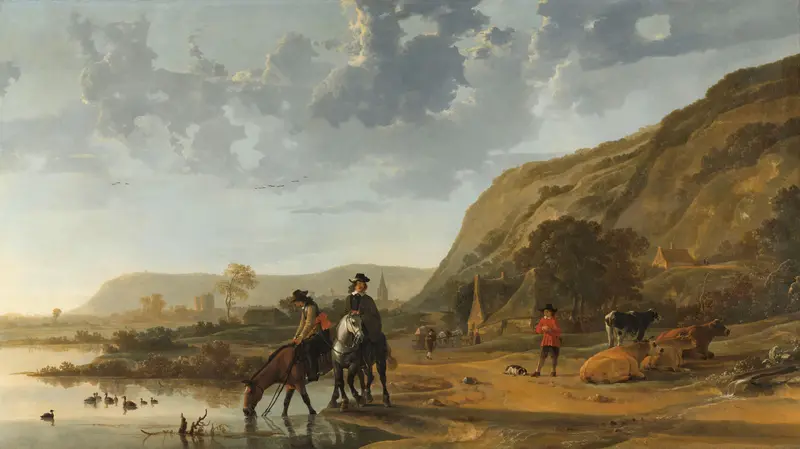
River Landscape with Riders
Aelbert Cuyp

The Maas at Dordrecht
Aelbert Cuyp
Gezicht op Dordrecht
Aelbert Cuyp
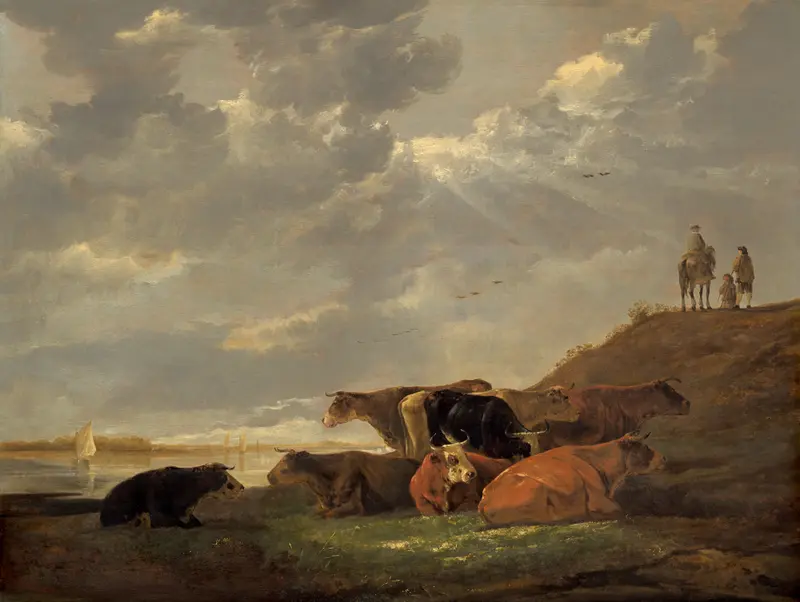
River Landscape with Cows
Aelbert Cuyp
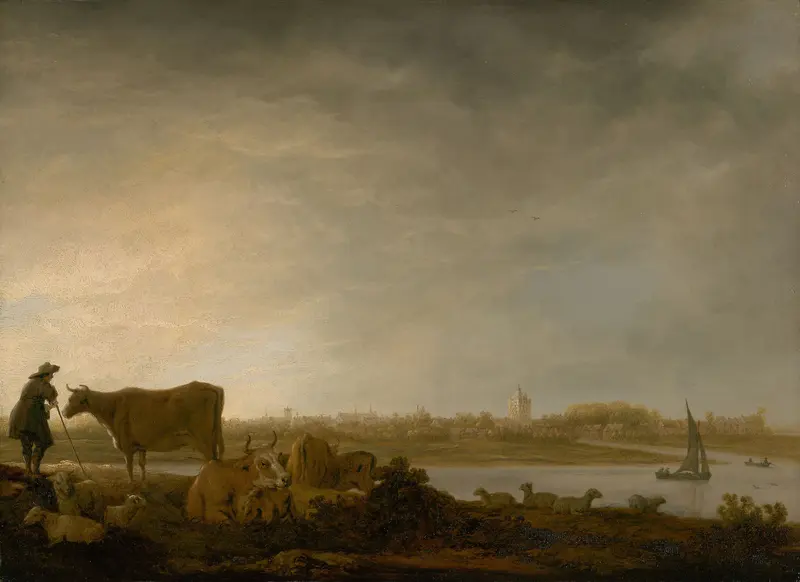
A View of Vianen with a Herdsman and Cattle by a River
Aelbert Cuyp
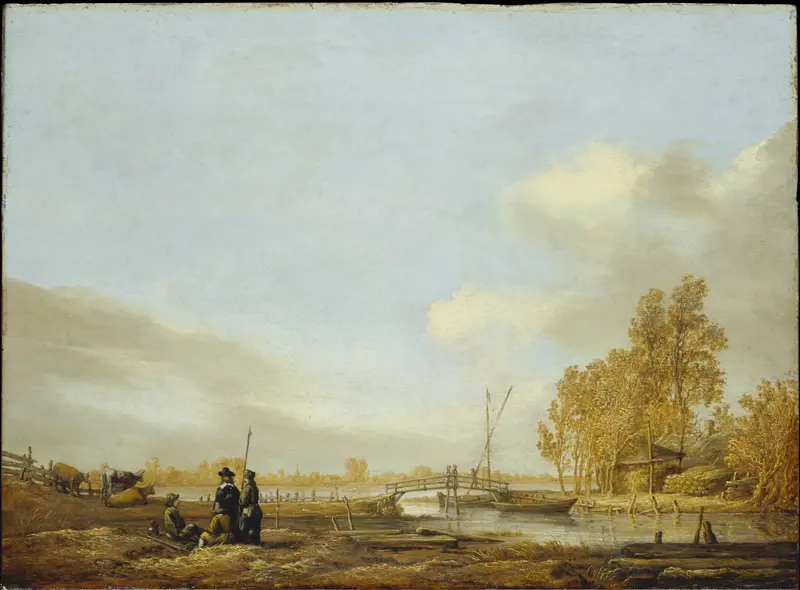
River Landscape with Footbridge
Aelbert Cuyp
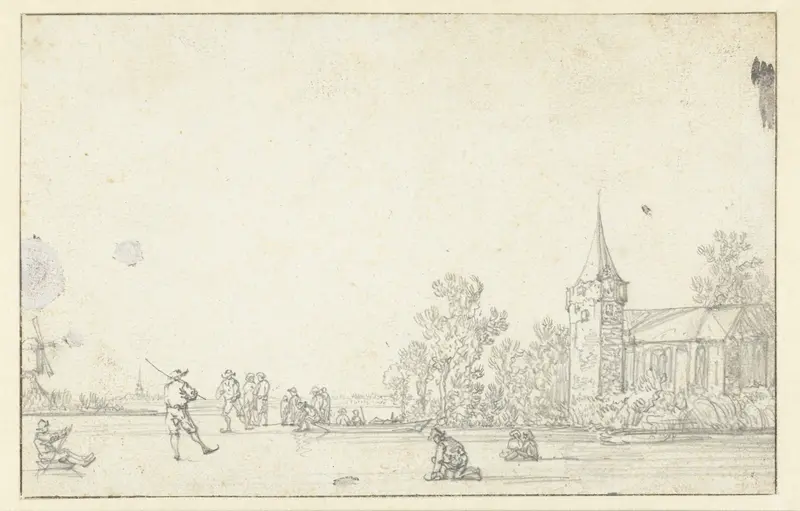
Bevroren rivier met schaatsers bij een kerk
Aelbert Cuyp

Cattle near a River
Aelbert Cuyp
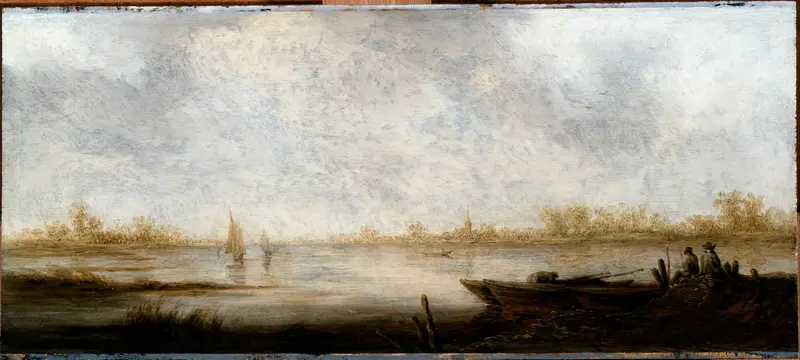
River Landscape
Aelbert Cuyp
More Genre Scene Art

Banquet of the Officers of the St George Civic Guard
Frans Hals

Rembrandt and Saskia in the Scene of the Prodigal Son
Rembrandt van Rijn

Bal du moulin de la Galette
Pierre-Auguste Renoir

Quadrille at the Moulin Rouge
Henri de Toulouse-Lautrec

A Burial at Ornans
Gustave Courbet

When Will You Marry?
Paul Gauguin