
The End of Romance — History & Facts
A lone horse stands over its fallen rider, the animal’s muzzle gently nudging the man’s still form as if urging him to rise. The path winds away into the empty green hills, but all movement has stopped here—except for the horse’s searching gesture and the subtle arc of birds in the distant sky. The man’s pistol lies loosely in his hand, his shirt stained and his body twisted in the dust, suggesting a story that has already reached its conclusion.
The light is clear and pitiless, flattening the drama into an everyday tragedy, while the open expanse of the landscape dwarfs both figures, making their fate seem both personal and universal. The title, The End of Romance, is inscribed in the corner, and it lingers in the mind as you notice the saddle still strapped, the path still open, and the sense of something irretrievably lost. Painted in 1915 by Antonio Parreiras, this work belongs to a moment when Brazilian artists were drawn to themes of the land, the gaucho, and the mythic violence of the frontier. Such images often served to dramatize the tension between civilization and wilderness, or to memorialize the passing of an older, wilder way of life.
While history has kept few traces of this particular painting’s journey, its presence in a collection marked as “own work” and its clear date root it firmly in the early twentieth century—a time when artists across Latin America were forging new national identities through scenes of struggle and solitude. The painting invites the viewer to linger on the details: the horse’s patience, the emptiness of the road, the silence after the story’s end.
More Artworks by Antonio Parreiras

The Gale
Antonio Parreiras
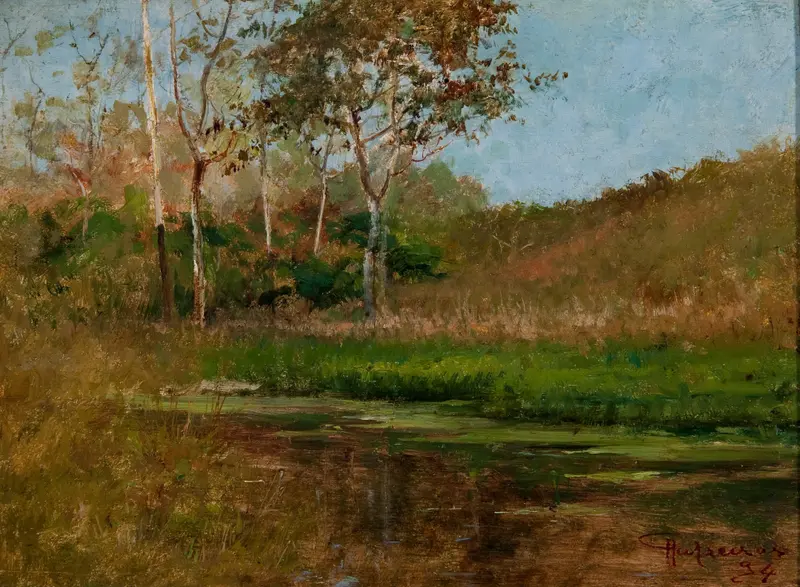
Still Water
Antonio Parreiras
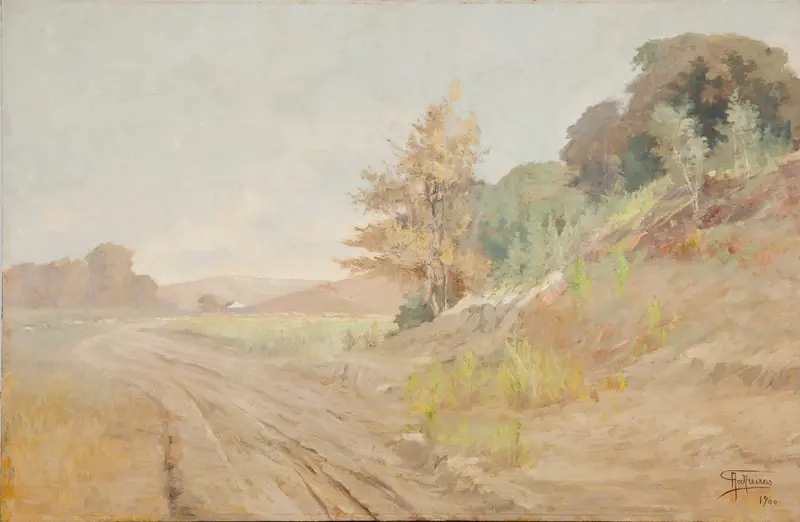
Hazy Day
Antonio Parreiras
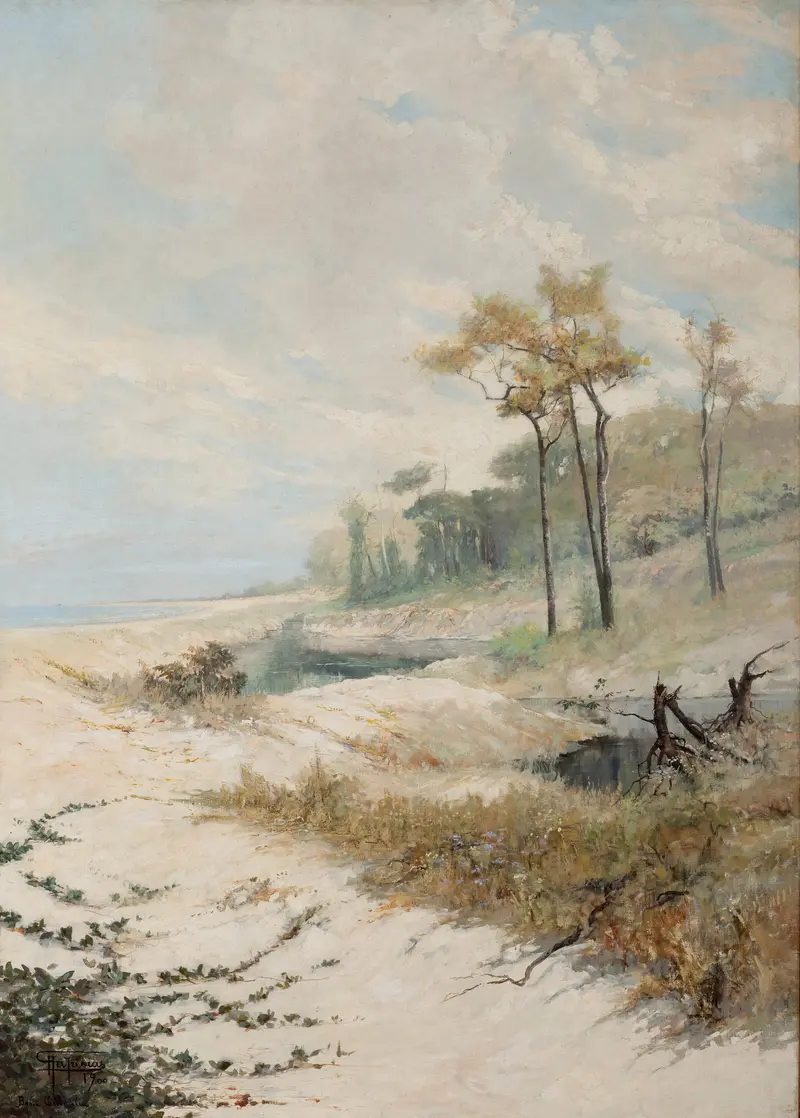
Cabrália Bay
Antonio Parreiras
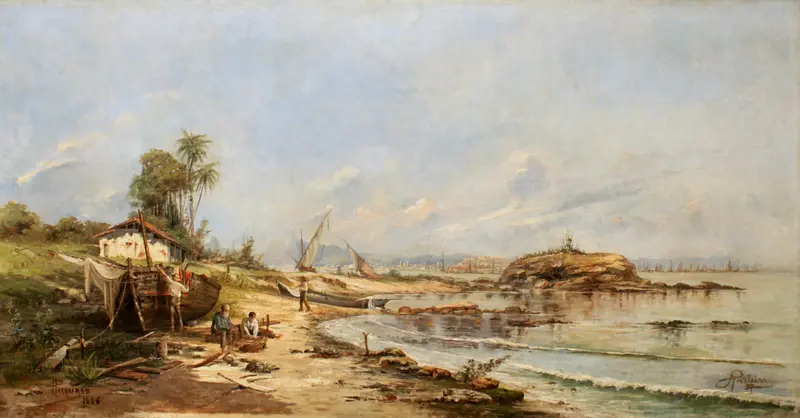
Gragoatá after the storm
Antonio Parreiras

Funeral in San Donà, Italy
Antonio Parreiras
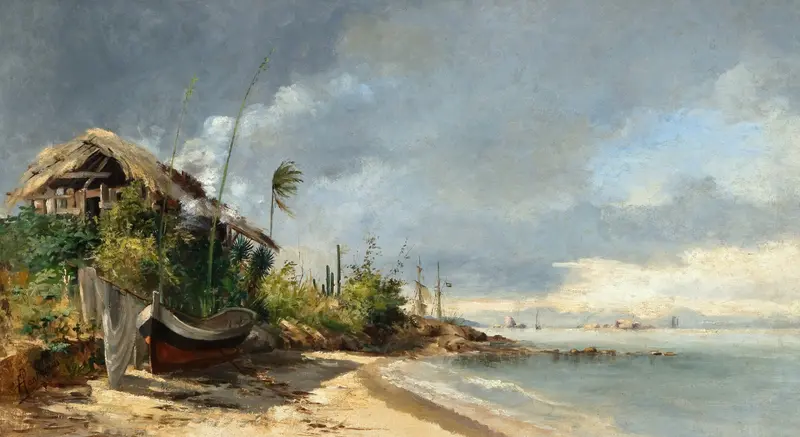
A View of the Beach, São Domingos, Niterói, RJ
Antonio Parreiras
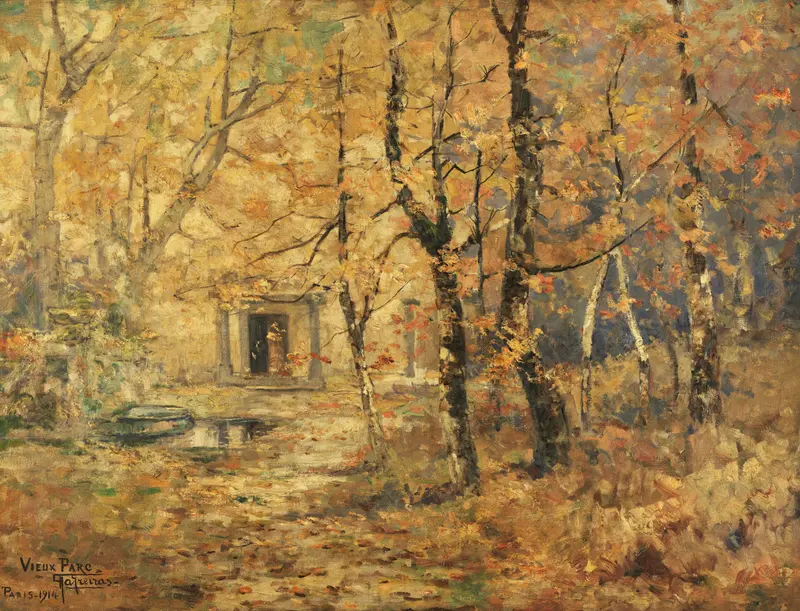
Vieux Parc, Paris
Antonio Parreiras
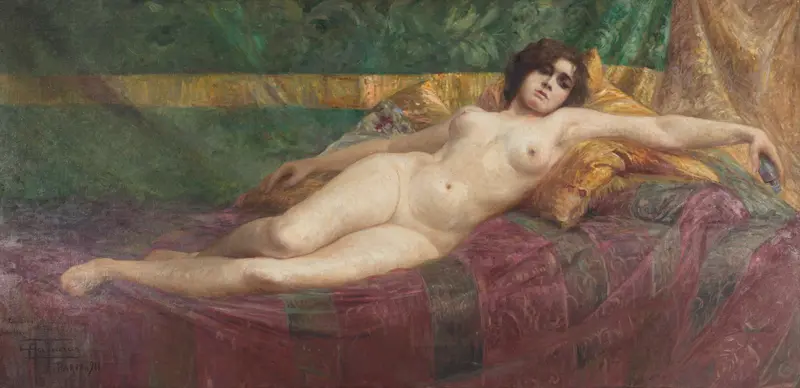
Sorrowful
Antonio Parreiras
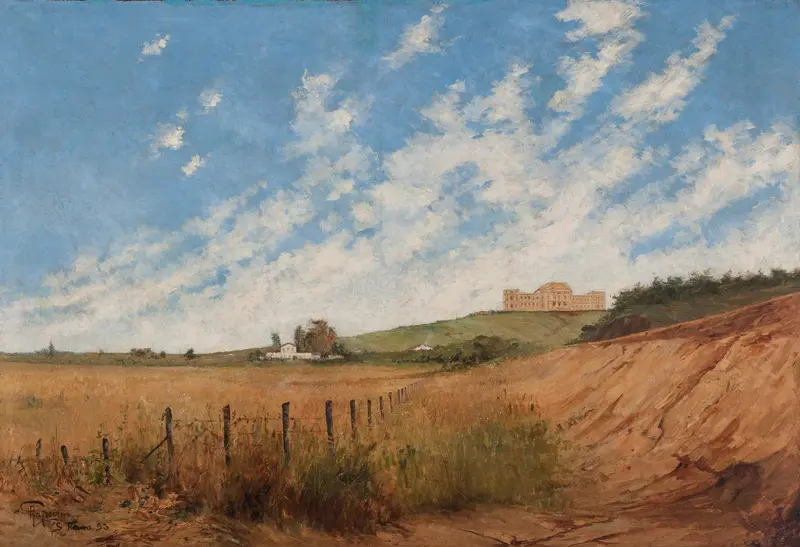
Paisagem do Campo do Ipiranga
Antonio Parreiras



