
The Fall of the House of Usher (Poe) — History & Facts
What first seizes the eye is the sheer violence of the image: a figure, wide-eyed and bloodied, bursts from shattered planks, her body splayed in a pose that is both desperate and defiant. Above her, two men recoil in horror, one flinging out his arm as if to ward off the nightmare unfolding below. Their faces, rendered with sharp, almost mask-like precision, are trapped between disbelief and terror, drawing us into the fevered moment.
A monstrous, serpentine creature writhes in the space between them and the woman, its mouth agape in a silent scream, blurring the line between hallucination and reality. The palette is thin and spectral—muted flesh tones, sickly greens, and splashes of red—heightening the sense of unease and unreality. Every line and gesture pulls the viewer downward, from the open book on the table to the chaos erupting beneath, as if the story itself has torn through the page and into the world. Created in 1923 as an illustration for Poe’s Tales of Mystery and Imagination, this work by Harry Clarke is steeped in the gothic revival of early twentieth-century book art.
Clarke’s illustrations were prized by publishers and collectors alike for their ability to conjure the psychological horror at the heart of Poe’s stories, blending Art Nouveau intricacy with a modern taste for the grotesque. The “dark classics” collection to which this piece belongs reflects a moment when illustrated editions of literary works were experiencing a renaissance, driven by advances in printing and a hunger for the macabre in postwar Europe. Little is recorded about the journey of this specific drawing, but its survival as part of a celebrated illustrated volume ensures that every detail—every wound, every wild stare—still has the power to unsettle.
The longer you look, the more the boundaries between reader, viewer, and victim begin to dissolve.
More Artworks by Harry Clarke
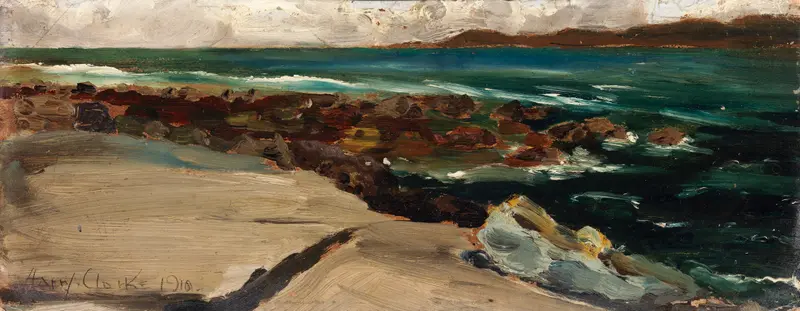
Landscape by the Coast
Harry Clarke
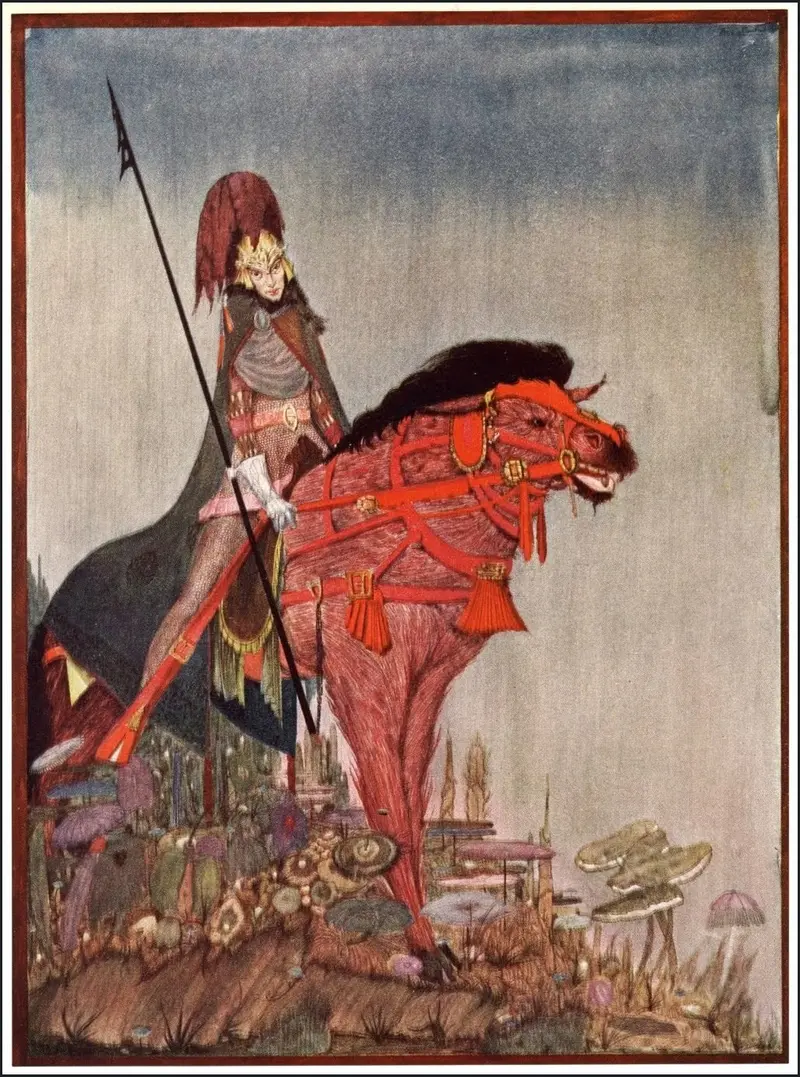
Metzengerstein (Poe)
Harry Clarke
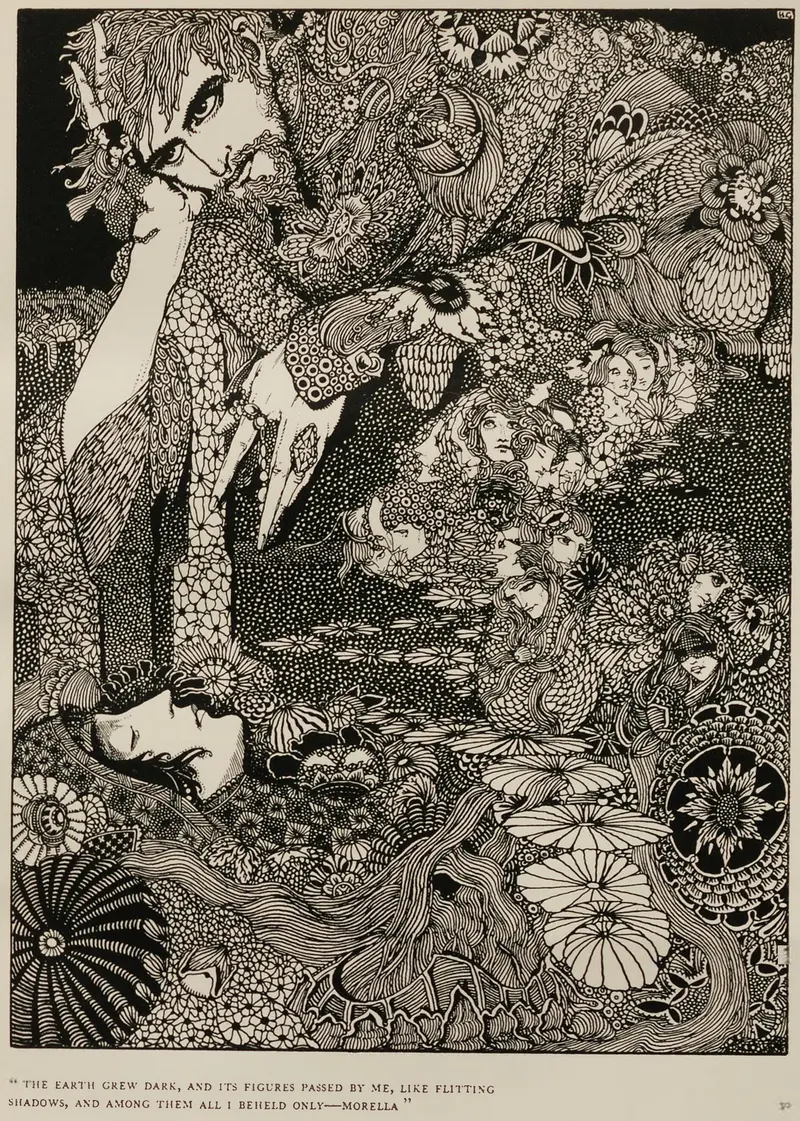
Morella (Poe)
Harry Clarke
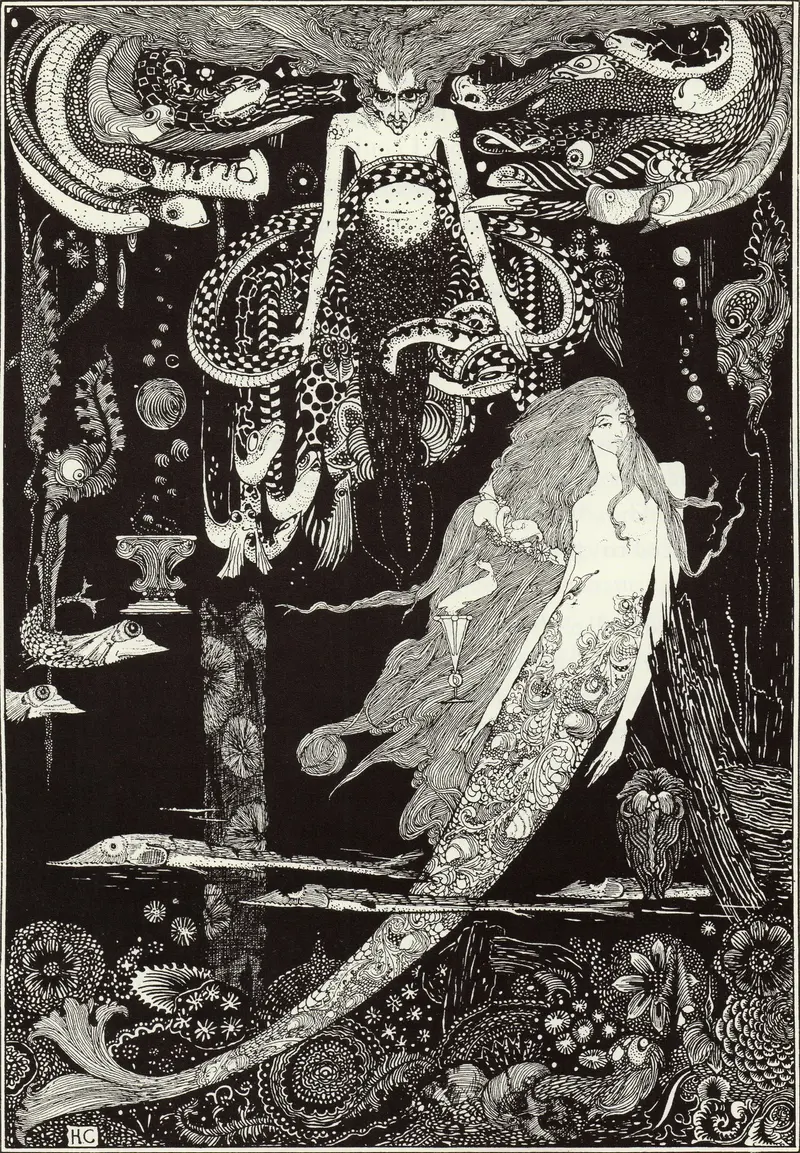
The Little Mermaid (Andersen)
Harry Clarke
Arabia (The Year's at the Spring)
Harry Clarke
Cinderella (Perrault)
Harry Clarke
The Tinder Box (Andersen)
Harry Clarke
The Dead (The Year's at the Spring)
Harry Clarke
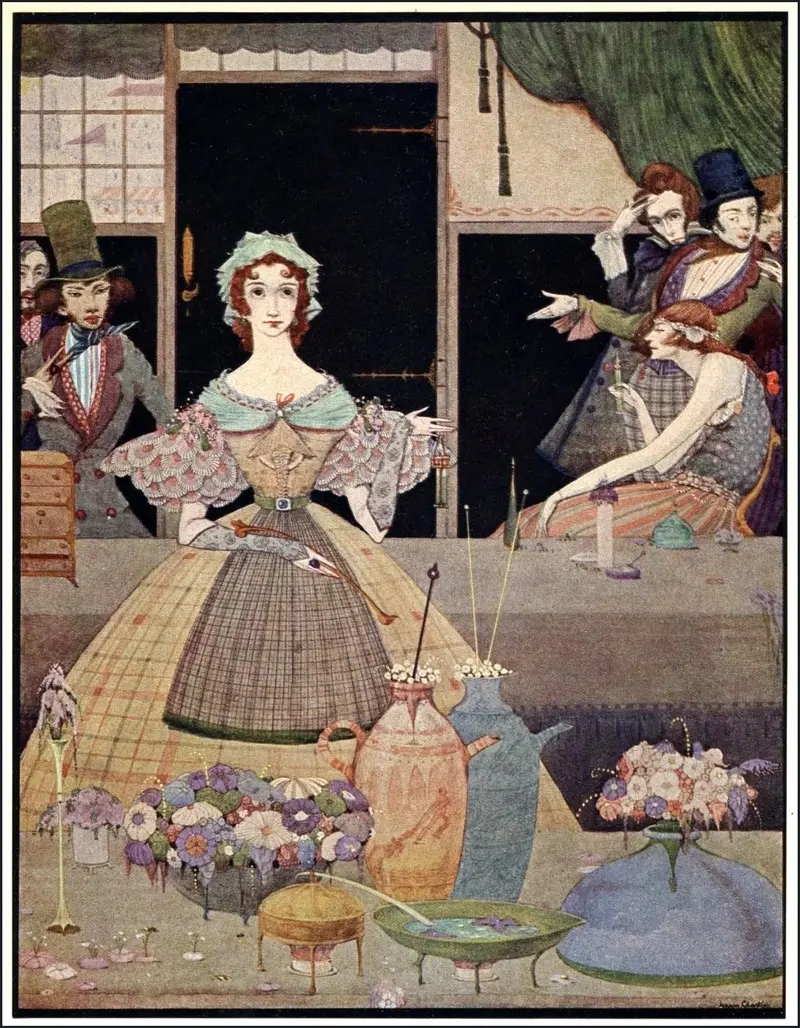
The Mystery of Marie Roget (Poe)
Harry Clarke

The Travelling Companion (Andersen)
Harry Clarke





