
The feeding hut in Ulvedalene, Dyrehaven. — History & Facts
The eye is drawn first to the quiet geometry of the feeding hut, its thatched roof and sturdy posts anchoring the scene amid a sweep of autumnal color. The low structure sits alone in a shallow dip, its open sides inviting speculation about the animals or people who might have sheltered there. Around it, the ground is scattered with fallen leaves, their ochre and russet tones echoed in the trees that ring the clearing.
The painter’s brushwork is brisk and loose, especially in the grass and foliage, giving the landscape a sense of motion and fleeting light, as if the wind were stirring through Dyrehaven at that very moment. The sky, softly streaked with grey and lavender, presses gently down, amplifying the hush that settles over the scene. Painted in 1902, The feeding hut in Ulvedalene, Dyrehaven belongs to a period when Danish artists like Albert Gottschalk turned their gaze to the everyday corners of their native landscape, finding poetry in the ordinary. Such works were rarely grand commissions; rather, they emerged from solitary walks and private observation, often painted en plein air to capture the shifting moods of the northern seasons.
The hut itself speaks to a world shaped by rural rhythms and the needs of livestock, while the loose handling and fresh palette reflect the influence of Impressionism, which had reached Denmark by the turn of the century. History has kept few traces of this specific painting beyond its listing in Troels Andersen’s catalogue and its appearance at Bruun Rasmussen, but its quiet presence invites the viewer to linger, imagining the life that once moved through this gentle hollow.
More Artworks by Albert Gottschalk
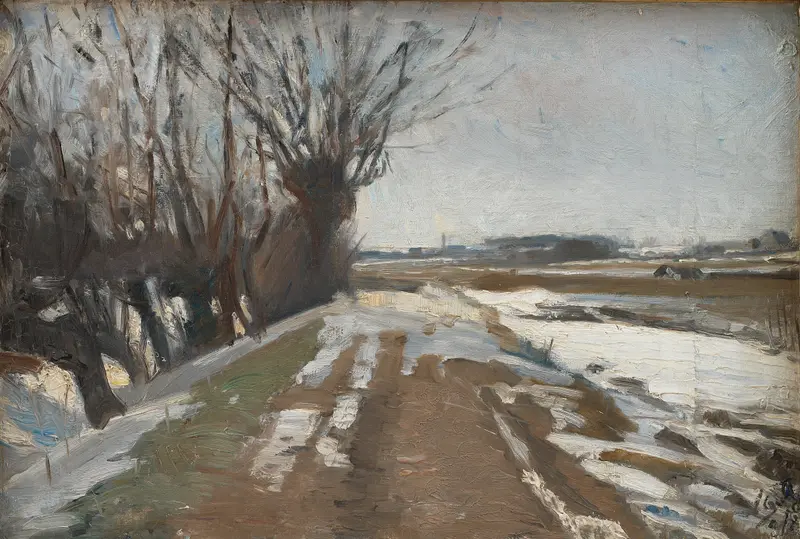
Winter Landscape. Utterslev near Copenhagen
Albert Gottschalk
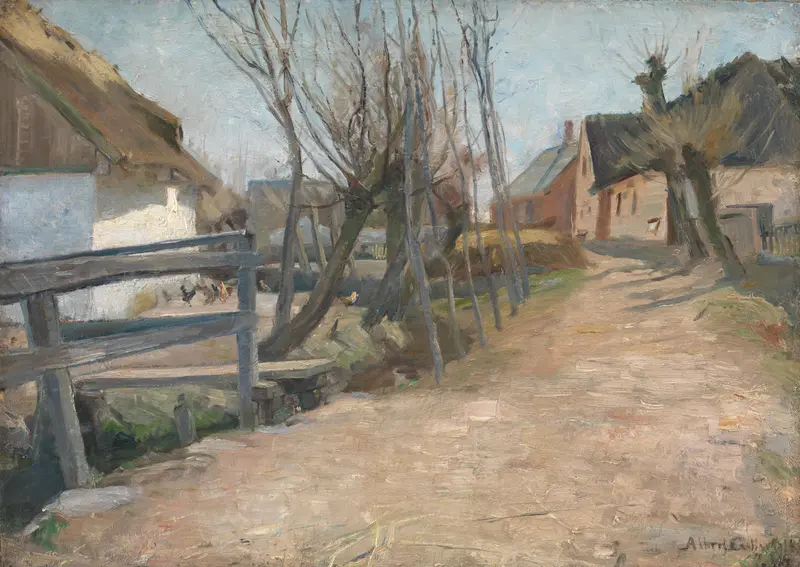
Tidlig forårsdag i Glostrup
Albert Gottschalk
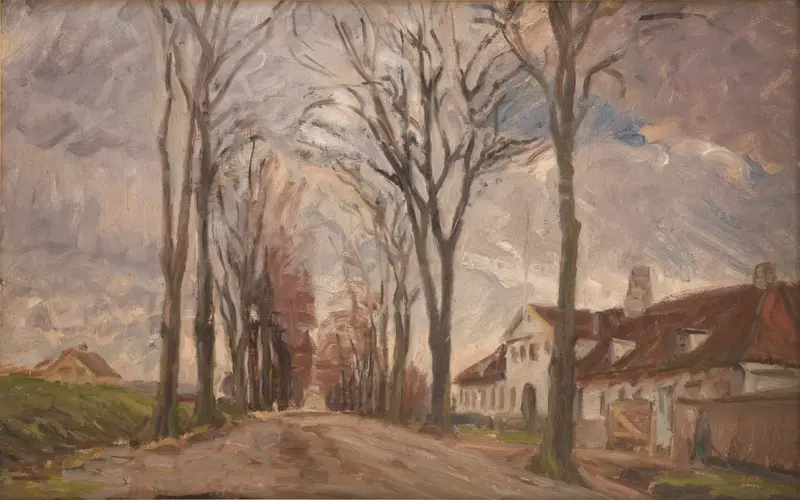
Lyngbyvejen ved Vintappergården
Albert Gottschalk
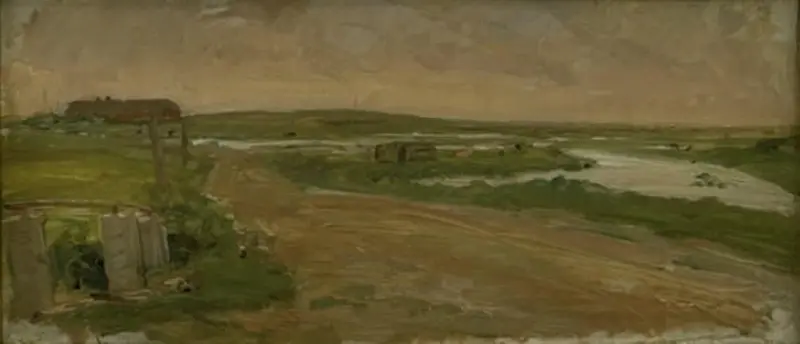
Vestjysk landskab. Holmsland
Albert Gottschalk
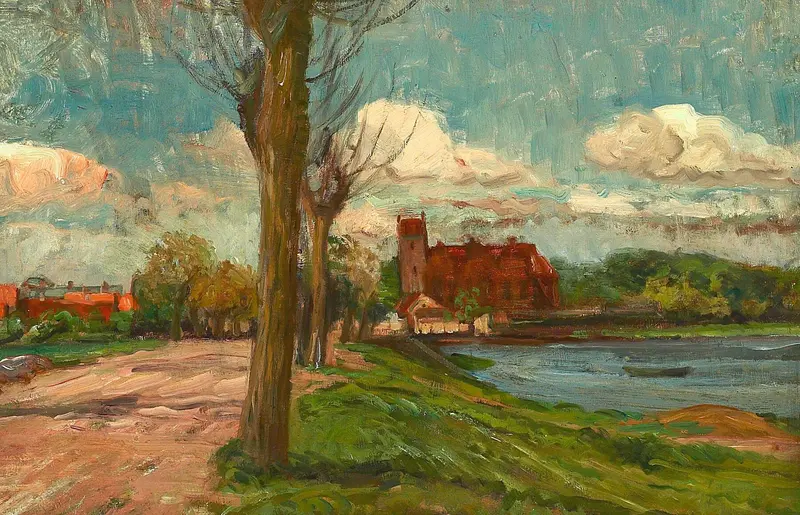
A road leading to a small town with a church.
Albert Gottschalk
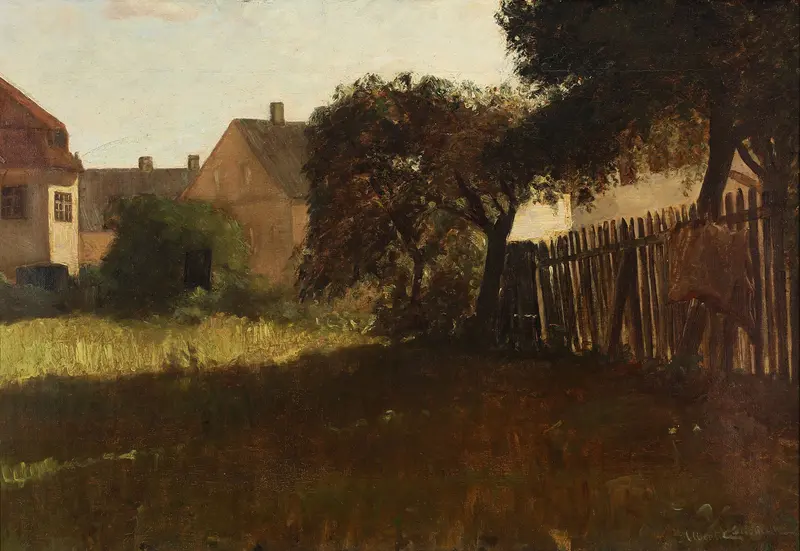
A summer day in a Garden in Vesterbro, Copenhagen
Albert Gottschalk
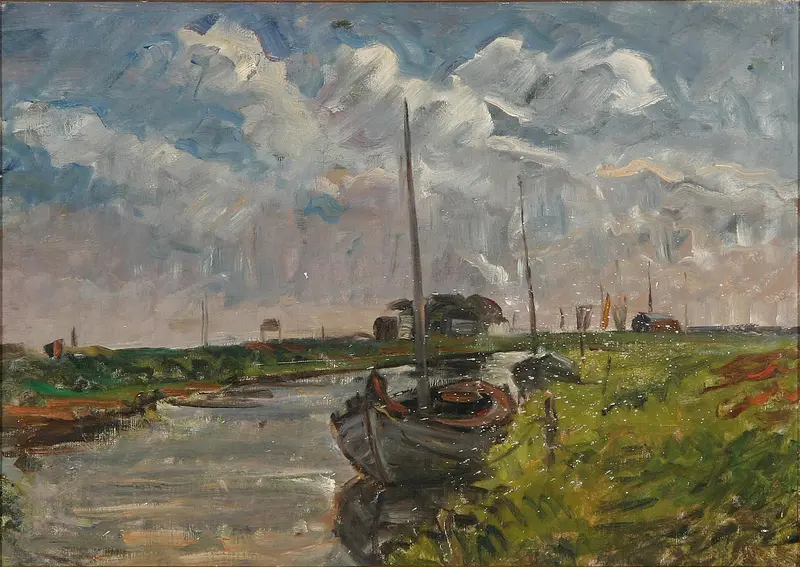
A canal with a boat.
Albert Gottschalk
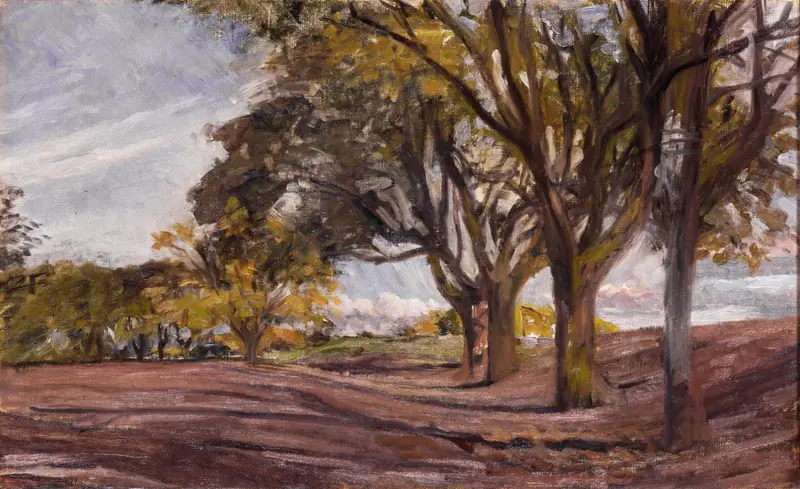
Chestnut Avenue at the Hermitage.
Albert Gottschalk
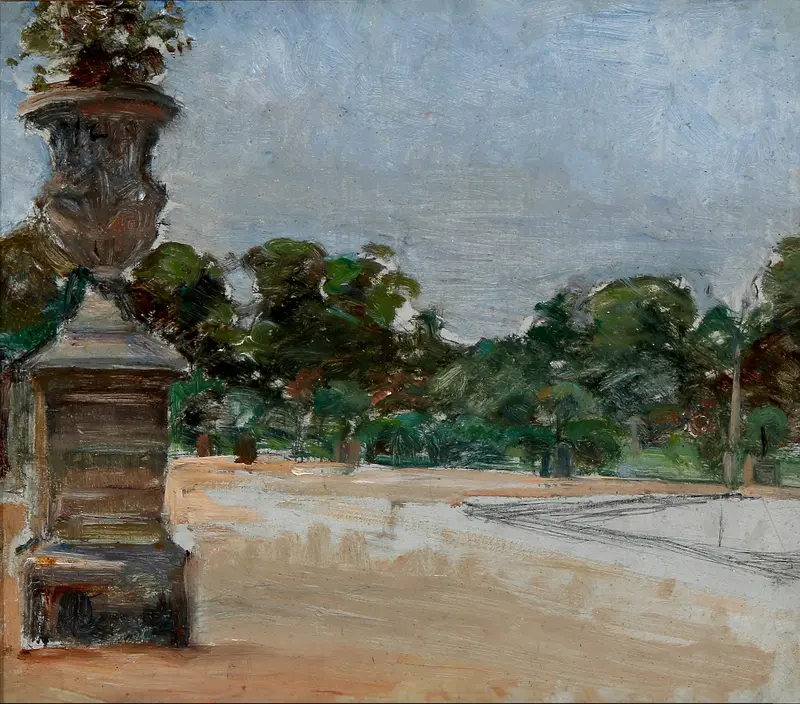
From the Tuileries Garden in Paris
Albert Gottschalk
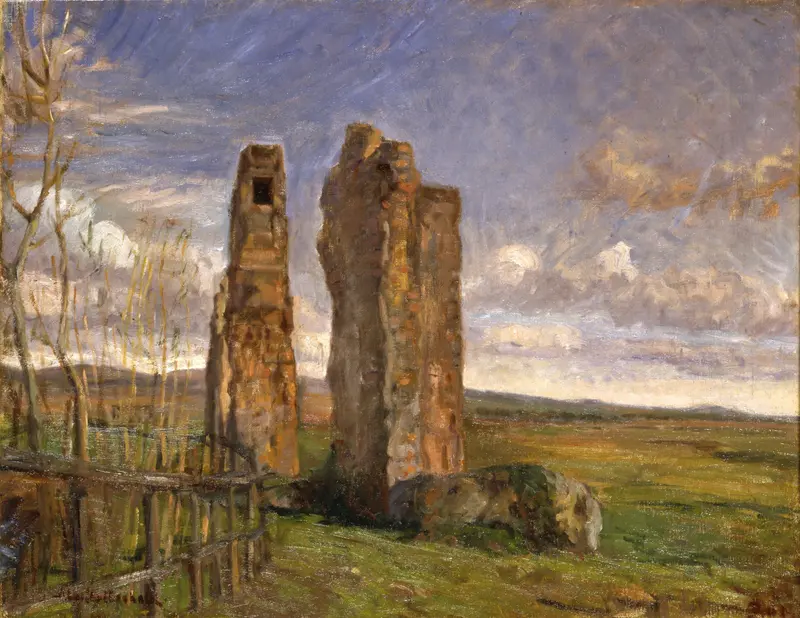
Ruins in Campagna
Albert Gottschalk
More Landscape Art

The Starry Night
Vincent van Gogh

View of Delft
Johannes Vermeer

Water Lilies
Claude Monet

The Grand Canal, Venice, looking north-west from the Ca' Corner to the Ca' Contarini degli Scrigni, with the campanile of Santa Maria della Carità
Canaletto

Windsor Castle
Canaletto

The Grand Canal looking North-East from the Palazzo Dolfin-Manin to the Rialto Bridge
Canaletto