
The Four and Twenty Elders Casting their Crowns before the Divine Throne — History & Facts
When William Blake exhibited The Four and Twenty Elders Casting their Crowns before the Divine Throne in 1805, viewers were struck by its visionary energy, so unlike anything else in English art of the time. The subject, drawn from the Book of Revelation, had rarely been attempted on this scale or with such intensity. Blake’s own contemporaries struggled to categorize the work, with one reviewer in 1806 describing it as “the wild effusion of a heated brain.” The painting stands as a testament to Blake’s unique position: both an outsider and a prophet within the Romantic movement, channeling biblical spectacle through his personal mythology. At the heart of the scene is the moment when the twenty-four crowned elders, robed in white, kneel and cast their golden crowns before the radiant throne of God.
Blake arranges the elders in a circle, their gestures both reverent and urgent, as if compelled by an unseen force. The throne itself blazes with light, rendered in swirling, almost abstract forms that seem to dissolve the boundary between the material and the spiritual. The elders’ crowns, scattered at the foot of the throne, symbolize the surrender of earthly power before divine authority.
Unlike earlier treatments by artists such as Albrecht Dürer, whose woodcuts emphasize hierarchy and order, Blake’s vision is charged with movement and spiritual drama. The medium of The Four and Twenty Elders Casting their Crowns before the Divine Throne remains uncertain—some believe it to be tempera, others watercolor or ink—and the painting’s early history is not well documented. It was likely created as part of a series of biblical illustrations for Blake’s patron, the civil servant Thomas Butts, who supported the artist through regular commissions. Today, the work is held in the collection of the Tate Britain, where it continues to intrigue scholars and visitors alike.
Within Blake’s career, it marks a period of intense creativity, when he produced some of his most ambitious and enigmatic religious imagery.
More Artworks by William Blake
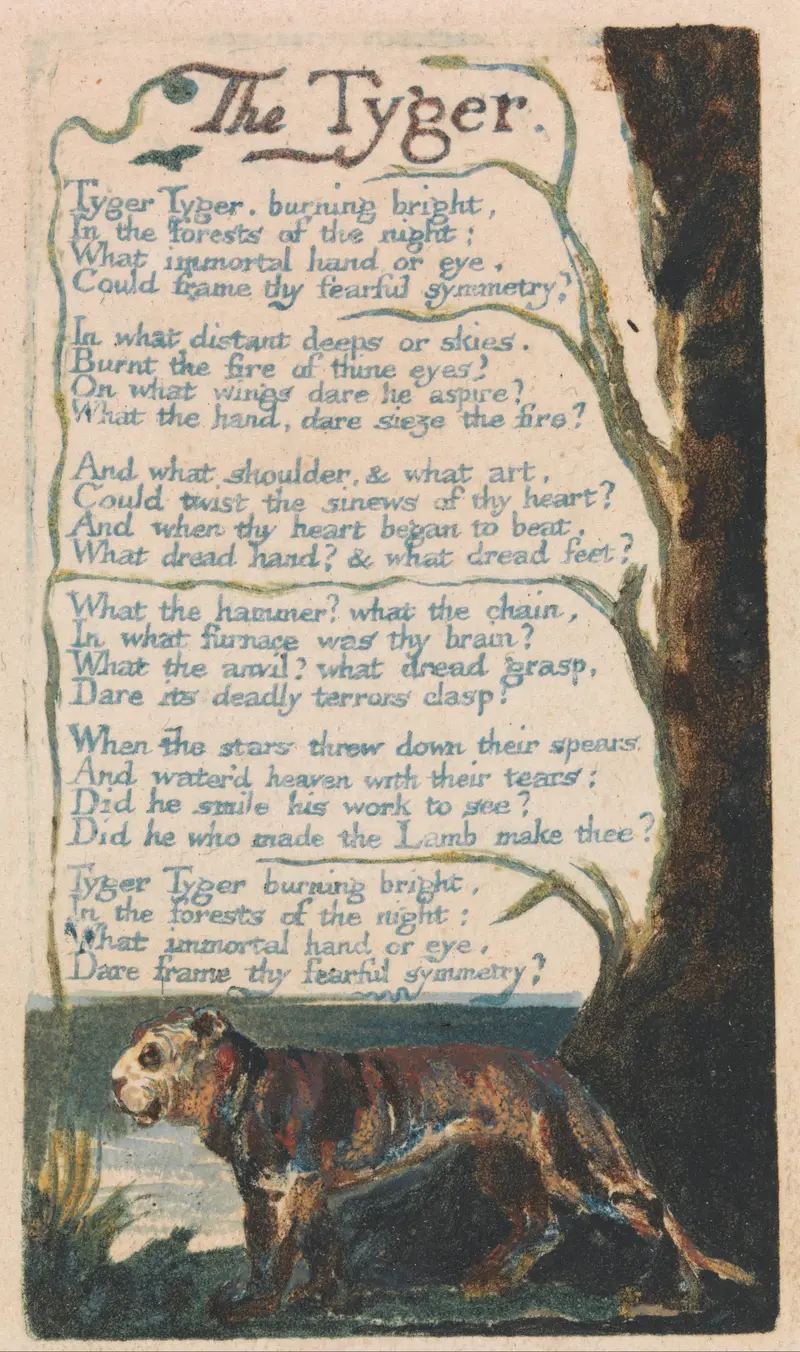
The Tyger
William Blake

Christ Blessing
William Blake
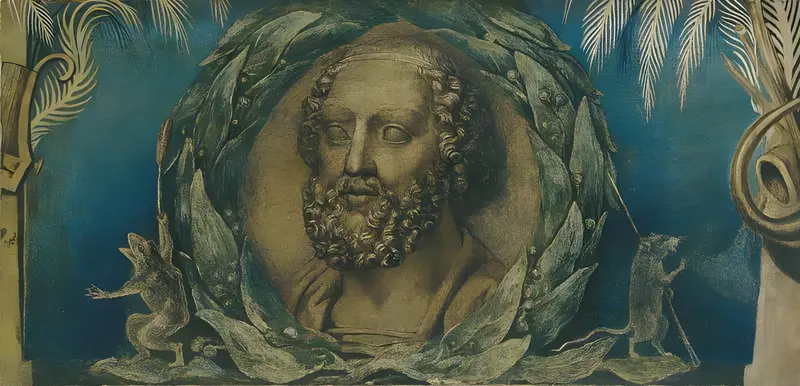
Homer
William Blake
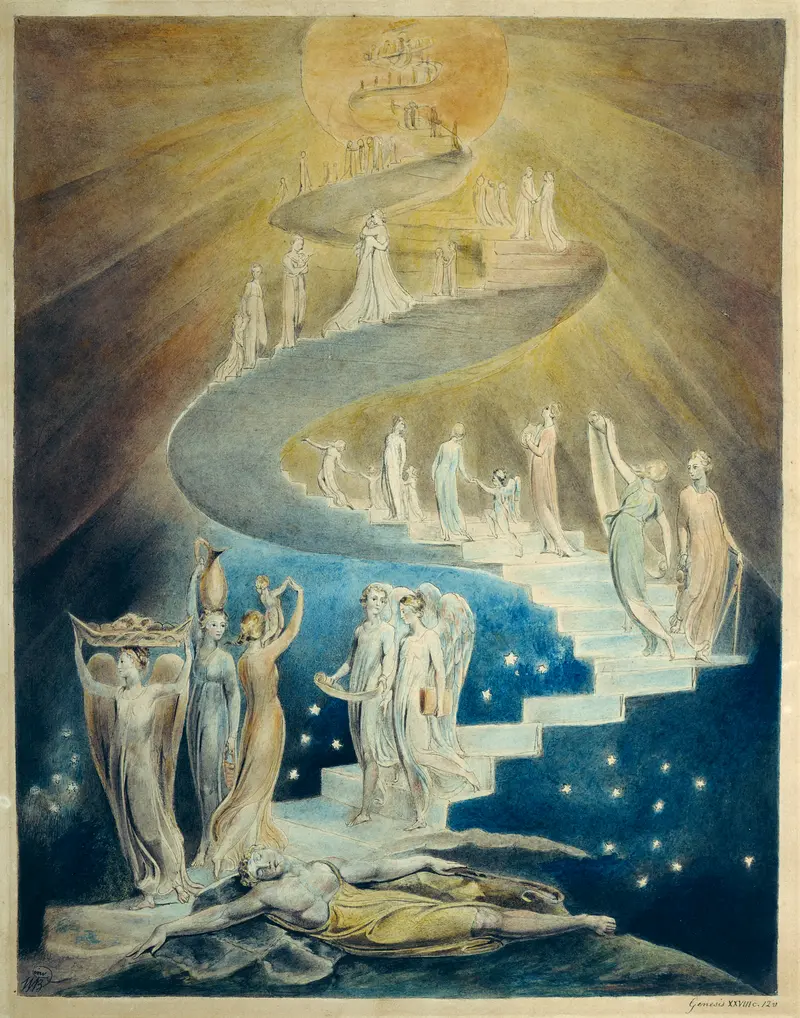
Jacob's Ladder
William Blake
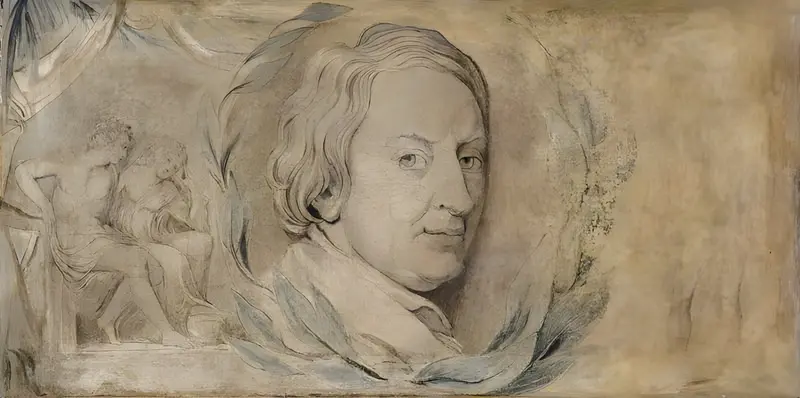
John Dryden (1631–1700)
William Blake

Landscape near Felpham
William Blake
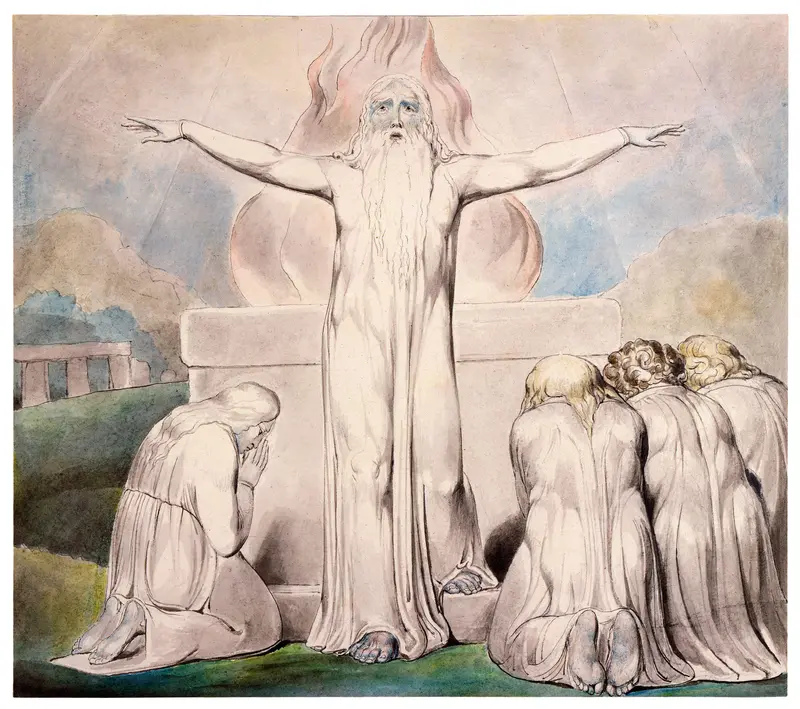
Sacrifice of Job
William Blake
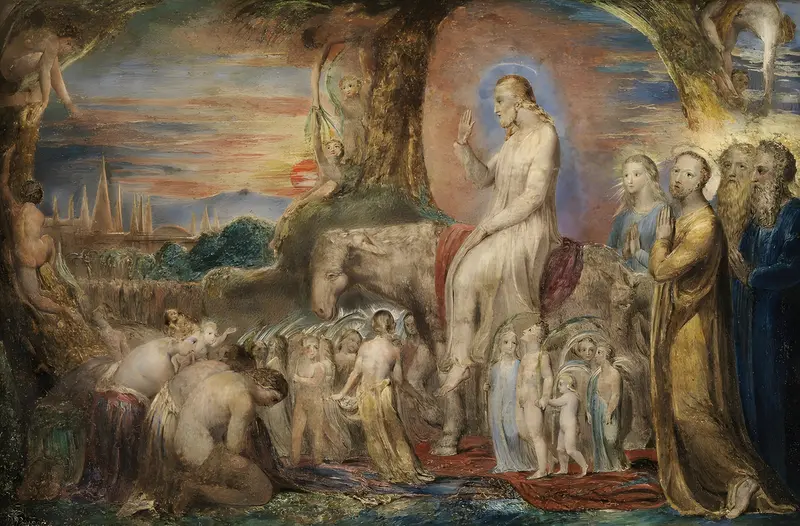
Christ's Entry into Jerusalem
William Blake
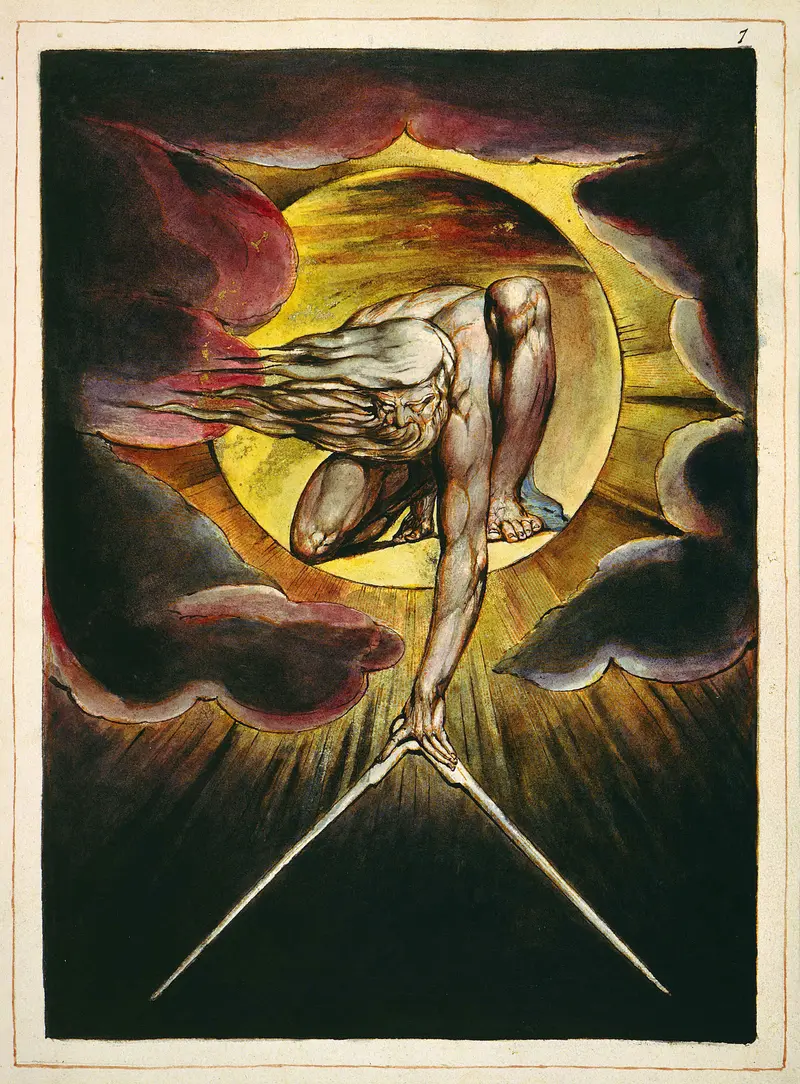
The Ancient of Days
William Blake
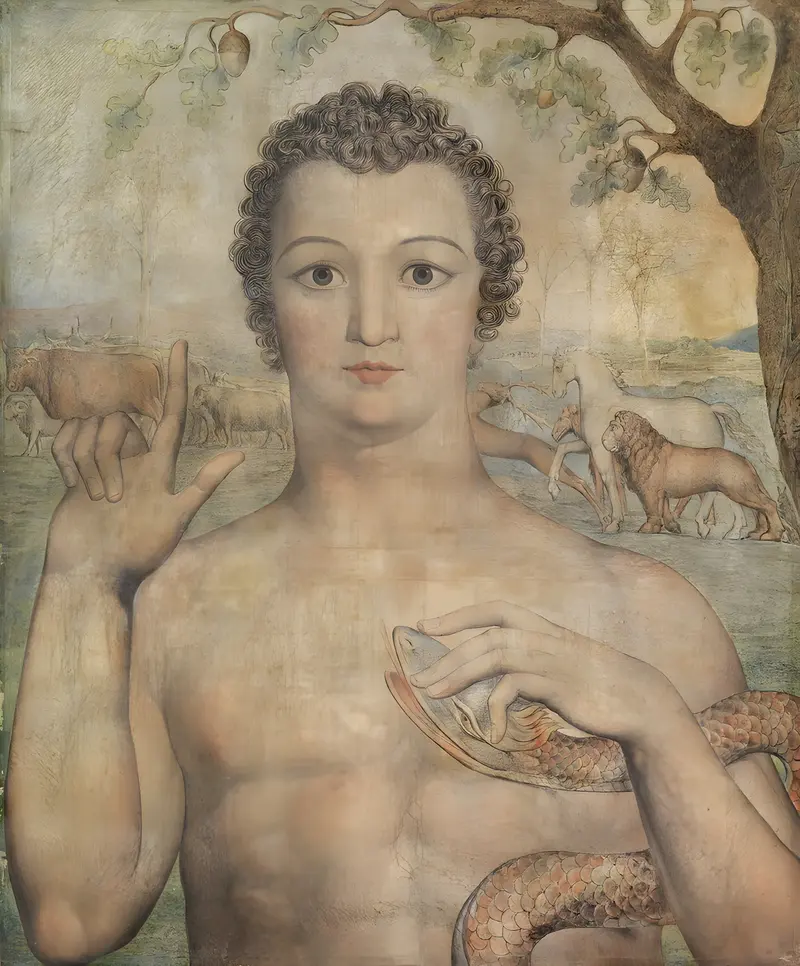
Adam Naming the Beasts
William Blake





