
The Four Seasons: October — History & Facts
What draws the eye first in The Four Seasons: October by Abel Grimmer is the sense of bustling, communal energy that fills every corner of the landscape. The scene is alive with the rituals of harvest: figures bend to the earth, gather fruit, and roll barrels towards a cottage where others press and taste the season’s yield. The light, cool and slanting, picks out the ochre of the house and the bright reds and whites of the workers’ clothing, guiding the viewer from one lively group to the next.
The rolling hills and distant castle lend a sense of continuity and security, as if these autumn labors are part of a cycle older than memory. Every gesture is purposeful—the man with the staff conferring with his companion, the women pouring and sorting—each a small drama in the larger choreography of rural life. This kind of painting thrived in the late sixteenth and early seventeenth centuries, when artists in the Low Countries like Abel Grimmer specialized in scenes of peasant life and the turning year. Such works were prized by urban collectors who longed for an idealized vision of the countryside, and they often appeared in sets representing the months or seasons.
The world that produced The Four Seasons: October was one of rapid change: cities growing, trade expanding, and yet a deep nostalgia for the rhythms of the land. Today, this painting is part of the Art UK collection, a reminder of how even the most ordinary labors were once worthy of careful observation and celebration. Let your gaze linger on the details—the barrels, the gestures, the distant birds—each one a thread in the fabric of an autumn day centuries ago.
More Artworks by Abel Grimmer

Flemish proverbs
Abel Grimmer
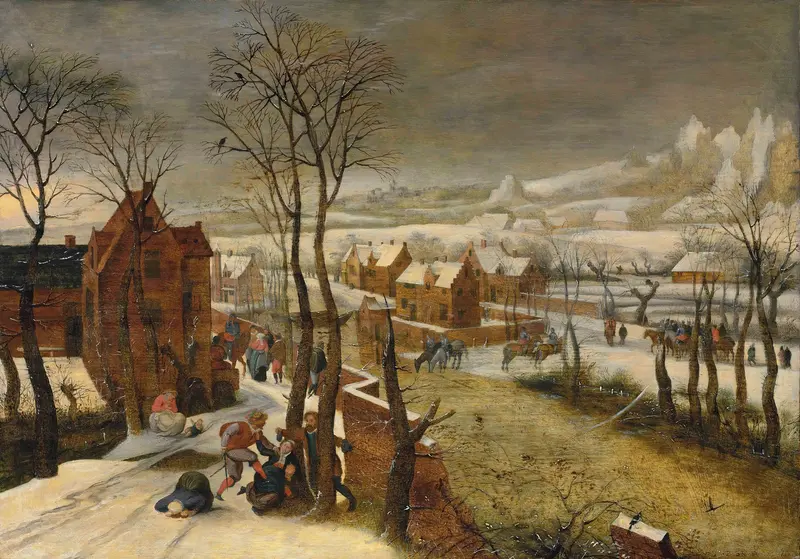
A Village Landscape In Winter With The Massacre Of The Innocents
Abel Grimmer
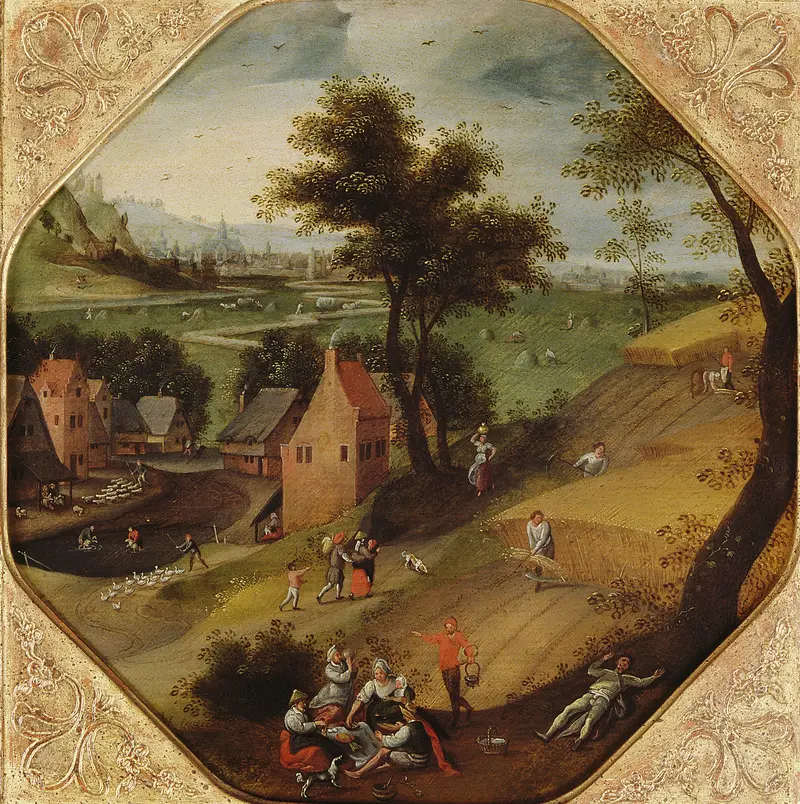
De Zomer
Abel Grimmer
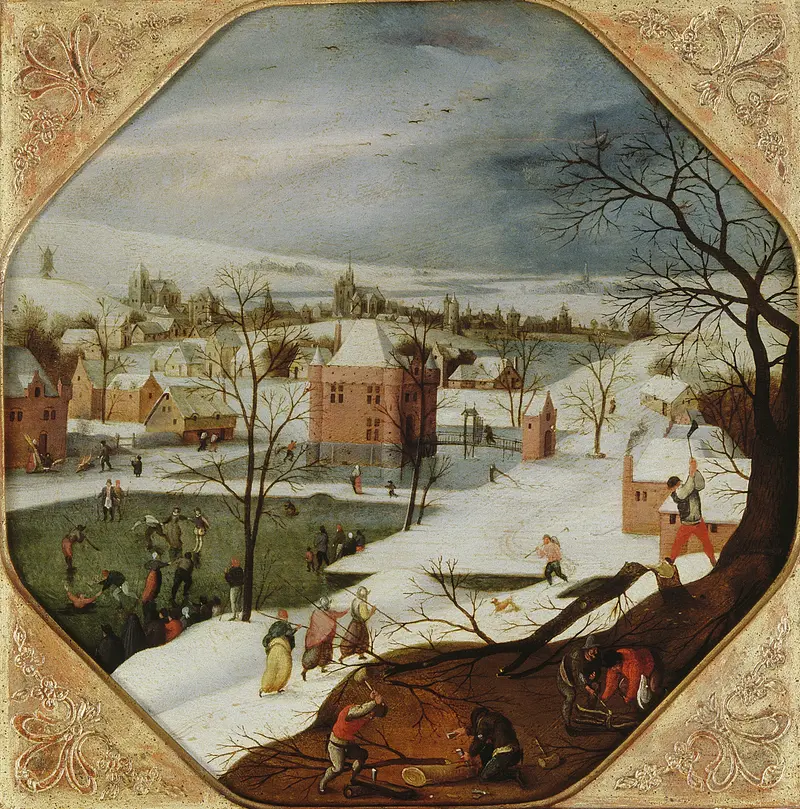
De Winter
Abel Grimmer
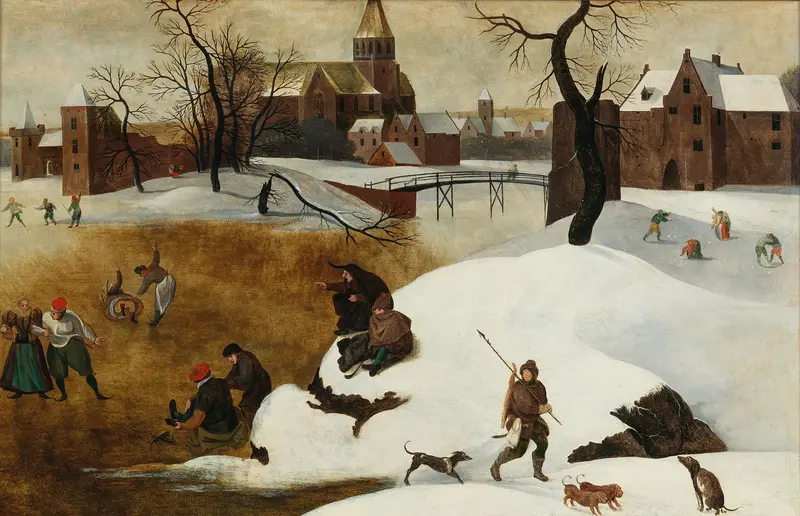
winter landscape with skaters
Abel Grimmer
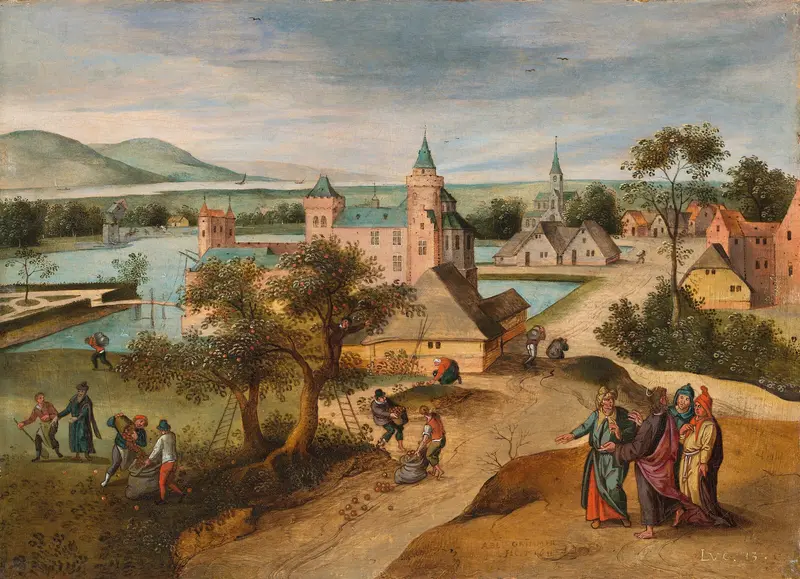
September – The Parable of the Barren Fig Tree
Abel Grimmer
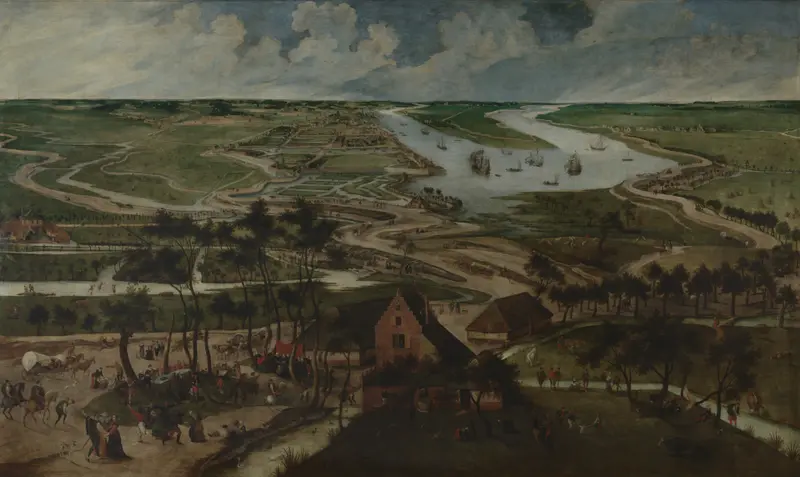
The Eel Huts in the Antwerp Polder outside the Lillo or Slijk Gate
Abel Grimmer
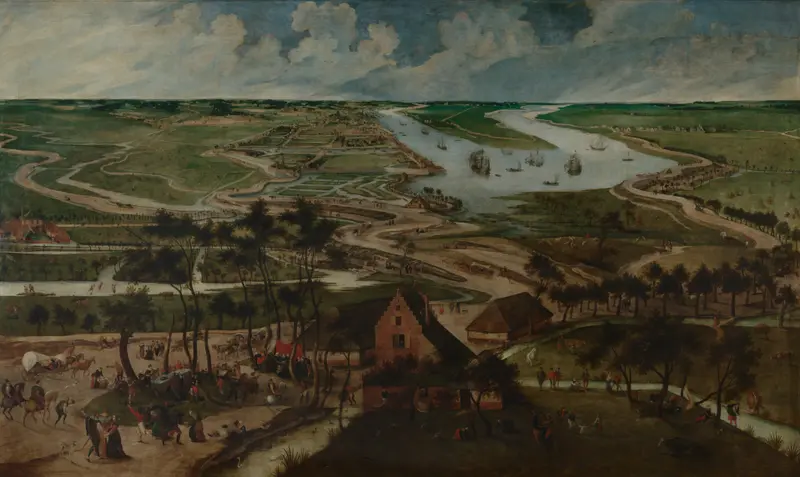
De Antwerpse polder en de Palinghuizen buiten de Slijk- of Lillopoort
Abel Grimmer
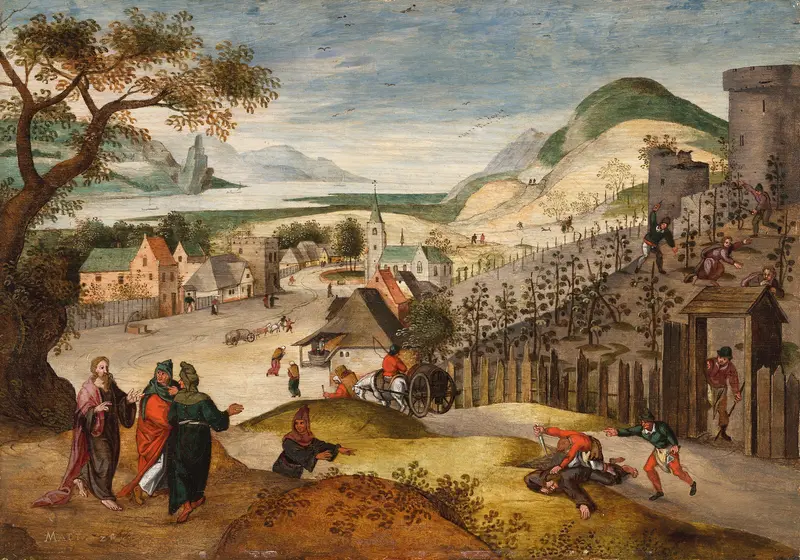
October – The Parable of the Vineyard
Abel Grimmer
The Marketplace in Bergen op Zoom
Abel Grimmer
More Genre Scene Art

Banquet of the Officers of the St George Civic Guard
Frans Hals

Rembrandt and Saskia in the Scene of the Prodigal Son
Rembrandt van Rijn

Bal du moulin de la Galette
Pierre-Auguste Renoir

Quadrille at the Moulin Rouge
Henri de Toulouse-Lautrec

A Burial at Ornans
Gustave Courbet

When Will You Marry?
Paul Gauguin