
The Galoshes of Fortune (Andersen) — History & Facts
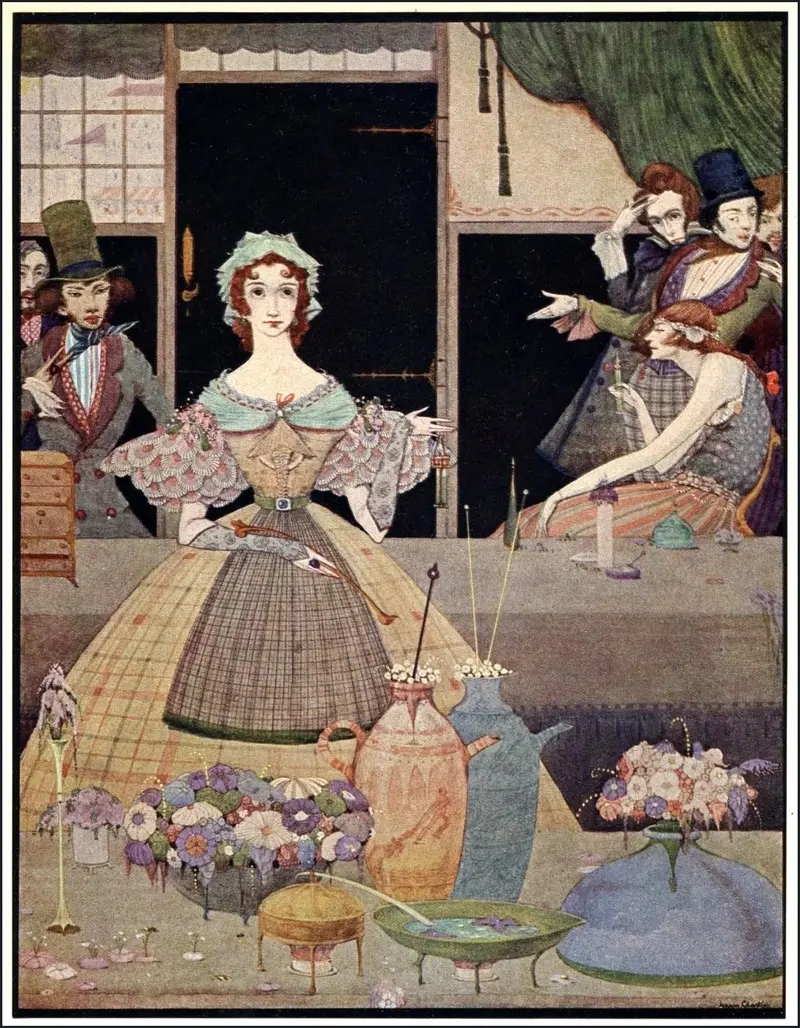
A single, magnetic figure commands the center of The Galoshes of Fortune (Andersen), his outstretched hand and elaborate attire drawing the viewer into a world where every inch of the page teems with pattern and possibility. The stark contrast of black and white is not merely decorative; it carves out a stage on which the fantastic and the sacred mingle. The eye is led first to the figure’s face, framed by a top hat and a mane of curls, then to the delicate, almost skeletal hand that gestures upward, as if conjuring the ethereal bird above.
Around him, a constellation of symbols—crosses, candles, and mysterious emblems—float in a tapestry of swirling lines, each detail a riddle inviting closer inspection. Created in 1916, this illustration by Harry Clarke belongs to a moment when book illustration was undergoing a transformation, fueled by the currents of Art Nouveau and the dark allure of Symbolism. Clarke’s work for Hans Christian Andersen’s fairy tales, as published in Dublin, stands out for its intricate penwork and haunting mood, a style that made him one of the most distinctive illustrators of his age. Such images were commissioned to enchant both children and adults, offering a visual feast that deepened the magic of the stories themselves.
While history has left few traces of this particular drawing’s journey, it survives as a testament to a time when books were portals, and illustrators like Clarke were their gatekeepers—look again, and let the patterns pull you further in.
More Artworks by Harry Clarke
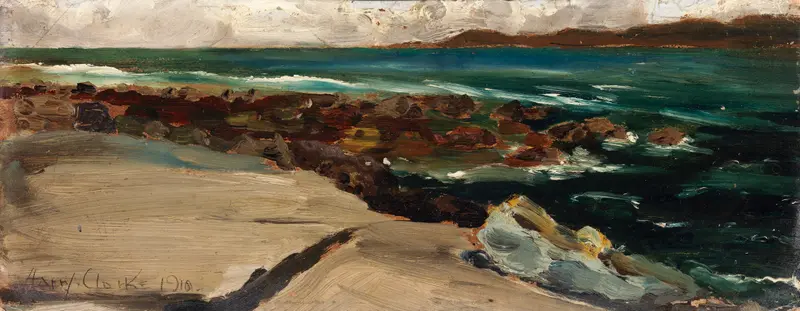
Landscape by the Coast
Harry Clarke
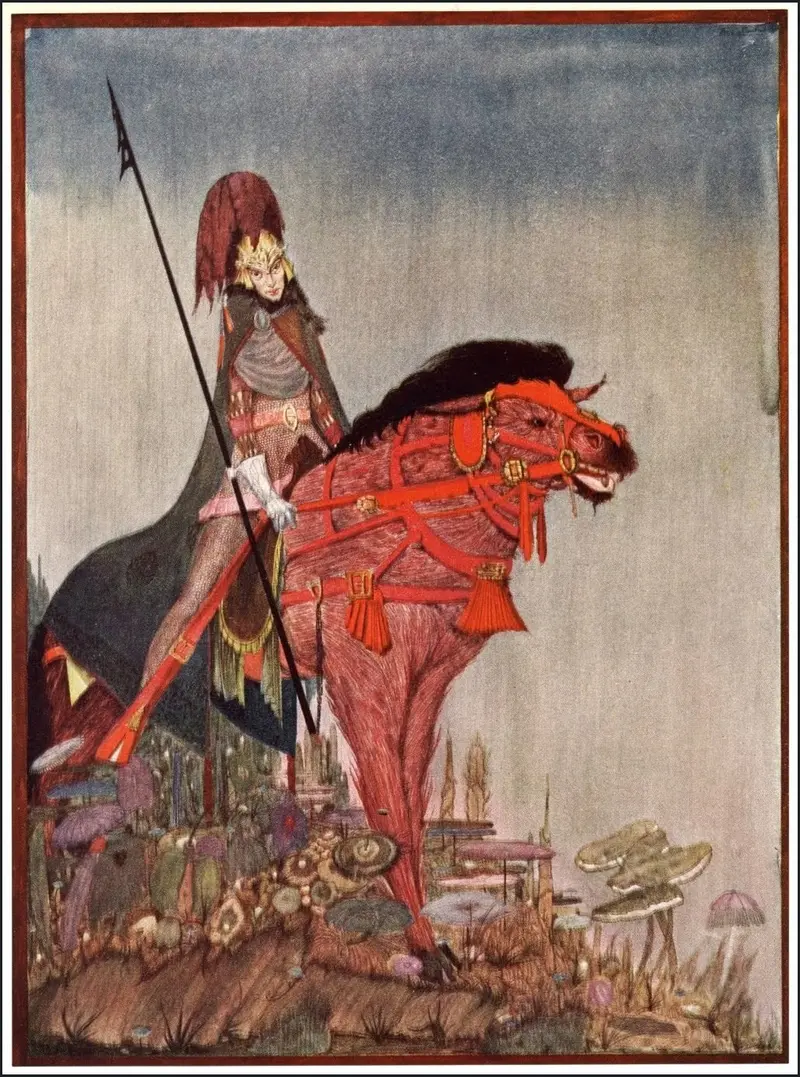
Metzengerstein (Poe)
Harry Clarke
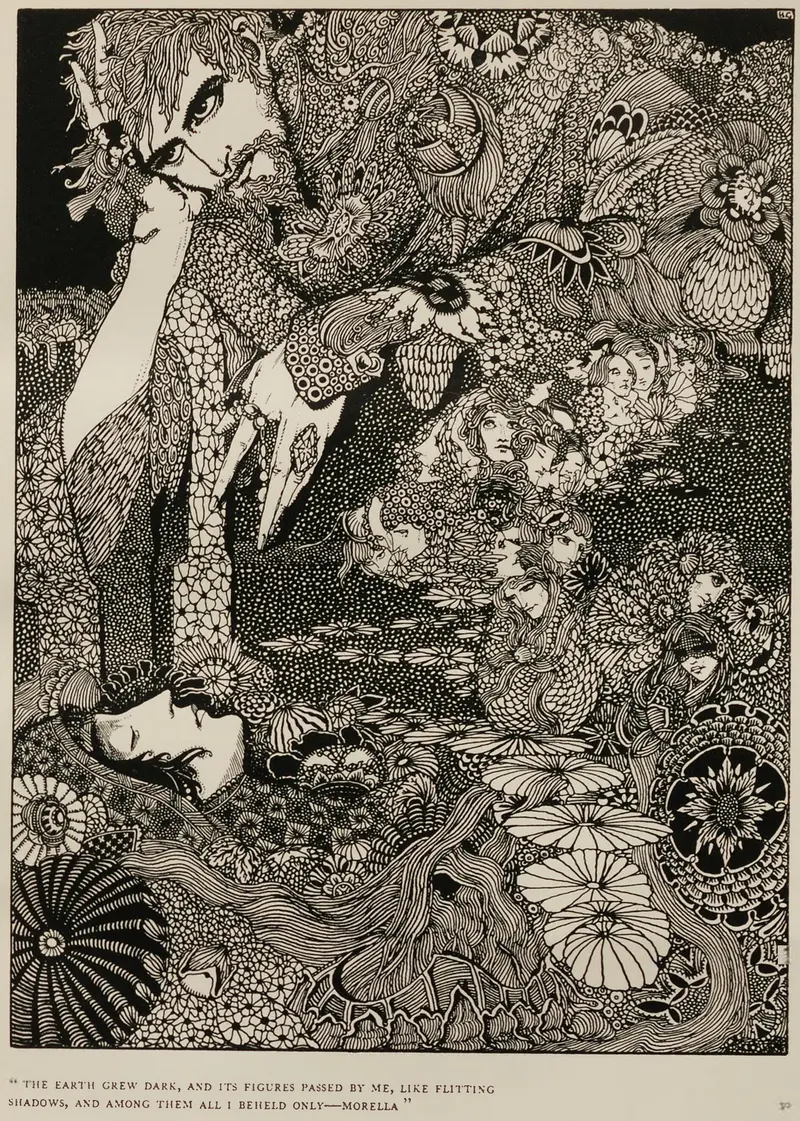
Morella (Poe)
Harry Clarke
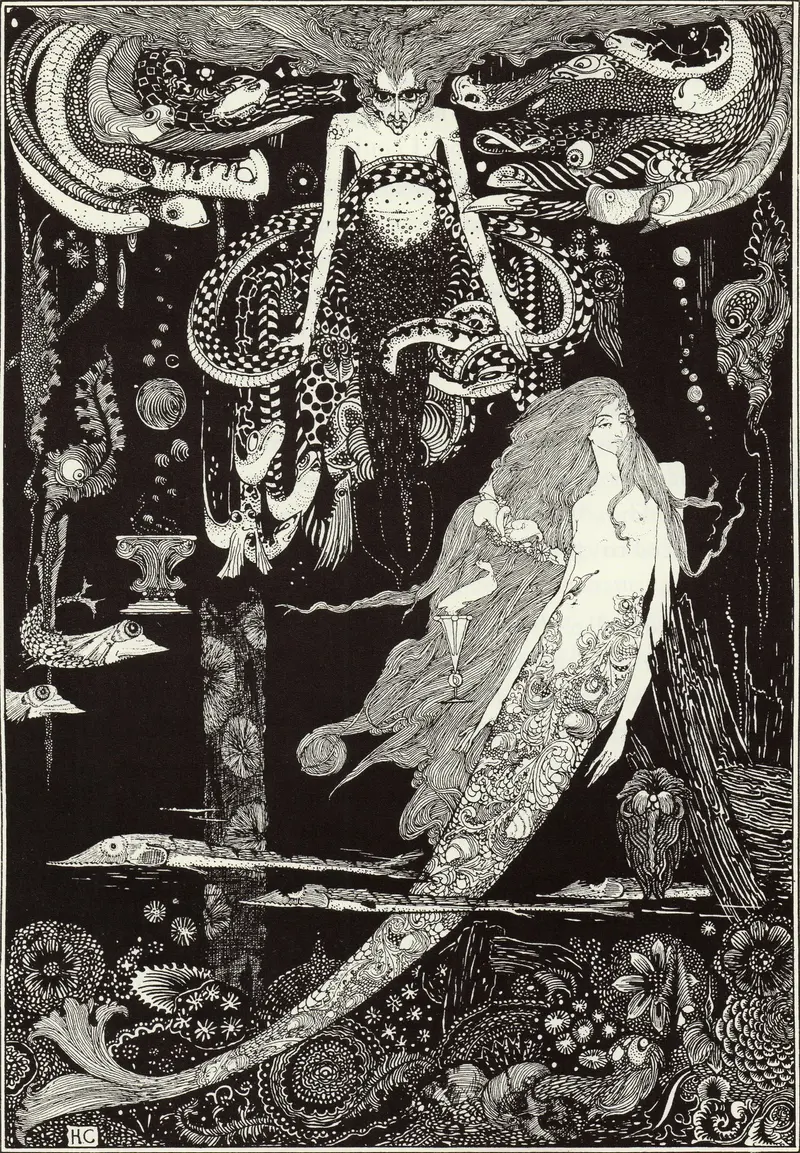
The Little Mermaid (Andersen)
Harry Clarke
Arabia (The Year's at the Spring)
Harry Clarke
Cinderella (Perrault)
Harry Clarke
The Tinder Box (Andersen)
Harry Clarke
The Dead (The Year's at the Spring)
Harry Clarke
The Mystery of Marie Roget (Poe)
Harry Clarke

The Travelling Companion (Andersen)
Harry Clarke





