
The Gardener — History & Facts
When Georges Seurat painted The Gardener in 1882, he was only twenty-three and still years away from developing the Pointillist technique that would later define his career. The painting stands out as one of the rare early works in which Seurat experimented with light and color before his scientific approach to painting took hold. Scholars have long noted that the identity of the gardener remains unknown, and the work’s medium is still a matter of debate—some suggest oil, others a mixture of media—adding a layer of mystery to its creation.
Unlike his later, more famous scenes of Parisian leisure, here Seurat turns his attention to a solitary figure absorbed in humble labor. The painting captures a quiet moment: a man, bent over in concentration, tends to a patch of earth, his form merging with the surrounding greenery. The light falls softly across the scene, illuminating the gardener’s shirt and casting gentle shadows that hint at a late afternoon. Unlike the stylized dots of color in A Sunday Afternoon on the Island of La Grande Jatte, this work uses broader, more traditional brushstrokes, yet already shows Seurat’s fascination with how sunlight plays on surfaces.
The composition is intimate, drawing the viewer close to the everyday dignity of work, much as Jean-François Millet did in his depictions of rural laborers. The absence of narrative drama invites us to reflect on the quiet persistence of the gardener’s task. The Gardener has not enjoyed the same fame or travel as Seurat’s later masterpieces, and its early date means it has often been overlooked in discussions of his career. Little is known about its early provenance, but it is generally believed to have remained in private hands for decades before entering a public collection.
The uncertainty surrounding its medium and the anonymity of its subject have made it a subject of scholarly curiosity, especially for those interested in Seurat’s formative years. Today, the painting stands as a testament to the artist’s early search for a personal vision, offering a rare glimpse into the years before he revolutionized modern painting.
More Artworks by Georges Seurat
A Sunday Afternoon on the Island of La Grande Jatte
Georges Seurat
Port-en-Bessin, The Outer Harbor (Low Tide)
Georges Seurat
Étude pour ‘La Grande Jatte’ (Study for ‘La Grande Jatte’)
Georges Seurat
Seascape at Port-en-Bessin,Normandy
Georges Seurat
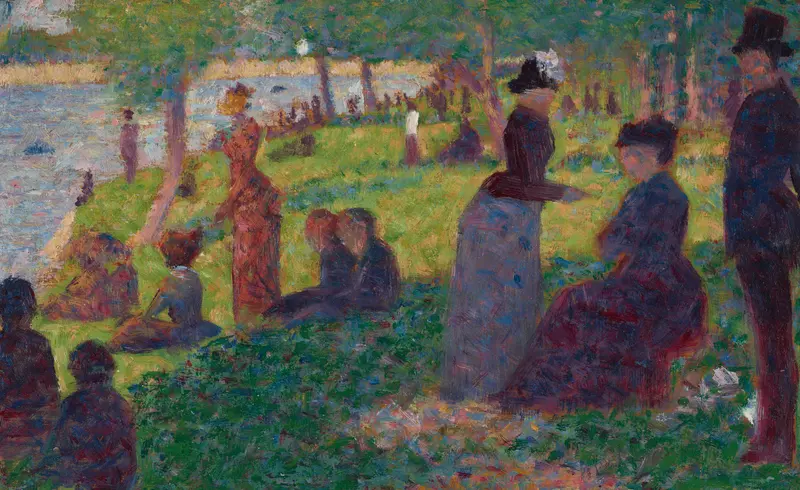
Oil Sketch for "A Sunday on La Grande Jatte — 1884"
Georges Seurat
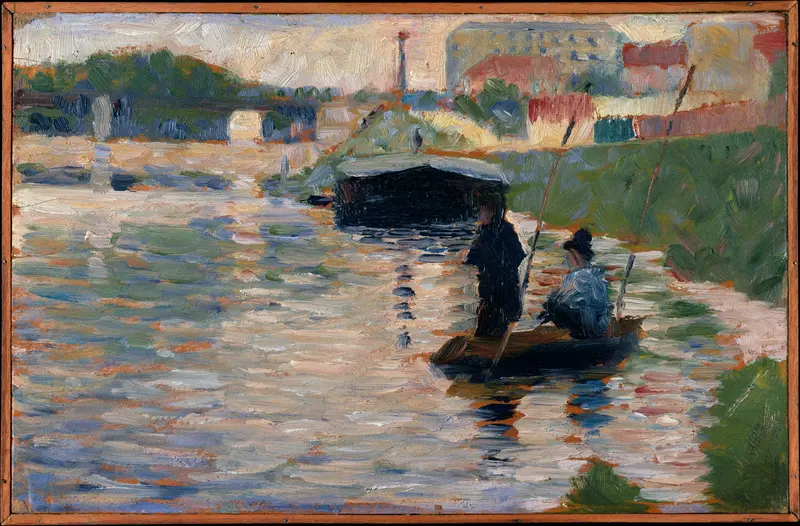
View of the Seine
Georges Seurat
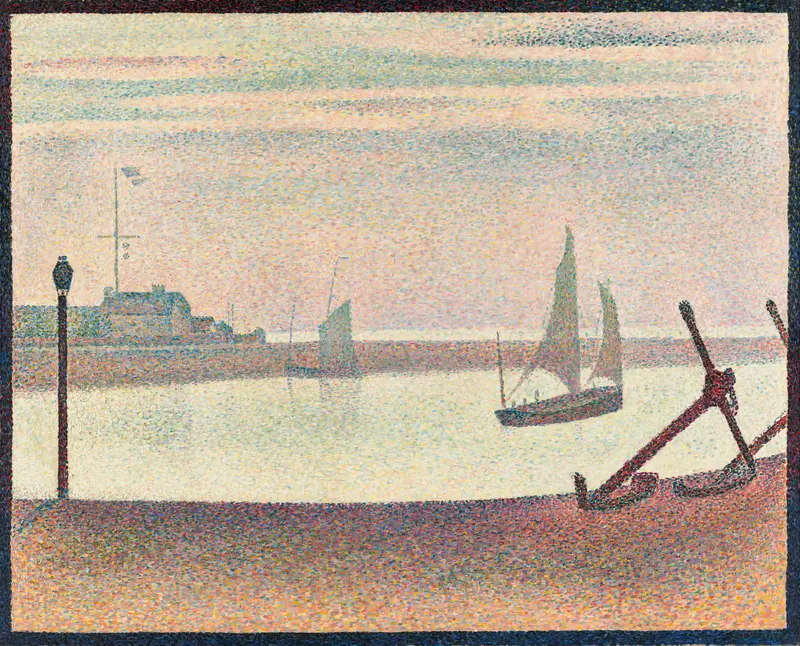
The Channel at Gravelines, Evening
Georges Seurat
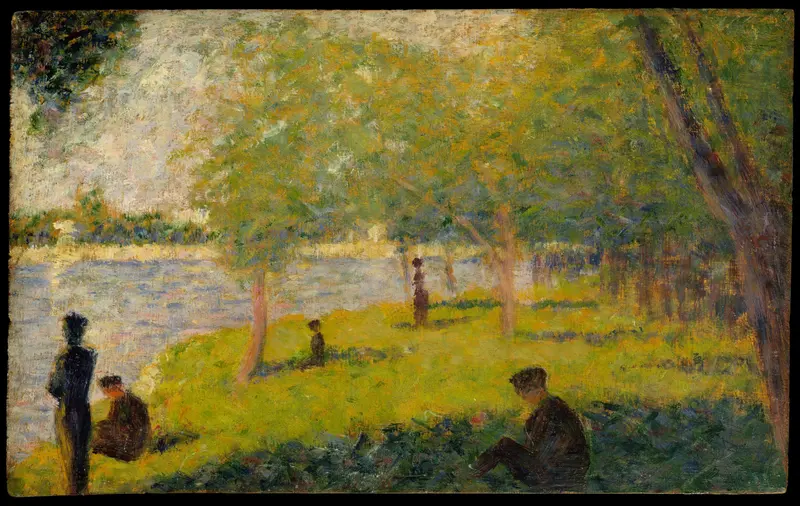
Study for ‘A Sunday on La Grande Jatte’
Georges Seurat
Study for A Sunday on La Grande Jatte
Georges Seurat
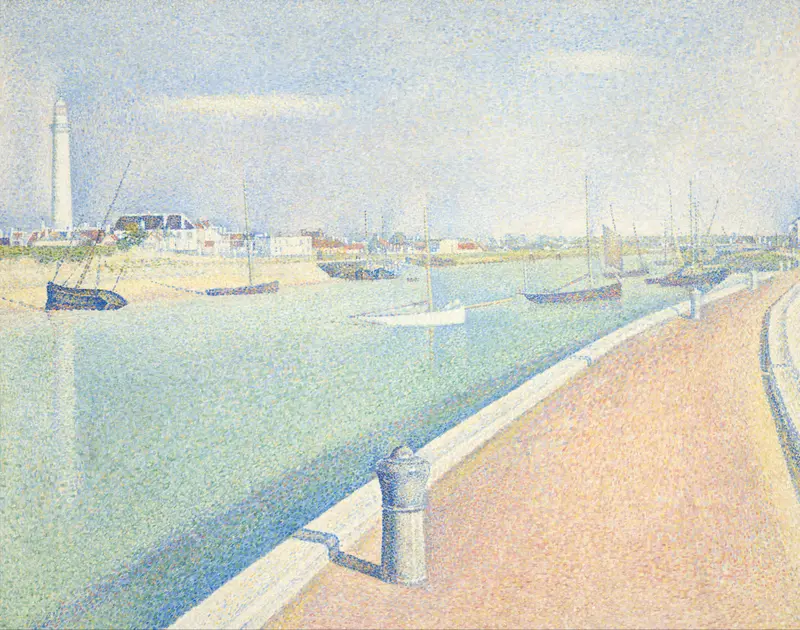
The Channel of Gravelines, Petit Fort Philippe
Georges Seurat
More Genre Scene Art

Banquet of the Officers of the St George Civic Guard
Frans Hals

Rembrandt and Saskia in the Scene of the Prodigal Son
Rembrandt van Rijn

Bal du moulin de la Galette
Pierre-Auguste Renoir

Quadrille at the Moulin Rouge
Henri de Toulouse-Lautrec

A Burial at Ornans
Gustave Courbet

When Will You Marry?
Paul Gauguin