
The Great Red Dragon and the Woman Clothed with the Sun (Rev. 12: 1-4) — History & Facts
Few images from the Romantic era are as unforgettable—or as unsettling—as The Great Red Dragon and the Woman Clothed with the Sun by William Blake. Painted around 1800, this work is part of a remarkable series Blake created for the English civil servant Thomas Butts, who commissioned over 80 biblical watercolors from the artist. The "Red Dragon" paintings, inspired by the apocalyptic visions of the Book of Revelation, have become some of Blake's most discussed and analyzed creations, with this particular scene haunting viewers and artists alike for generations. At the center of the painting, the monstrous dragon, with its sinuous body and seven crowned heads, hovers above the radiant woman clothed in sunlight.
The moment is one of imminent threat: the dragon is poised to devour the woman's child as soon as it is born, a direct reference to Revelation 12:1-4. Blake intensifies the drama by casting the woman in a halo of golden light, her arms raised in supplication or terror, while the dragon's wings stretch wide, dominating the composition. The contrast between her vulnerability and the dragon's muscular menace is stark, and Blake's swirling, almost sculptural forms recall the dynamism of Michelangelo's figures in the Sistine Chapel, though here the energy is turned toward dread rather than salvation. The medium of The Great Red Dragon and the Woman Clothed with the Sun is watercolor and graphite on paper, a choice that gives the work its eerie luminosity and fluidity.
After remaining in private hands for many years, the painting now resides in the Brooklyn Museum, where it continues to fascinate scholars and the public. For Blake, these apocalyptic visions marked a period of intense spiritual and artistic exploration, bridging his work as a poet, printmaker, and painter. The Red Dragon series stands as a testament to Blake's singular vision—one that still challenges and inspires, two centuries after its creation.
More Artworks by William Blake
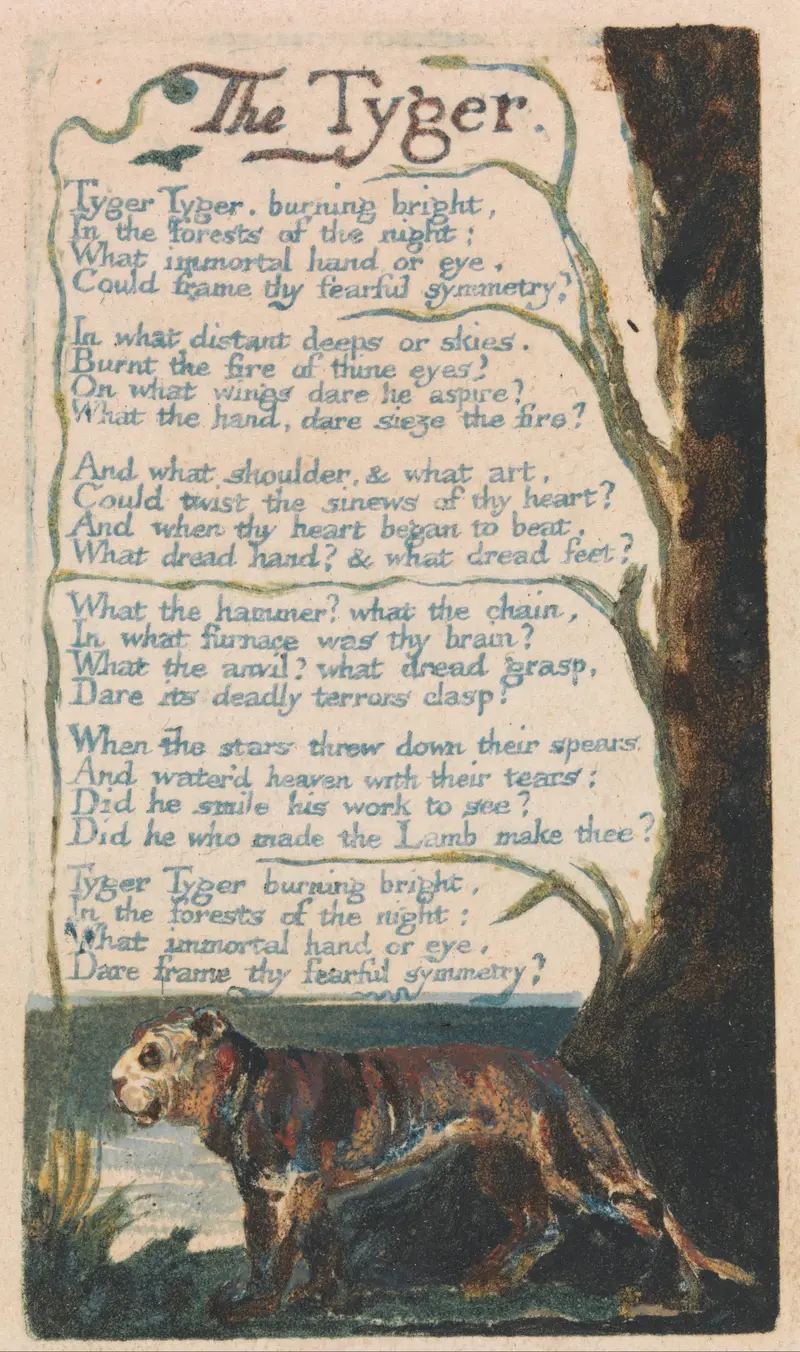
The Tyger
William Blake

Christ Blessing
William Blake
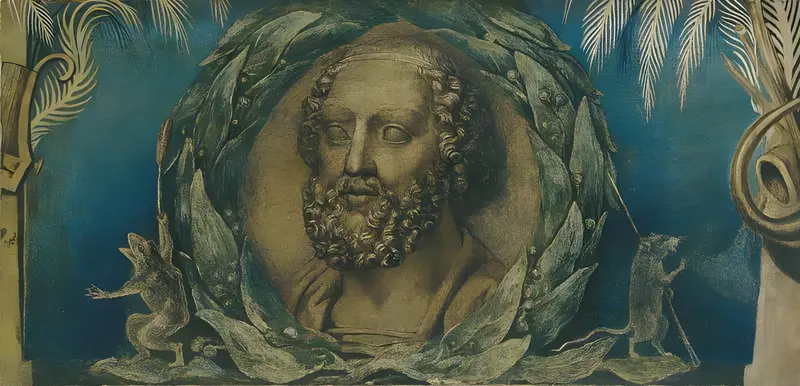
Homer
William Blake
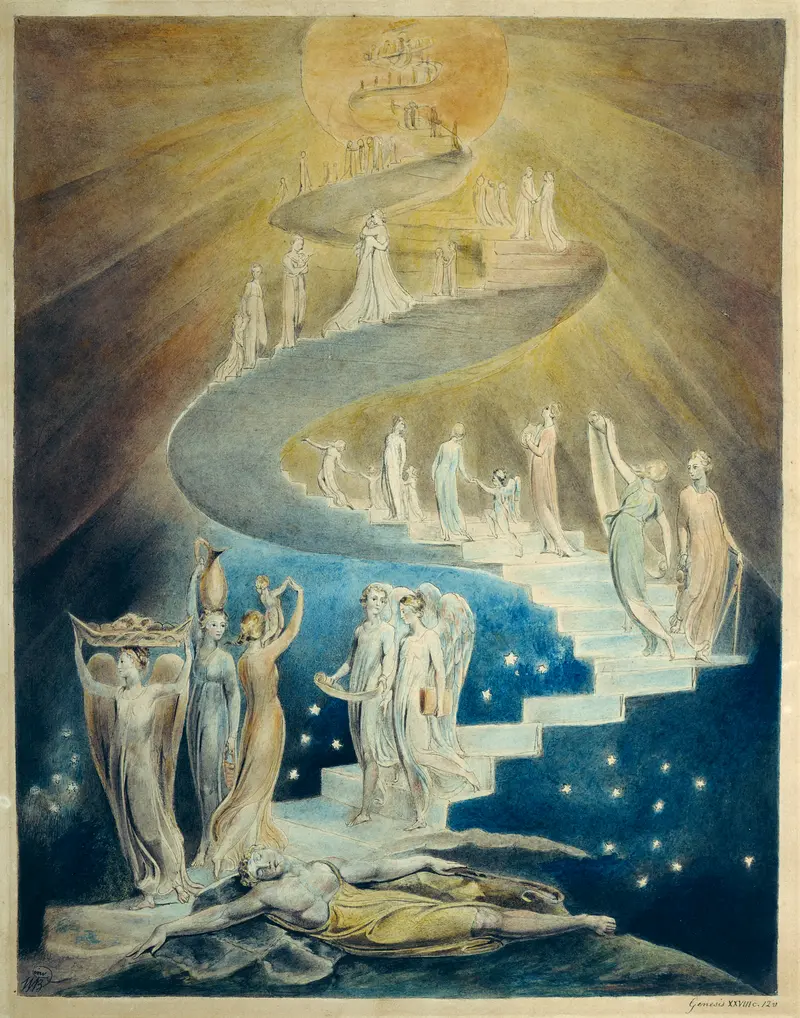
Jacob's Ladder
William Blake
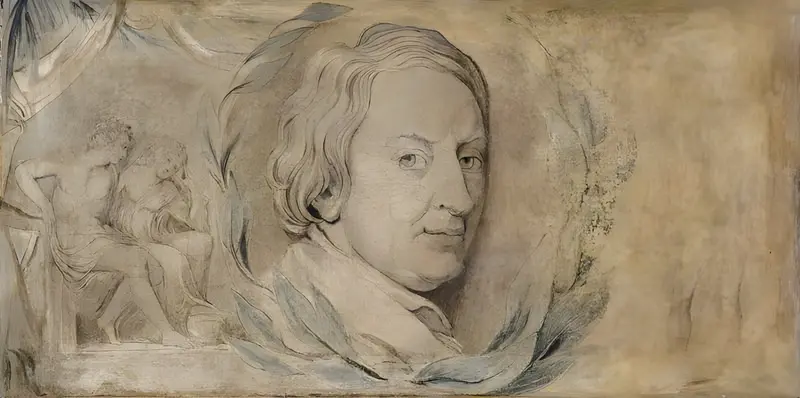
John Dryden (1631–1700)
William Blake
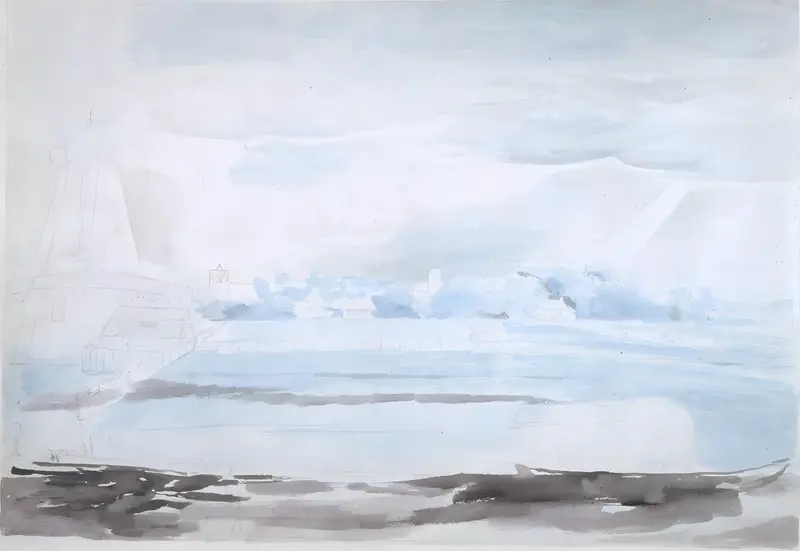
Landscape near Felpham
William Blake
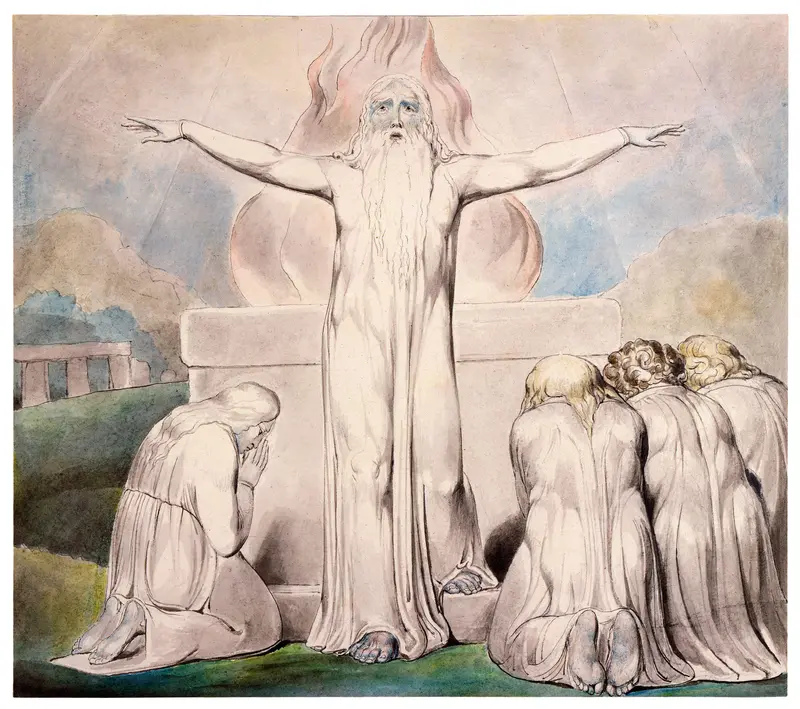
Sacrifice of Job
William Blake
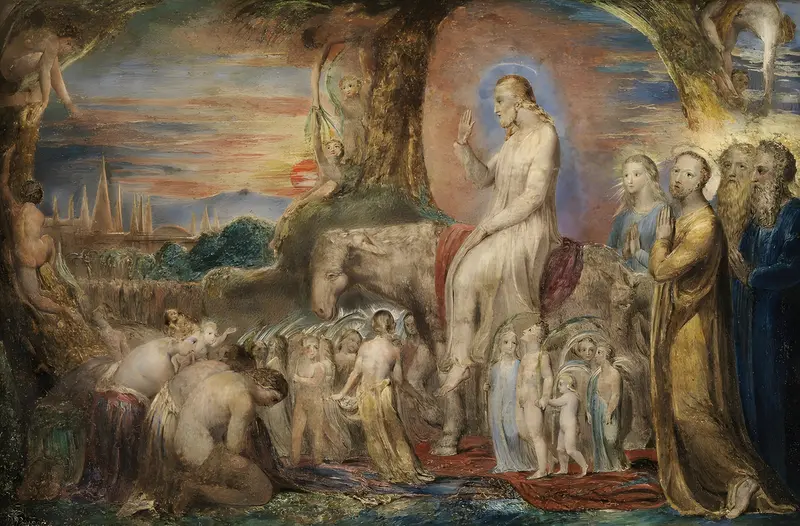
Christ's Entry into Jerusalem
William Blake
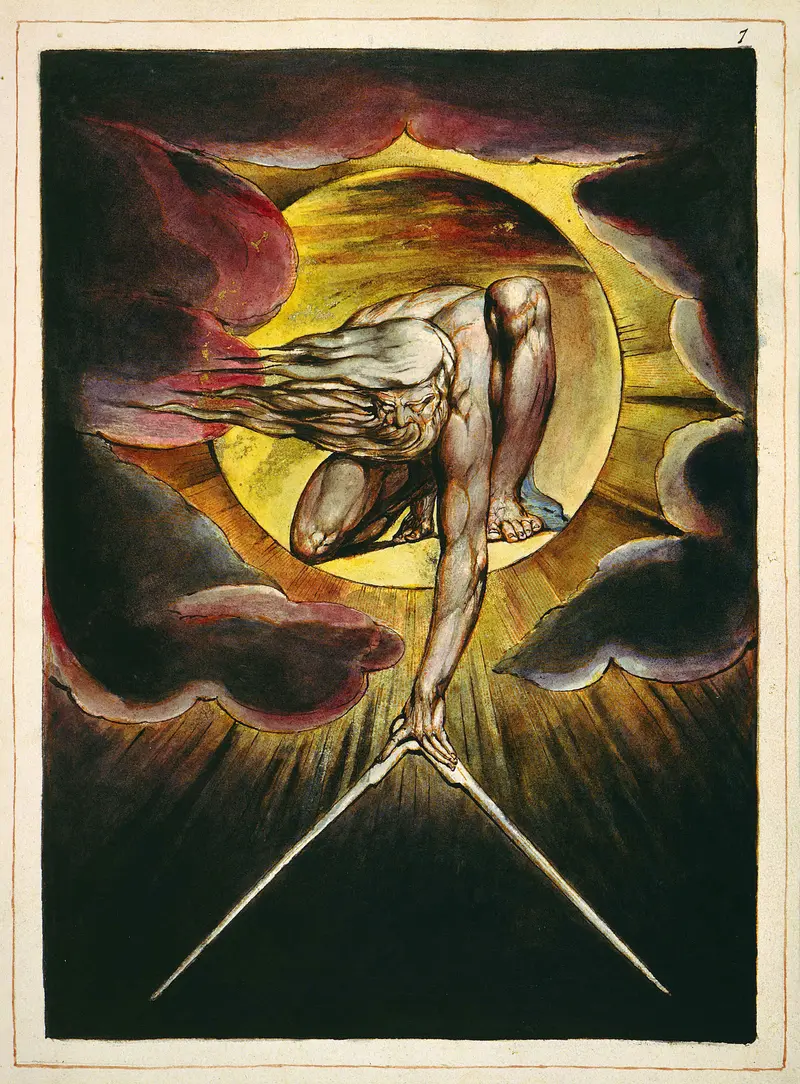
The Ancient of Days
William Blake
Adam Naming the Beasts
William Blake





