
The Grinder — History & Facts
A shaft of sunlight slices across the courtyard, catching the rough hands of a man bent over his grindstone—a moment of work paused in amber. The scene is alive with small dramas: a child crouches low, utterly absorbed in a bowl, while a dog hovers nearby, nose twitching for scraps. The grinder’s hat casts a shadow over his face, but his posture speaks of steady labor, the slow, rhythmic turning of the wheel echoing through the stillness.
Around him, the world continues: a woman and child appear at the stair, a horse waits in the dim stable, and another figure, half-hidden in a doorway, watches the scene unfold. The palette is warm, the light golden, setting a mood both industrious and quietly domestic. Painted around 1840, this work by Alexandre-Gabriel Decamps belongs to a period when artists turned their gaze to the everyday lives of working people, capturing the dignity and texture of ordinary existence. Such genre scenes were prized in nineteenth-century Europe, both as records of vanishing trades and as gentle commentaries on social order.
While history has kept few traces of this particular painting’s journey, its survival in a modern digital collection—The Yorck Project’s archive of 10,000 masterpieces—reminds us how these images once shaped, and still reflect, our sense of the past. Look again at the grinder’s hands, the child’s intent focus, and the interplay of light and shadow: each detail invites us to linger, to imagine the lives that once filled this sunlit yard.
More Artworks by Alexandre-Gabriel Decamps

Still Life with Herring, Bread, and Cheese
Alexandre-Gabriel Decamps
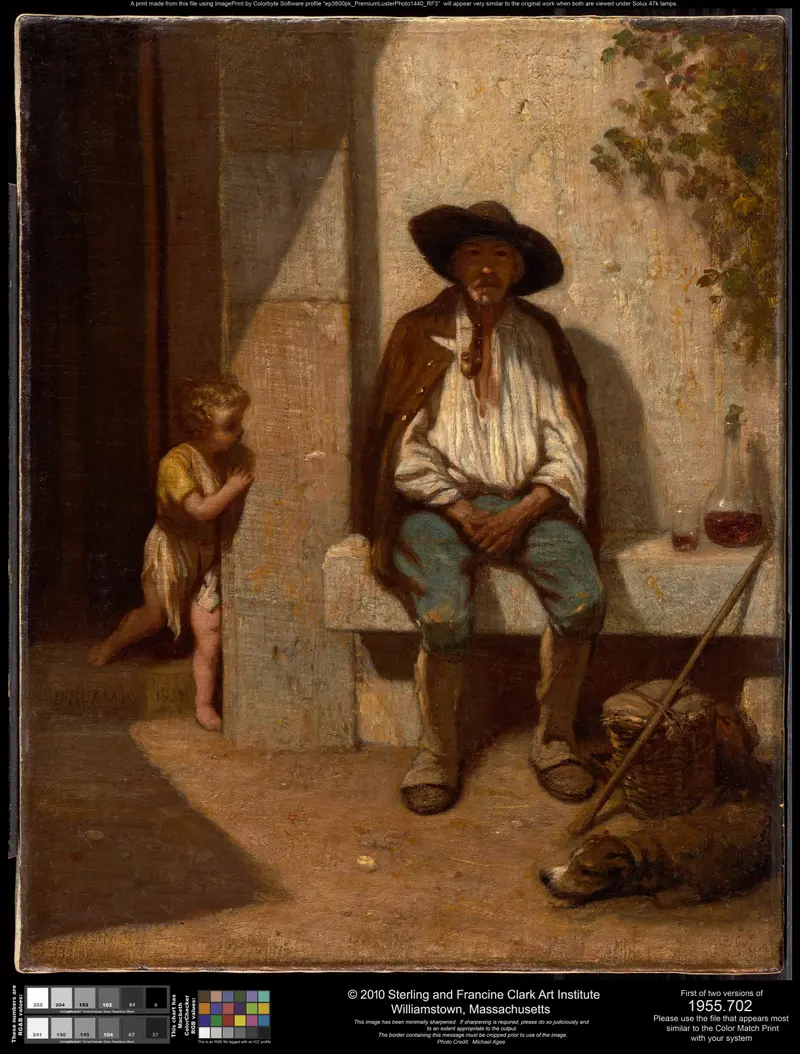
Italian Peasant
Alexandre-Gabriel Decamps
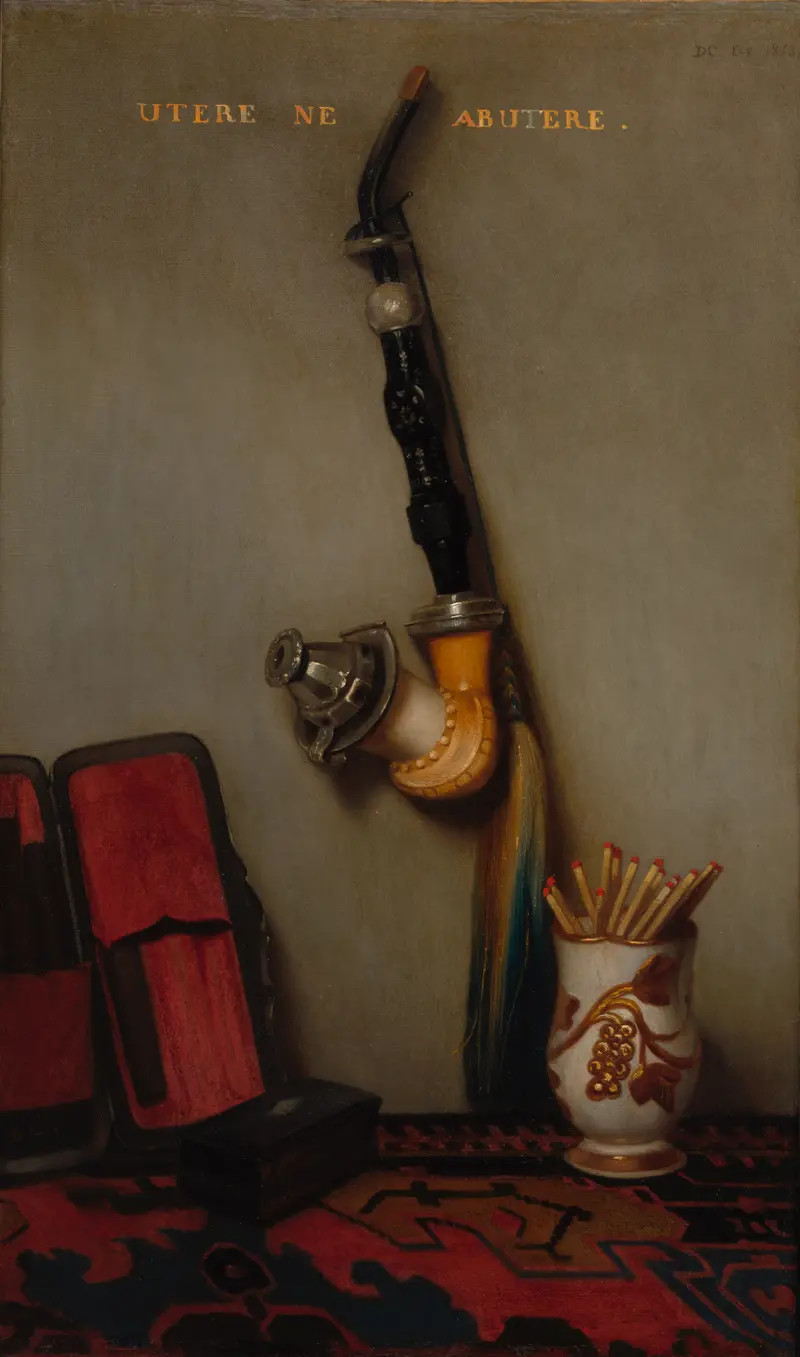
Still Life with Pipe and Matches
Alexandre-Gabriel Decamps
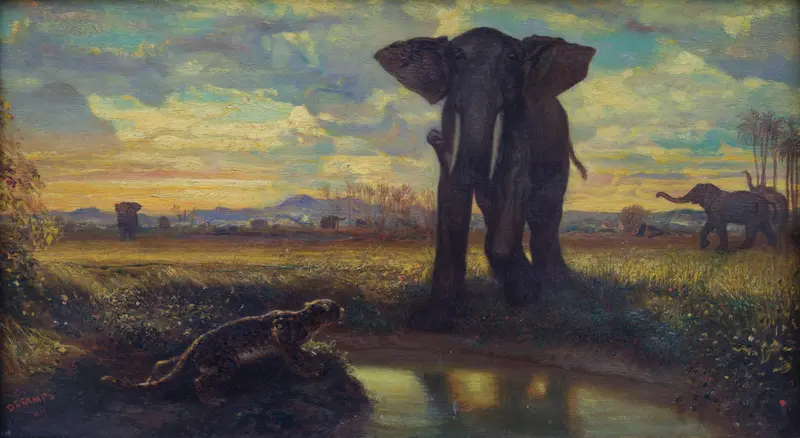
Tigre et éléphant à la source Musée du Louvre Peintures RF
Alexandre-Gabriel Decamps
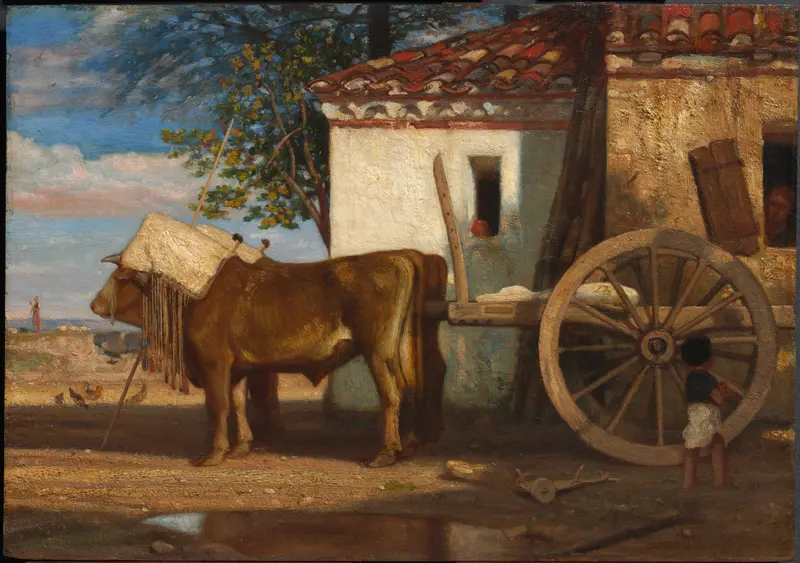
Oxen before a Farmhouse at Le Verrier
Alexandre-Gabriel Decamps
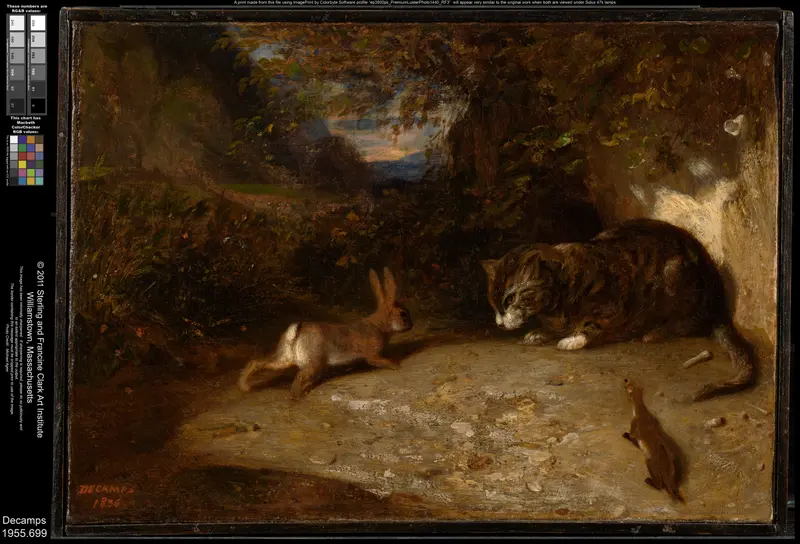
Cat, Weasel, and Rabbit
Alexandre-Gabriel Decamps
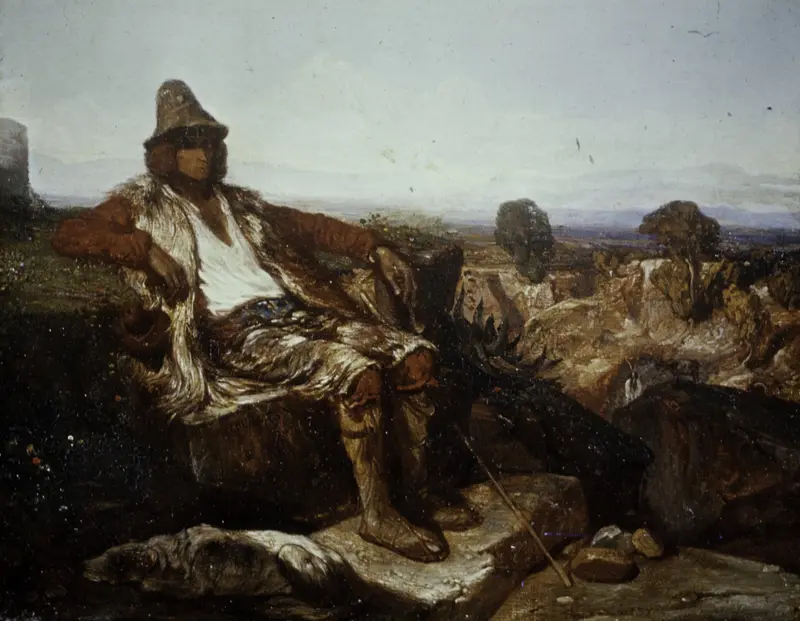
Goatherd of the Abruzzi
Alexandre-Gabriel Decamps
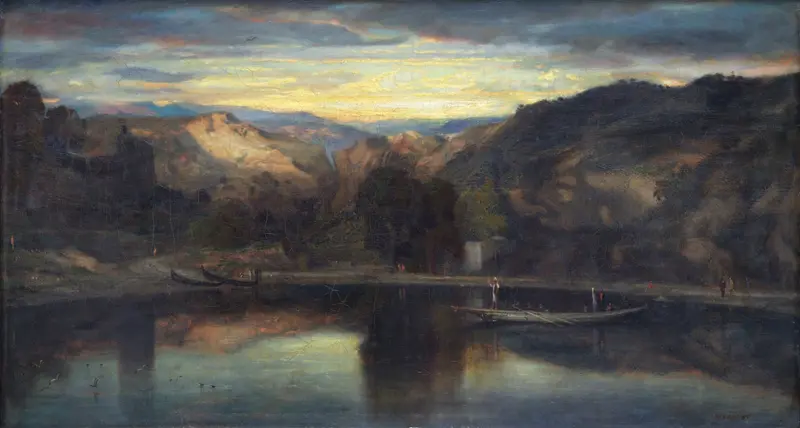
Jésus sur le lac de Génésareth Musée du Louvre Peintures RF
Alexandre-Gabriel Decamps

Espagnols jouant aux cartes Musée du Louvre Peintures RF
Alexandre-Gabriel Decamps
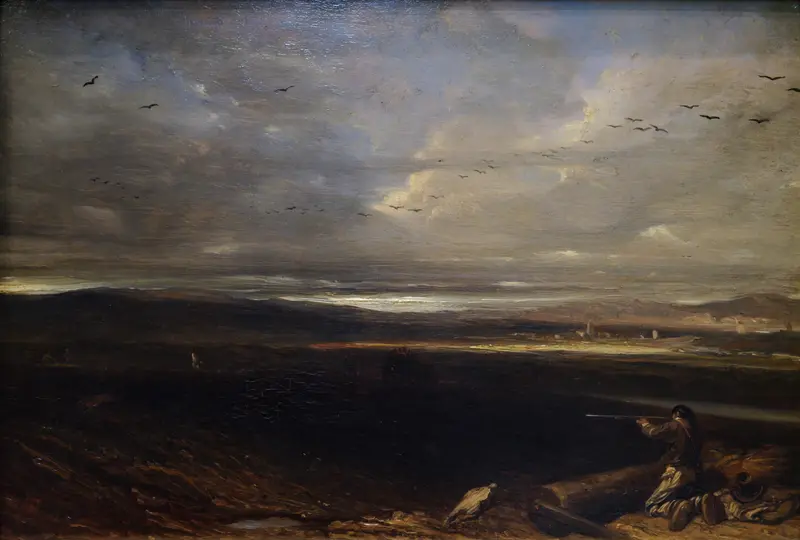
La battue en plaine Musée du Louvre Peintures RF
Alexandre-Gabriel Decamps
More Genre Scene Art

Banquet of the Officers of the St George Civic Guard
Frans Hals

Rembrandt and Saskia in the Scene of the Prodigal Son
Rembrandt van Rijn

Bal du moulin de la Galette
Pierre-Auguste Renoir

Quadrille at the Moulin Rouge
Henri de Toulouse-Lautrec

A Burial at Ornans
Gustave Courbet

When Will You Marry?
Paul Gauguin