
The huntsman — History & Facts
A figure strides across open ground, his gaze fixed ahead, a dog pressed close to his boots—The huntsman by Alexandre-Gabriel Decamps draws the viewer into the quiet tension of anticipation. The oval frame compresses the world, focusing attention on the solitary man whose heavy coat and purposeful step suggest both routine and resolve. The low, gray sky swells above him, its weight pressing down, while a shaft of light breaks through to illuminate the distant village and the field’s edge, hinting at a world beyond the hunter’s immediate task.
Every detail—the angle of the gun, the alert posture of the dog, the hunched shoulders—signals a life shaped by the rhythms of land and weather. Painted between 1818 and 1860, this work belongs to an era when artists like Decamps explored the lives of ordinary people, elevating rural labor and daily ritual to worthy subjects. In nineteenth-century France, such scenes resonated with a public increasingly fascinated by the countryside and its traditions, even as industrialization transformed society. Little is recorded about the journey of this specific painting before it entered the collection of Rijksmuseum Twenthe, but its presence there speaks to the enduring appeal of the quietly observed moment.
As you look again, notice how the horizon pulls your gaze outward, inviting you to imagine what lies beyond the frame—both for the huntsman and for yourself.
More Artworks by Alexandre-Gabriel Decamps

Still Life with Herring, Bread, and Cheese
Alexandre-Gabriel Decamps
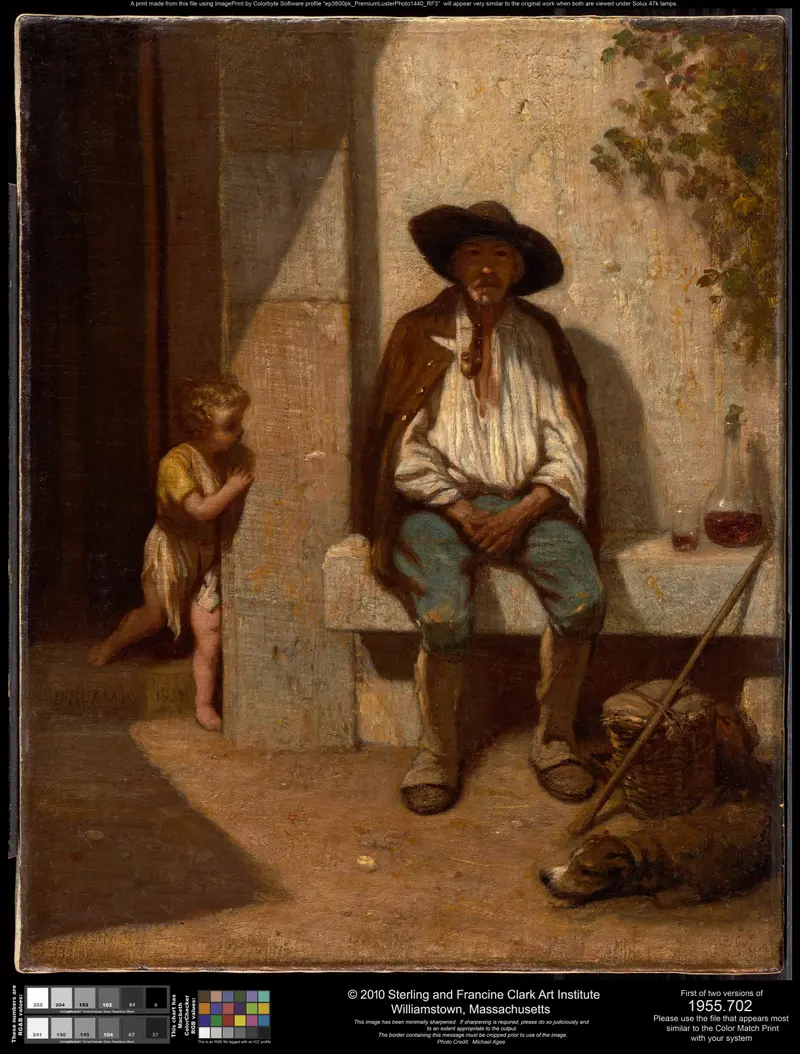
Italian Peasant
Alexandre-Gabriel Decamps
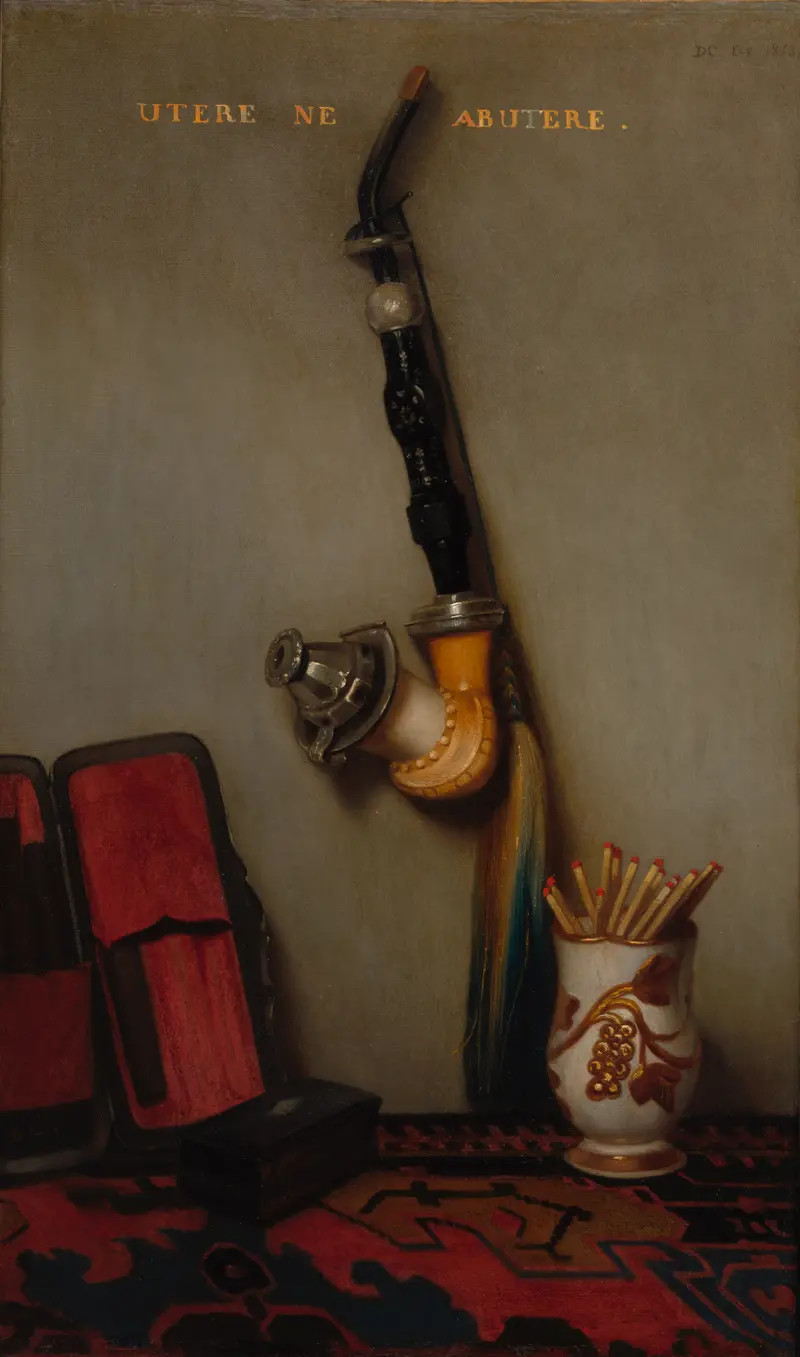
Still Life with Pipe and Matches
Alexandre-Gabriel Decamps
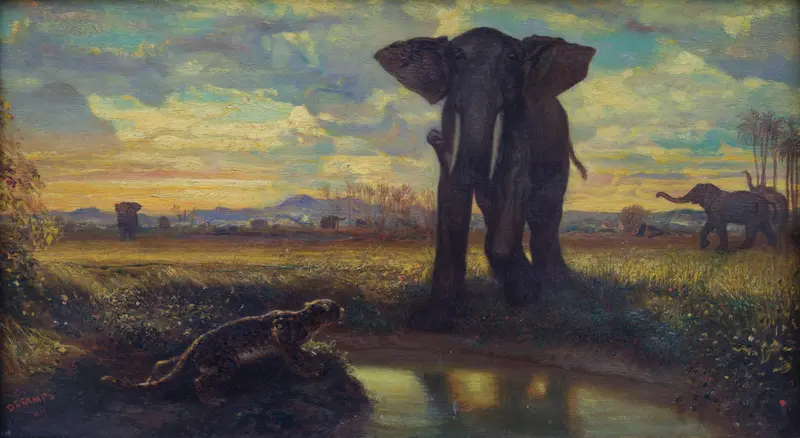
Tigre et éléphant à la source Musée du Louvre Peintures RF
Alexandre-Gabriel Decamps
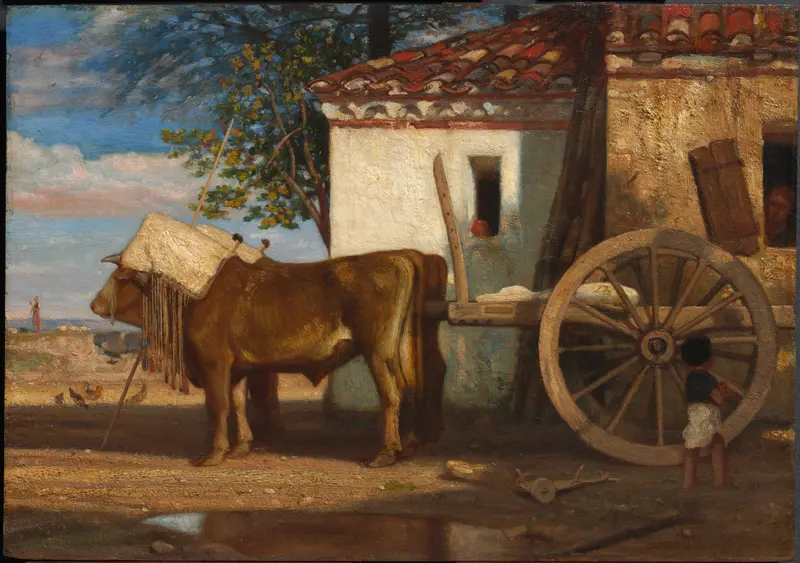
Oxen before a Farmhouse at Le Verrier
Alexandre-Gabriel Decamps
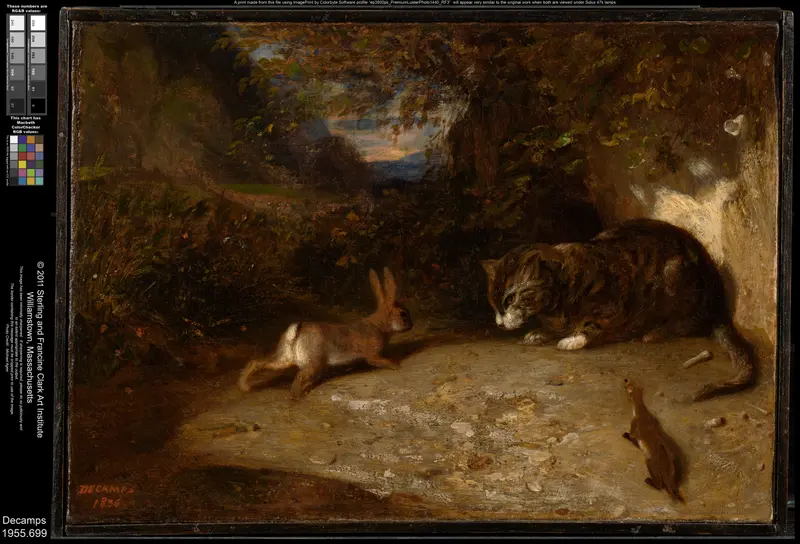
Cat, Weasel, and Rabbit
Alexandre-Gabriel Decamps
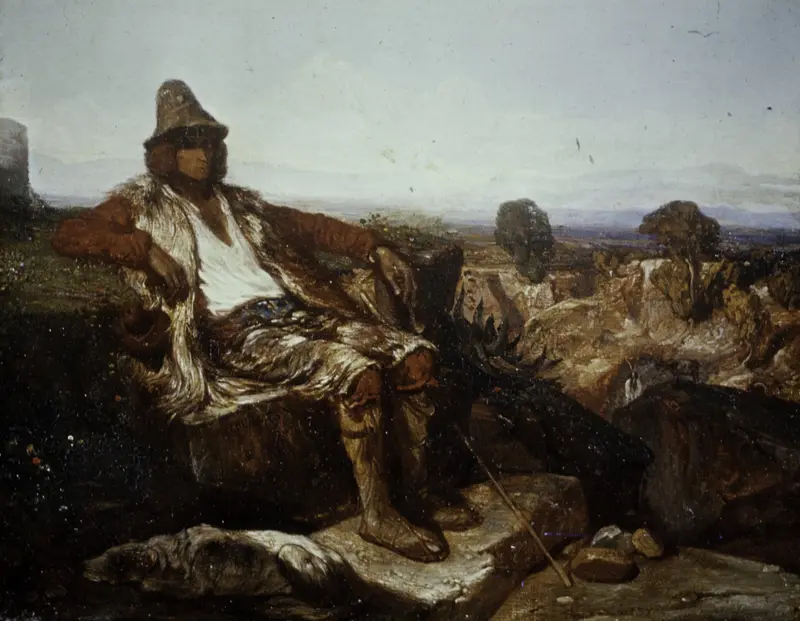
Goatherd of the Abruzzi
Alexandre-Gabriel Decamps
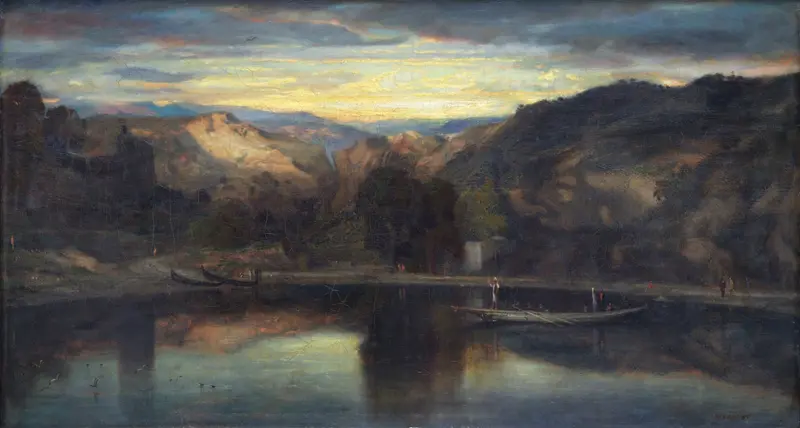
Jésus sur le lac de Génésareth Musée du Louvre Peintures RF
Alexandre-Gabriel Decamps

Espagnols jouant aux cartes Musée du Louvre Peintures RF
Alexandre-Gabriel Decamps
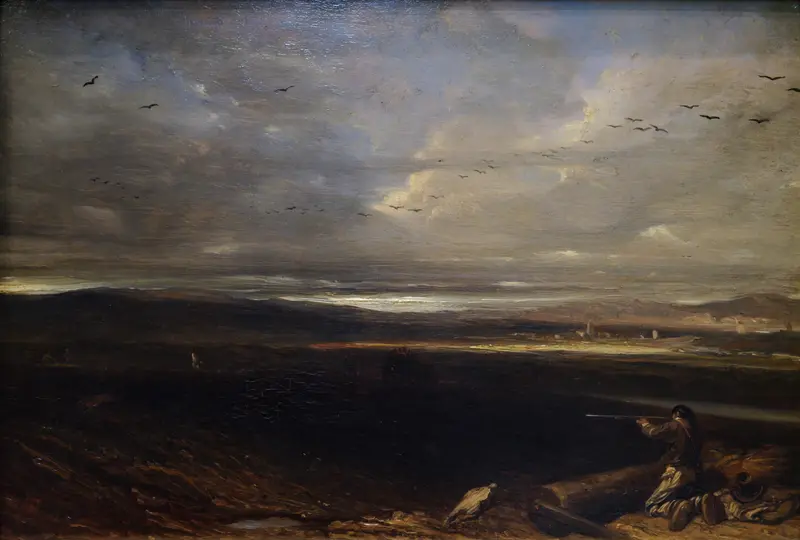
La battue en plaine Musée du Louvre Peintures RF
Alexandre-Gabriel Decamps
More Genre Scene Art

Banquet of the Officers of the St George Civic Guard
Frans Hals

Rembrandt and Saskia in the Scene of the Prodigal Son
Rembrandt van Rijn

Bal du moulin de la Galette
Pierre-Auguste Renoir

Quadrille at the Moulin Rouge
Henri de Toulouse-Lautrec

A Burial at Ornans
Gustave Courbet

When Will You Marry?
Paul Gauguin