
The Kitchen of the Rôtisserie des Deux Paons — History & Facts
What draws the eye first is not a single figure, but the glow—an almost molten radiance—spilling from the great hearth at the heart of The Kitchen of the Rôtisserie des Deux Paons. Here, the kitchen is a stage, and the cooks and scullions become actors caught mid-performance: a chef leans intently over the fire, another stands with arms akimbo, and a pair of kitchen maids hover at the left, trays in hand. The brushwork is thick, nearly sculptural, and the forms seem to flicker and dissolve in the heat and bustle.
Notice how the light from the fire carves out faces and aprons, while the rest of the room recedes into a tapestry of browns and ochres, punctuated by gleaming copper and the quick white flash of a cat prowling the flagstones. Painted between about 1875 and 1881, this scene by Adolphe Joseph Thomas Monticelli belongs to a world where the kitchen was both engine and emblem of bourgeois ambition. In late nineteenth-century France, such images of culinary labor were both nostalgic and modern, celebrating the rituals of preparation in a time when restaurants and grand hotels were transforming dining into spectacle. Monticelli’s loose, impasto style echoes the innovations of the Impressionists, yet his kitchens are more dreamlike, less documentary—a memory of warmth and chaos rather than a ledger of daily work.
History has kept few traces of this particular kitchen or its patrons, but the painting now hangs in the Cleveland Museum of Art, inviting us to linger in its golden haze and imagine the stories rising with the steam.
More Artworks by Adolphe Monticelli

Portrait of a Lady
Adolphe Monticelli
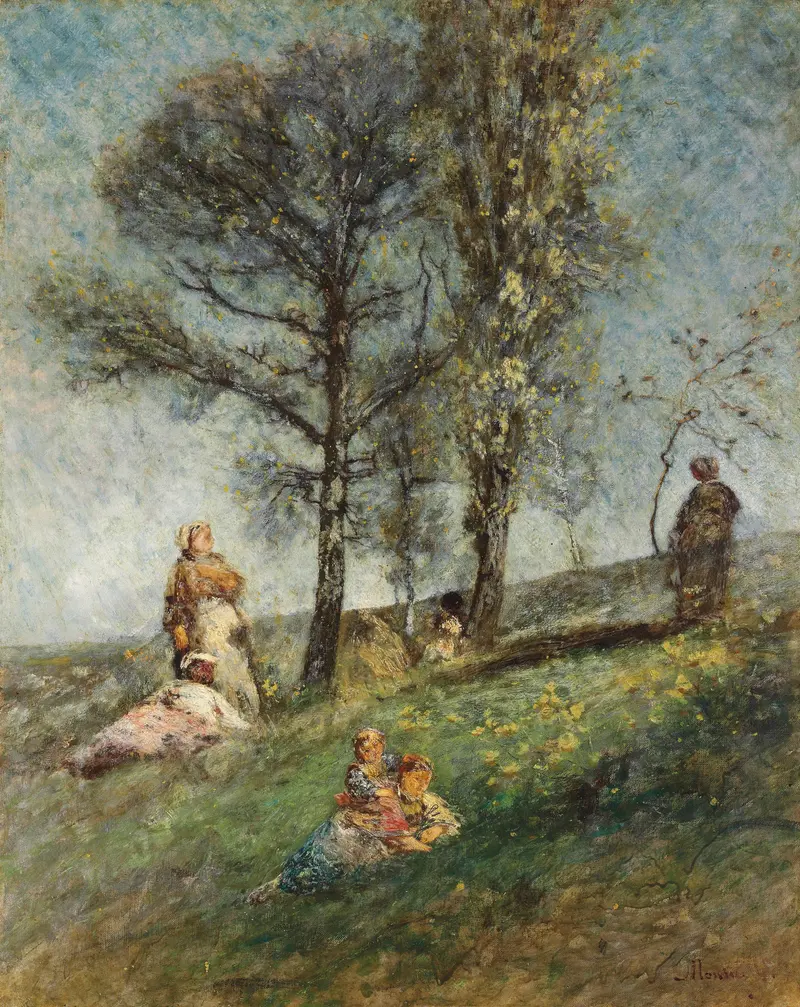
A Young Family Under Trees On A Hill
Adolphe Monticelli

Fête d'Après-Midi
Adolphe Monticelli
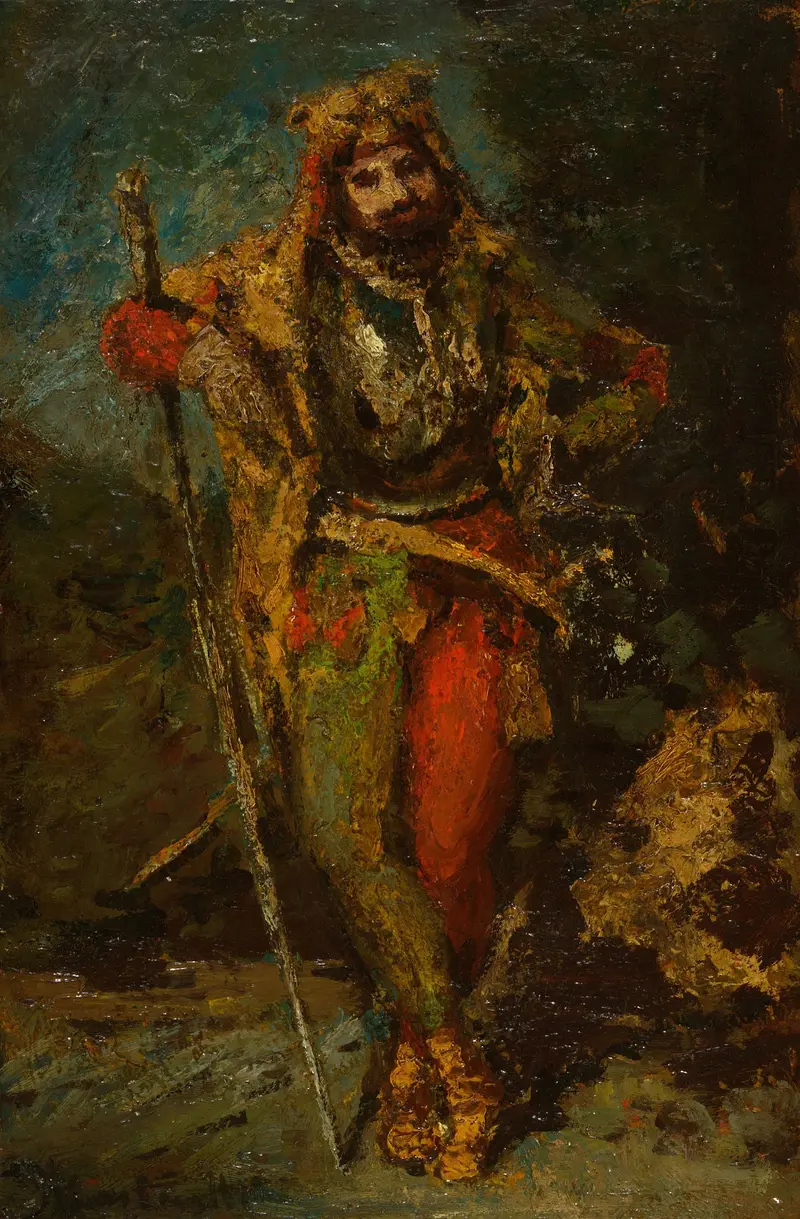
Mephisto from the Opera Faust
Adolphe Monticelli
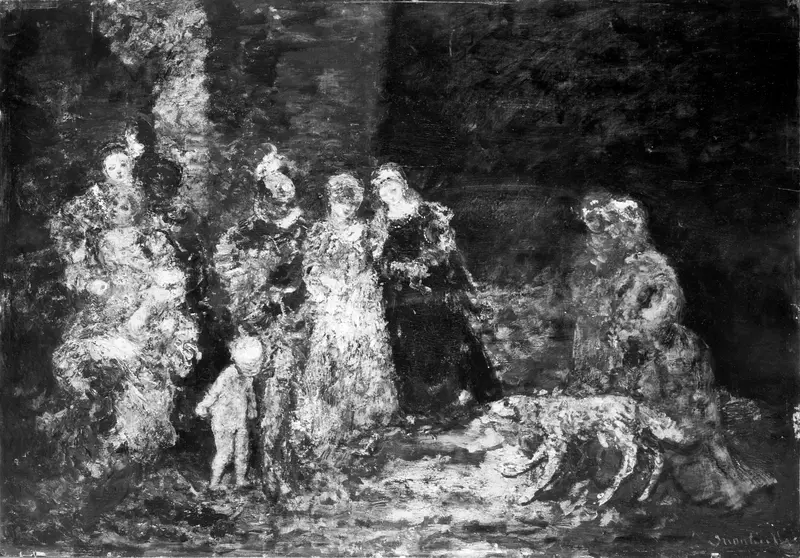
The Fairies
Adolphe Monticelli
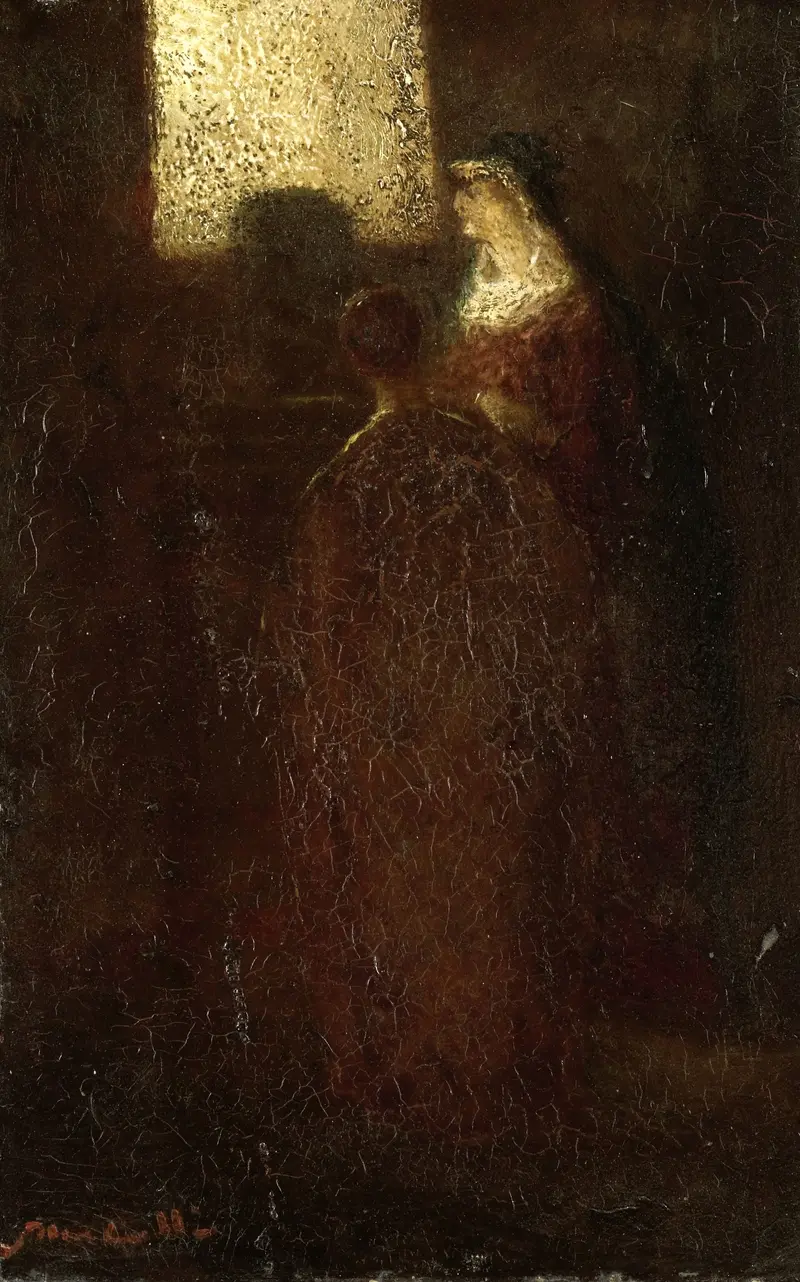
Aan het altaar
Adolphe Monticelli
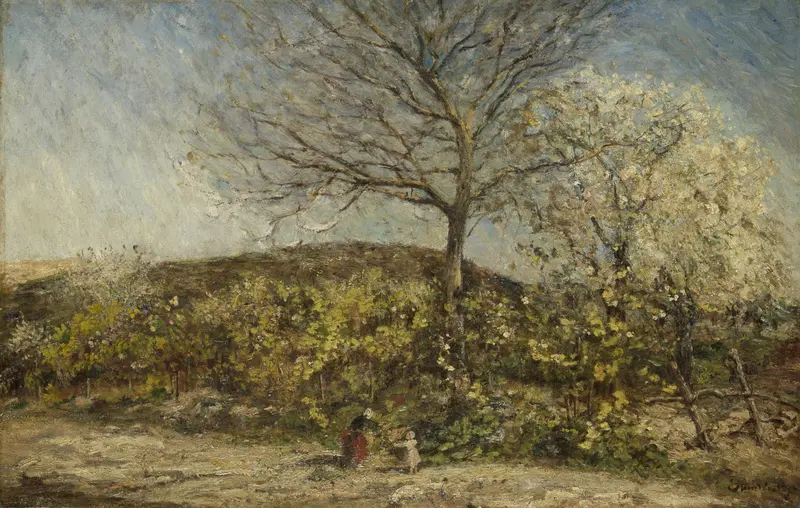
Landschap met bloeiende boomgaard
Adolphe Monticelli
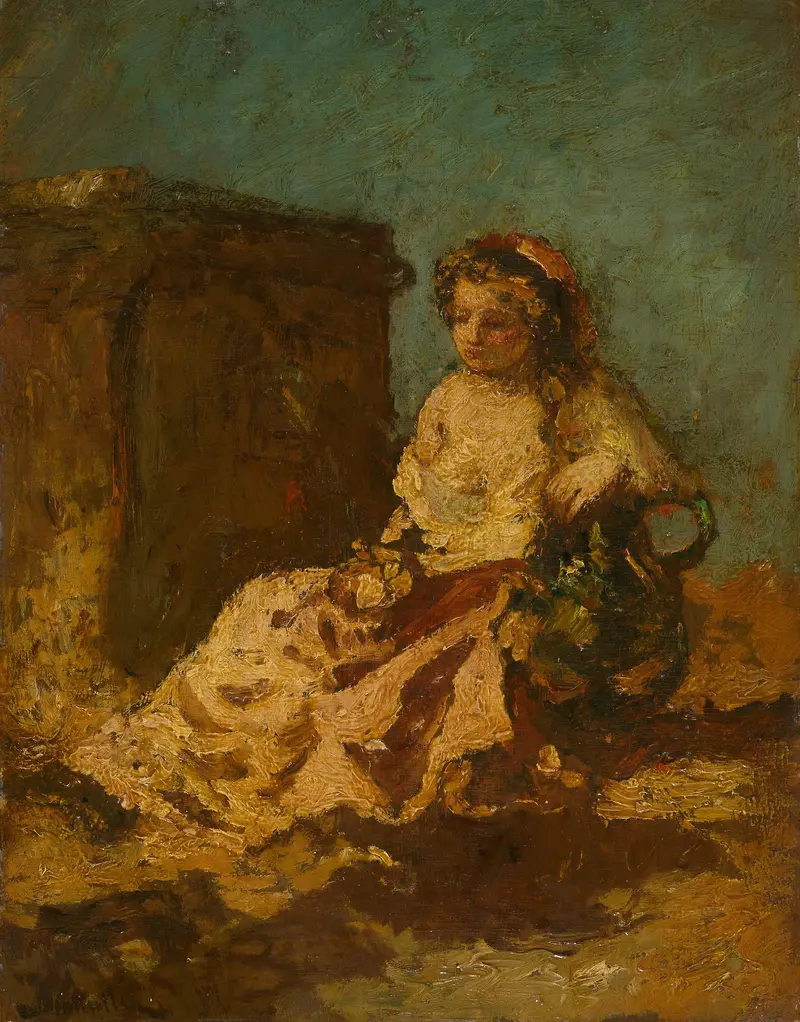
Meditation (Seated Woman)
Adolphe Monticelli
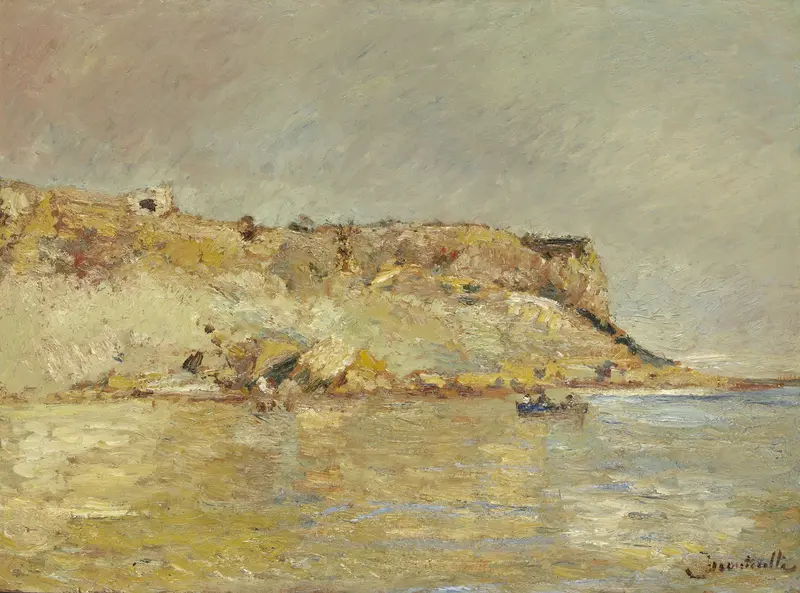
Coastal Mountains
Adolphe Monticelli
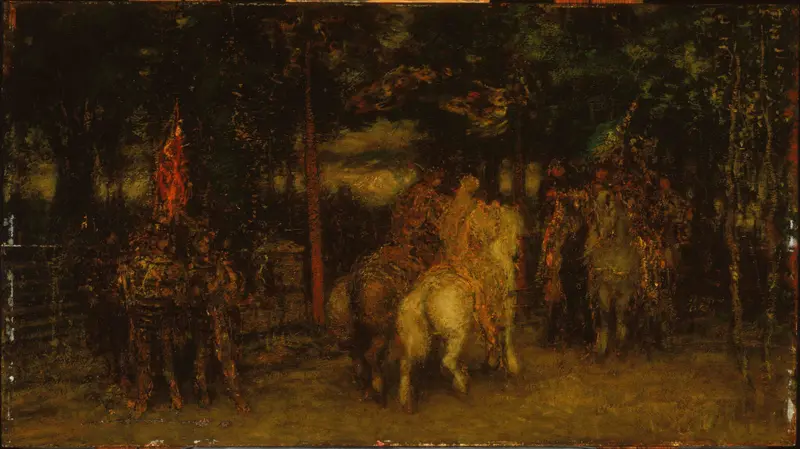
Landscape with Figures
Adolphe Monticelli
More Genre Scene Art

Banquet of the Officers of the St George Civic Guard
Frans Hals

Rembrandt and Saskia in the Scene of the Prodigal Son
Rembrandt van Rijn

Bal du moulin de la Galette
Pierre-Auguste Renoir

Quadrille at the Moulin Rouge
Henri de Toulouse-Lautrec

A Burial at Ornans
Gustave Courbet

When Will You Marry?
Paul Gauguin