
The Komoro River At Tennoji — History & Facts
Can paint confess what words never could? In The Komoro River At Tennoji, glimmers of light dance across the canvas, illuminating a moment that speaks volumes without uttering a single word. Look closely at the shimmering reflections on the water, where hues of blue and green converge. Notice how the artist’s careful brushwork creates a textured surface, capturing the fluidity of the river as it winds through the landscape. The composition draws your eye toward the horizon, where soft clouds delicately frame the scene, allowing the golden light of the setting sun to cast a warm glow over the entire tableau.
Each stroke reveals a world steeped in tranquility, inviting contemplation and connection. Within this serene landscape lies an emotional tension. The interplay of light and shadow suggests fleeting moments—the passage of time mirrored in the calm water but accentuated by the deepening twilight. The distant mountains stand solemnly, representing a steadfastness that contrasts with the ephemeral beauty of the river.
The scene evokes a sense of nostalgia, a reminder of nature’s constant yet ever-changing presence. Kobayashi Kiyochika created this work between 1877 and 1882, during a transformative period for Japanese art as the Meiji Restoration ushered in modern influences. Living in Tokyo at the time, he was part of the shift from traditional ukiyo-e to Western painting techniques, blending both worlds. This piece reflects not only his personal evolution as an artist but also the broader cultural dialogue occurring in Japan, where the natural beauty of the landscape was beginning to be celebrated anew.
More Artworks by Kobayashi Kiyochika
Browse all →
Thunder and Lightning at Oumaya Bridge
Kobayashi Kiyochika

Shinkyō, Sacred Bridge at Nikkō
Kobayashi Kiyochika

Daybreak at Shrine, Kanda
Kobayashi Kiyochika

The Great Fire at Ryōgoku Bridge, Viewed from Asakusa Bridge on the 26th of January, 1881
Kobayashi Kiyochika

The Moon At Shinagawa
Kobayashi Kiyochika
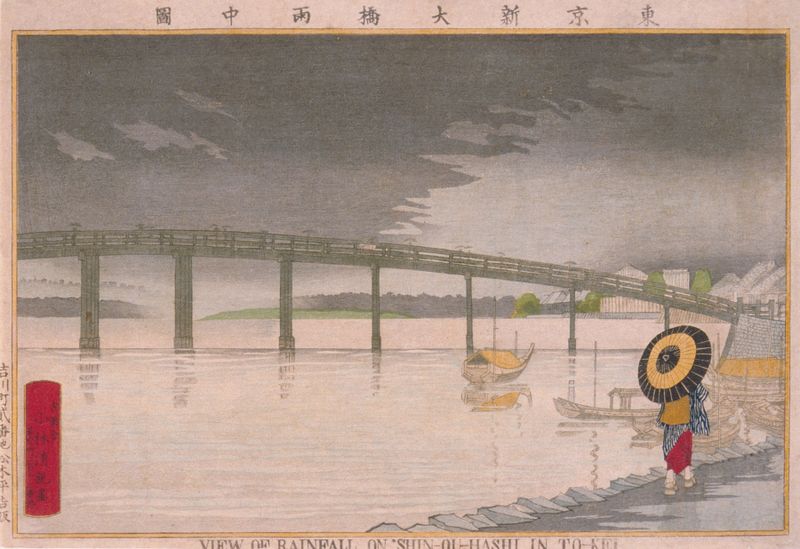
View of Rainfall on Shin-Ou-hashi in To-kei
Kobayashi Kiyochika

Evening at Tōshōgū Shrine, Ueno, Tokyo
Kobayashi Kiyochika

Snow at Ochanomizu
Kobayashi Kiyochika
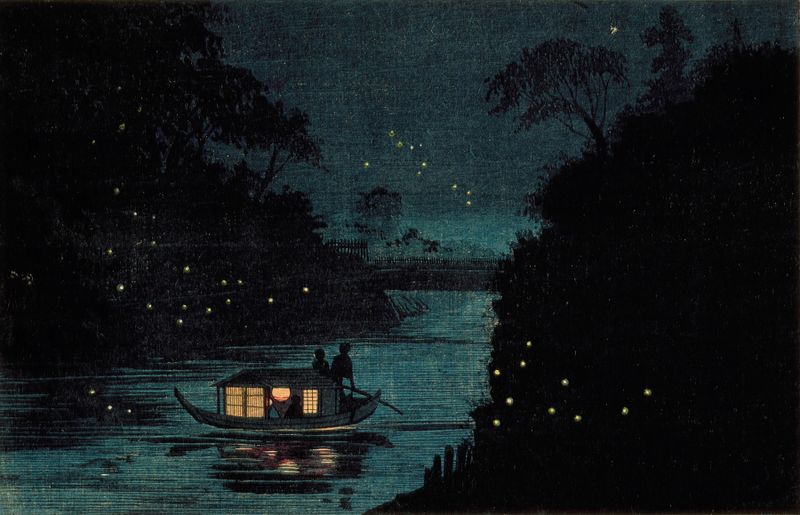
Fireflies at Ochanomizu
Kobayashi Kiyochika
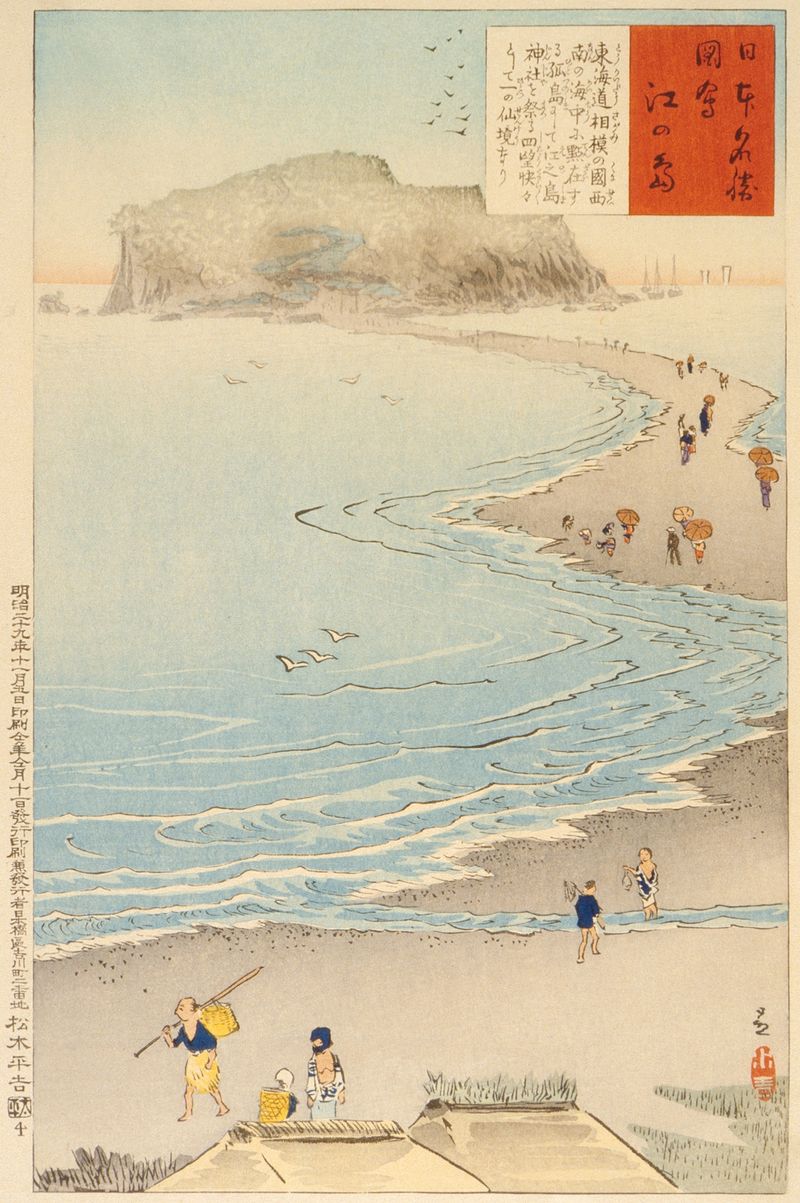
The Island Enoshima
Kobayashi Kiyochika





