
The Koromo River Below the Temple Tennōji — History & Facts
Did the painter know this moment would outlive them? The gentle flow of the Koromo River beneath the Tennōji temple transcends the confines of time, inviting contemplation on the interplay between nature and humanity. Look to the left at the serene waters, where delicate ripples reflect the vibrant hues of dusk. The soft gradient of the sky—brilliant oranges and muted purples—envelops the temple, drawing the eye upwards. Notice how the bold strokes create a rhythm in the water, echoing the graceful lines of the temple’s architecture.
The juxtaposition of solidity against fluidity suggests an eternal dialogue between permanence and transience. Beneath the tranquil surface lies a deeper emotional tension—life flows continuously while moments are fleeting. The temple, a steadfast guardian, evokes a sense of spirituality and reverence, in stark contrast to the river’s perpetual movement. Each brushstroke captures fleeting light, reminding us that while nature changes, sacred spaces remain as anchors in our lives, signifying hope and continuity. In 1880, during a time of great change in Japan, the artist created this work amidst the Meiji Restoration, which marked the country’s rapid modernization.
Kiyochika, known for his ukiyo-e prints, sought to blend traditional aesthetics with contemporary themes, reflecting a world caught between the past and the future. His portrayal of the Koromo River and temple encapsulated a moment of stillness within the torrent of transformation that characterized his time.
More Artworks by Kobayashi Kiyochika
Browse all →
Thunder and Lightning at Oumaya Bridge
Kobayashi Kiyochika

Shinkyō, Sacred Bridge at Nikkō
Kobayashi Kiyochika

Daybreak at Shrine, Kanda
Kobayashi Kiyochika

The Great Fire at Ryōgoku Bridge, Viewed from Asakusa Bridge on the 26th of January, 1881
Kobayashi Kiyochika

The Moon At Shinagawa
Kobayashi Kiyochika
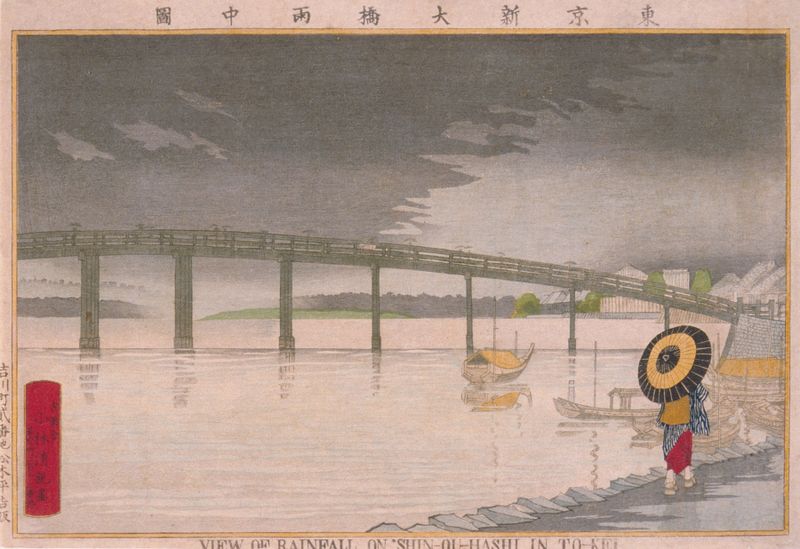
View of Rainfall on Shin-Ou-hashi in To-kei
Kobayashi Kiyochika

Evening at Tōshōgū Shrine, Ueno, Tokyo
Kobayashi Kiyochika

Snow at Ochanomizu
Kobayashi Kiyochika
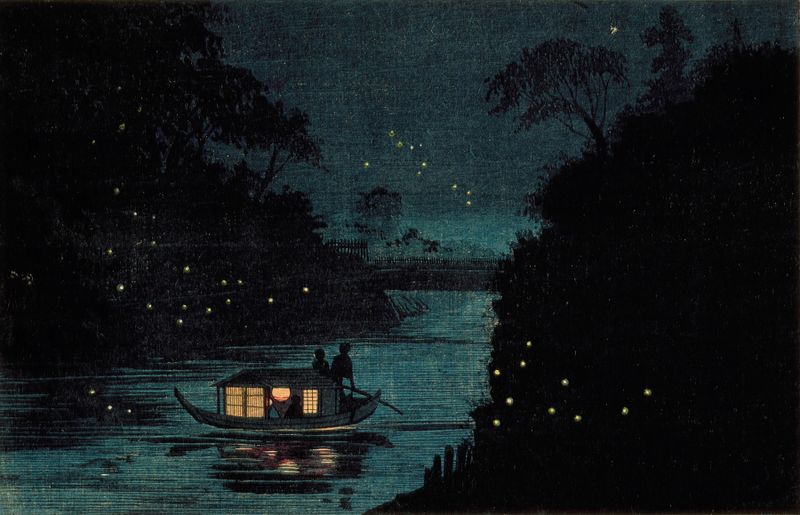
Fireflies at Ochanomizu
Kobayashi Kiyochika
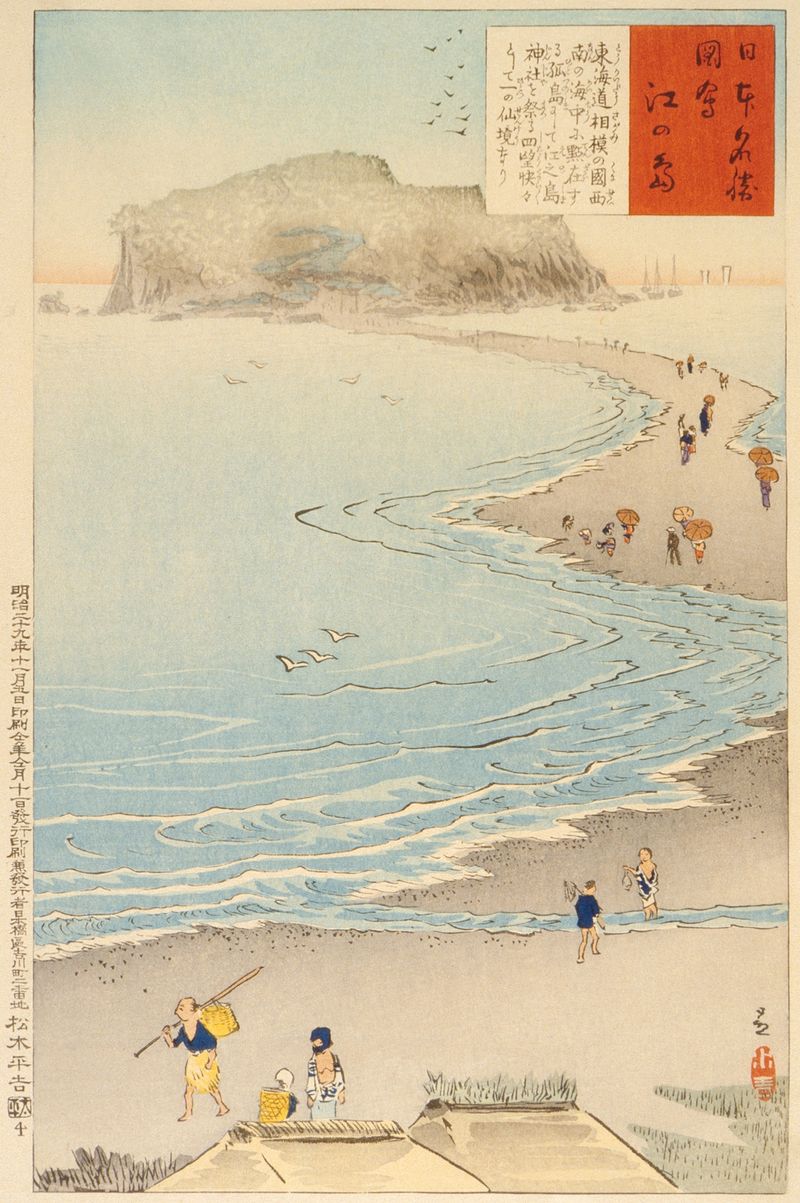
The Island Enoshima
Kobayashi Kiyochika





