
The „Maria“ at Honfleur — History & Facts
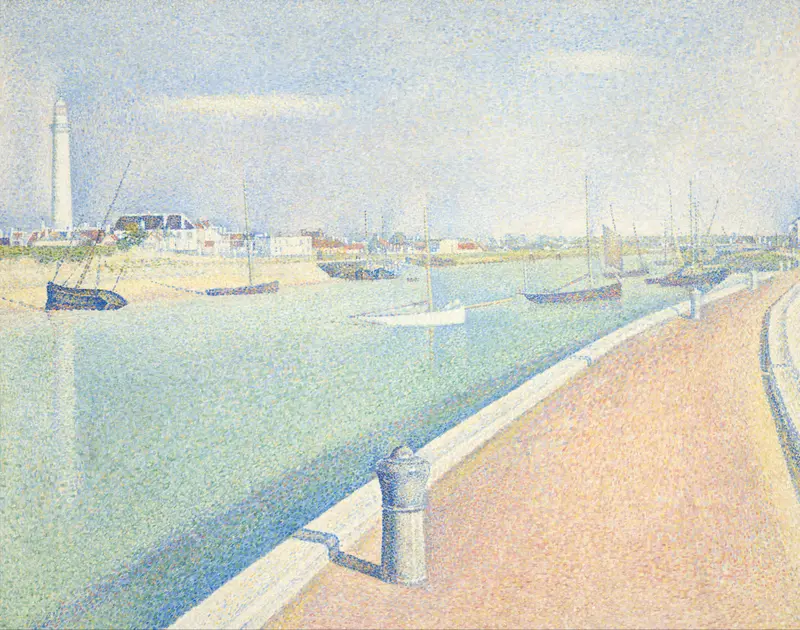
When Georges Seurat painted The „Maria“ at Honfleur in 1886, he was at the height of his experiments with pointillism—a technique so radical that critics at the time struggled to describe it. This small canvas is remarkable because it is one of the rare plein air studies Seurat completed outside Paris, and it captures the port of Honfleur, a site beloved by Impressionists but rendered here with Seurat’s scientific rigor. The painting stands as a testament to Seurat’s obsession with light and color theory, and it is one of the few works that documents his brief visit to the Normandy coast.
Unlike his monumental A Sunday on La Grande Jatte, this work is intimate, painted quickly but with the same meticulous method. The scene unfolds at the bustling Honfleur harbor, where the fishing vessel Maria sits moored against a backdrop of shimmering water and distant sails. Seurat fixes his gaze on a quiet moment: the boat is still, its crew absent or hidden, the rigging and hull rendered in precise, dappled touches of color. The sky and water dissolve into a mosaic of blues and violets, each dot carefully placed to capture the flicker of light off the sea.
Unlike Claude Monet’s lively and spontaneous brushwork in his Honfleur scenes, Seurat’s approach is measured, almost mathematical, emphasizing structure and harmony over fleeting impression. The geometry of the masts and the rhythm of the reflections hint at Seurat’s fascination with order beneath nature’s surface. The exact provenance of The „Maria“ at Honfleur is not fully documented, and the painting’s medium—whether oil on panel or canvas—remains a subject of scholarly debate. It is likely that Seurat painted it as a study for a larger composition that was never realized, and it may have remained in his studio until his early death in 1891.
Today, the work is prized as a rare glimpse into Seurat’s working process away from Paris, and it stands as a bridge between his grand compositions and his more intimate, experimental studies. Its place in the artist’s career is significant: it marks a moment when Seurat was refining his theories, capturing the world not as it appeared, but as it could be understood through color and light.
More Artworks by Georges Seurat
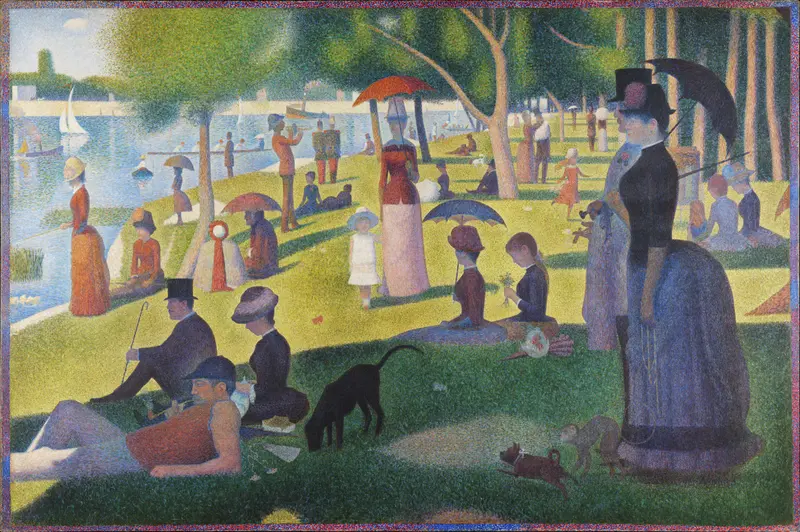
A Sunday Afternoon on the Island of La Grande Jatte
Georges Seurat
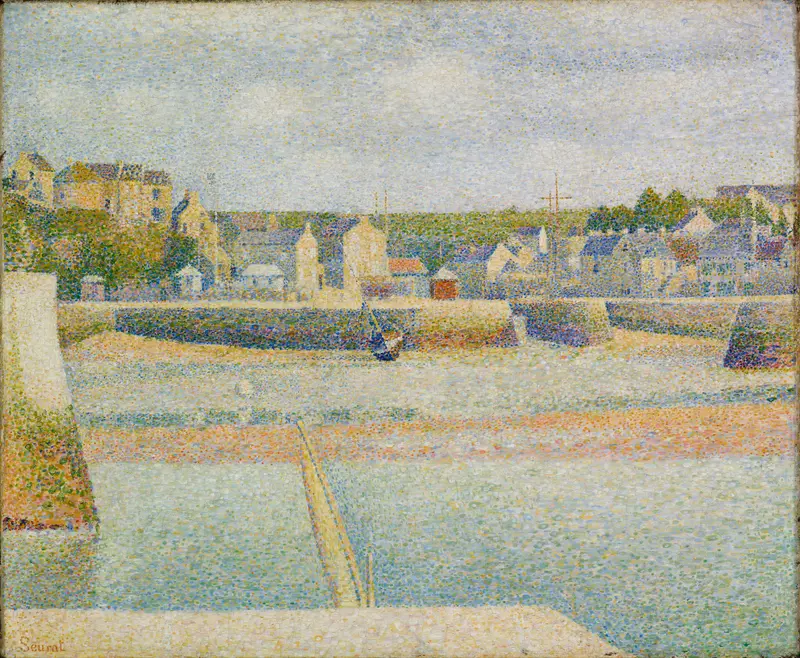
Port-en-Bessin, The Outer Harbor (Low Tide)
Georges Seurat
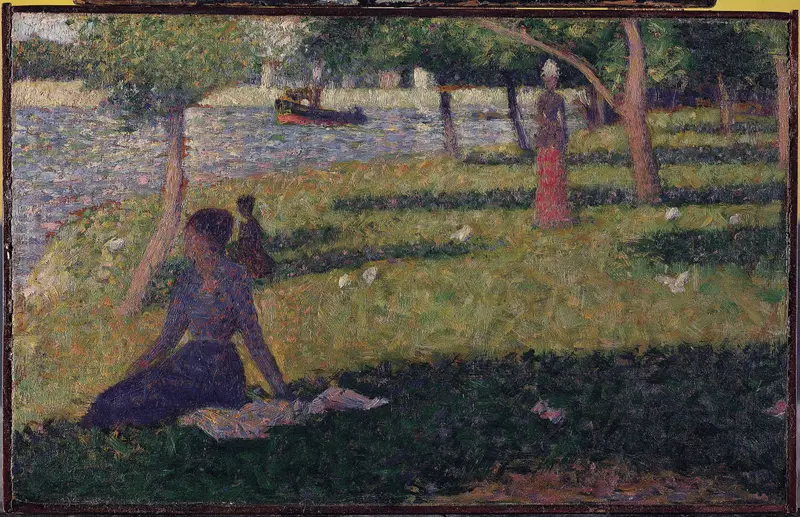
Étude pour ‘La Grande Jatte’ (Study for ‘La Grande Jatte’)
Georges Seurat
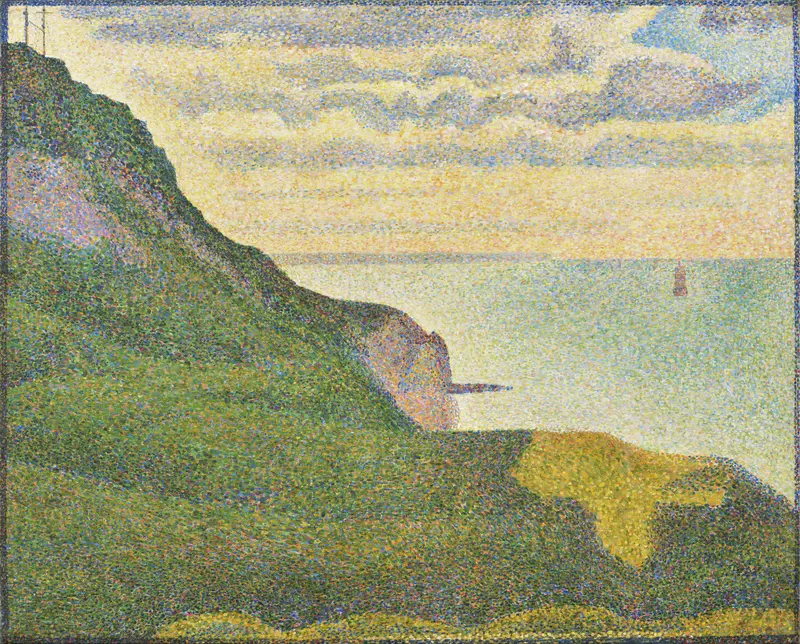
Seascape at Port-en-Bessin,Normandy
Georges Seurat
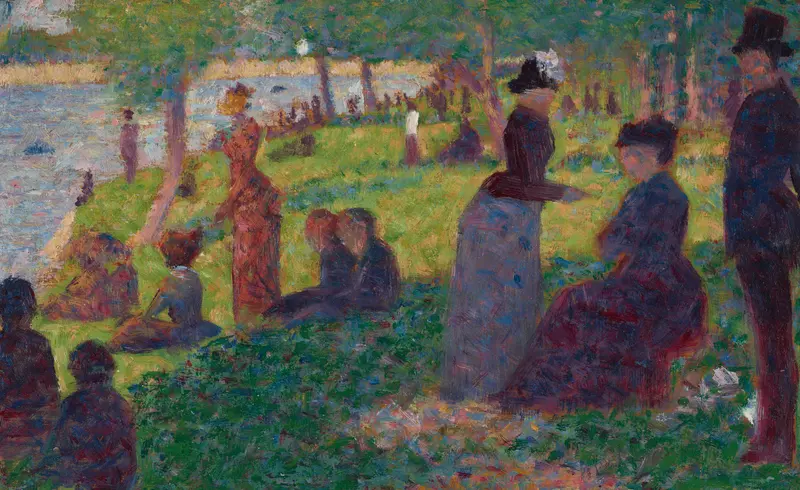
Oil Sketch for "A Sunday on La Grande Jatte — 1884"
Georges Seurat
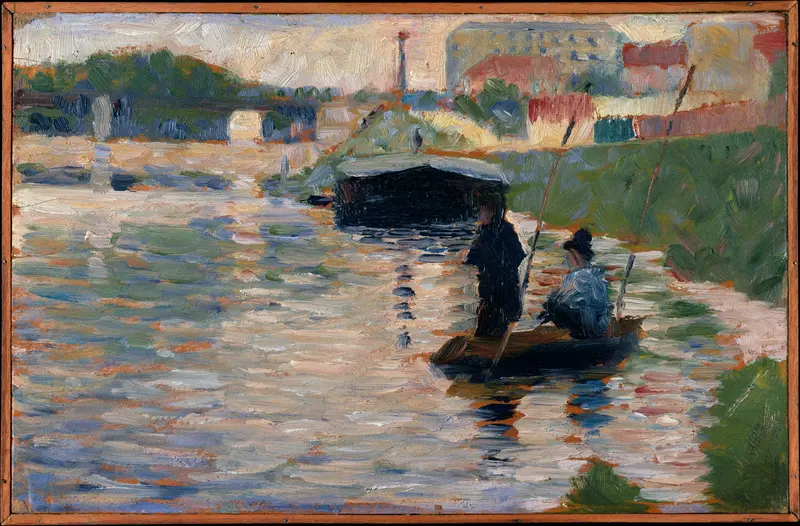
View of the Seine
Georges Seurat
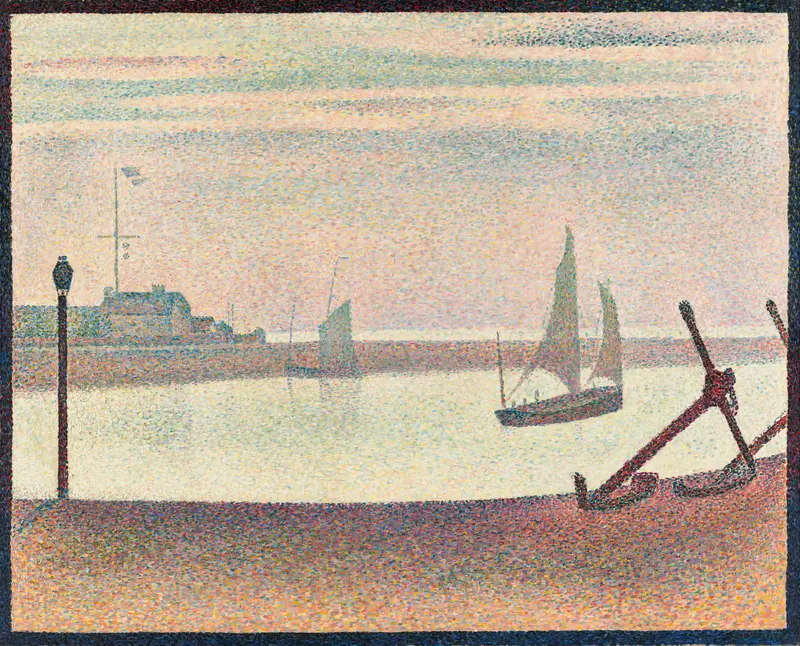
The Channel at Gravelines, Evening
Georges Seurat
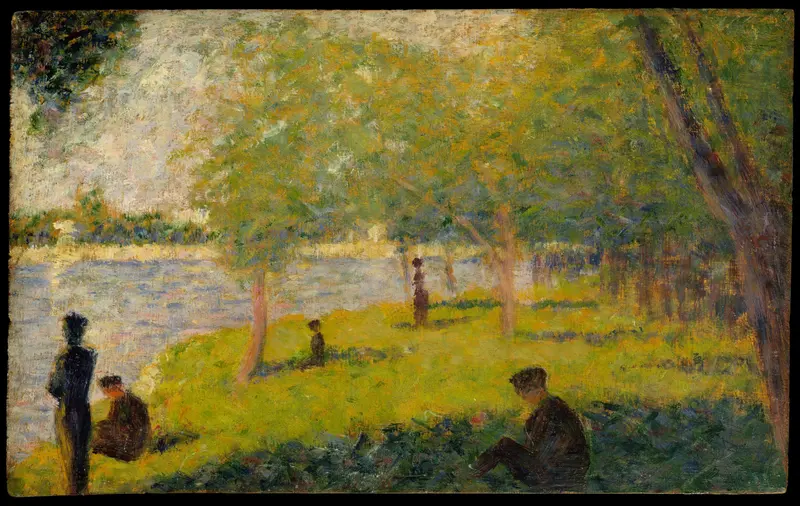
Study for ‘A Sunday on La Grande Jatte’
Georges Seurat
Study for A Sunday on La Grande Jatte
Georges Seurat
The Channel of Gravelines, Petit Fort Philippe
Georges Seurat





