
The Mill Pond — History & Facts
In The Mill Pond, George Inness captures a tranquil scene filled with soft greens and blues. The painting depicts a serene pond surrounded by lush trees and gentle hills. Light filters through the foliage, creating dappled reflections on the water's surface.
The overall atmosphere is peaceful and inviting, drawing the viewer into the natural setting. The painting is executed in oil on canvas, showcasing Inness's skill in blending colors and creating depth. The brushwork is loose yet deliberate, allowing for a sense of movement in the leaves and water. The composition is balanced, with the pond acting as a focal point amidst the surrounding landscape.
The dimensions of the artwork are approximately 76 x 101 cm. George Inness was a prominent figure in American landscape painting during the 19th century. He was influenced by the Hudson River School but sought to express a more personal and emotional connection to nature. The Mill Pond reflects his interest in capturing the beauty of rural America.
An interesting fact about this work is that it exemplifies Inness's transition towards a more Impressionistic style, focusing on light and atmosphere.
More Artworks by George Inness

Autumn Woods
George Inness
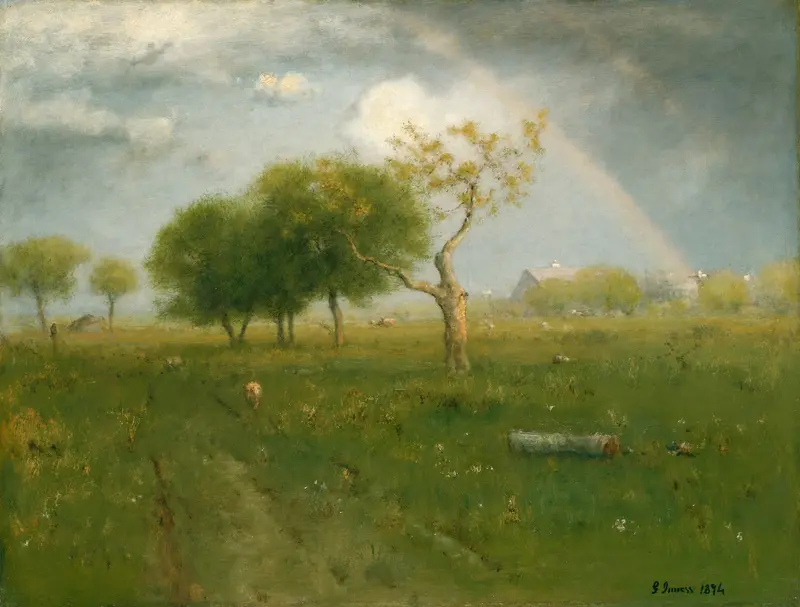
After a Summer Shower
George Inness

View in Berkshire County, Massachusetts, Clearing Off after a September Storm
George Inness
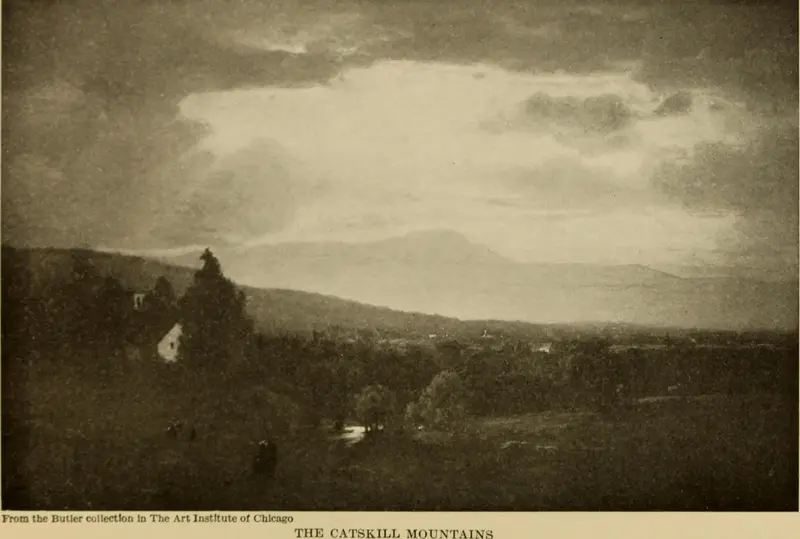
Catskill Mountains
George Inness
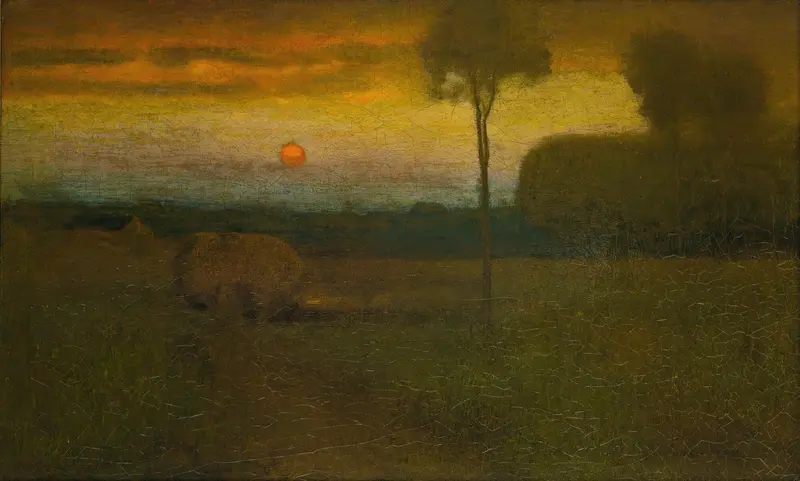
Landscape (Evening Landscape)
George Inness
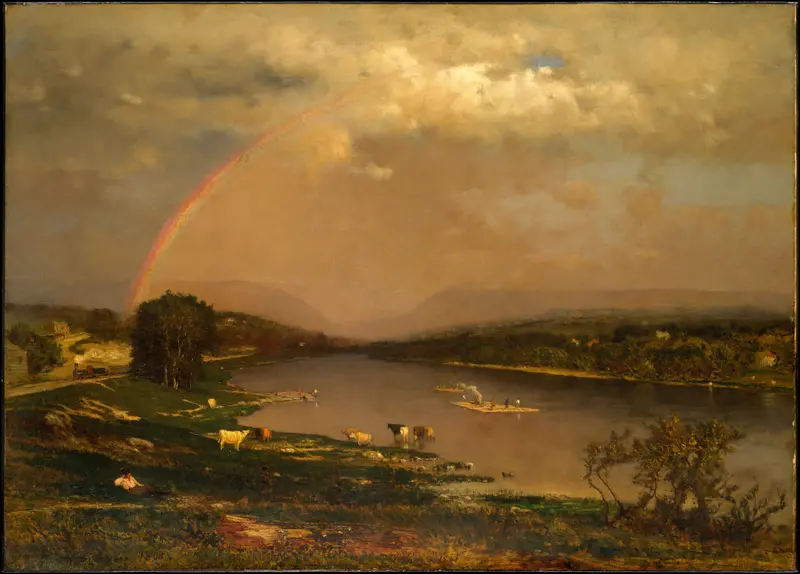
Delaware Water Gap
George Inness
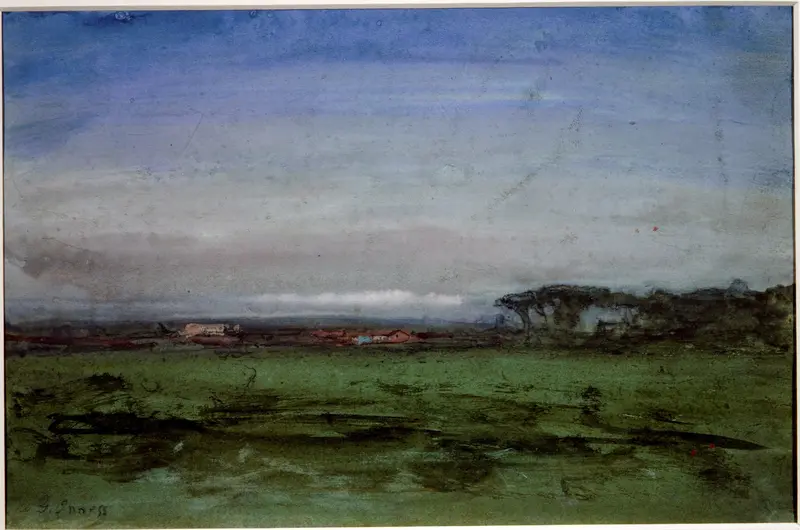
Across the Campagna
George Inness
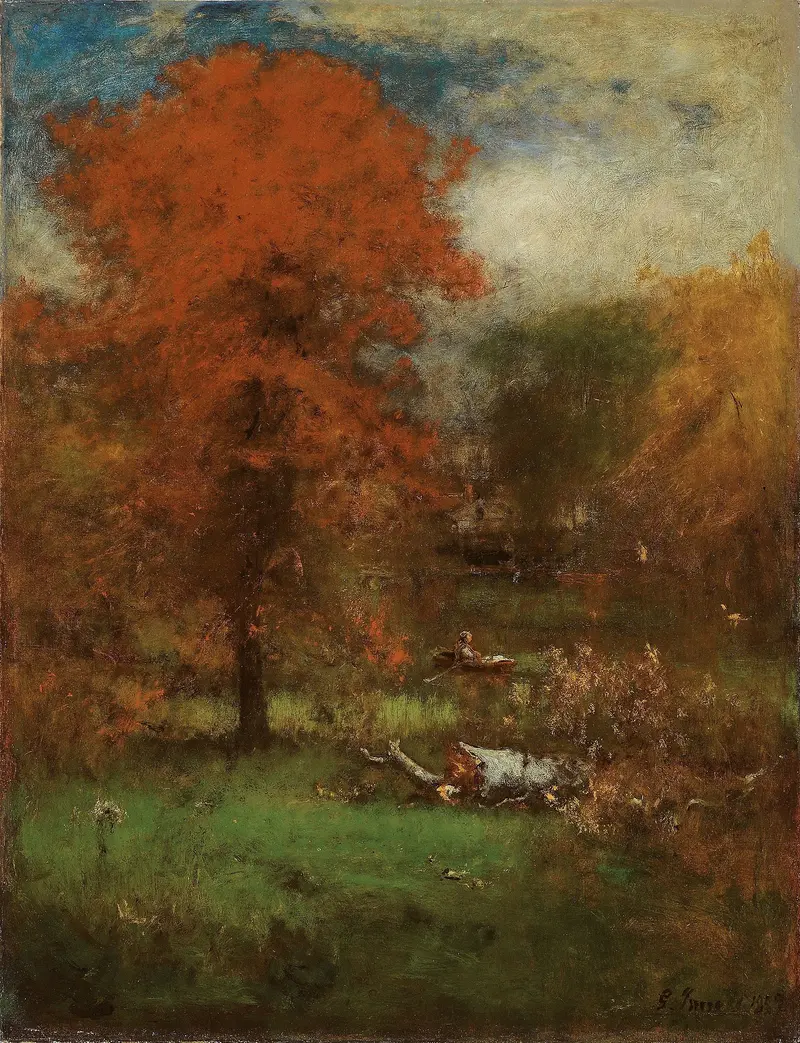
The Mill Pond
George Inness
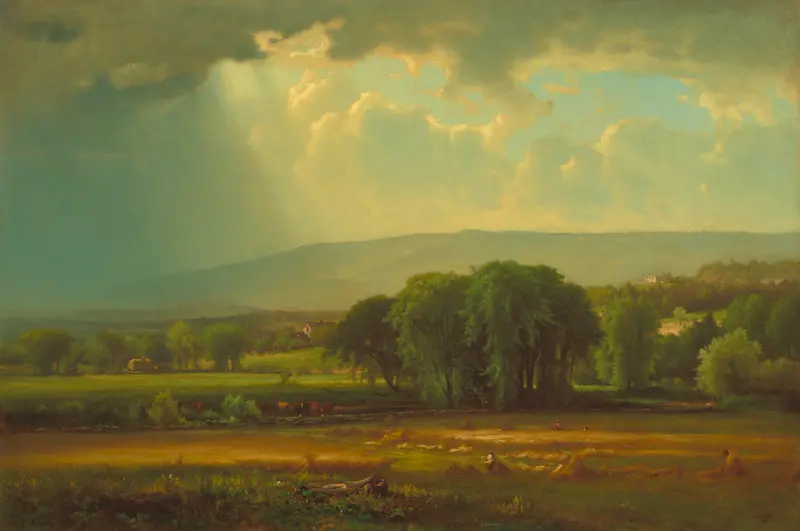
Harvest Scene in the Delaware Valley
George Inness
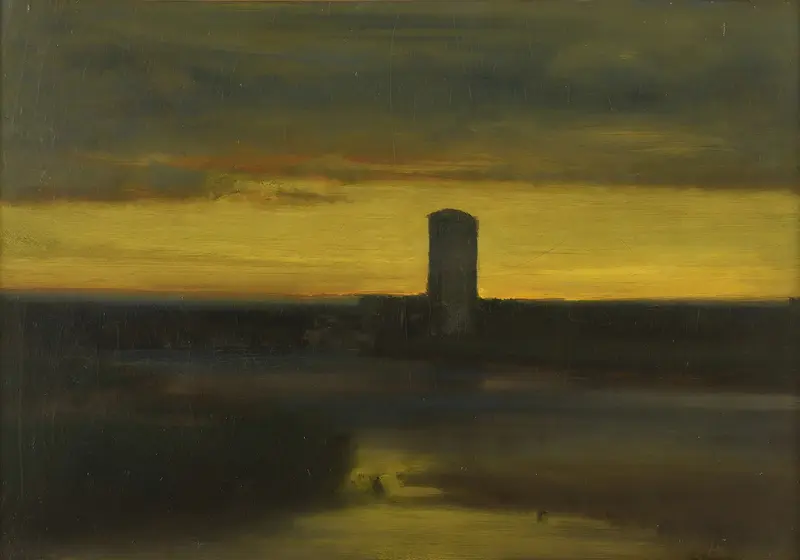
Afterglow
George Inness
More Landscape Art

Starry Night
Vincent van Gogh

View of Delft
Johannes Vermeer

Water Lilies
Claude Monet

The Grand Canal, Venice, looking north-west from the Ca' Corner to the Ca' Contarini degli Scrigni, with the campanile of Santa Maria della Carità
Canaletto

Windsor Castle
Canaletto

The Grand Canal looking North-East from the Palazzo Dolfin-Manin to the Rialto Bridge
Canaletto