
The Miracle of the Holy House of Loreto — History & Facts
In The Miracle of the Holy House of Loreto, Giovanni Battista Tiepolo uses vibrant colors and dynamic figures to depict a miraculous event. The scene is filled with heavenly light, illuminating the figures of angels and saints. The architecture of the Holy House is intricately detailed, surrounded by a celestial atmosphere.
Tiepolo's characteristic use of color creates a sense of movement and drama in the composition. The painting is executed in oil on canvas, showcasing Tiepolo's skill in blending colors and creating depth. The dimensions are approximately 200 x 300 cm, making it a large and impactful work. Viewers can observe the intricate details in the clothing of the figures and the architectural elements.
The use of light and shadow enhances the three-dimensional quality of the painting. Giovanni Battista Tiepolo was a prominent Italian painter of the Rococo style, known for his grand and theatrical compositions. This work, created in the 1750s, illustrates the miraculous transportation of the Holy House of Loreto to Italy. An interesting fact about this painting is that it was commissioned for the church of Loreto, emphasizing its religious significance.
Tiepolo's ability to convey divine narratives through art has made this piece a notable example of Rococo religious art.
More Artworks by Giovanni Battista Tiepolo
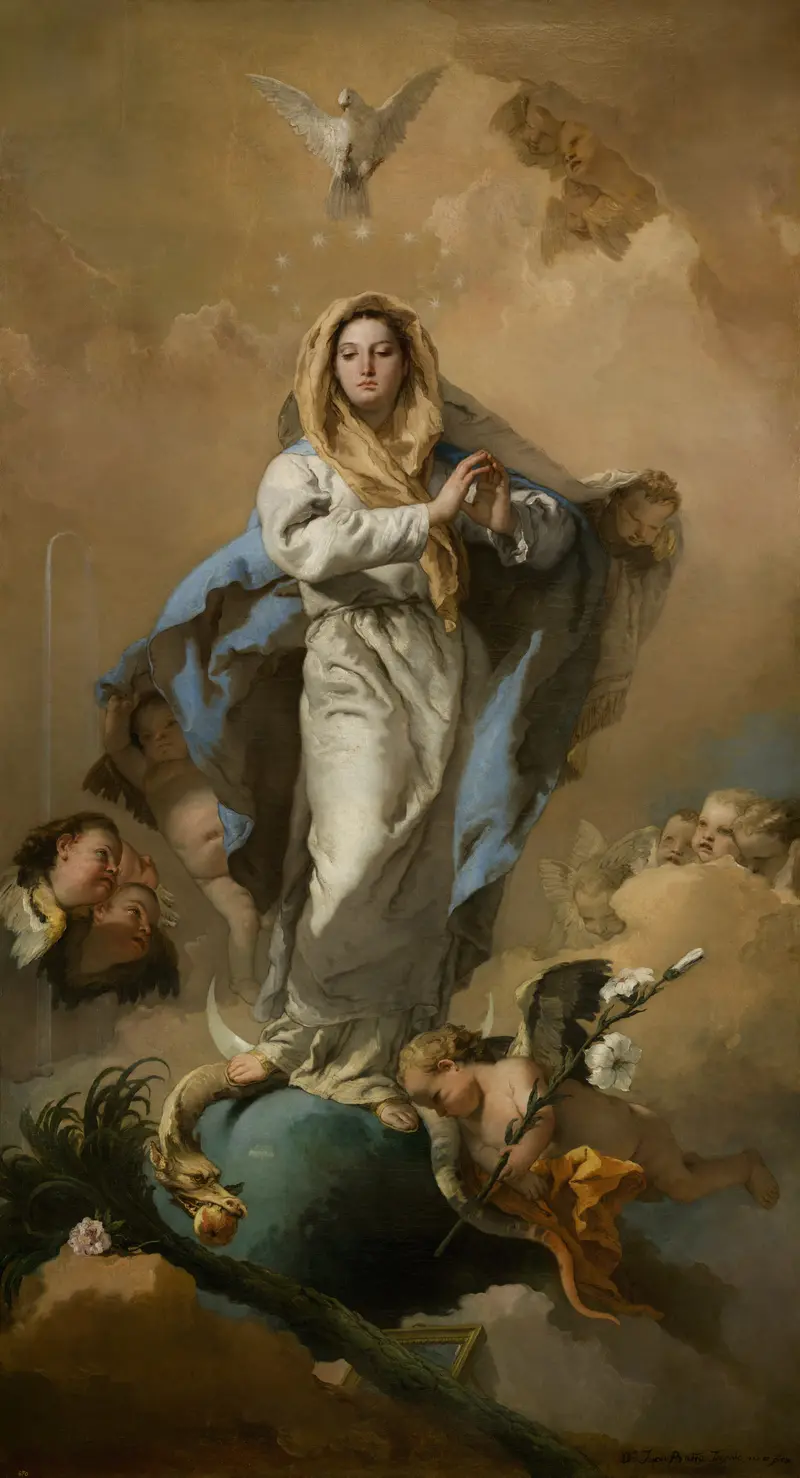
The Immaculate Conception
Giovanni Battista Tiepolo
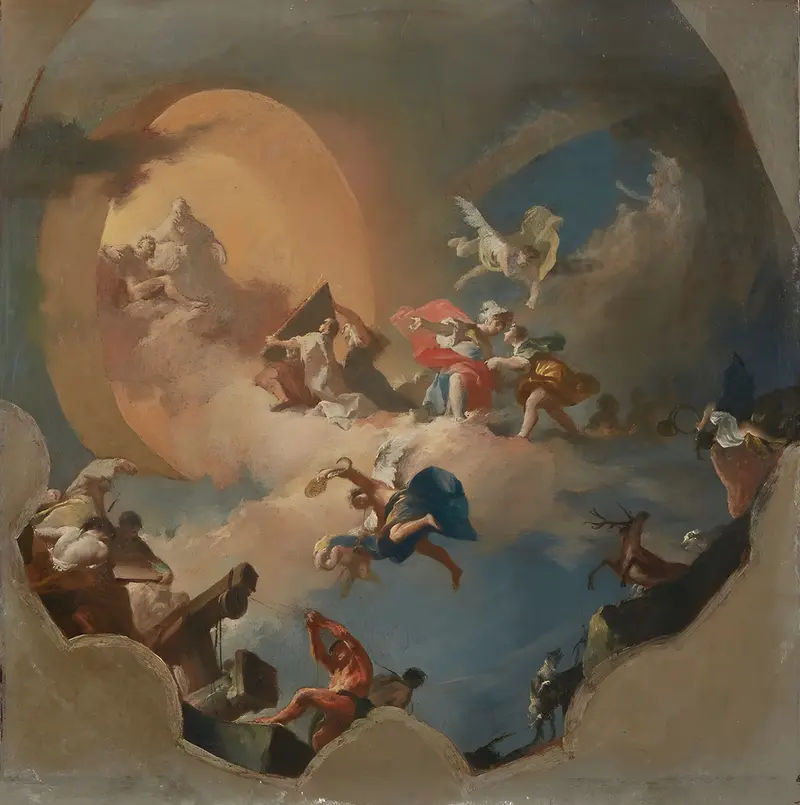
The Apotheosis of the Arts
Giovanni Battista Tiepolo
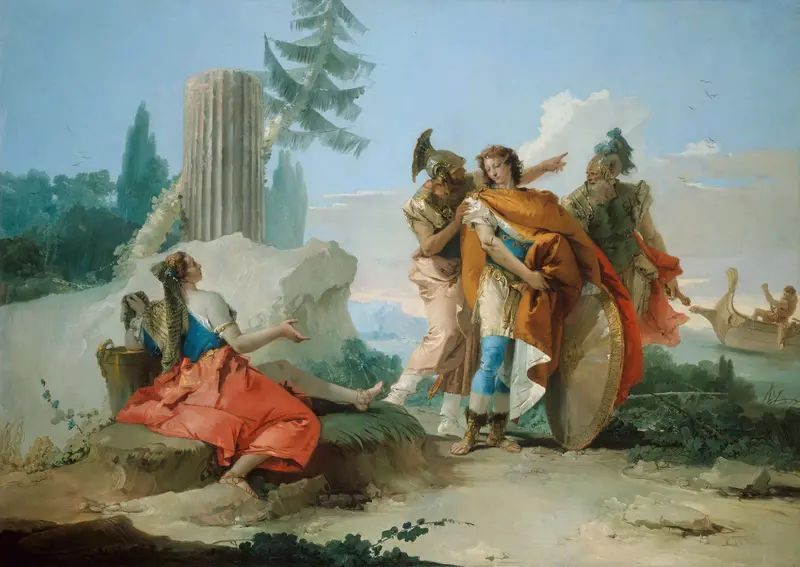
Armida Abandoned by Rinaldo
Giovanni Battista Tiepolo
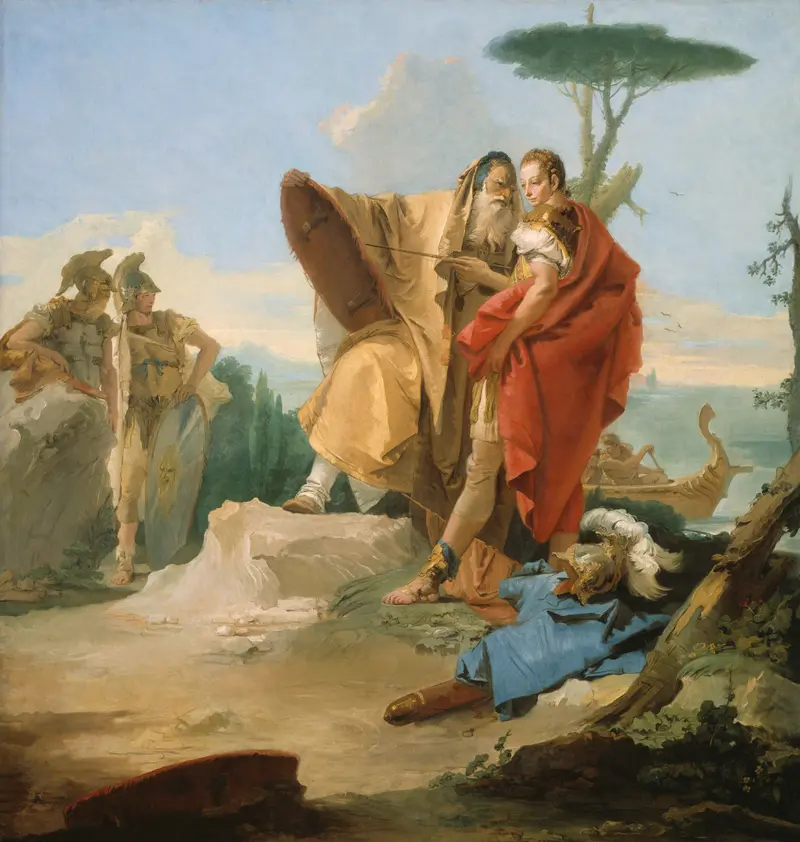
Rinaldo and the Magus of Ascalon
Giovanni Battista Tiepolo
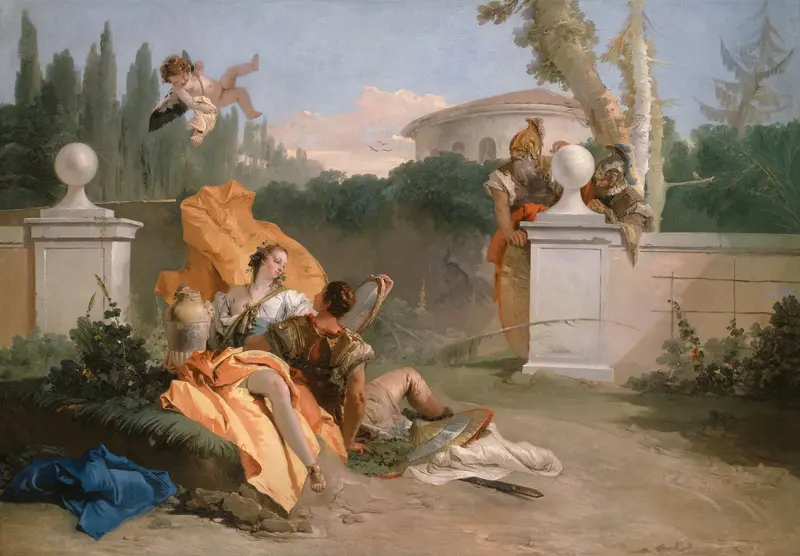
Rinaldo and Armida in Her Garden
Giovanni Battista Tiepolo
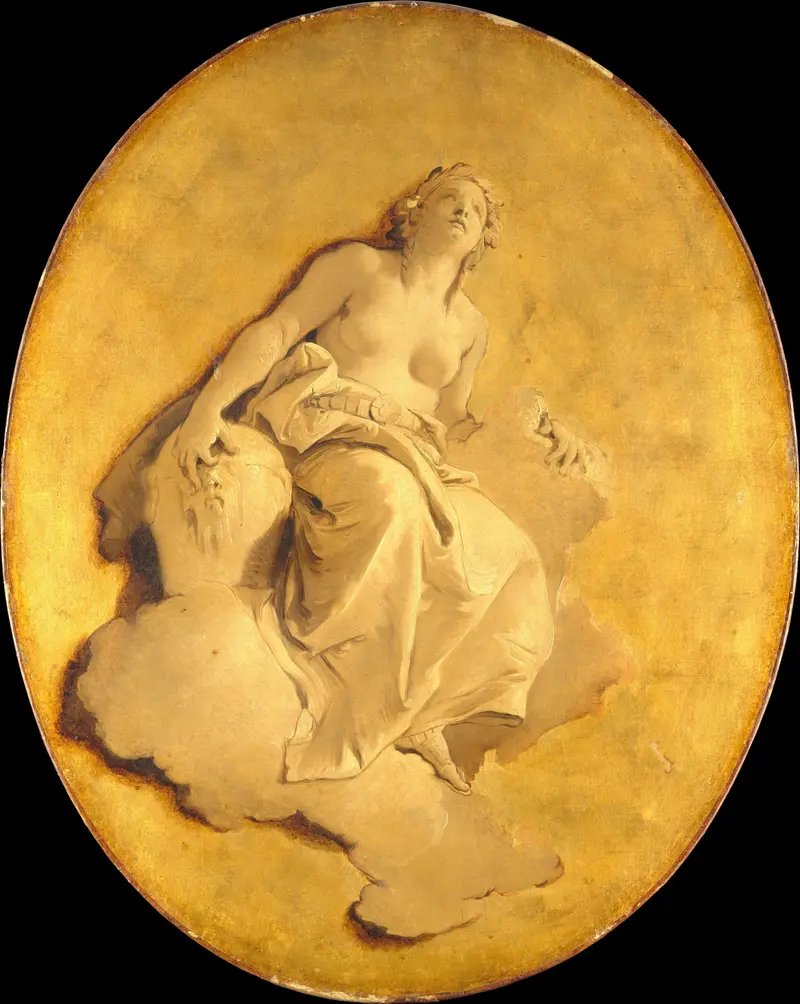
A Female Allegorical Figure
Giovanni Battista Tiepolo
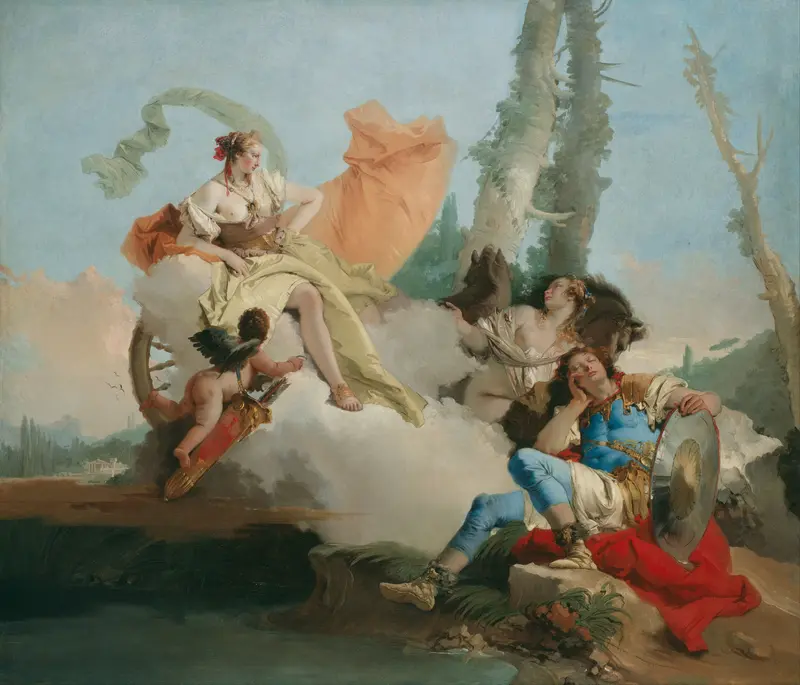
Armida Encounters the Sleeping Rinaldo
Giovanni Battista Tiepolo
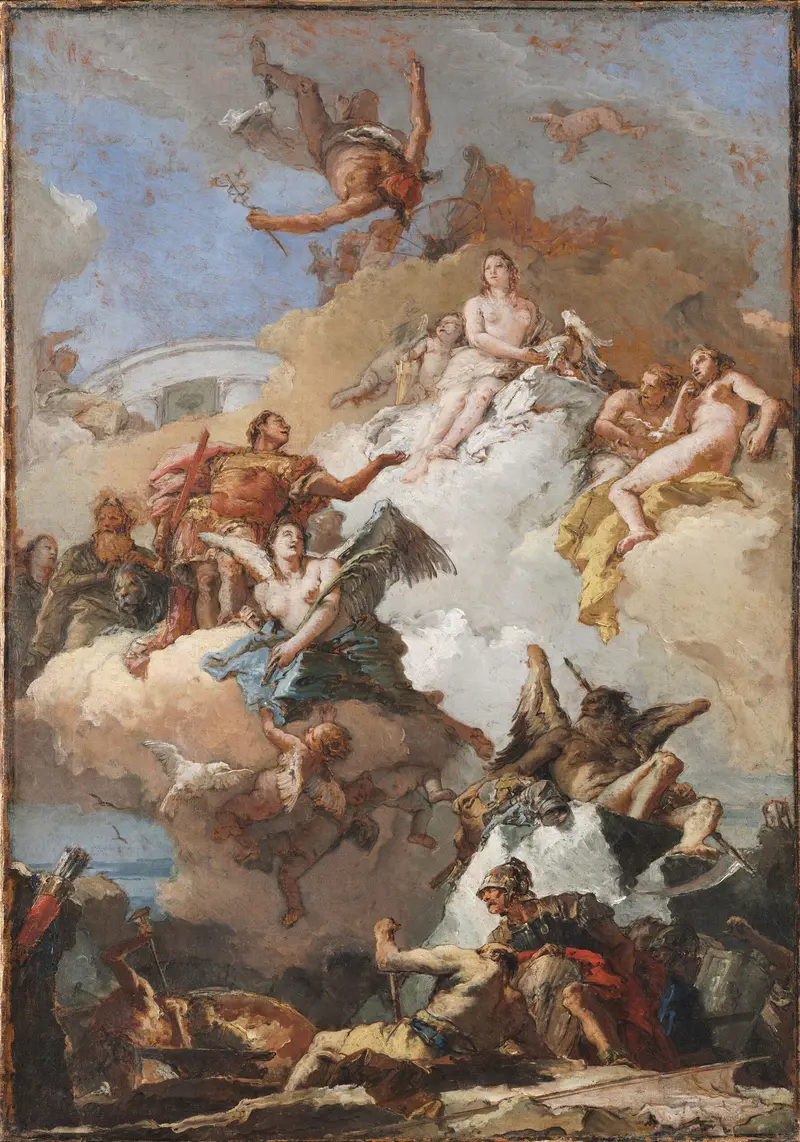
The Apotheosis of Aeneas
Giovanni Battista Tiepolo
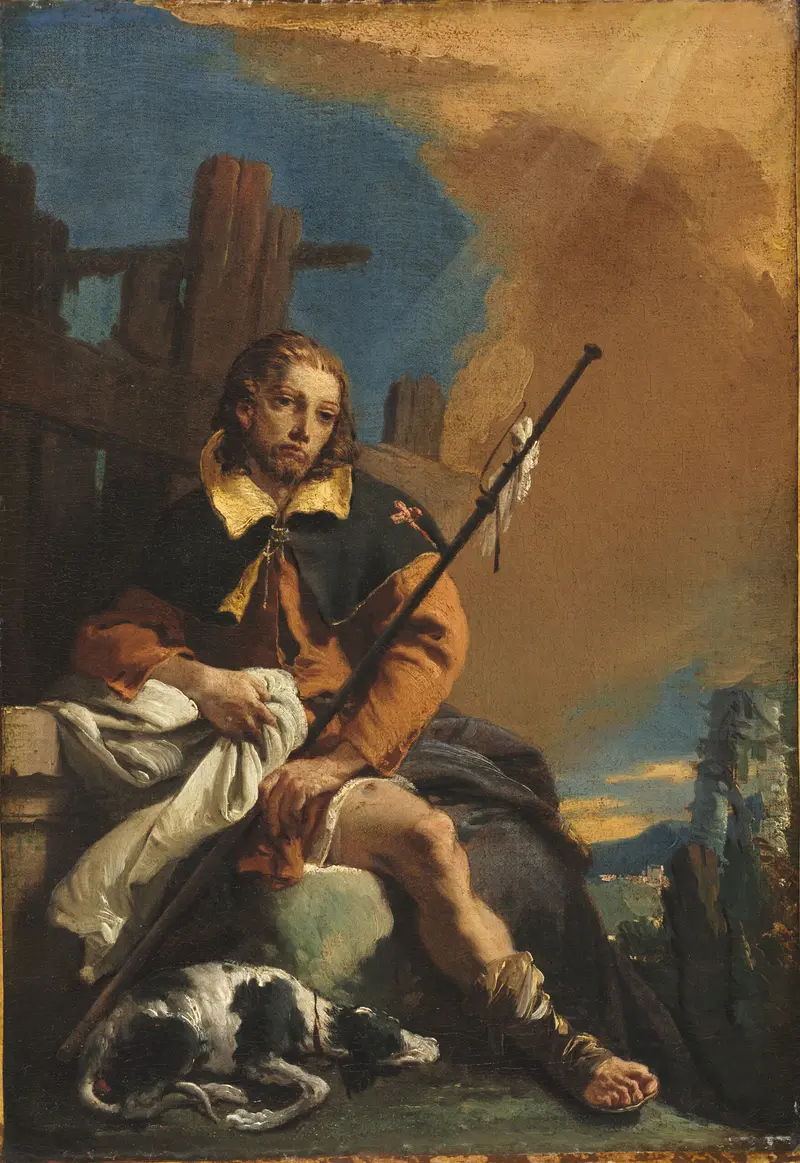
Saint Roch as a Pilgrim
Giovanni Battista Tiepolo
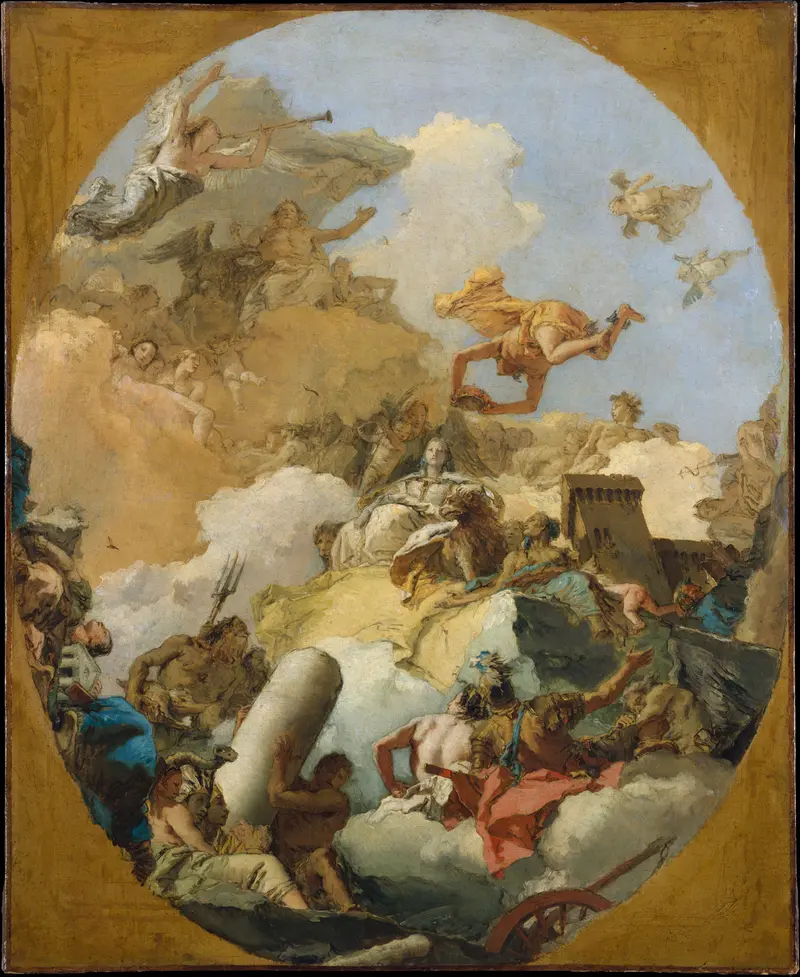
The Apotheosis of the Spanish Monarchy
Giovanni Battista Tiepolo





