
The Morning Walk — History & Facts
When The Morning Walk first appeared in 1884, it was met with both curiosity and skepticism, as Georges Seurat had not yet unveiled his revolutionary technique of pointillism to the wider public. This painting stands at a fascinating crossroads: it was created during the very year Seurat began experimenting with the division of color, a method that would soon define his mature style and change the course of modern art. Scholars have long debated whether The Morning Walk is a preparatory work for his later masterpiece, A Sunday Afternoon on the Island of La Grande Jatte, or a standalone exploration of light and leisure.
What is certain is that it marks a pivotal moment in Seurat’s search for a new visual language. The scene captures a quiet, sunlit promenade, where a solitary figure strolls along a tree-lined path, her silhouette softened by the early light. The gentle dapple of shadow and the careful arrangement of foliage hint at Seurat’s growing fascination with optical effects, even before his full embrace of pointillism. The woman’s upright posture and measured pace suggest the ritual of morning walks in Parisian parks, a subject also explored by Claude Monet and Gustave Caillebotte, yet here rendered with a more deliberate, almost scientific attention to structure.
The play of light across her dress and the path beneath her feet invites the viewer to linger, to notice how the world is built from small, precise touches of color. The serenity of the moment, combined with the careful geometry of trees and shadows, speaks to Seurat’s unique blend of observation and order. The exact journey of The Morning Walk after its creation is not fully documented, but it is generally believed to have remained in private hands for many years, overshadowed by Seurat’s larger and more famous compositions. As with many works from his early period, its attribution has occasionally been questioned, though most specialists now agree on its authenticity.
Today, it is valued as a key piece in understanding the artist’s transition from Impressionist influences to the pioneering techniques of the Neo-Impressionist movement. Whether displayed in a museum or studied in reproduction, The Morning Walk offers a glimpse into the moment when Seurat was poised to transform the very act of painting.
More Artworks by Georges Seurat
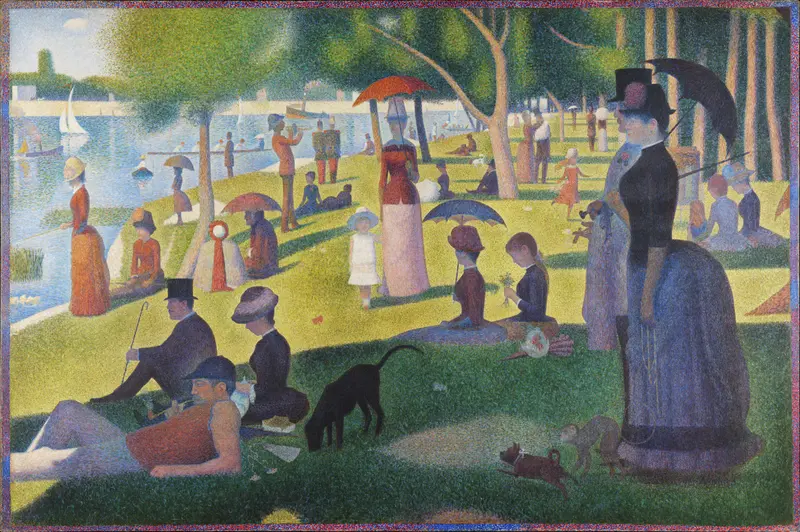
A Sunday Afternoon on the Island of La Grande Jatte
Georges Seurat
Port-en-Bessin, The Outer Harbor (Low Tide)
Georges Seurat
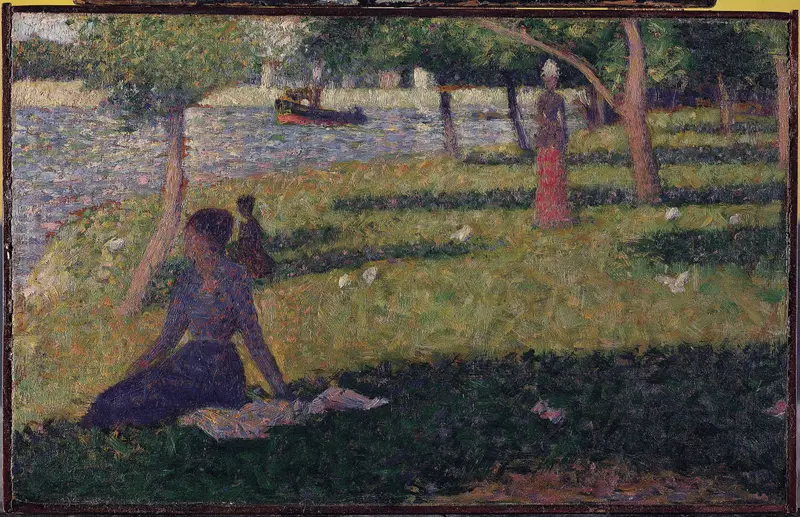
Étude pour ‘La Grande Jatte’ (Study for ‘La Grande Jatte’)
Georges Seurat
Seascape at Port-en-Bessin,Normandy
Georges Seurat
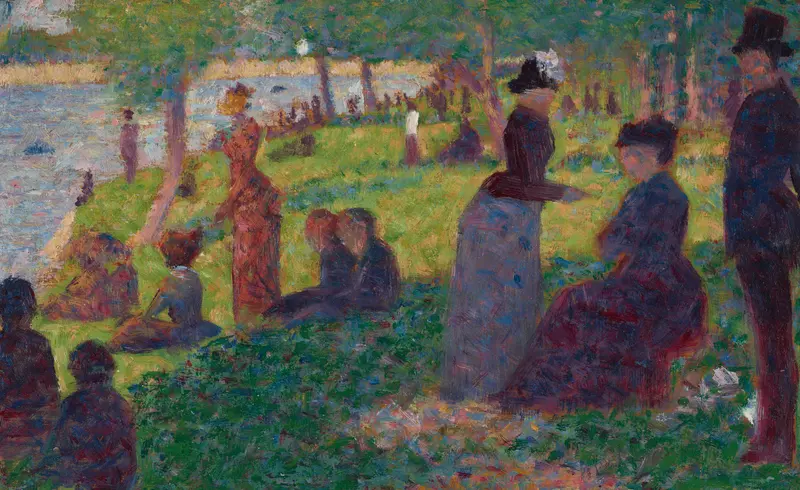
Oil Sketch for "A Sunday on La Grande Jatte — 1884"
Georges Seurat
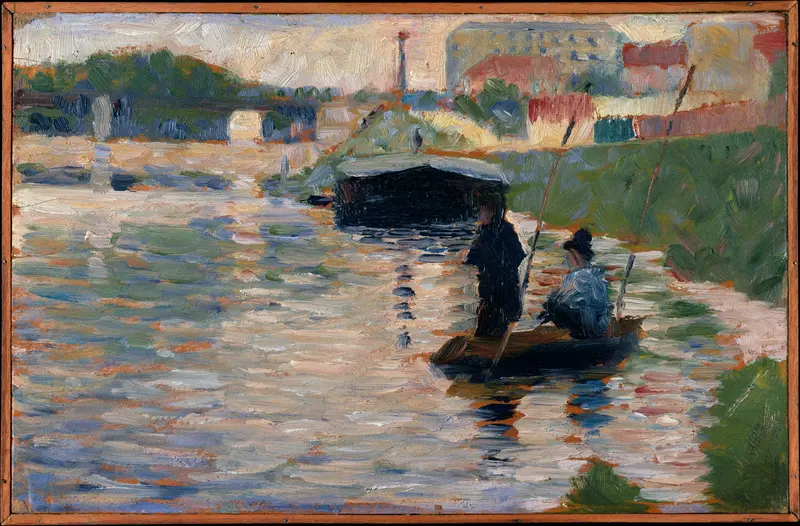
View of the Seine
Georges Seurat
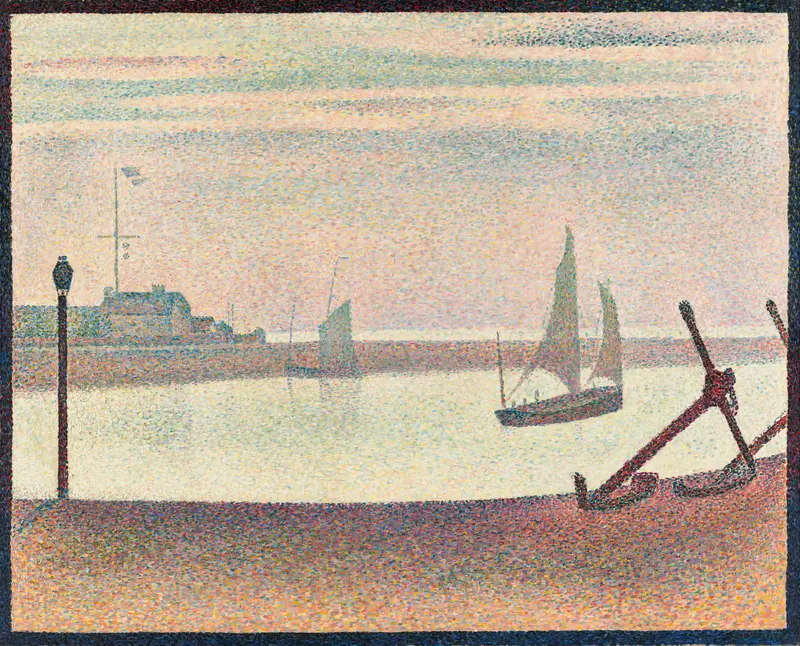
The Channel at Gravelines, Evening
Georges Seurat
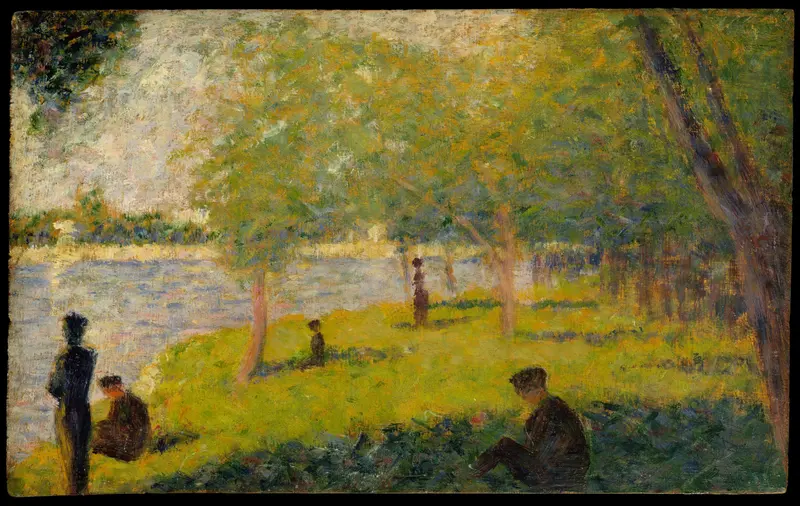
Study for ‘A Sunday on La Grande Jatte’
Georges Seurat
Study for A Sunday on La Grande Jatte
Georges Seurat
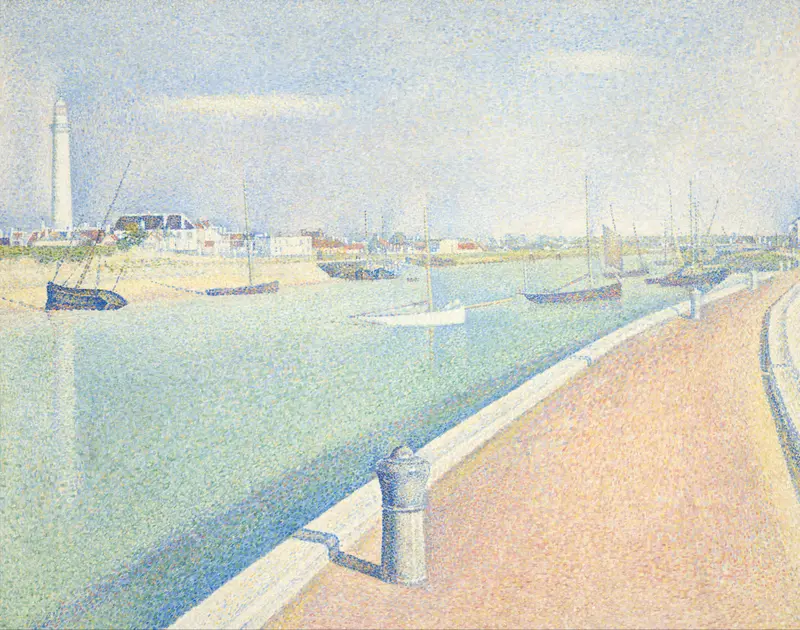
The Channel of Gravelines, Petit Fort Philippe
Georges Seurat
More Genre Scene Art

Banquet of the Officers of the St George Civic Guard
Frans Hals

Rembrandt and Saskia in the Scene of the Prodigal Son
Rembrandt van Rijn

Bal du moulin de la Galette
Pierre-Auguste Renoir

Quadrille at the Moulin Rouge
Henri de Toulouse-Lautrec

A Burial at Ornans
Gustave Courbet

When Will You Marry?
Paul Gauguin