
The Murders in the Rue Morgue (Poe) — History & Facts
What first seizes the eye in The Murders in the Rue Morgue (Poe) is the wild, almost hallucinatory violence of the central figure—a monstrous, furred creature looming over a lifeless form, its mouth twisted in a grimace that is neither animal nor human. The composition is a study in opposites: the tangled, almost organic texture of the beast’s fur against the precisely patterned gown of its victim, the inky blackness of the room broken only by the stark white of the window and the exposed flesh. Each detail is a clue: the hand reaching in desperation, the knife clutched in the beast’s paw, the second body slumped in the corner with eyes wide in frozen terror.
The window, high and improbably open, draws the gaze upward, hinting at an impossible intrusion, while a shadowy figure peers in from beyond—witness, detective, or accomplice, the image refuses to say. Created in 1919 as part of Harry Clarke’s illustrations for Poe’s Tales of Mystery and Imagination, this drawing belongs to a moment when the Gothic imagination was finding new life in the illustrated book. Clarke, an Irish artist known for his work in stained glass and book illustration, brought a feverish intricacy to his pen-and-ink visions, marrying the macabre with the ornamental. Such works were commissioned for a growing audience of readers hungry for both horror and beauty, at a time when the traumas of the First World War had made the boundaries between nightmare and reality feel perilously thin.
History has kept few traces of the circumstances behind each of Clarke’s illustrations, but their power endures—inviting us to peer closer, to puzzle out every pattern, and to wonder what other horrors might lurk just beyond the edge of the page.
More Artworks by Harry Clarke
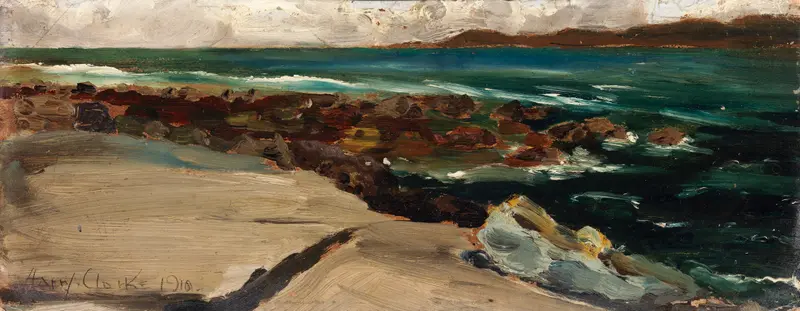
Landscape by the Coast
Harry Clarke
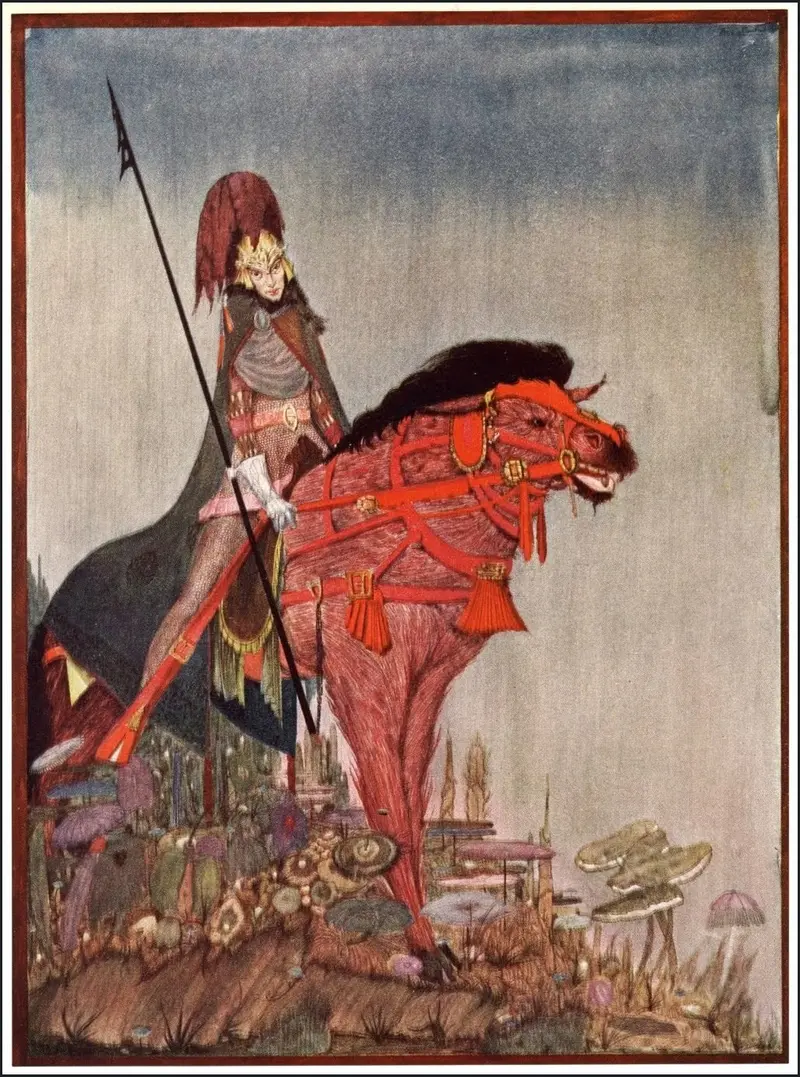
Metzengerstein (Poe)
Harry Clarke
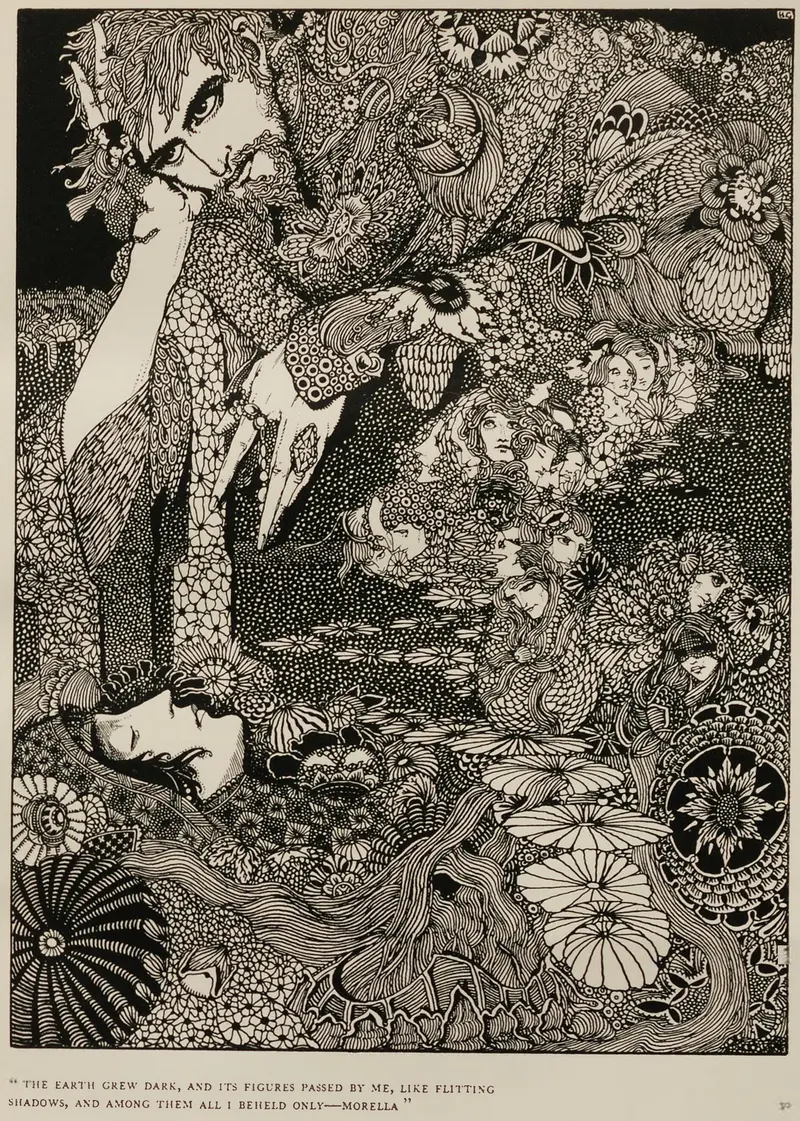
Morella (Poe)
Harry Clarke
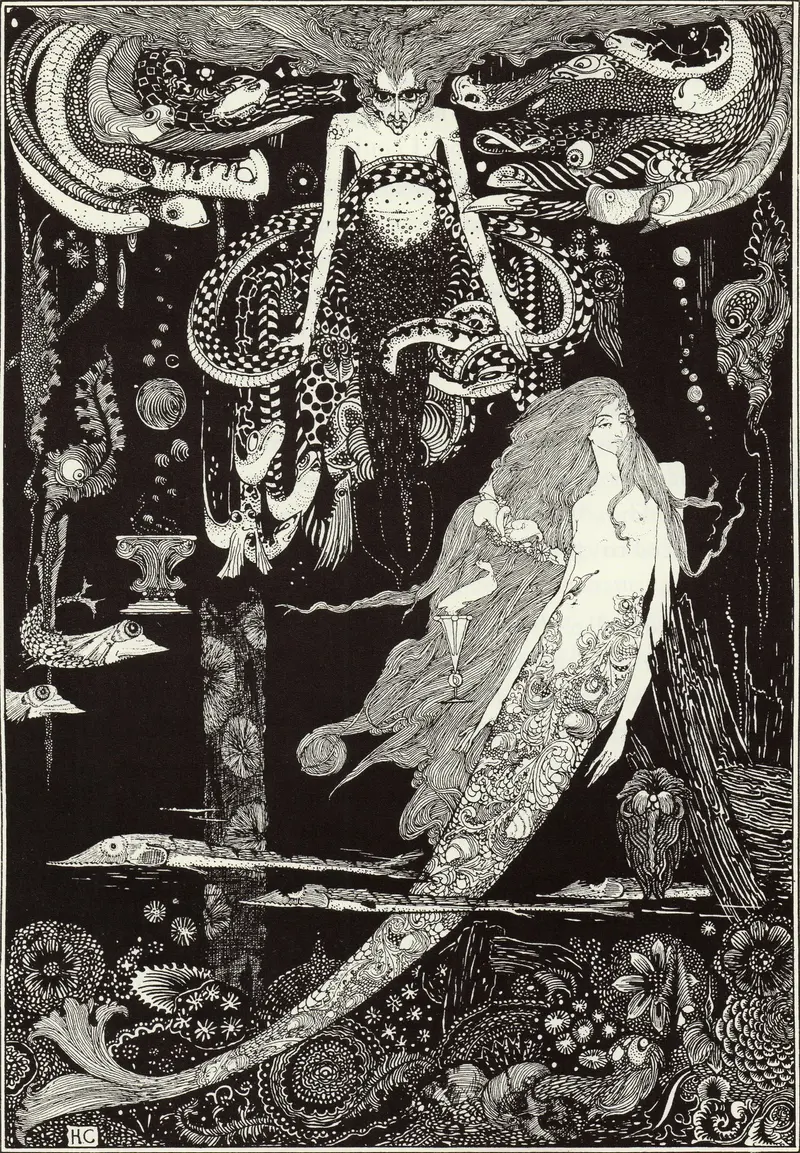
The Little Mermaid (Andersen)
Harry Clarke
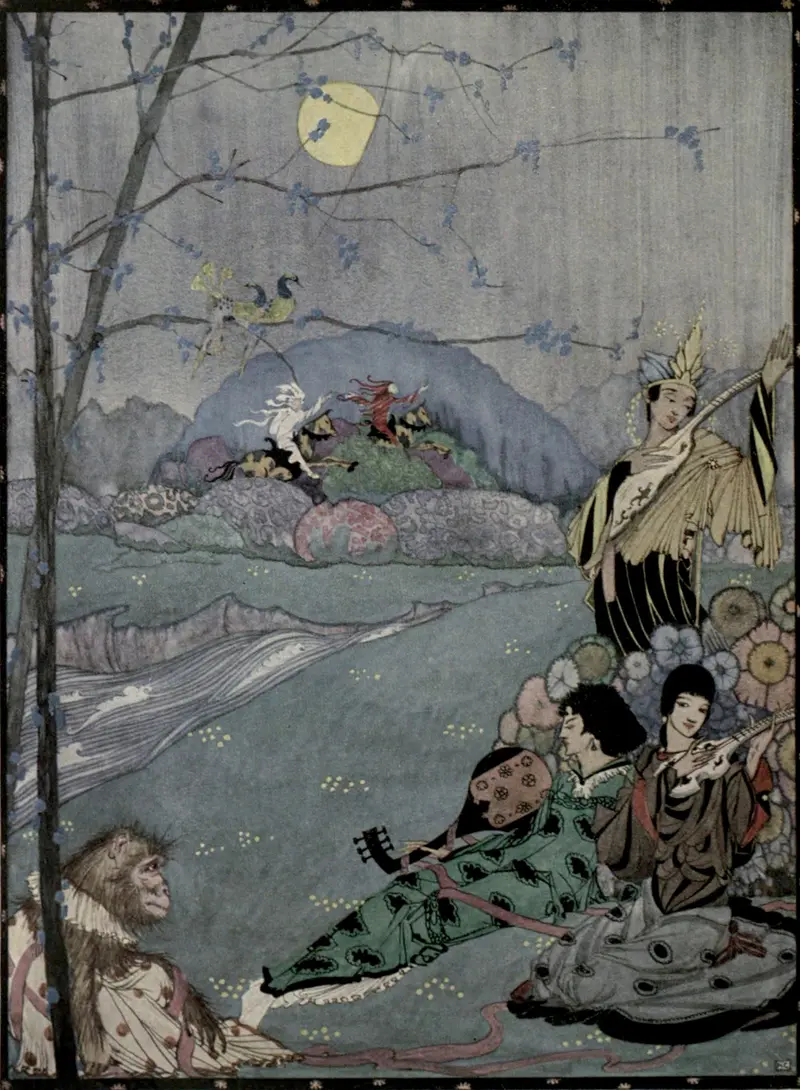
Arabia (The Year's at the Spring)
Harry Clarke
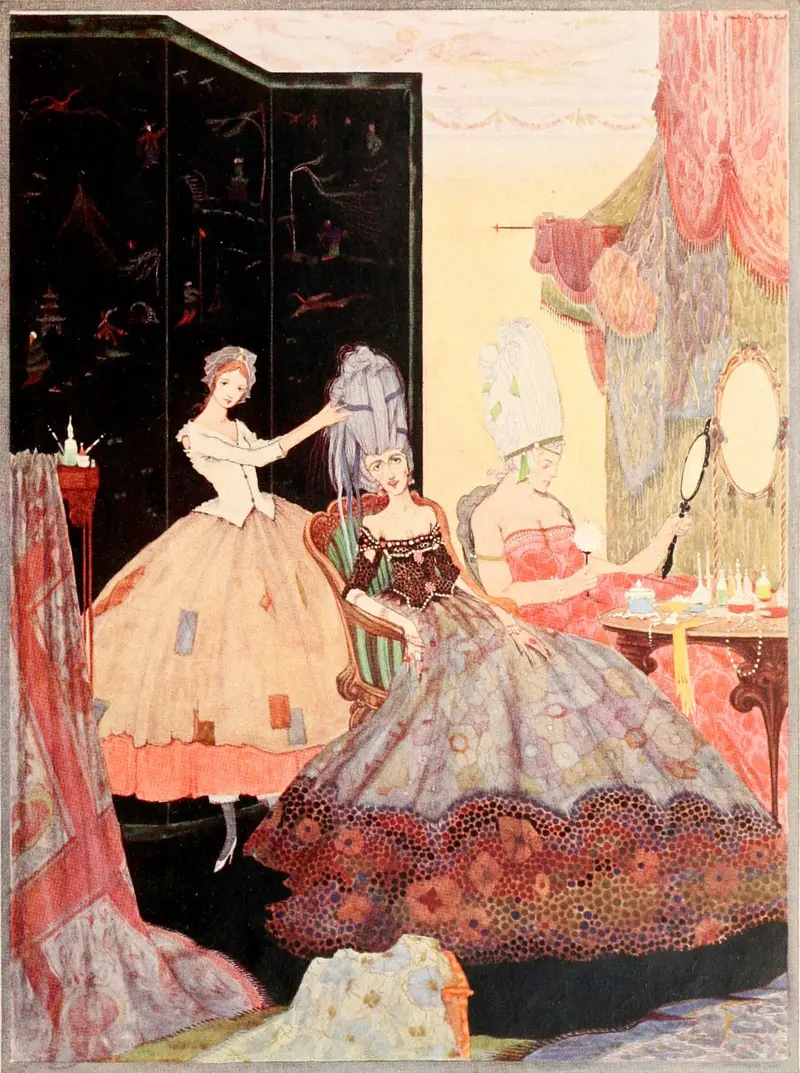
Cinderella (Perrault)
Harry Clarke
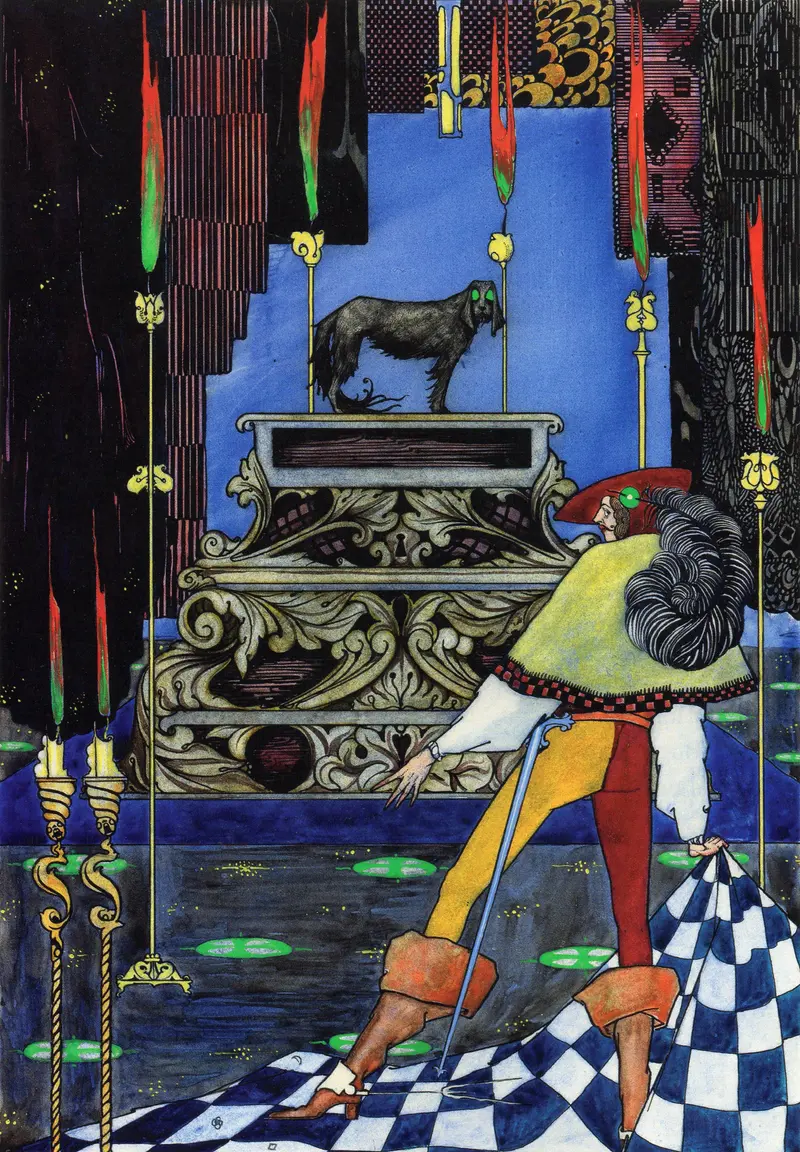
The Tinder Box (Andersen)
Harry Clarke
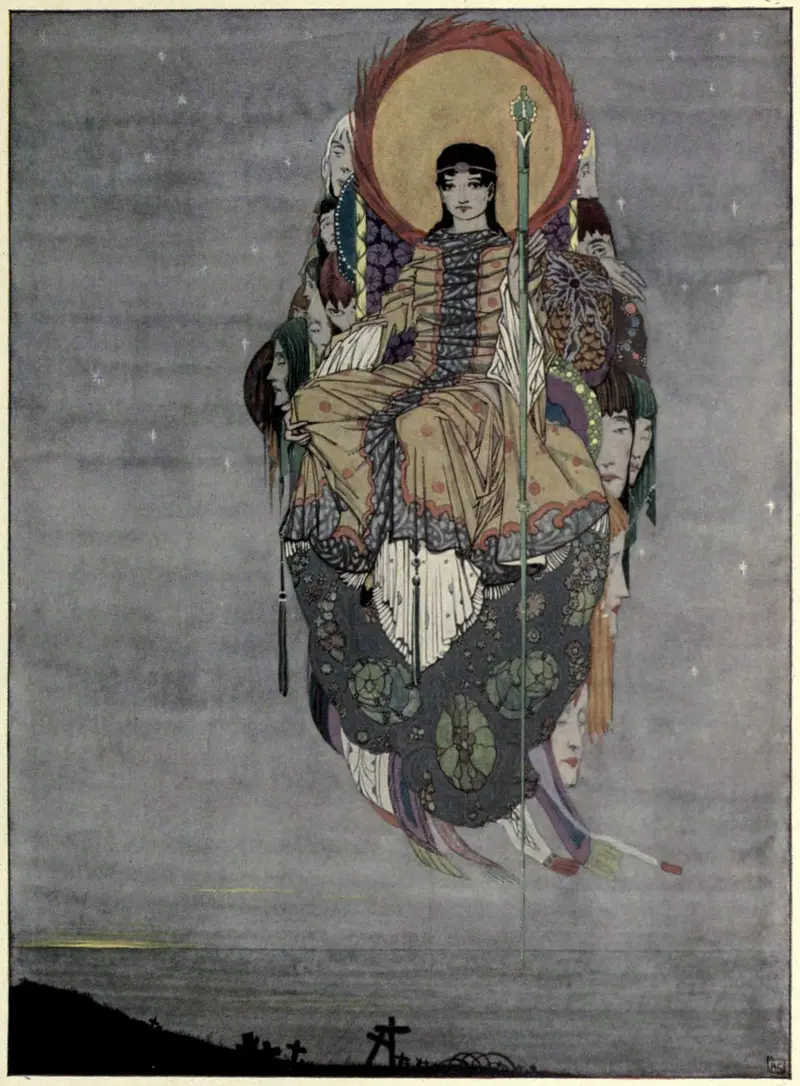
The Dead (The Year's at the Spring)
Harry Clarke
The Mystery of Marie Roget (Poe)
Harry Clarke

The Travelling Companion (Andersen)
Harry Clarke





