
The mussel eater — History & Facts
A single figure commands the center, caught mid-act with a mussel poised between his fingers and lips, his eyes half-closed in private pleasure. Around him, the dim interior glows with the warmth of firelight, drawing your gaze from the shadowed workshop at left to the lively cluster of children and animals at his feet. The mussel shells scattered across the floor are not mere debris—they are evidence of appetite and festivity, echoed by the sly glance of the cat and the eager faces of the children.
The painter’s hand lingers on textures: the rough wool of sleeves, the gleam of pottery, the soft fur of the dog. In the background, onlookers at a window lean in, their curiosity mingling with amusement, as if the act of eating itself is a spectacle worth pausing for. Painted around 1650, this scene belongs to the world of the Dutch Golden Age, when artists like Aelbert Cuyp turned everyday life into a subject of lasting fascination. Such genre paintings were prized by a new class of urban collectors—merchants, craftsmen, and burghers—who saw their own lives and pleasures reflected in these images.
The setting, with its tools and hearth, hints at the mingling of work and leisure, a hallmark of the period’s domestic ideals. Today, The mussel eater resides in the collection of collectie.boijmans.nl, a reminder that history has kept few traces of its journey but preserved the vividness of its moment. Let your eye return to the central figure and the laughter in the shadows: here, the ordinary is given the dignity of a painted stage.
More Artworks by Aelbert Cuyp

The Maas at Dordrecht
Aelbert Cuyp
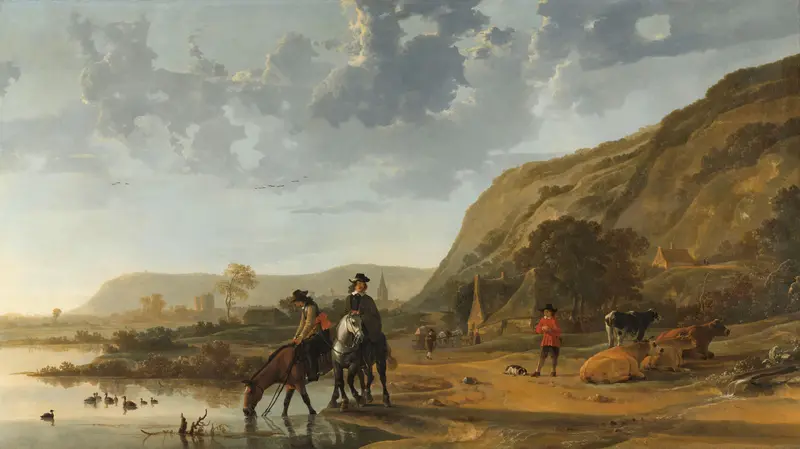
River Landscape with Riders
Aelbert Cuyp

The Maas at Dordrecht
Aelbert Cuyp
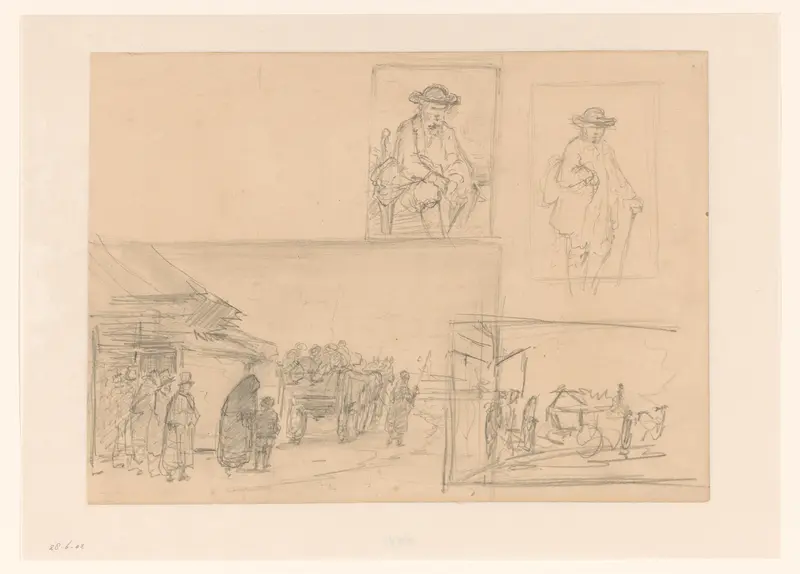
Gezicht op Dordrecht
Aelbert Cuyp
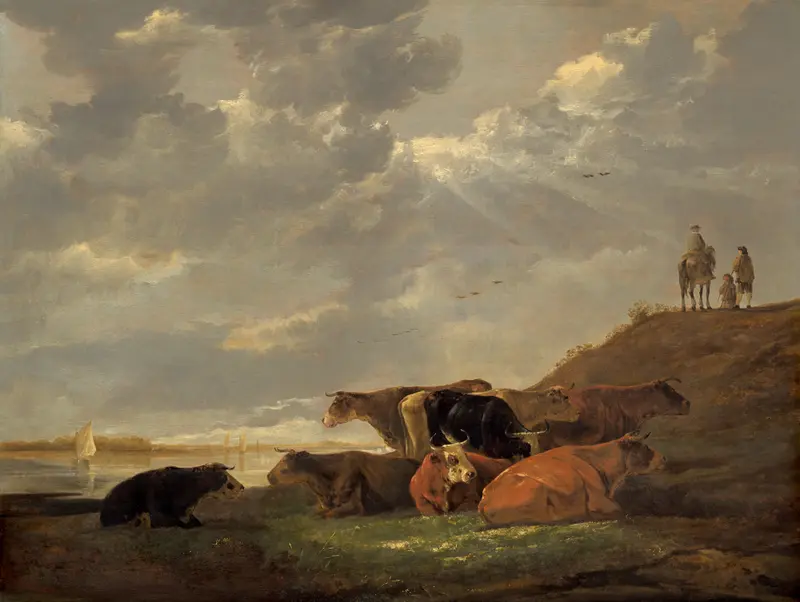
River Landscape with Cows
Aelbert Cuyp
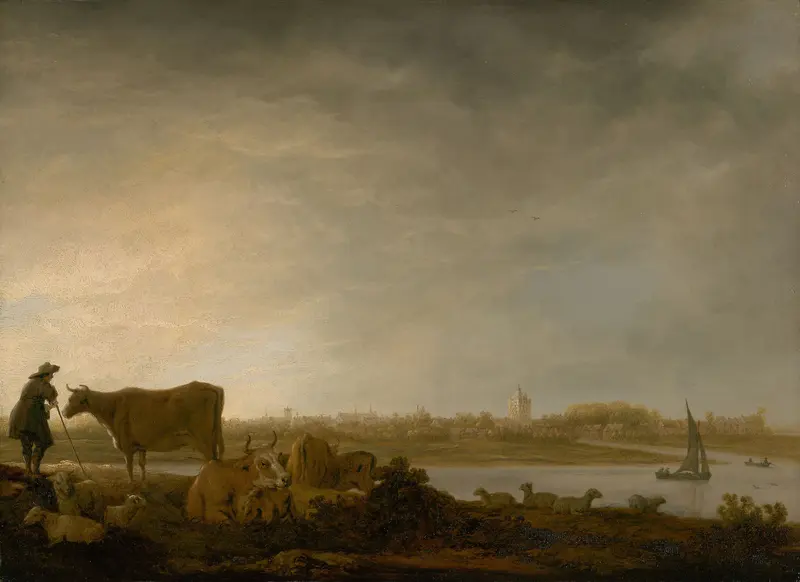
A View of Vianen with a Herdsman and Cattle by a River
Aelbert Cuyp
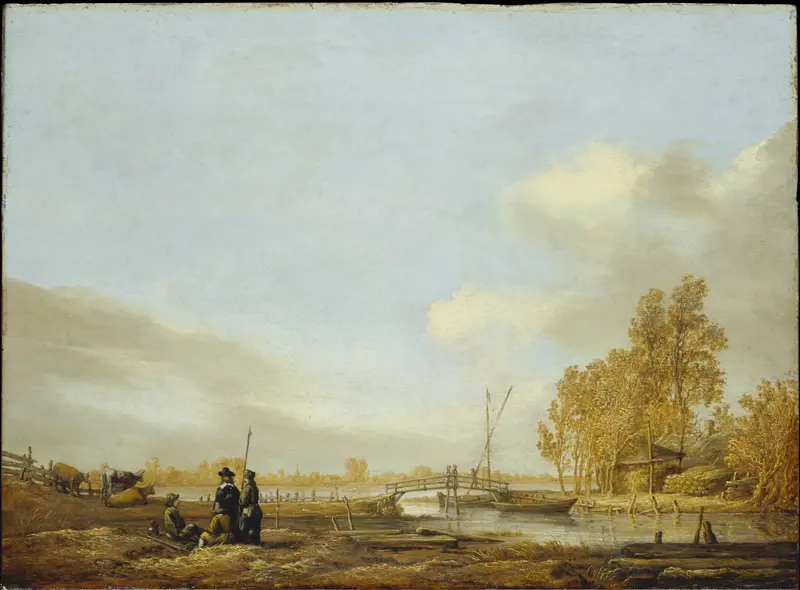
River Landscape with Footbridge
Aelbert Cuyp
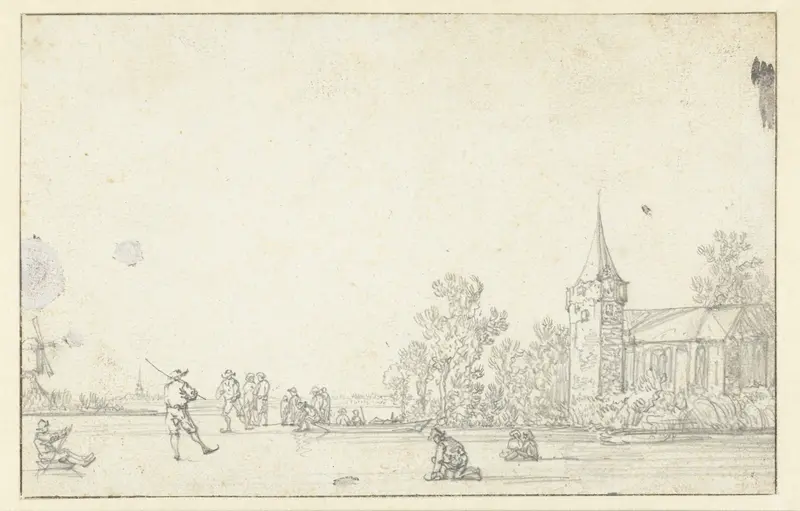
Bevroren rivier met schaatsers bij een kerk
Aelbert Cuyp

Cattle near a River
Aelbert Cuyp
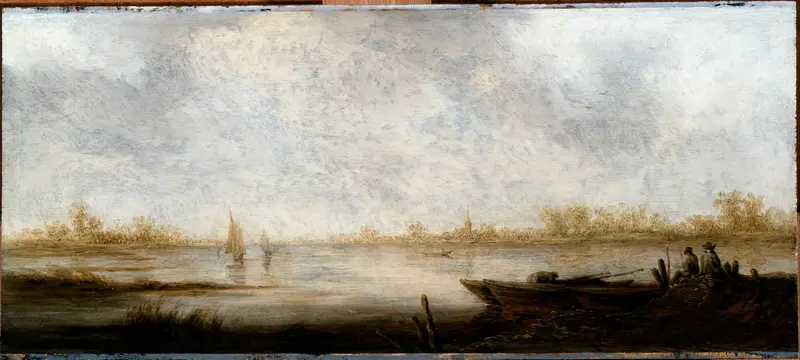
River Landscape
Aelbert Cuyp
More Genre Scene Art

Banquet of the Officers of the St George Civic Guard
Frans Hals

Rembrandt and Saskia in the Scene of the Prodigal Son
Rembrandt van Rijn

Bal du moulin de la Galette
Pierre-Auguste Renoir

Quadrille at the Moulin Rouge
Henri de Toulouse-Lautrec

A Burial at Ornans
Gustave Courbet

When Will You Marry?
Paul Gauguin