
The New Baby — History & Facts
Few paintings of 19th-century domestic life have been as widely reproduced in prints and postcards as The New Baby by Felix Schlesinger. The work’s popularity in its own era is attested by its frequent appearance in middle-class parlors across Europe, where it became a sentimental emblem of family happiness. Yet, despite its fame, the original painting’s exact date and medium remain uncertain, a rarity for such a well-known image.
This mystery has led some scholars to speculate about whether Schlesinger himself authorized all the versions that circulated, or if some were studio copies. A moment of hushed anticipation fills the scene: an older sibling, perhaps a sister, leans over a cradle to meet the gaze of the family's newest member. The artist captures the tender curiosity and slight apprehension that often greet a baby’s arrival, as the child’s hands clutch the cradle’s edge and the mother looks on, her expression a mix of pride and gentle encouragement. The soft daylight, filtering through a window, bathes the figures in warmth, highlighting the textures of the children’s clothing and the simple furnishings.
This intimate, everyday drama recalls the domestic genre scenes of Johann Georg Meyer von Bremen, another German painter who specialized in the quiet rituals of family life, though Schlesinger’s touch is lighter and more playful. Little is known about the early provenance of The New Baby, though it is typical of the sentimental domestic genre that flourished in Germany in the mid-to-late 19th century. Felix Schlesinger, active in Hamburg and Frankfurt, built his reputation on such scenes, which found a ready market among the rising bourgeoisie. The painting’s widespread reproduction in prints and illustrations helped cement its place in the popular imagination, even as the original’s whereabouts have sometimes been uncertain.
Today, examples of Schlesinger’s work can be found in German museums and private collections, though The New Baby itself is more often encountered in reproduction than in person—a testament to the enduring appeal of its subject.
More Artworks by Felix Schlesinger

Fleißige Helfer in der Küche
Felix Schlesinger

Die Zeitungslektüre
Felix Schlesinger
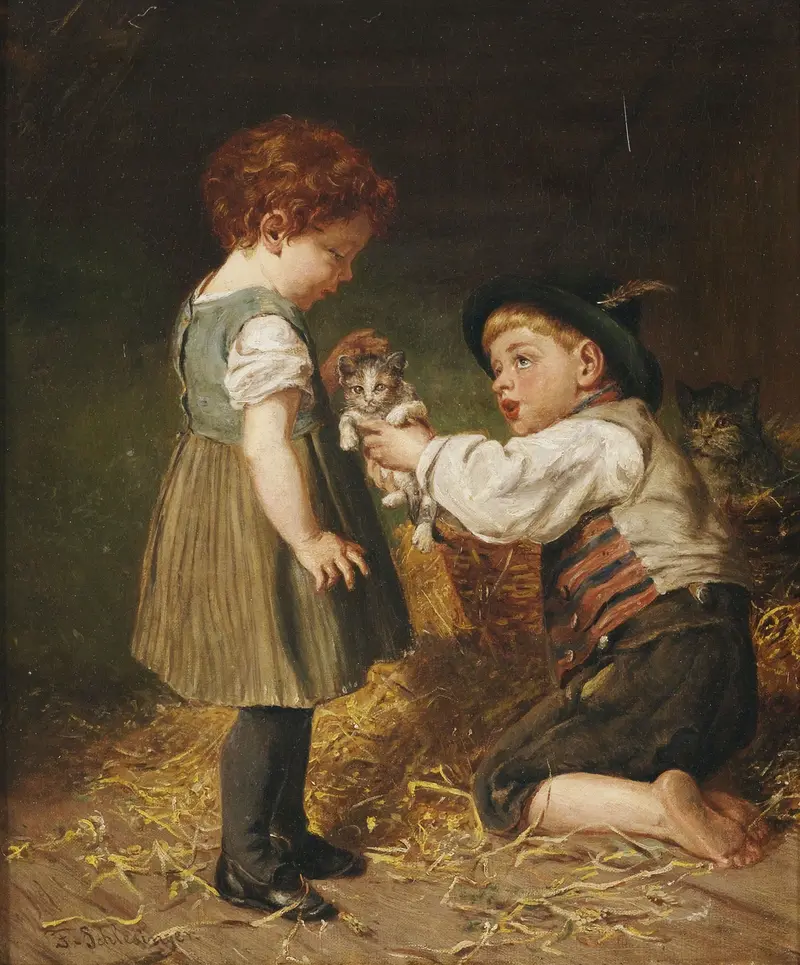
Zwei Kinder mit Kätzchen im Stall
Felix Schlesinger
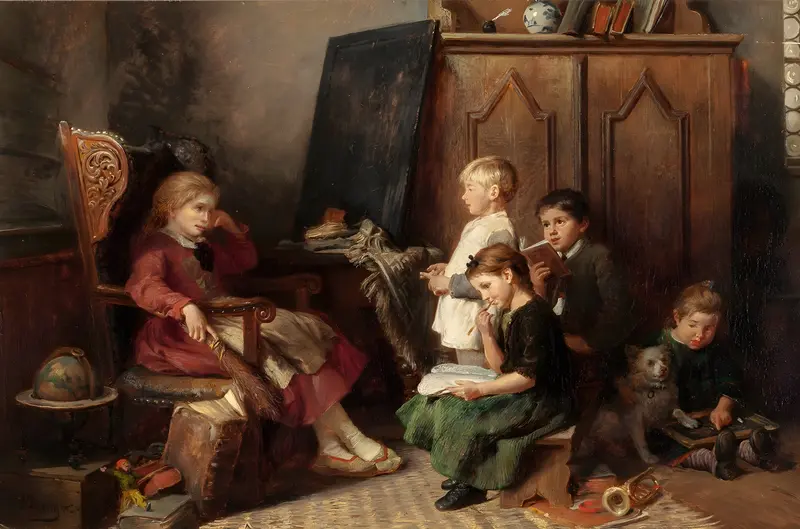
Children Reading
Felix Schlesinger
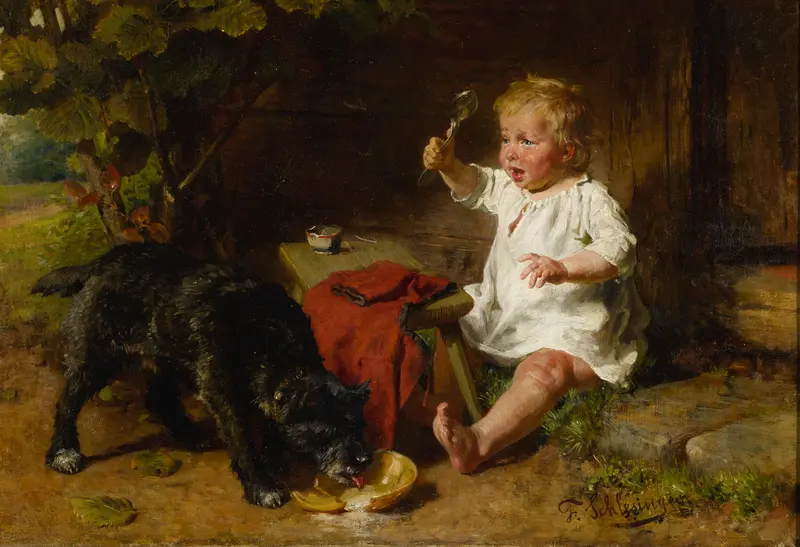
A Shared Meal
Felix Schlesinger
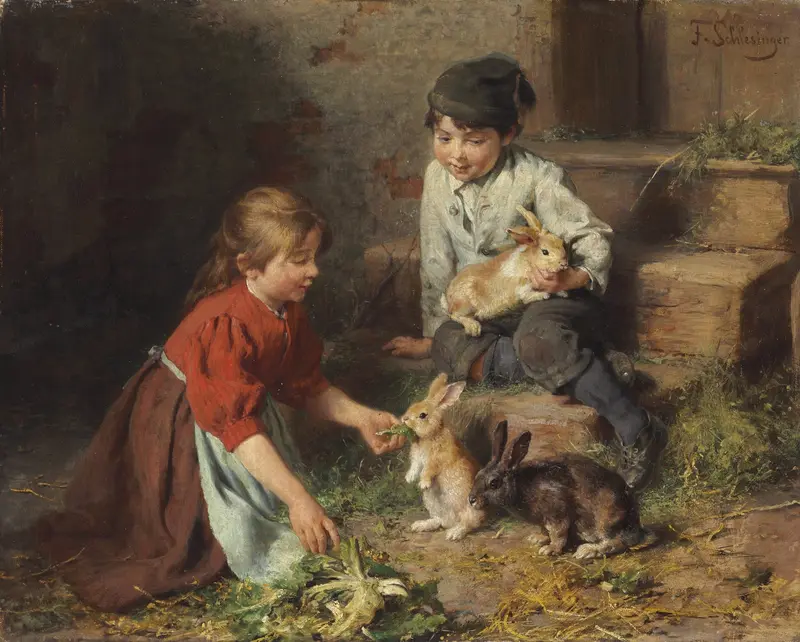
Fütterung Der Kaninchen
Felix Schlesinger
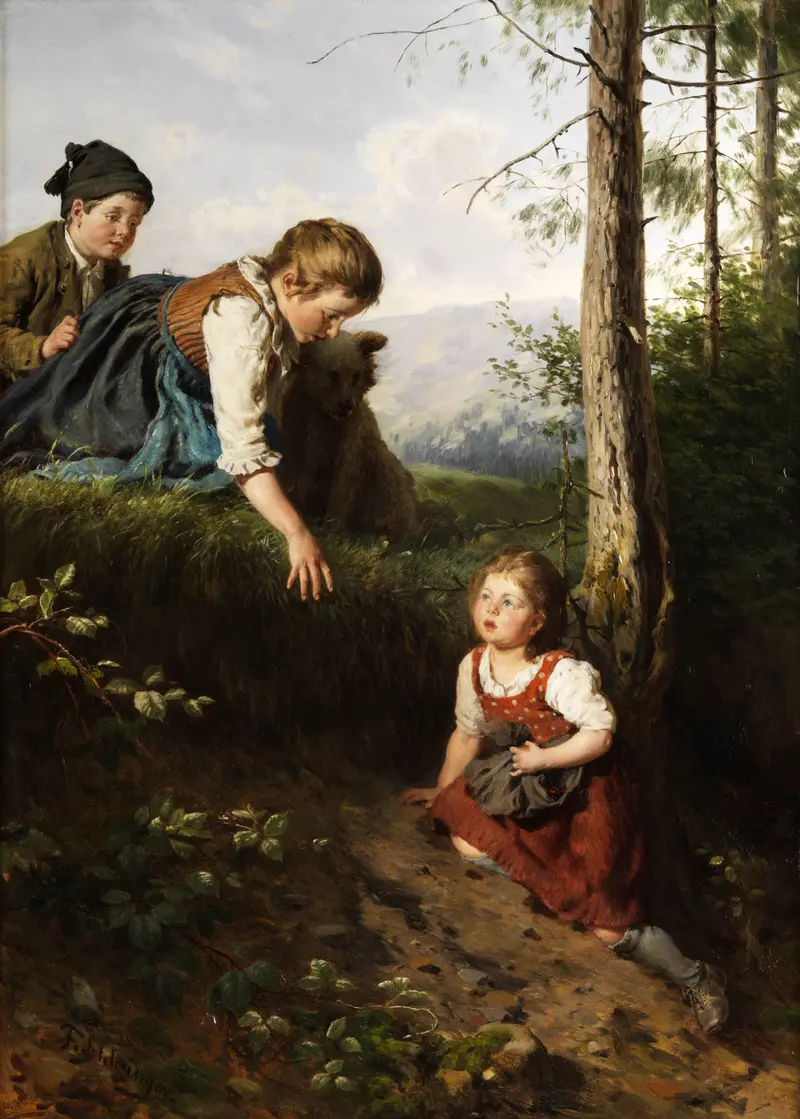
Drei Kinder im Wald beim Beerenpflücken
Felix Schlesinger
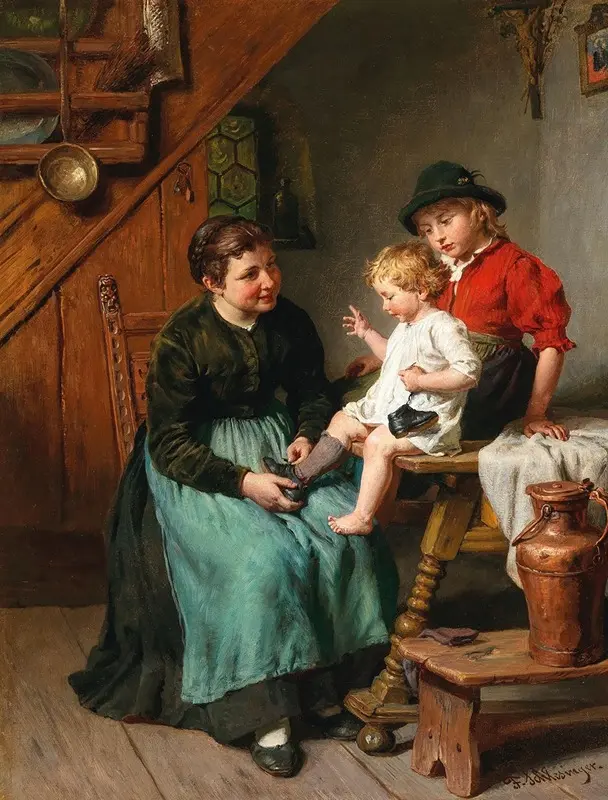
The First Shoe
Felix Schlesinger
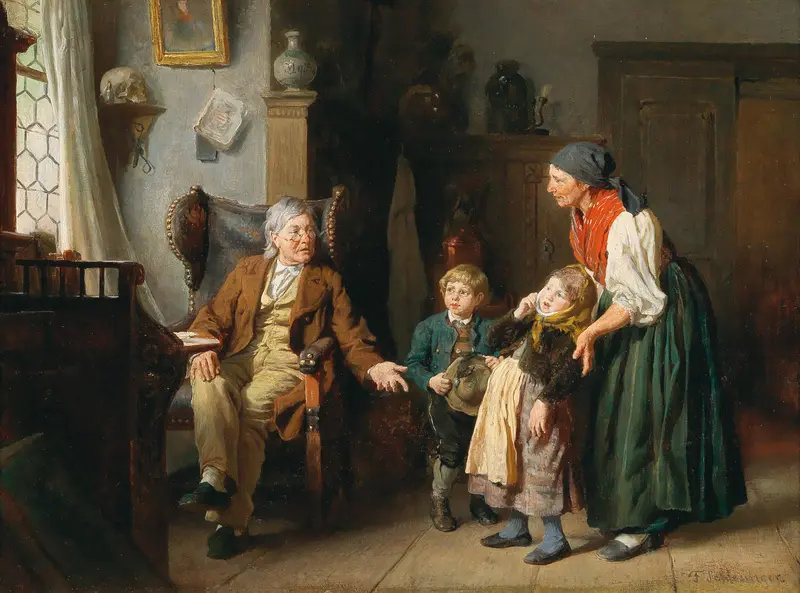
The village doctor
Felix Schlesinger
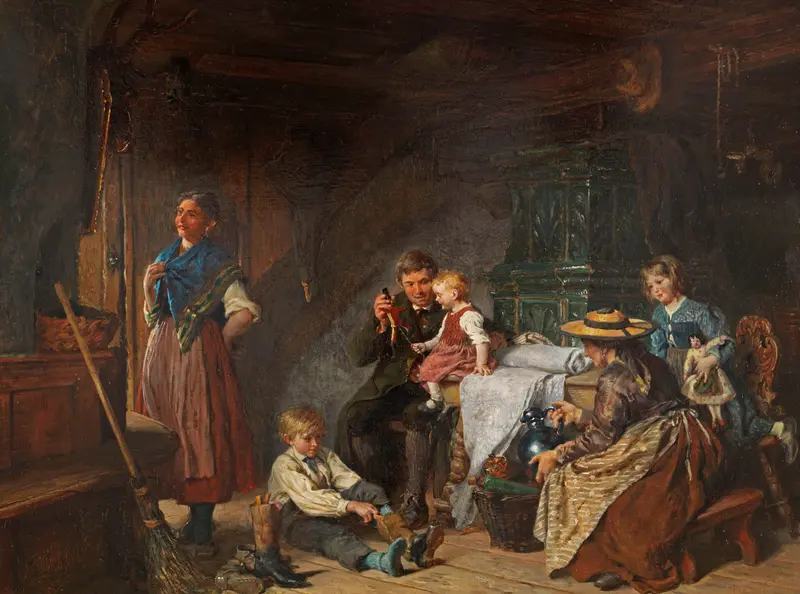
Familienszene
Felix Schlesinger
More Genre Scene Art

Banquet of the Officers of the St George Civic Guard
Frans Hals

Rembrandt and Saskia in the Scene of the Prodigal Son
Rembrandt van Rijn

Bal du moulin de la Galette
Pierre-Auguste Renoir

Quadrille at the Moulin Rouge
Henri de Toulouse-Lautrec

A Burial at Ornans
Gustave Courbet

When Will You Marry?
Paul Gauguin