
The Pink Tug — History & Facts
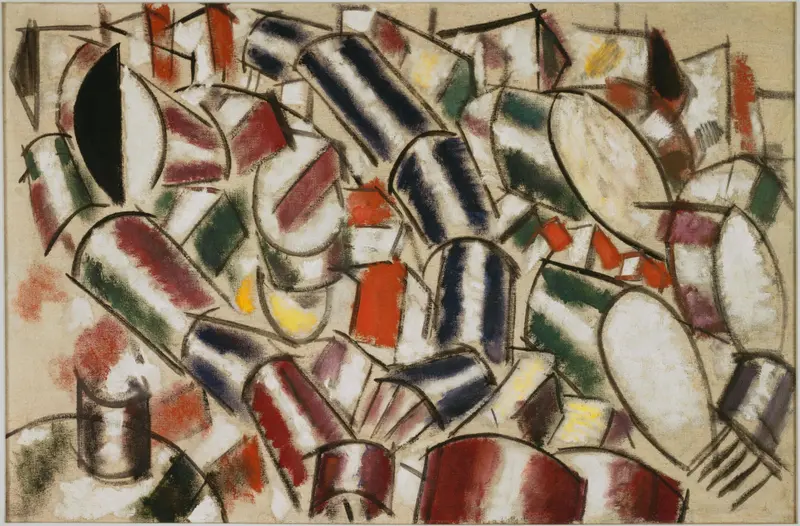
A riot of cylinders, cones, and bold stripes propels the eye through The Pink Tug, as if the entire scene is caught mid-movement, gears whirring and pistons firing. The painting’s title hints at a vessel, but the image itself is a puzzle of forms—mechanical, playful, and almost musical in their arrangement. The bursts of red and pink, set against a scaffolding of white, yellow, and black, suggest both the energy of a working harbor and the artificial harmony of a machine age.
Léger’s vision here is not of a tranquil port, but of industry transformed into spectacle, where every shape seems both functional and celebratory. Created in 1918, at the close of the First World War, this work belongs to a world obsessed with machines and the promise of modernity. Léger, a leading figure of early Cubism and later Purism, often painted the mechanical landscape of the new century—his forms echo the assembly lines and urban rhythms that defined his era. Paintings like this were rarely private commissions; rather, they were statements for the public, declarations that art could capture the pulse of a mechanized world.
Now in the Museum Ludwig, The Pink Tug stands as both artifact and manifesto, inviting viewers to lose themselves in its engineered chaos and to imagine the city as a living engine.
More Artworks by Fernand Léger

The Tugboat Bridge
Fernand Léger
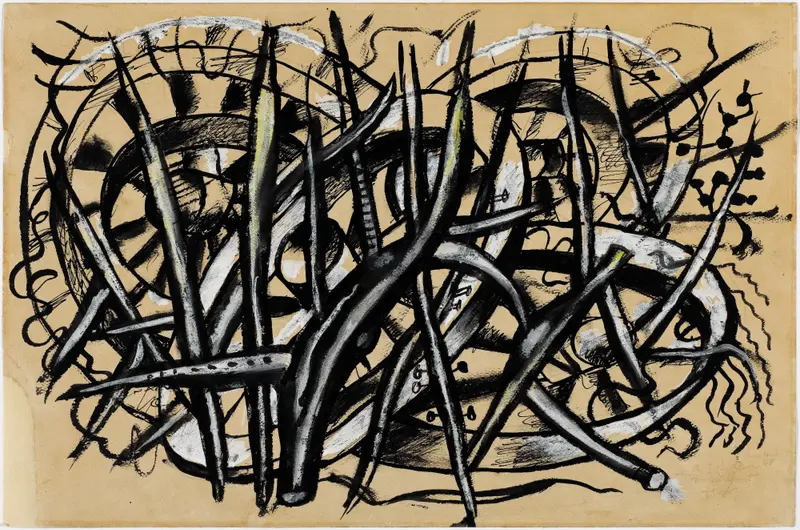
The Wheels
Fernand Léger

Le Cirque Médrano
Fernand Léger
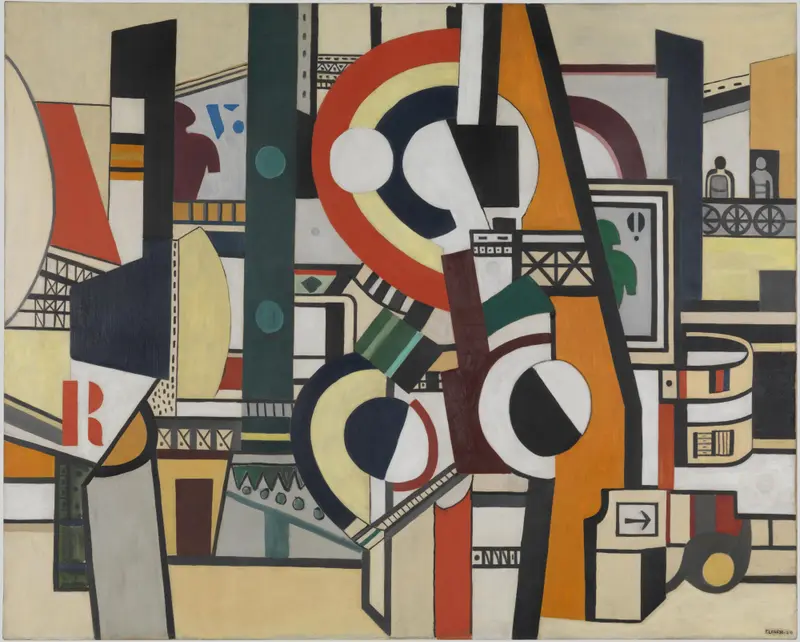
The Disks in the City
Fernand Léger
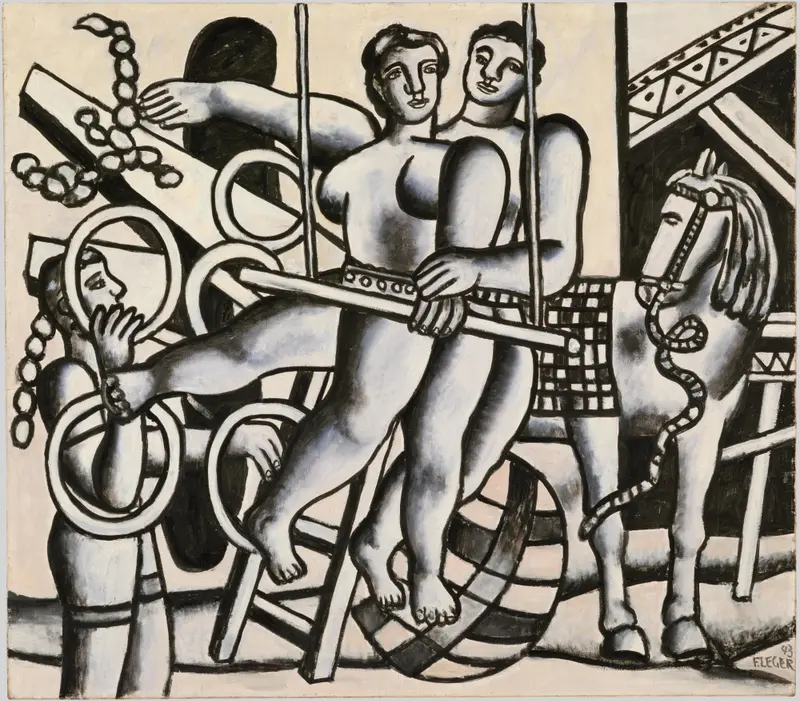
Le Jongleur et les acrobates
Fernand Léger
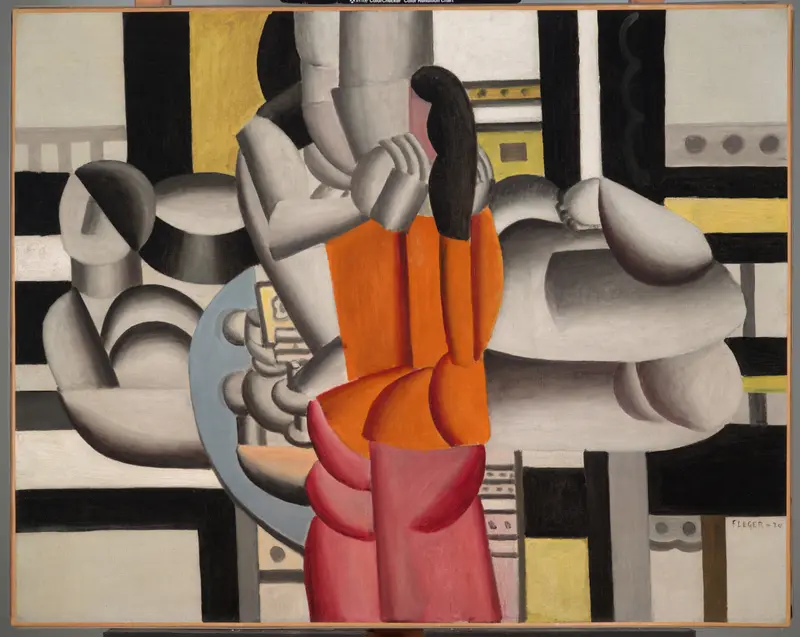
Three Women and Still Life (Déjeuner)
Fernand Léger

Reading
Fernand Léger
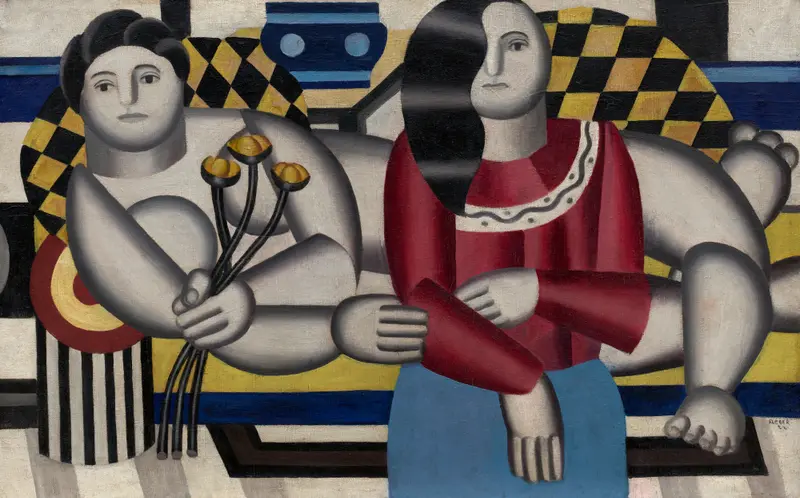
Femme couchée
Fernand Léger
Woman holding flowers
Fernand Léger
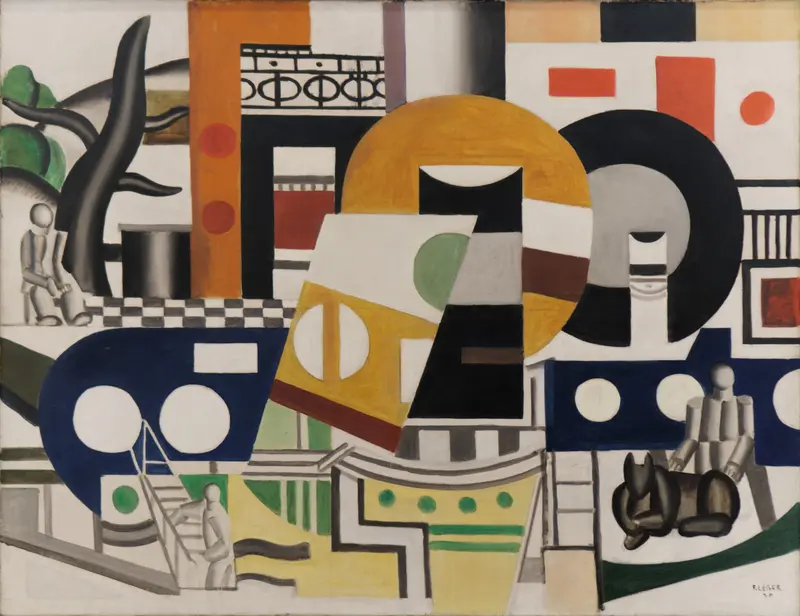
The Tug
Fernand Léger





