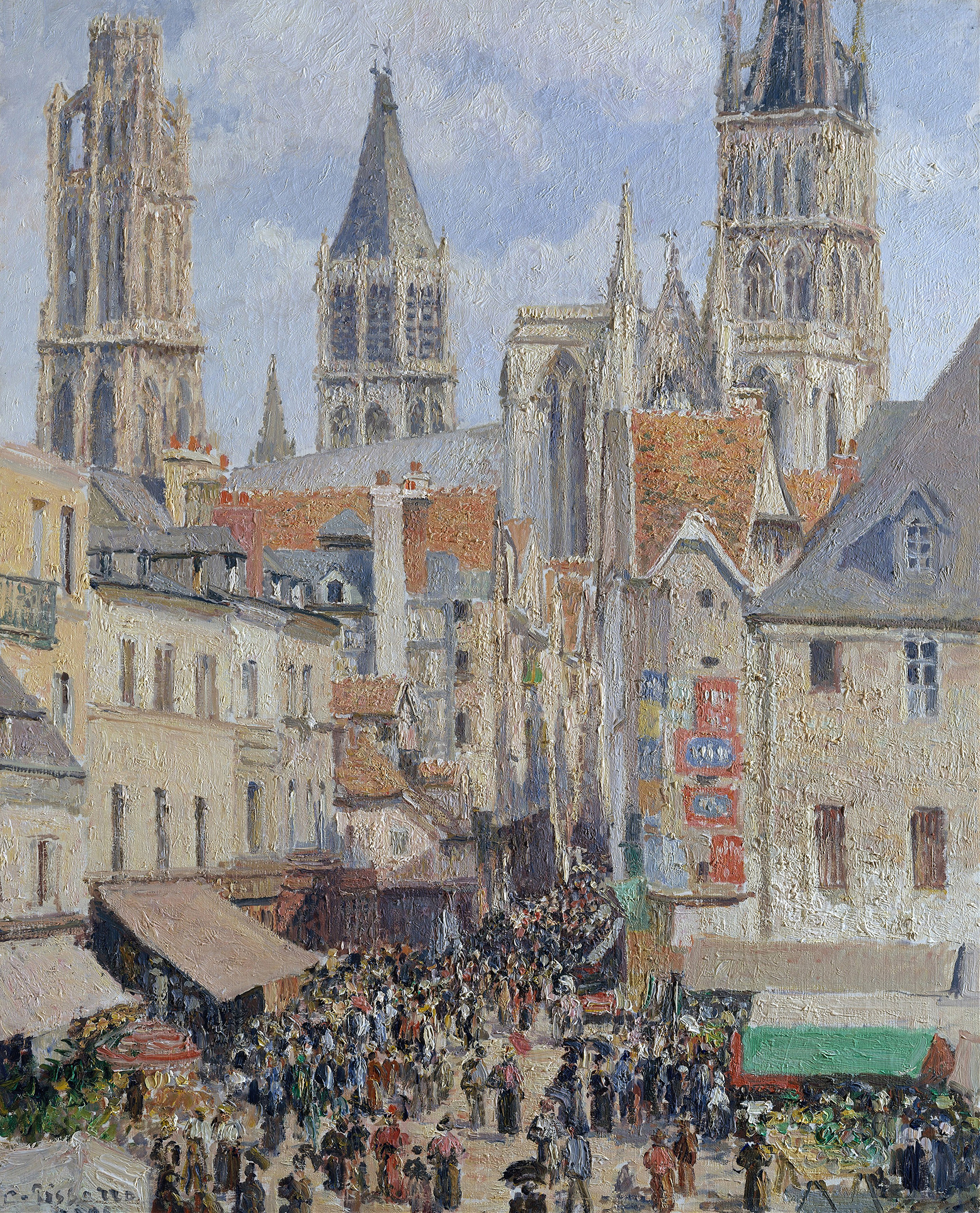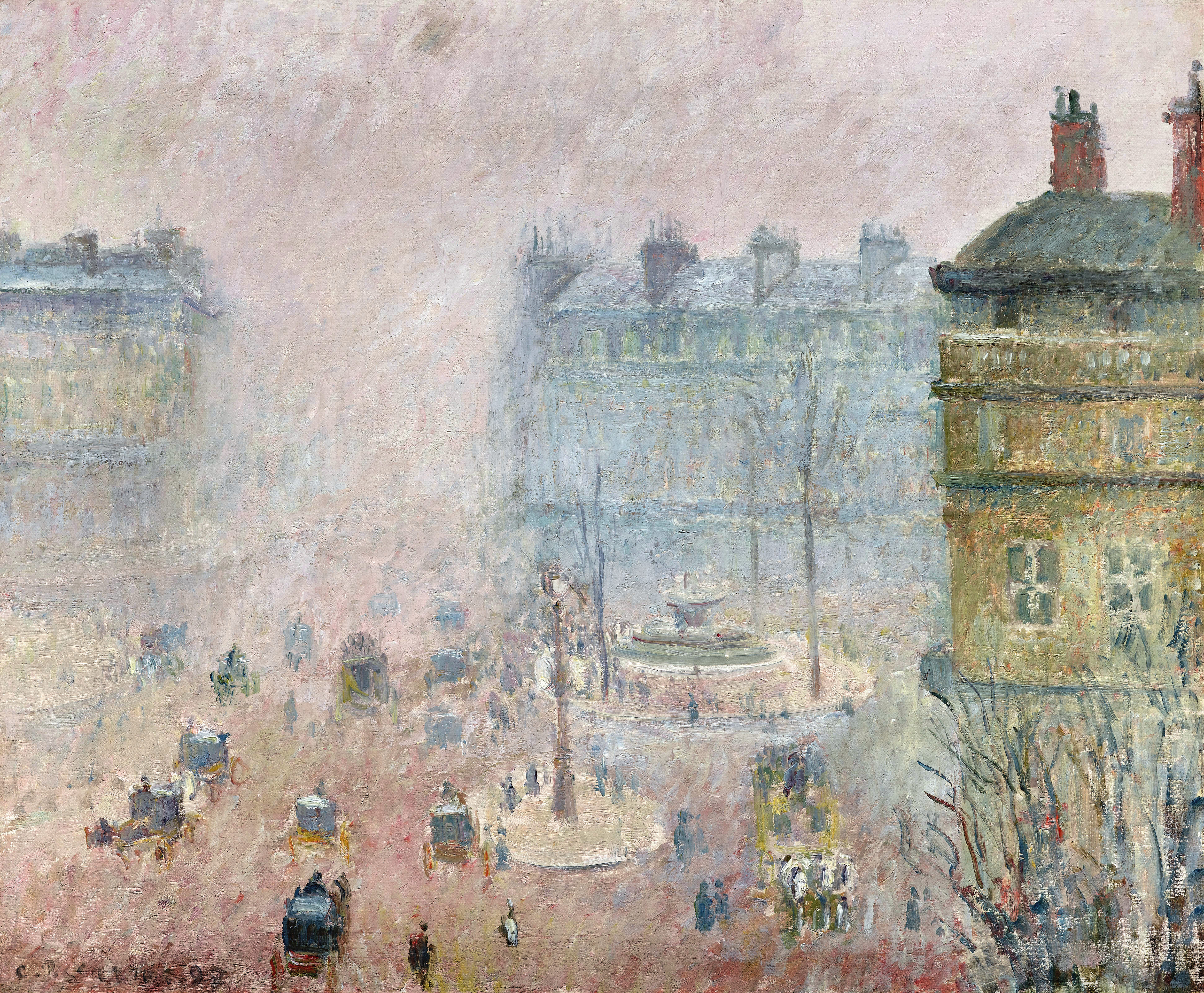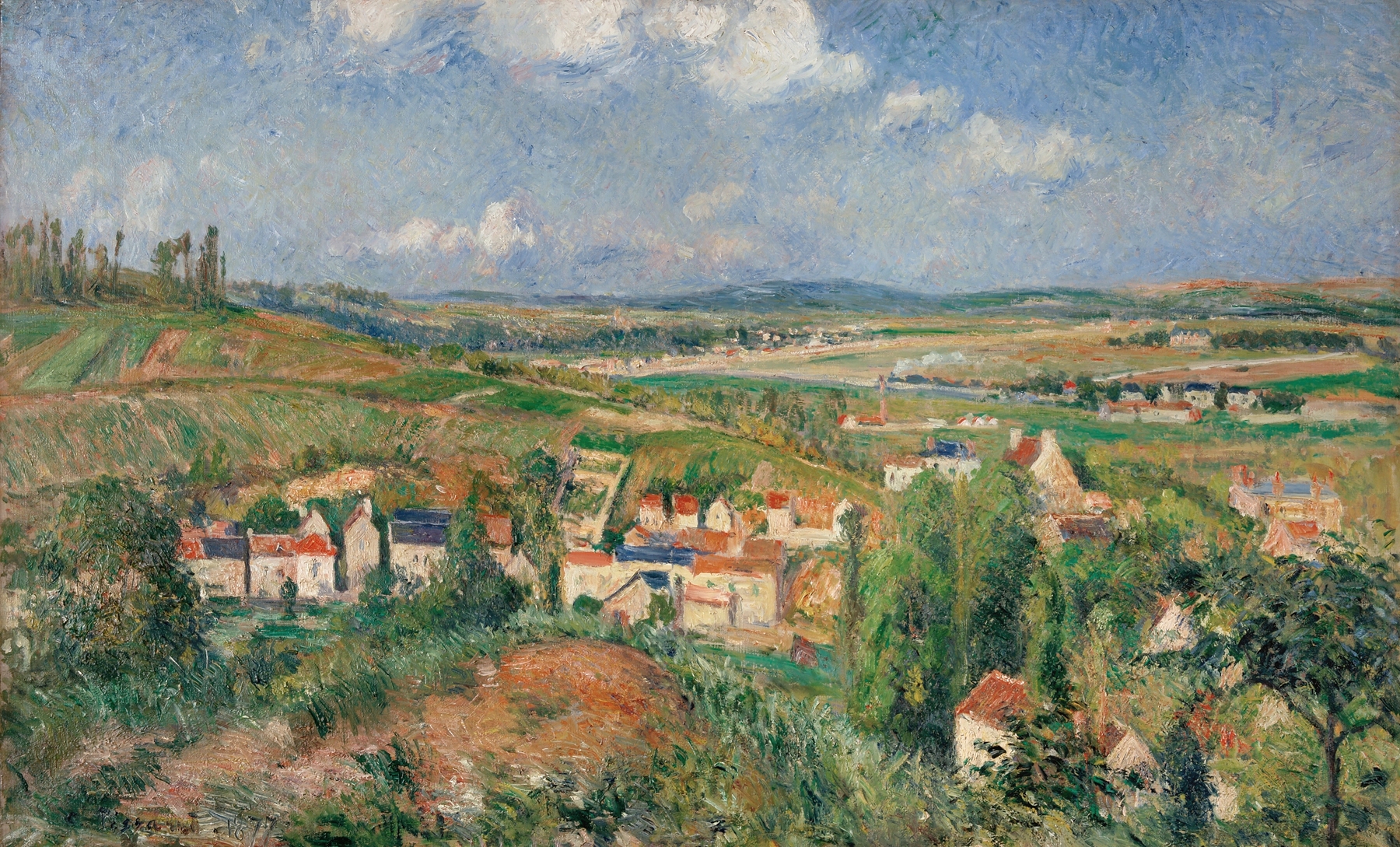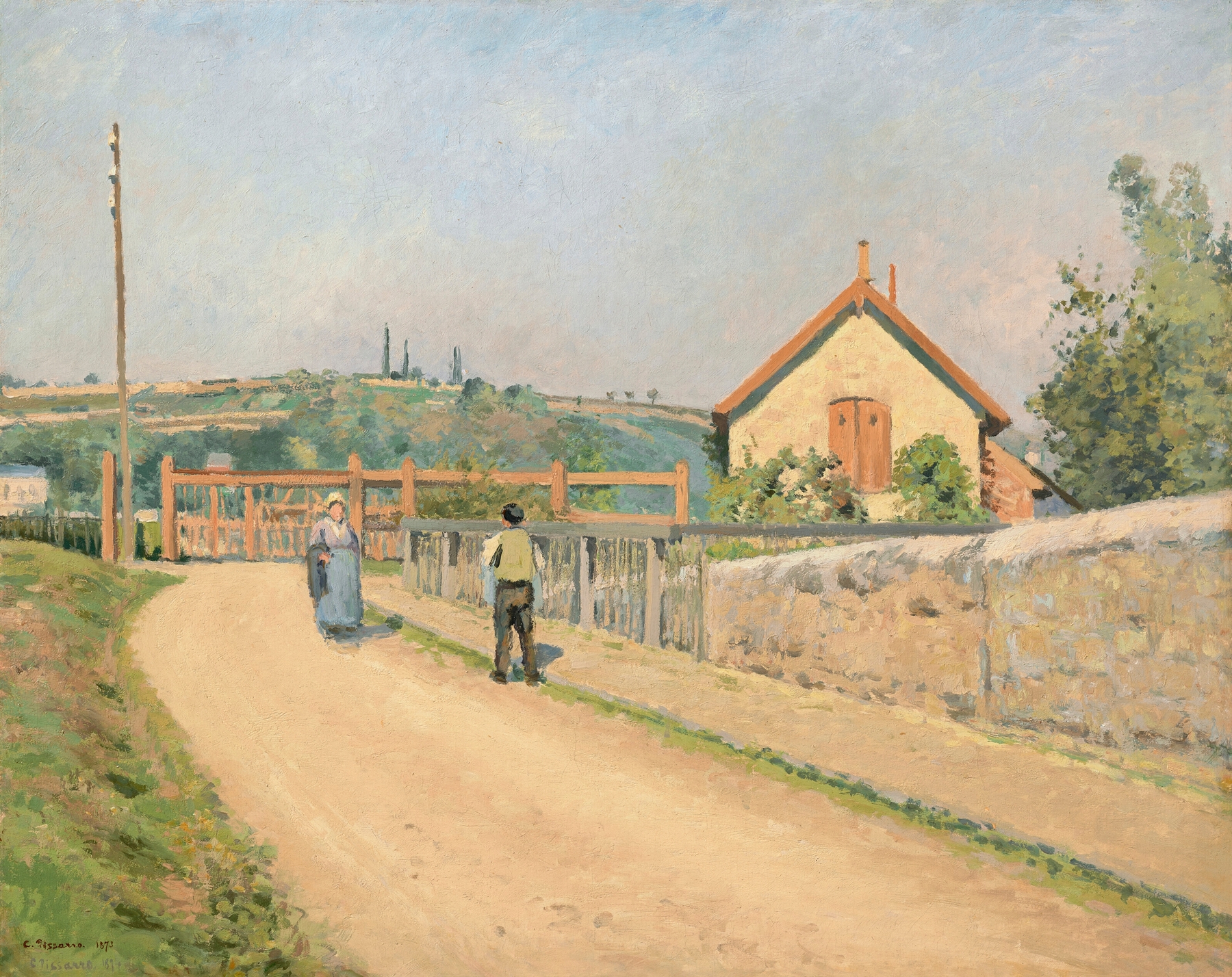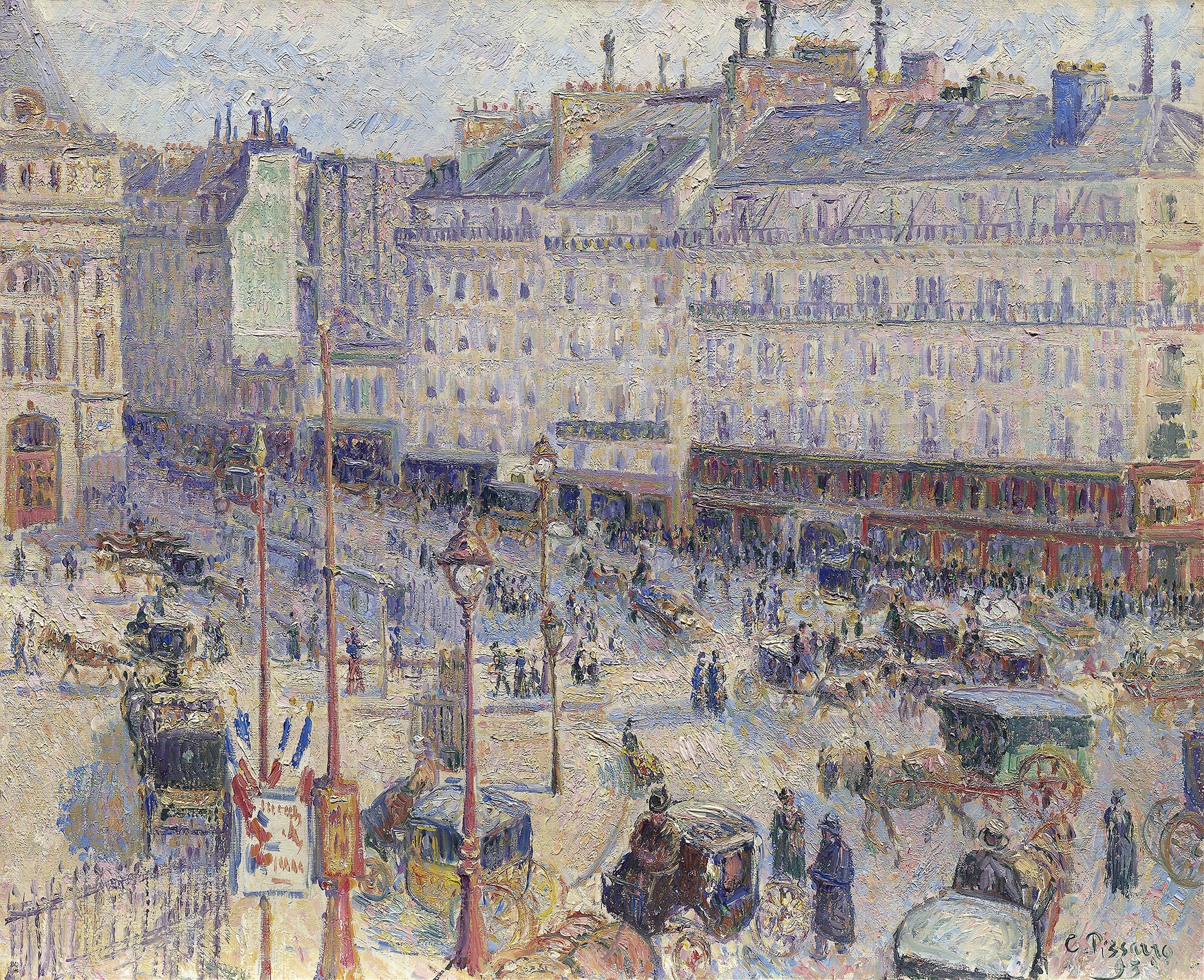
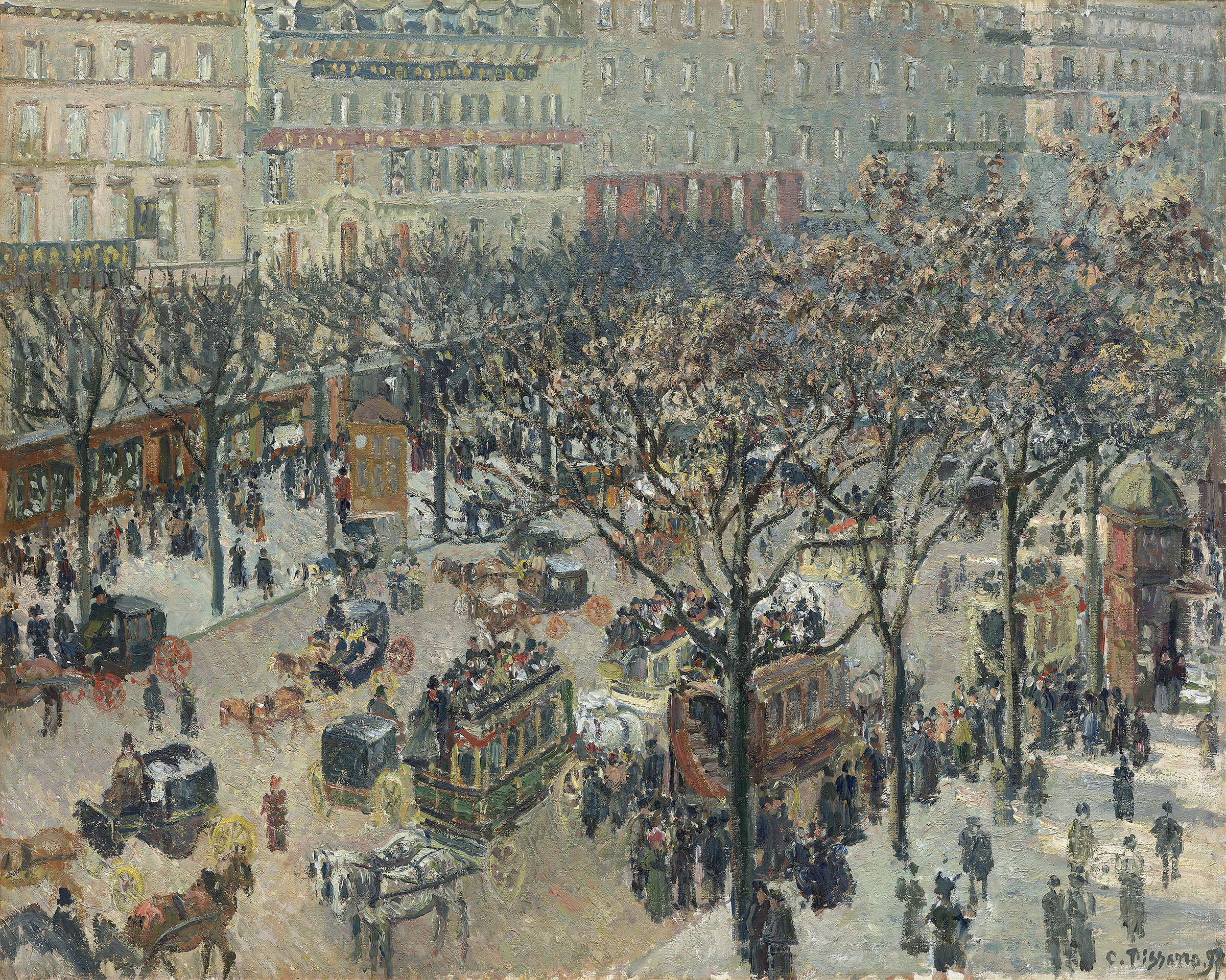
Can beauty exist without sorrow? This question lingers in the air, echoing through time as we peer into the vibrant world captured by the artist's brush. Focus first on the bustling foreground, where figures bustle along the cobbled streets, their movements frozen in a moment of everyday life. Notice how the light dances on the yellow, ochre, and verdant hues of the buildings, creating an inviting warmth despite the underlying chill of autumn. The composition is alive with color and texture, leading the eye through the scene while inviting the viewer to pause and discern the subtle interactions of the pedestrians. As you explore further, observe the juxtaposition of urban life and natural elements—the lush trees peeking through the architecture, offering a sense of solace amidst the thrumming energy of the city. There’s a tension between the fleeting, transient nature of the crowd and the steady permanence of the structures, hinting at an emotional undercurrent of longing amidst the daily routine. Each brushstroke captures not just the physical reality but also the pulse of hope and resilience, suggesting a faith in the beauty of the everyday, even when tinged with uncertainty. In *The Place du Havre, Paris*, painted in 1893, Camille Pissarro was deeply engaged in the Impressionist movement, seeking to capture the modernity of urban life. Living in a rapidly changing world, Pissarro's experiences of displacement and his commitment to portraying the ordinary reflect a moment in art history where the traditional was being challenged, and new interpretations of beauty were emerging amidst the chaos of life.