
The Poor Artist — History & Facts
No one knows exactly when Albert Pinkham Ryder painted The Poor Artist, nor the identity of the solitary figure at its heart, but the painting has long stirred curiosity for its raw, almost confessional glimpse into the artist’s own world. Ryder, known for his eccentric habits and reclusive lifestyle in late 19th-century New York, was rumored to have painted by moonlight and to obsessively rework his canvases for years. The painting’s uncertain date and medium only add to its mystique, making it a touchstone for those fascinated by the myth of the suffering, isolated creator. At the center of The Poor Artist, a lone man sits hunched in a cramped, dimly lit room, surrounded by the sparse trappings of a life devoted to art yet marked by hardship.
The clutter of brushes, tattered canvases, and the meager light filtering through a grimy window tell a story of perseverance in the face of poverty. The artist’s bowed head and slumped shoulders capture a moment of exhaustion or reflection, inviting the viewer to share in his struggle. Unlike Jean-François Millet’s dignified peasants or Vincent van Gogh’s feverish self-portraits, Ryder’s subject is rendered with a muted palette and a quiet, almost private melancholy, emphasizing the solitude of artistic pursuit. Little is known about the early history of The Poor Artist, and it is not clear whether it was ever exhibited during Ryder’s lifetime.
The painting’s rough surface and experimental technique are typical of Ryder’s later work, which often suffered from cracking and darkening due to his unconventional materials. Today, the painting’s whereabouts are not widely publicized, and it is rarely seen outside of scholarly circles, adding to its reputation as a hidden gem within Ryder’s small and enigmatic oeuvre. Its elusive history and haunting subject continue to fascinate those who seek to understand the inner life of one of America’s most mysterious painters.
More Artworks by Albert Pinkham Ryder

The Toilers of the Sea
Albert Pinkham Ryder
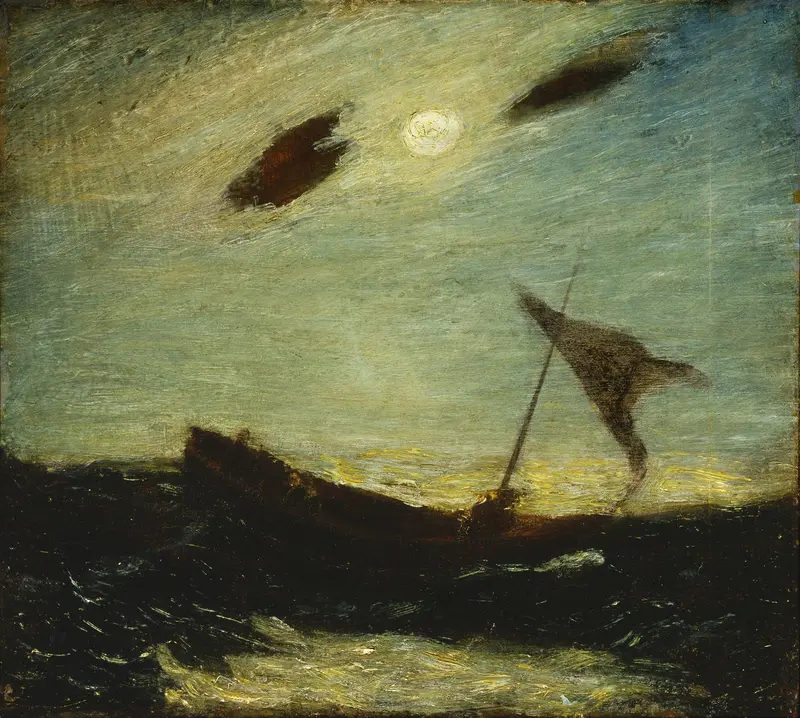
Moonlight
Albert Pinkham Ryder
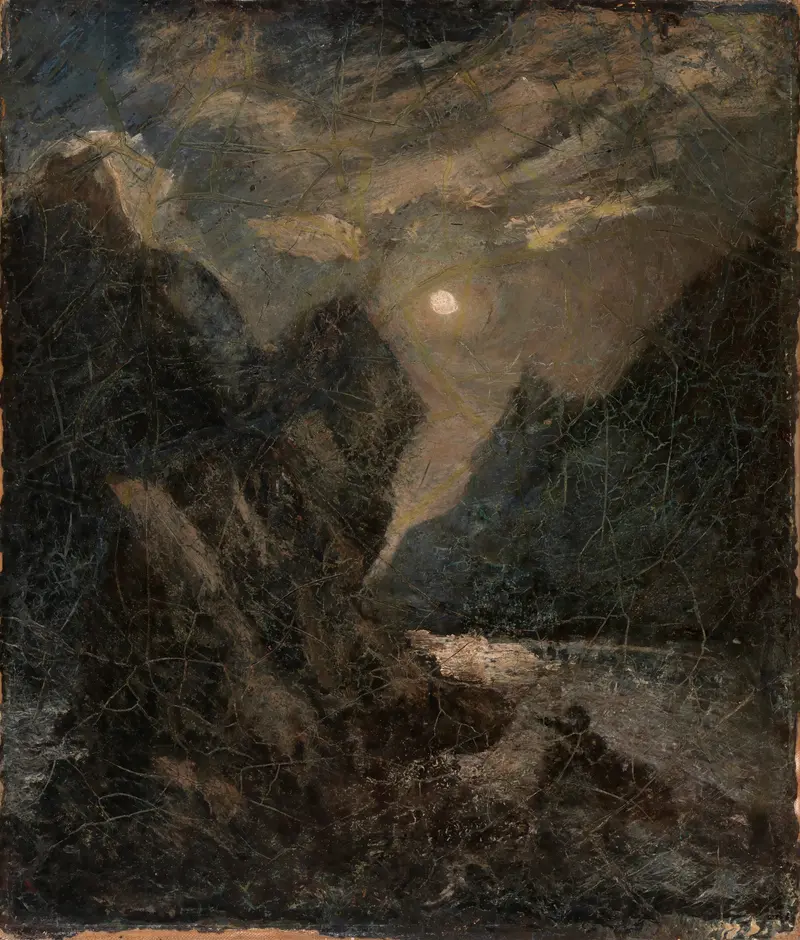
The Lorelei
Albert Pinkham Ryder
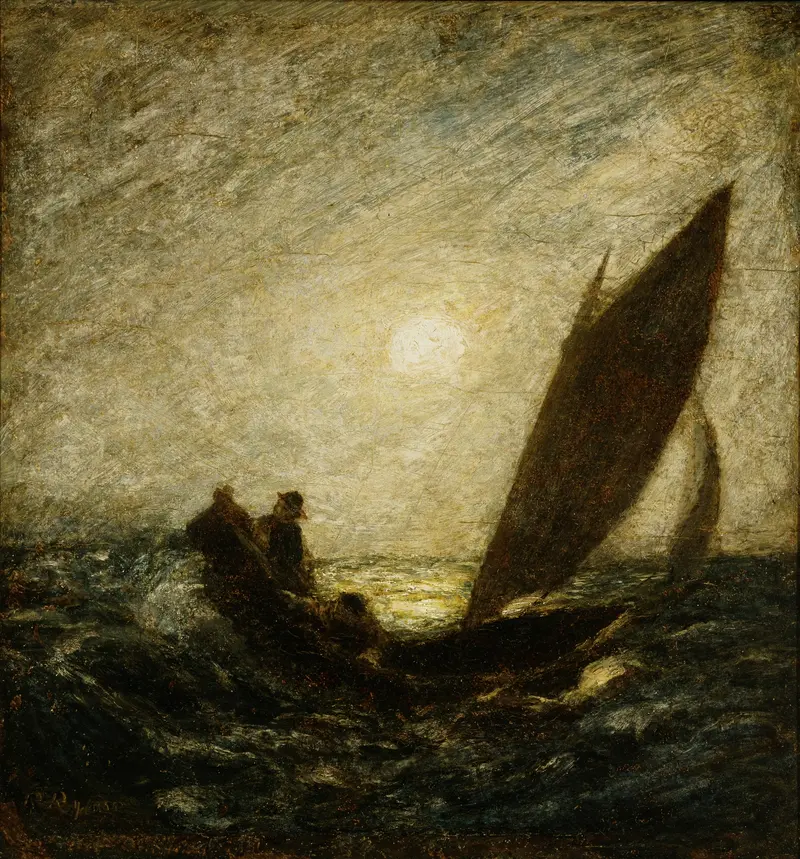
With Sloping Mast And Dipping Prow
Albert Pinkham Ryder
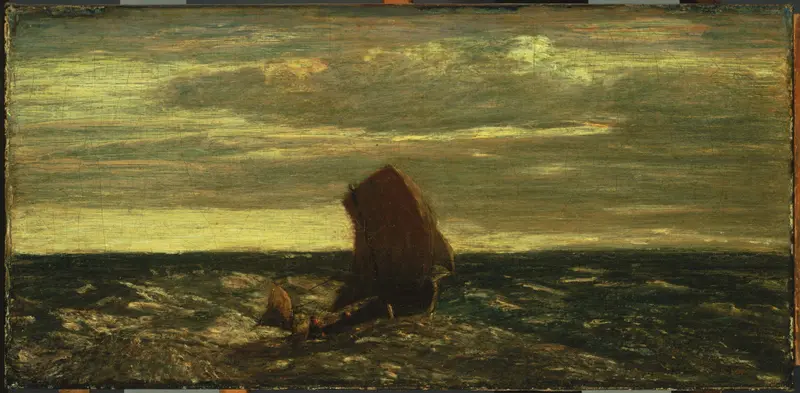
Homeward Bound
Albert Pinkham Ryder
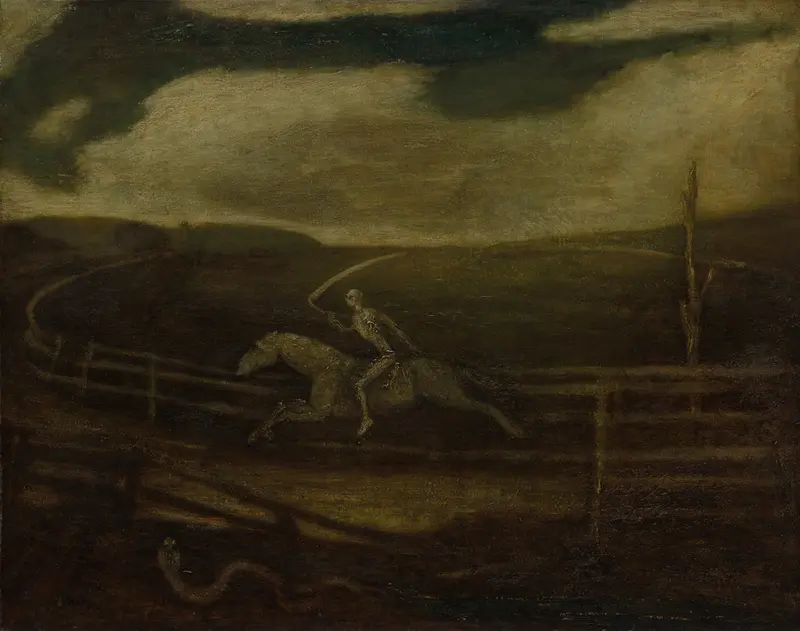
The Race Track (Death on a Pale Horse)
Albert Pinkham Ryder
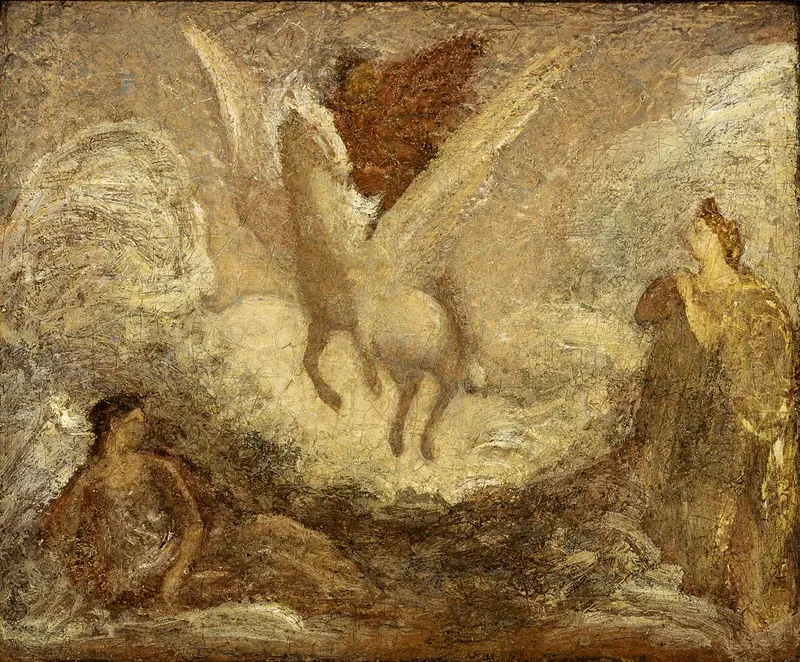
Pegasus Departing
Albert Pinkham Ryder
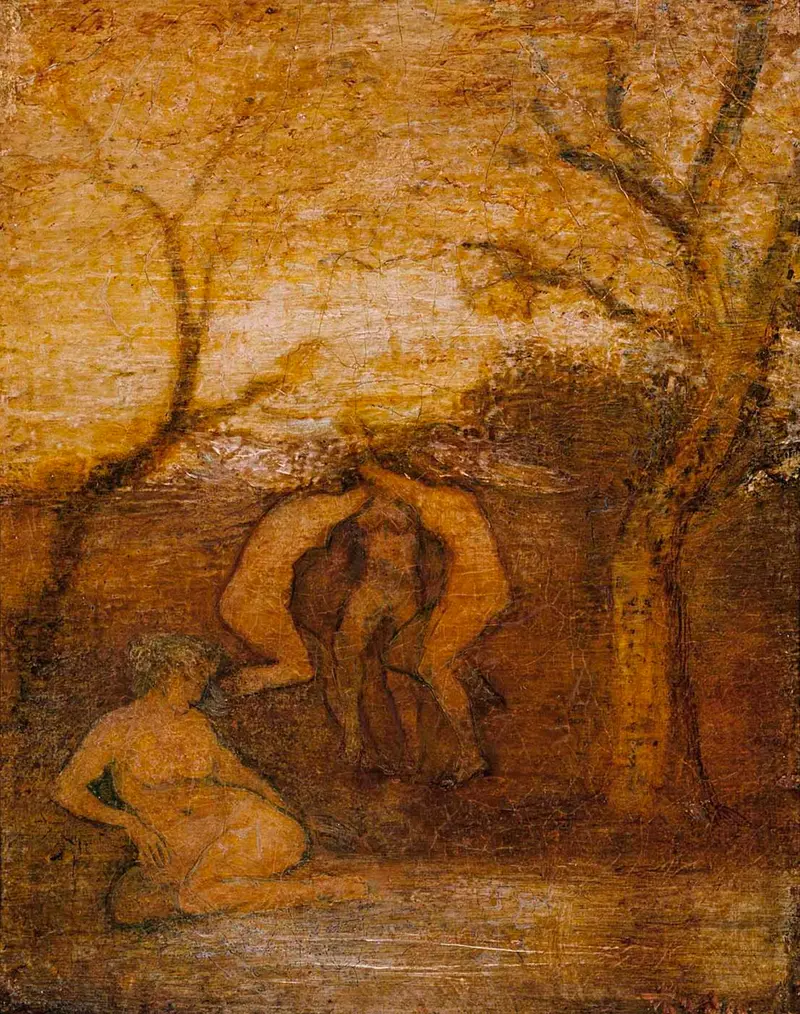
Dancing Dryads
Albert Pinkham Ryder
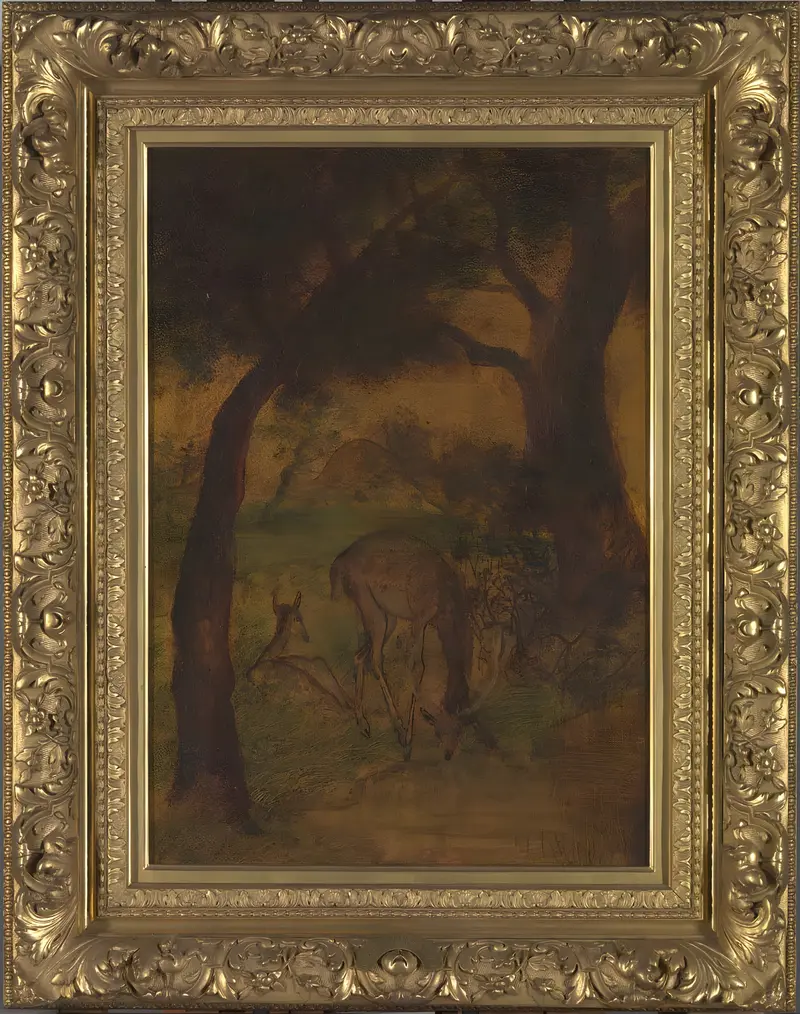
A Stag Drinking
Albert Pinkham Ryder
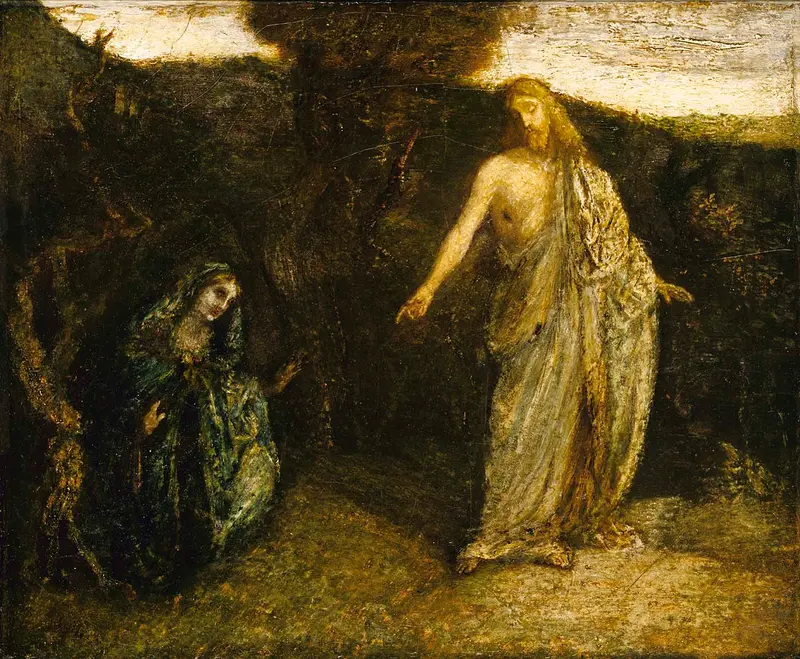
Christ Appearing to Mary
Albert Pinkham Ryder
More Genre Scene Art

Banquet of the Officers of the St George Civic Guard
Frans Hals

Rembrandt and Saskia in the Scene of the Prodigal Son
Rembrandt van Rijn

Bal du moulin de la Galette
Pierre-Auguste Renoir

Quadrille at the Moulin Rouge
Henri de Toulouse-Lautrec

A Burial at Ornans
Gustave Courbet

When Will You Marry?
Paul Gauguin